

The Joel Robuchon pommes purée copycat recipe — the most famous mashed potatoes in the world, made at home for about $7. Two sticks of cold butter folded into one pound of Yukon Gold, passed twice through a fine sieve. The technique that separates silky from gluey: dry the potato before the butter goes in, keep the butter cold, and add it piece by piece.
What Makes This Purée Different From Regular Mashed Potatoes
Standard mashed potatoes: boil, drain, mash with a fork or mixer, add warm butter and cream.
Robuchon’s purée: boil whole, peel hot, pass through a fine drum sieve twice, dry on the stove, emulsify cold butter piece by piece over low heat for 12 minutes, finish with hot milk.
The difference is emulsification. Cold butter added gradually to hot, dry potato forms a genuine emulsion — the same mechanism as a beurre blanc or hollandaise. The butter fat, milk solids, and potato starch lock together into a smooth, pourable, glossy mass that stays uniform even as it cools slightly. Add warm butter or skip the drying step and you get greasy potato: fat sitting on top of water sitting on top of starch. Looks similar, tastes completely different.
The three technique details that actually matter:
The right potato. Waxy, low-starch varieties only — La Ratte (the original), Yukon Gold, or fingerlings. Russet potatoes have too much starch; once damaged by heat and pressure through a ricer, that starch releases and turns the purée to paste no matter how much butter you add. The waxy starch in Yukons holds its structure through the ricing and drying steps, then accepts the emulsified butter without going gluey.
Dry the potato before the butter. After ricing, three to five minutes on medium heat, stirring constantly, until steam actively rises and the mass looks visibly fluffier. You are evaporating the cooking water that soaked into the potato during boiling. Water dilutes the emulsion; dry potato accepts butter cleanly. Skip this step and the butter emulsion never fully forms.
Cold butter, one piece at a time. Take the butter straight from the refrigerator. Add one or two tablespoons at a time. Whisk or fold each piece in completely — the surface should look glossy and creamy, not greasy or separated — before adding the next. This takes ten to twelve minutes. It cannot be rushed. Melted or room-temperature butter separates on contact with the potato instead of emulsifying; the same result as adding warm butter to a sauce.
The Butter Ratio (And Why It’s Not as Insane as It Sounds)
The famous claim: Robuchon uses equal parts butter and potato by weight. The actual restaurant recipe, as published in his cookbooks and confirmed by multiple chefs who trained under him, is closer to 2:1 potato to butter — 500g of potatoes, 250g of butter. Still extreme by any normal standard. Standard American mashed potato recipes call for about 30g of butter per 500g of potato. Robuchon’s recipe uses eight times that.
The reason it doesn’t taste like eating a stick of butter: the emulsification. When fat emulsifies with the potato starch and milk proteins rather than sitting on top of them, you taste the flavor without the greasy mouthfeel. The result is rich but clean — you taste potato first, then a pure dairy butter note, then clean milky finish. No cream, no cream cheese, no starch thickeners. The fat content is genuinely high, and the purée is not a diet food. But it’s not cloying either.
Serving
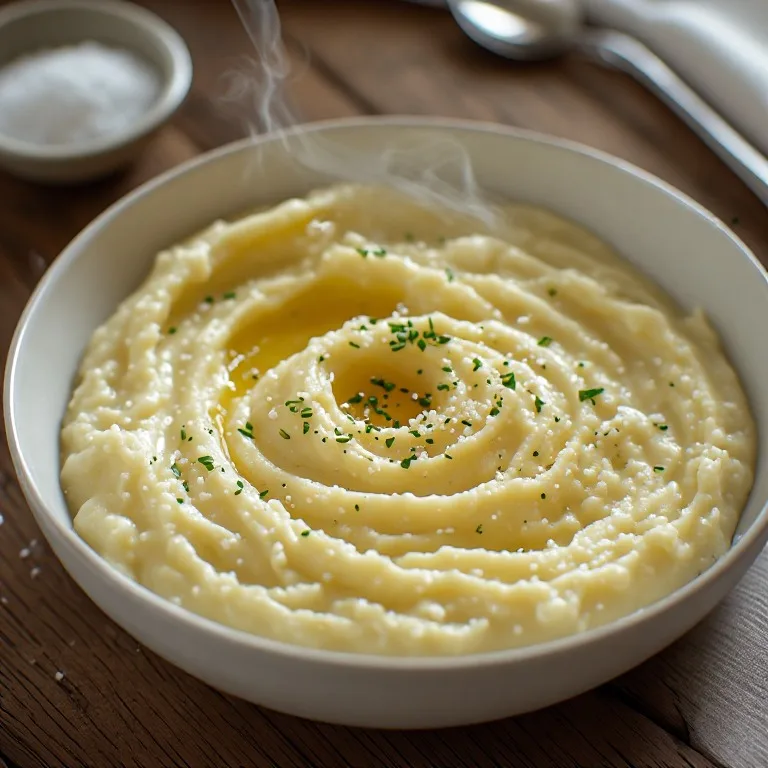
Robuchon served the purée in a warm, shallow bowl with a swooping spread done by the back of a spoon — the same motion as applying spackling paste to a wall, done in a single confident pass. The purée should be warm enough to spread effortlessly; if it’s resisting the spoon, it has cooled. Reheat gently with a splash of hot milk before plating.
At the restaurant it appeared alongside practically every main course. At home it is the thing people remember: the other components of a roast chicken or a pan-seared fish are forgotten, and the mashed potatoes become the subject of conversation. It pairs naturally with another fine-dining classic built on restraint — Thomas Keller’s French Laundry roast chicken, whose pan juices were practically made for spooning over a bowl of this purée.