
Pin It

Perfect Jammy Eggs — The TikTok Soft-Boiled Obsession

Perfect Jammy Eggs — The TikTok Soft-Boiled Obsession
Jump to Recipe
Prep 5 min Cook 7 min Serves 4
Quick answer: Boil water first, lower in fridge-cold eggs, cook exactly 6 minutes 30 seconds, then ice bath immediately. Optionally marinate overnight in soy sauce. You get a custardy golden yolk every single time.

Shop the tools

Gear matched to this recipe. These are Amazon affiliate links — we may earn a small commission if you buy, at no extra cost to you.

As an Amazon Associate, Copycat Spices earns from qualifying purchases. Product images are generic illustrations, not the exact item listed.

Perfect Jammy Eggs — The TikTok Soft-Boiled Obsession

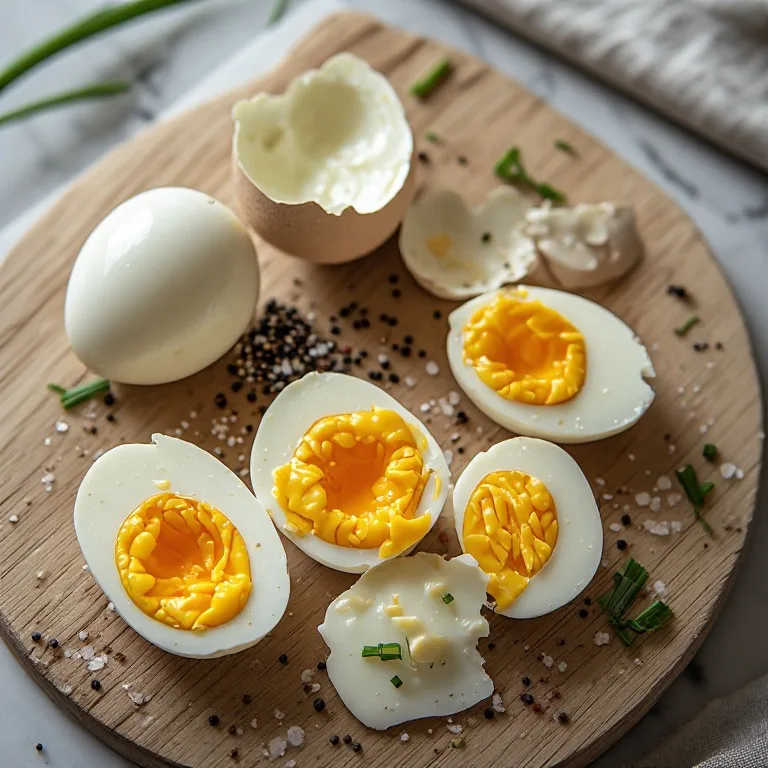
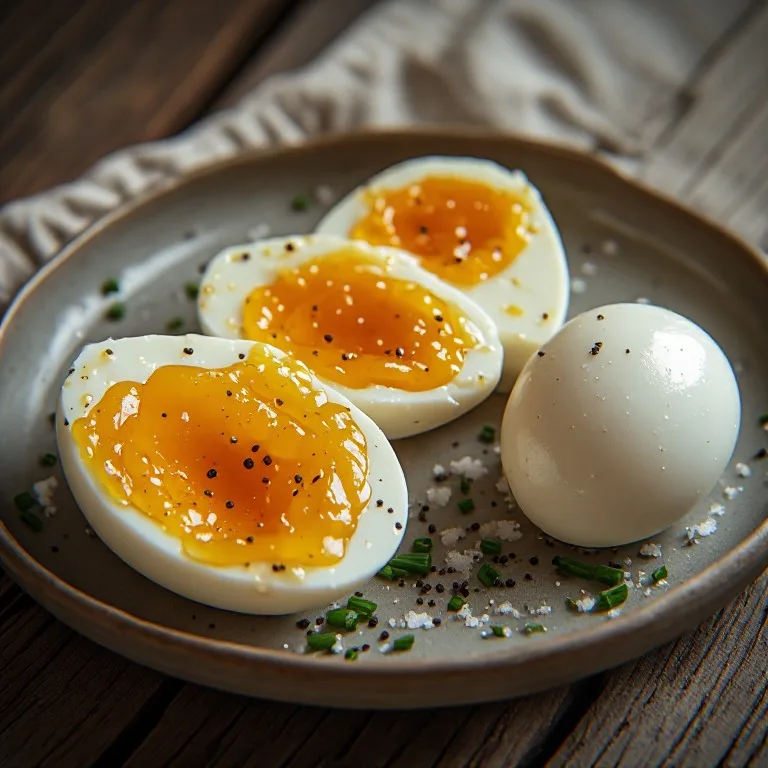
6 minutes 30 seconds to the custardy, golden-centered jammy egg that's taken over salads, ramen, toast, and every TikTok food account.

Easy Prep: 5 min Cook: 7 min Total: 12 min4 servings ~$2.80/serving
Prep5 min
Cook7 min
Total12 min
Servings
4
At home~$2.80/serving
vs
Restaurant~$12.60/serving
You save ~78%

The Story Behind the Recipe

6 minutes 30 seconds to the custardy, golden-centered jammy egg that's taken over salads, ramen, toast, and every TikTok food account.

Nutrition Facts

Per serving (4 servings)
Calories70
Total Fat5g
Total Carbs0g
Dietary Fiber0g
Sugars0g
Protein6g
Sodium65mg

* Estimated values based on standard recipe preparation. Actual values may vary.

Ingredients

Instructions

💡
Pro tip: This recipe tastes even better the next day. The flavors need time to meld together in the fridge.
❄️
Storage: Keeps in an airtight container in the fridge for up to 2 weeks. Freezer-friendly for up to 3 months.
🎃 Free Halloween cookbook — download now The Copycat Halloween Cookbook A ready-made, photo-illustrated PDF of our best halloween copycat recipes — free to download, no building required. Pay what you want to support if you love it.

Free PDF — instant download. We'll also send new seasonal copycat recipes now and then; unsubscribe anytime. Or just download it →

Perfect Jammy Eggs — The 6-Minute 30-Second Obsession Taking Over Every Food Account

The jammy egg has been a fixture of Japanese ramen shops and French bistros for decades. TikTok discovered it around 2021, attached it to every grain bowl, avocado toast, and salad plate on the internet, and turned a simple technique into one of the most-searched egg methods in home cooking history.

The appeal makes sense. A good jammy egg is visually perfect — a custardy, deep golden yolk that pours slightly when you cut it, encased in a fully-set but still-tender white. It’s what most people actually want when they order a “poached egg” but can never quite execute. The jammy soft-boil is more reliable, more forgiving, and just as impressive.

Why Timing Is Everything (And Why Half a Minute Matters)

An egg cooks differently at every 30-second interval. Here’s a rough map for large eggs from the fridge in boiling water:

  • 5 minutes: White not fully set near the yolk, yolk still runny and liquid
  • 6 minutes: White just set, yolk very soft and liquid in the center — beautiful but fragile
  • 6:30 minutes: The jammy sweet spot. White fully set and tender, yolk thick and golden, custardy but not flowing
  • 7 minutes: Yolk is starting to set from the edges inward, less custardy
  • 8 minutes: Yolk is mostly set, pale yellow at the edges — heading toward hard-boiled territory
  • 10+ minutes: Hard-boiled. Grey ring starting to form around the yolk from iron and sulfur compounds reacting

The 30-second window between 6 and 7 minutes produces fundamentally different results. This is why the ice bath exists — to stop that clock exactly where you want it.

The Science of the Ice Bath (It’s Not Optional)

When you pull an egg from boiling water, the egg itself is still extremely hot. The white at the outermost layer is fully cooked, but heat is still conducting inward toward the center of the yolk. Without an ice bath, that residual heat will cook the yolk further for 2–3 minutes after the egg leaves the pot.

Ice water drops the surface temperature of the egg so fast that conduction stops almost immediately. The yolk stays at exactly the texture it was when you pulled it, rather than continuing to set on the counter.

Cold tap water is not sufficient. Tap water warms up almost immediately when you add a hot egg. You need ice — real ice — to maintain a temperature cold enough to halt cooking quickly.

The Consistency Problem: Why Your Results Vary

Most home cooks get inconsistent jammy eggs because they haven’t controlled for two variables: starting egg temperature and starting water temperature.

If you sometimes use room-temperature eggs and sometimes use cold eggs from the fridge, you’re cooking from different starting internal temperatures. A room-temperature egg cooks slightly faster and needs 30 seconds less. The internet consensus on 6:30 assumes cold eggs from the fridge.

If you sometimes start in cold water and let it come to a boil with the egg inside, the timing varies based on your stove’s output, the pot’s mass, and the starting tap water temperature. Starting in already-boiling water eliminates all of that variation.

Control both variables and the technique becomes nearly foolproof.

The Soy Marinade: Why It Makes a Good Egg Into a Great One

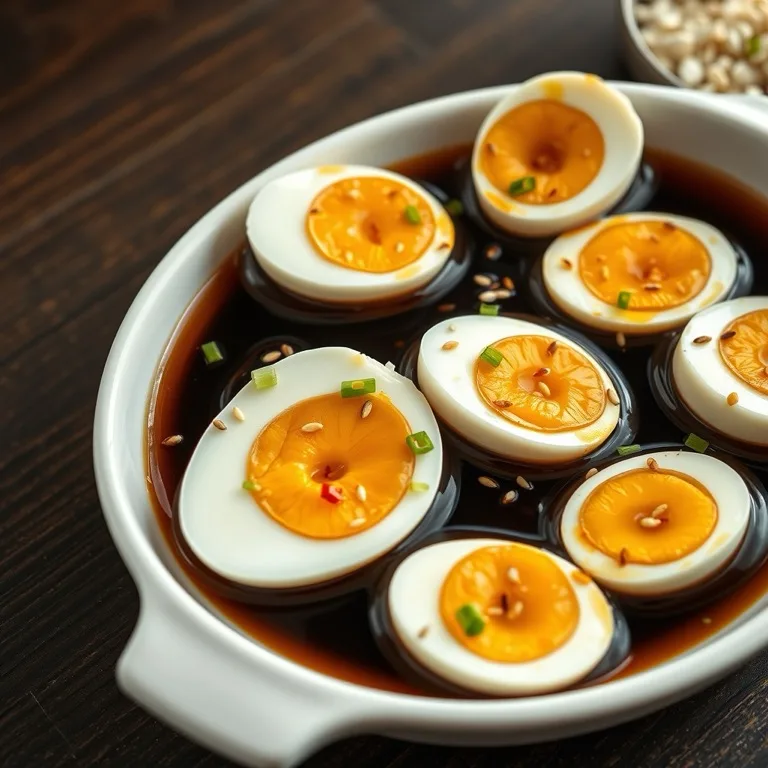
The overnight soy marinade is the version that went genuinely viral, and for good reason. The eggs emerge from the marinade a deep amber-brown, and when you cut them, the contrast between the dark outer white and the golden yolk is visually stunning.

Flavor-wise, the soy and mirin penetrate only the outer layer of the white — the yolk doesn’t really absorb the marinade. But that savory, slightly sweet outer layer transforms what’s already a good egg into something that functions as its own dish. A marinated jammy egg sliced over plain rice with a little sesame oil is a complete meal.

The key timing window: 2 hours for light flavor and color, 8–12 hours (overnight) for full flavor and the dark exterior, no more than 24 hours or the salt starts toughening the protein structure of the white.

Applying the Jammy Egg Everywhere

Once you have the technique, the applications are unlimited. Split and draped over a bowl of ramen. Halved on a Niçoise salad. Sliced onto avocado toast with chili flakes. Served whole alongside a grain bowl. Hidden inside a bao bun. Kept in the fridge for a grab-and-go protein snack.

The reason TikTok chefs return to this technique constantly is that it delivers extraordinary visual and textural reward for minimal effort. Six minutes and thirty seconds of precision produces something that looks and eats like it took much longer.
🥗

Make It Healthier

Love Perfect Jammy Eggs — The TikTok Soft-Boiled Obsession but want a lighter version? Try these simple swaps:

  • ✓Each egg is only 70 calories with 6g protein — one of the best protein-per-calorie foods available
  • ✓Marinate in reduced-sodium soy sauce to cut the sodium significantly without losing the flavor
  • ✓Slice over grain bowls instead of using as a standalone snack to increase satiety
  • ✓The jammy yolk acts as a natural sauce, reducing the need for dressings or heavy toppings

Frequently Asked Questions

Why do my jammy eggs keep coming out different each time?

The most common cause is inconsistency in the starting point. If you sometimes start with cold water and sometimes boiling, your results will vary wildly. Always start with rolling boiling water, always use fridge-cold eggs (not room temperature), and always use an ice bath. Controlling those three variables produces consistent results every time.

What's the difference between a jammy egg and a soft-boiled egg?

Soft-boiled is a range — anywhere from nearly raw to nearly hard-boiled. Jammy is a specific texture within that range: the yolk is thick and moldable like cold jam or peanut butter, not liquid and not chalky. It holds its shape when you cut the egg but is clearly soft and rich.

Can I make jammy eggs ahead of time?

Unpeeled, jammy eggs keep in the fridge for up to 5 days. Peeled eggs should be stored in cold water and used within 2 days. Marinated eggs keep up to 5 days in the fridge and actually improve on day 2.

My eggs crack every time in the boiling water. How do I stop this?

Two causes: lowering them too fast (use a spoon, lower slowly), or thermal shock from very cold eggs hitting very hot water. Let your eggs sit on the counter for 5 minutes before cooking, or poke a tiny hole in the wide end with a thumbtack — this releases air pressure and prevents cracking.

Love this recipe? Share it!

Free PDF: our 12 most-wanted copycat recipes — instant download.

Made it? Buy us a coffee

Every recipe here is free, with no paywalls. If this one was a hit at your table, a small tip keeps new copycats coming.

$

Ratings & Reviews

—
No ratings yet

Rate this recipe

Click a star to rate

Leave a Review

0/500

CS

Copycat Spices Editorial

Researched + fact-checked. Every recipe on Copycat Spices is built from published sources — official ingredient lists, brand-published recipes, interviews and food-science references — and fact-checked before it goes live, then written as clear, step-by-step instructions for home cooks of all skill levels.

Learn more about our mission →