


Pin It

Girl & the Goat Magic Beans (The Famous Chicago Green Beans, Made at Home)

Girl & the Goat Magic Beans (The Famous Chicago Green Beans, Made at Home)
Jump to Recipe
Prep 20 min Cook 10 min Serves 4 as a side
Quick answer: Make the vinaigrette first: whisk together 2 tablespoons fresh lemon juice, 2½ tablespoons fish sauce, 1 tablespoon tamari soy sauce, 1½ teaspoons Dijon mustard, 1½ teaspoons Sriracha, 1 rough-chopped garlic clove, and 2 tablespoons neutral oil (rice bran or avocado) until combined. Make the aioli: whisk ⅓ cup of that vinaigrette into 1 cup of mayonnaise and set aside. Blanch 1 pound of clean green beans in heavily salted boiling water for 2 to 3 minutes until bright green and just tender — not limp. Drain immediately and transfer to an ice bath to stop cooking. Dry thoroughly with a kitchen towel. Heat a large skillet or wok over high heat. Add a thin film of neutral oil. Add ½ cup thinly shaved shallots and cook, tossing, for 1 to 2 minutes until softened and lightly browned at the edges. Add the dried green beans and toss to combine with the shallots. Pour in enough vinaigrette to lightly coat the beans — about 3 to 4 tablespoons — and toss over high heat for 1 minute, letting the steam coat everything. Add ½ cup roasted unsalted cashews (roughly broken), toss once more, and taste for salt. Transfer to a serving dish and drizzle with the aioli. Serve immediately.

Shop the tools

Gear matched to this recipe. These are Amazon affiliate links — we may earn a small commission if you buy, at no extra cost to you.

As an Amazon Associate, Copycat Spices earns from qualifying purchases. Product images are generic illustrations, not the exact item listed.

Girl & the Goat Magic Beans (The Famous Chicago Green Beans, Made at Home)

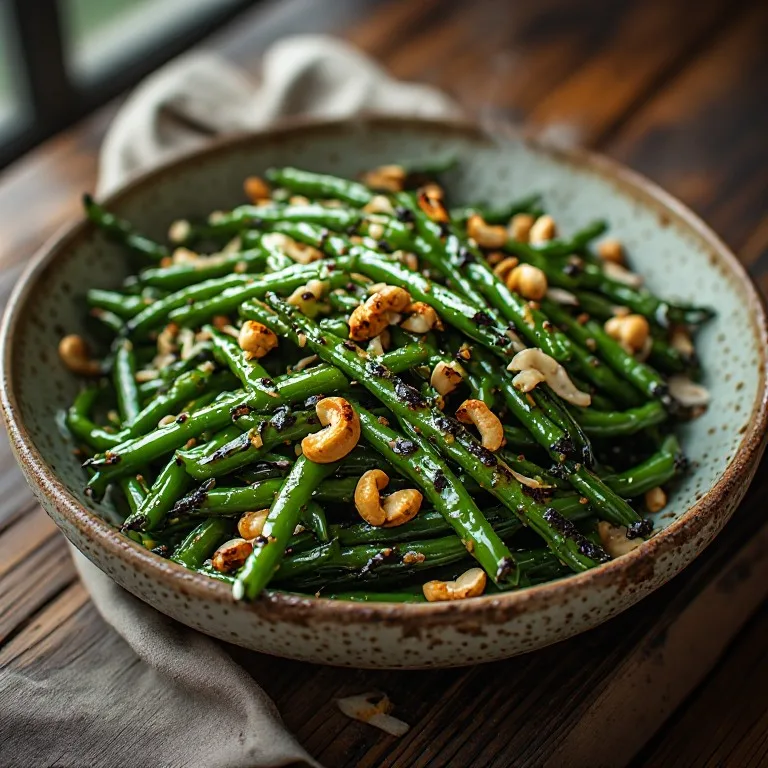
Girl & the Goat's Magic Beans are the green bean dish that made vegetable sides famous. The secret is a three-ingredient umami base — fish sauce, tamari, and fresh lemon — poured over blanched-then-seared beans with crispy shallots, cashews, and an aioli that ties it together. Here's Stephanie Izard's method, explained.

Easy Prep: 20 min Cook: 10 min Total: 30 min4 as a side servings ~$4.50/serving
Prep20 min
Cook10 min
Total30 min
Servings
4
At home~$4.50/serving
vs
Restaurant~$20.25/serving
You save ~78%

The Story Behind the Recipe

Stephanie Izard opened Girl & the Goat on July 12, 2010, on West Randolph Street in Chicago's West Loop — a loud, 130-seat room with an open kitchen and a constantly rotating menu of globally influenced small plates. She had won Top Chef Season 4 in 2008, the first woman ever to do so, was named a Food & Wine Best New Chef in 2010, and took the James Beard Award for Best Chef: Great Lakes in 2013. Within months of opening, a table required booking weeks out — a situation that has not changed much in the years since. The sautéed green beans, which regulars and food writers started calling the Magic Beans, became the dish nearly every table orders. The sauce is what makes them. Izard builds a vinaigrette on fish sauce, tamari, and fresh lemon juice, emulsified with Dijon and spiked with sriracha and raw garlic, then folds some of that same vinaigrette into mayonnaise for the aioli drizzle. It is aggressively savory and bright at once, and it clings to blanched-then-seared beans in a way a plain vinegar dressing never could. A shared side runs about $14 at the restaurant; at home, with a bottle of good fish sauce and a bag of cashews, the whole dish costs roughly $8 for four. The one thing it cannot do without is real fish sauce — the fermented-anchovy depth is load-bearing, and soy sauce or Worcestershire will not stand in for it.

Nutrition Facts

Per serving (4 as a side servings)
Calories345
Total Fat28g
Total Carbs16g
Dietary Fiber4g
Sugars5g
Protein6g
Sodium820mg

* Estimated values based on standard recipe preparation. Actual values may vary.

Ingredients

  • For the fish sauce vinaigrette (makes more than you need — keeps 5 days refrigerated)
  • For the aioli
  • For the green beans

Instructions

💡
Pro tip: This recipe tastes even better the next day. The flavors need time to meld together in the fridge.
❄️
Storage: Keeps in an airtight container in the fridge for up to 2 weeks. Freezer-friendly for up to 3 months.
🎃 Free Halloween cookbook — download now The Copycat Halloween Cookbook A ready-made, photo-illustrated PDF of our best halloween copycat recipes — free to download, no building required. Pay what you want to support if you love it.

Free PDF — instant download. We'll also send new seasonal copycat recipes now and then; unsubscribe anytime. Or just download it →

Copycat Girl & the Goat Magic Beans

The most ordered vegetable side at a Chicago restaurant that has been fully booked since opening day. Stephanie Izard’s Magic Beans — officially the sautéed green beans at Girl & the Goat — converted a generation of green bean skeptics with a single concept: treat the vegetable like a savory meat dish.

The recipe is not complicated. But the three decisions that most copycat versions get wrong are exactly the ones that make or break it.

The Three Things That Actually Make This Dish

1. Blanch first, sear second — in that order.

Most people who try to make this at home either sauté the raw beans until cooked through (which takes too long and makes them limp) or undercook them trying to get some color (which leaves them raw in the center). The correct technique is two-stage: blanch in heavily salted boiling water for 2 to 3 minutes until al dente and bright green, shock in ice water to stop cooking and set color, then dry them completely. The high-heat sauté at the end only takes 1 minute — it just needs to sear the surface, heat the beans through, and coat them in the vinaigrette. Dry beans are essential: any surface moisture causes steaming instead of searing.

2. The vinaigrette is a three-part umami stack, not a simple dressing.

Fish sauce (fermented anchovy — glutamates, salinity, depth) + tamari (rounder and less sharp than regular soy sauce, adds a second umami layer) + fresh lemon juice (citric acid brightness that cuts through both) form the base of a vinaigrette that tastes like the beans are seasoned from the inside. The Dijon acts as an emulsifier and adds just enough mustard edge. The Sriracha is a background warmth — you won’t identify it as hot pepper, but the dish would taste flat without it. Do not swap tamari for standard soy sauce and do not use bottled lemon juice. Both substitutions produce a noticeably sharper, thinner result.

3. The aioli is not optional and is not just plain mayo.

The aioli is ⅓ cup of the same vinaigrette whisked into 1 cup of mayonnaise — so it delivers the same fish sauce–tamari–lemon flavors in a creamy form. Its function is contrast: the aggressively seasoned hot beans against cool pools of rich aioli at the bottom of the dish. Recipes that leave it out or substitute plain mayo are missing the element that makes this a plate people talk about.

About Girl & the Goat

Stephanie Izard opened Girl & the Goat in 2010 on West Randolph Street in Chicago’s West Loop, two years after winning Top Chef Season 4 — the first woman to win the competition. The restaurant has been fully booked since its first week and has operated continuously since, requiring reservations weeks in advance. Izard won the James Beard Award for Best Chef: Great Lakes in 2013.

The menu runs as bold small plates with global influences — a dedicated goat section (confit belly, liver mousse, goat empanadas), wood oven–roasted whole branzino, crispy short ribs — but the vegetable sides became as searched for as any protein. The Magic Beans, on the menu since the early years, became the dish people describe as converting them to green bean believers.

The restaurant now simply lists them as Sautéed Green Beans, but anyone who has eaten there still calls them Magic Beans.

The Fish Sauce Vinaigrette Makes More Than You Need

This is intentional. The vinaigrette keeps for 5 days refrigerated and has strong secondary uses: as a dipping sauce for grilled chicken or shrimp, as a dressing for grain bowls or cucumber salads, or as a marinade for pork or tofu. Make the full batch and find uses for the rest.

The aioli similarly keeps for up to a week in the refrigerator and is excellent as a sandwich spread, a dip for fried food, or a dressing for cold roasted vegetables.

What This Dish Is and Is Not

This is a restaurant-style vegetable side dish that tastes emphatically savory — not a health-food side, not a light salad. The fish sauce and tamari make it genuinely salty, the cashews add fat and crunch, and the aioli adds richness. It works as a side dish at a dinner party, as part of a larger spread of small plates, or as a weeknight side dish when you want the vegetables to hold up alongside something bold.

It does not work well as a dish that sits. Serve it immediately.
🥗

Make It Healthier

Love Girl & the Goat Magic Beans (The Famous Chicago Green Beans, Made at Home) but want a lighter version? Try these simple swaps:

  • ✓Halve the aioli or skip it entirely — the vinaigrette already seasons the beans fully, and this removes the single biggest source of calories and fat (roughly 120 fewer calories and 13g less fat per serving).
  • ✓Swap half the mayonnaise in the aioli for plain Greek yogurt (whisked with the vinaigrette) — you keep the creamy drizzle at well under half the fat.
  • ✓Cut the cashews to 2–3 tablespoons instead of ½ cup — you still register the crunch for about 60 fewer calories per serving.
  • ✓Use a lower-sodium fish sauce like Red Boat and low-sodium tamari — the dish is salty by design, but this trims a few hundred milligrams of sodium per serving without dulling the flavor.

Frequently Asked Questions

Why is the blanching step necessary? Can I just sauté the raw beans?

Blanching is the single most important technique decision in this recipe, and skipping it is the most common reason home versions fall flat. Raw green beans sautéed over high heat without blanching turn out in one of two ways: either undercooked and squeaky in the center while the outside has some color, or fully cooked but limp and oil-logged because you had to keep them in the pan long enough to cook through. Blanching for 2 to 3 minutes in heavily salted boiling water fully cooks the bean through to an al dente snap, while the ice bath stops the cooking precisely at that point and sets the bright green color. When these pre-cooked beans hit the high-heat skillet with the shallots, they only need 1 minute — just enough to sear the outside slightly, absorb the vinaigrette, and heat through. The result is a bean that is genuinely crisp-tender with a slight char on the exterior, not squeaky-raw and not limp. Drying the beans thoroughly after the ice bath is equally critical: water on the beans when they hit the hot pan causes steaming rather than searing, and it dilutes the vinaigrette when you add it.

What is tamari and why does this recipe use it instead of regular soy sauce?

Tamari is a Japanese soy sauce made with little to no wheat — most brands are gluten-free, which is why it is sometimes marketed that way. The functional reason this recipe uses tamari rather than standard soy sauce is flavor depth: tamari is thicker, darker, and less sharply salty than Chinese or all-purpose soy sauce. It has a rounder, more complex umami quality with less of the thin metallic edge that regular soy sauce can contribute when used in vinaigrettes. In this recipe, the tamari sits alongside fish sauce and lemon juice in the vinaigrette — the fish sauce delivers strong glutamate-based umami and salinity, the tamari adds a second layer of savory depth, and the lemon juice cuts through both. Substituting regular soy sauce will produce a serviceable vinaigrette but a noticeably sharper, saltier one. If you cannot find tamari, use low-sodium soy sauce and reduce the quantity by about 20 percent.

The aioli seems like just flavored mayo. Is it really worth making?

The aioli is what separates Girl & the Goat's version from the copycat recipes that treat the vinaigrette as the only sauce. The aioli is built from the same vinaigrette base — ⅓ cup of the dressing whisked into 1 cup of mayonnaise — so it delivers the same fish sauce, tamari, lemon, and Sriracha flavors but in a rich, creamy form. When you drizzle it over the finished beans, it does two things: it adds creaminess that rounds out the high-salt, high-acid punch of the vinaigrette-dressed beans, and it creates contrast — the crispy beans, the chewy cashews, and then pools of cool creamy aioli at the bottom of the dish that you catch with each bite. Leaving it out is technically simpler but produces a dish that is sharply seasoned all the way through with no variation. The aioli is also the component that produces the sauce at the bottom of the serving dish that everyone at the table ends up scooping up with bread.

Can I prepare any part of this ahead of time?

Yes — both the vinaigrette and the aioli hold well in the refrigerator for up to 5 days in sealed containers. You can also blanch and shock the green beans up to a day ahead; store them dried and uncovered on a sheet pan in the refrigerator so they stay dry (covering them traps condensation). What cannot be done ahead is the final sauté — the beans need to be seared hot and served immediately. A dish left to sit after sautéing will become limp as the residual steam continues to cook the beans and the aioli warms and loses its contrast with the hot beans. This is one of those dishes where the prep is advance-friendly but the finish is 10 minutes before the table.

My cashews are getting soggy before I finish the dish. What am I doing wrong?

Two things cause soggy cashews: adding them too early, or not using truly roasted dry-roasted nuts. Add the cashews in the last 30 seconds of sautéing — they are already roasted, they only need to warm through and pick up a little of the vinaigrette. Any longer in the pan and they soften. The other common issue is using raw cashews (they have no crunch and absorb oil readily) or cashews roasted in oil (they get greasy and soft quickly). Use dry-roasted unsalted cashews — the kind roasted without oil — which maintain their crunch longest. Breaking or roughly chopping them before adding (rather than adding whole or very finely chopped) gives pieces that are large enough to register as crunchy but small enough to fit on a fork with the beans.

Why is Girl & the Goat's dish called Magic Beans?

Stephanie Izard named the dish Magic Beans in the early years of the restaurant, referencing how reliably the dish converted people who claimed to dislike green beans. The combination of fish sauce, tamari, and aioli produces a vegetable side that tastes nothing like the plain green beans most people grew up with — the umami depth makes them taste more like a savory meat-adjacent dish. The name stuck through years of the restaurant's history and became the shorthand most food media used to refer to the dish. The restaurant now simply calls them Sautéed Green Beans on the menu, but they are still searched as Magic Beans by anyone who had them and is trying to find the recipe.

What is Girl & the Goat and who is Stephanie Izard?

Girl & the Goat is Stephanie Izard's flagship restaurant, opened in 2010 on West Randolph Street in Chicago's West Loop — the dense stretch of restaurants often called Chicago's Restaurant Row. Izard was the first woman to win Top Chef (Season 4, 2008), and opened Girl & the Goat with her winnings and a business partner two years later. The restaurant has run near-capacity since opening day and still requires reservations booked weeks in advance. Izard won the James Beard Award for Best Chef: Great Lakes in 2013. The restaurant's approach is bold small plates with global flavors — the menu includes a dedicated goat section, whole roasted branzino, wood-oven pig face, and the vegetable sides that have become as famous as any protein on the menu. Izard also operates Little Goat Diner (a casual American diner in the same building), Duck Duck Goat (Chinese-influenced), and a Los Angeles location of Girl & the Goat.

Can I substitute anything for the fish sauce?

Fish sauce is the backbone of the vinaigrette and is not well-substituted without changing the dish's character. It delivers a layered, briny umami from fermented anchovy that has no direct equivalent. The closest vegan substitute is a combination of soy sauce (or tamari) plus a small amount of nori powder or seaweed paste, but the result is a blunter, less complex umami. Worcestershire sauce is sometimes suggested as a substitute; it is not equivalent — it contains anchovies too, but also tamarind, molasses, and other ingredients that shift the flavor profile significantly. If you need to avoid fish sauce for dietary reasons, increase the tamari to 3½ tablespoons and add ½ teaspoon of white miso whisked into the vinaigrette — it is not the same dish, but it is the closest approximation of that umami depth.

Love this recipe? Share it!

Free PDF: our 12 most-wanted copycat recipes — instant download.

Made it? Buy us a coffee

Every recipe here is free, with no paywalls. If this one was a hit at your table, a small tip keeps new copycats coming.

$

Girl & the Goat is a trademark of its owner, used here only to describe the dish this recipe recreates. This is an independent copycat written in our own words — Copycat Spices is not affiliated with, endorsed by or sponsored by Girl & the Goat.

Ratings & Reviews

—
No ratings yet

Rate this recipe

Click a star to rate

Leave a Review

0/500

CS

Copycat Spices Editorial

Researched + fact-checked. Every recipe on Copycat Spices is built from published sources — official ingredient lists, brand-published recipes, interviews and food-science references — and fact-checked before it goes live, then written as clear, step-by-step instructions for home cooks of all skill levels.

Learn more about our mission →