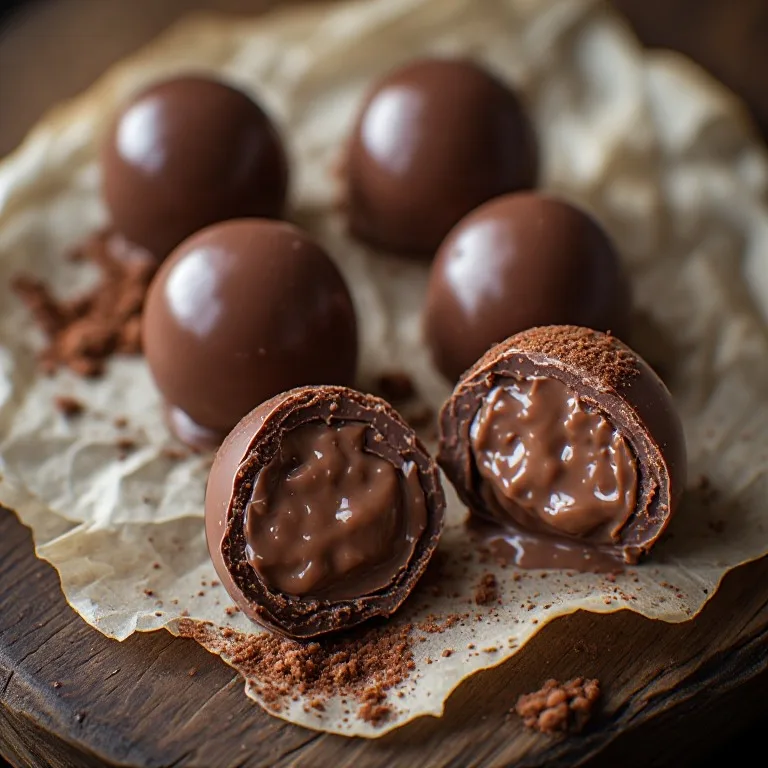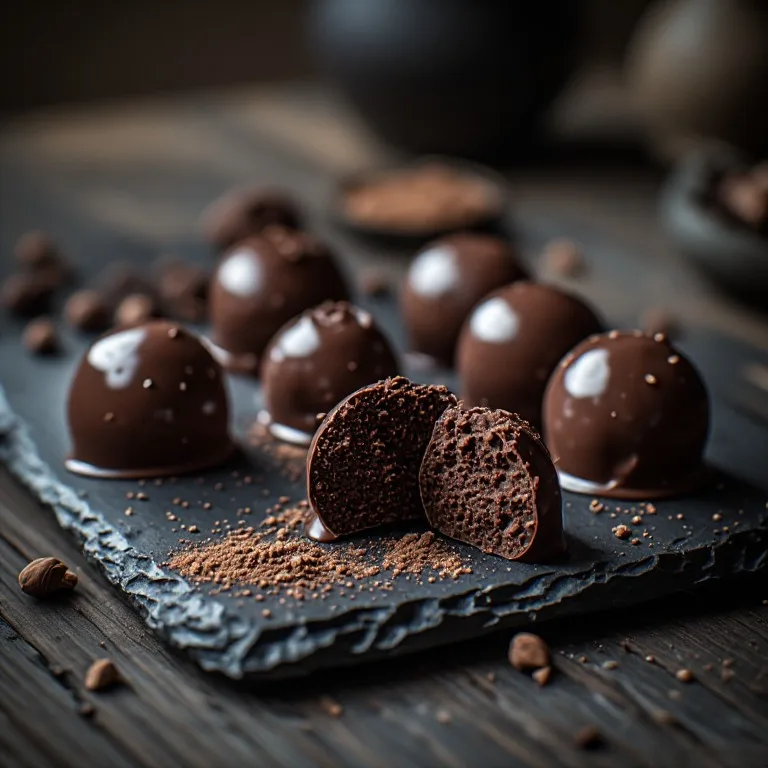


Godiva Dark Chocolate Truffles are the centerpiece of the Gold Collection — a smooth, dense dark chocolate ganache center in a thin dark chocolate shell. An 18-piece Gold Ballotin retails for about $35–$44 at US retailers, roughly $2.25 per truffle. This batch of 24 costs about $8–$10 in ingredients, around 40 cents each.
Godiva was founded in Brussels in 1926 by Joseph Draps, who created the signature gold ballotin box and earned a Belgian Royal Warrant by 1968. The brand has manufactured its American chocolates in Reading, Pennsylvania since the early US years.
Why a 2:1 Ganache Ratio
The chocolate-to-cream ratio is what separates a Godiva-style truffle from a softer one. Lindt Lindor uses a near 1:1 ratio (equal parts chocolate and cream) to create a center that melts instantly at body temperature. Godiva’s centers are firm: you bite in and get a clean break, then the ganache releases its flavor as it warms in your mouth. That firmness comes from a 2:1 ratio — 2 parts dark chocolate to 1 part cream by weight.
At that ratio, the ganache sets firm enough to scoop, roll, and hold its round shape without deforming. The optional tablespoon of cognac or rum doesn’t add alcohol flavor — it deepens the chocolate in the same way a small amount of espresso does, making the 60–70% cacao taste more complex.
The Process
Ganache (10 min active, 2–3 hrs passive): Heat cream to a simmer, pour over chocolate, rest 2 minutes, stir smooth from the center out. Add butter, cognac, and salt. Chill in a shallow dish with plastic wrap pressed to the surface until firm — 2 to 3 hours.
Scoop and freeze (10 min active, 1 hr passive): Scoop into 1-inch balls, roll smooth. Refrigerate 30 minutes, then freeze 30 minutes until solid. Frozen centers hold their shape during dipping.
Dip and set (15 min active, 30–45 min passive): Melt the shell chocolate with oil until barely warm. Dip each frozen ball using two forks, let excess drip, set on parchment at room temperature — not the refrigerator — for a glossy, snapping shell.
Common Mistakes to Avoid
Four problems account for nearly every failed batch of homemade truffles:
- Grainy ganache. Using chocolate chips instead of bar chocolate. Chips contain stabilizers (lecithin, sometimes added starch) that resist melting into a smooth emulsion. Use a chopped bar or baking callets.
- Greasy, split ganache. The cream was boiled rather than brought to a bare simmer, or the ganache was over-stirred while too warm. Heat the cream only until small bubbles form at the edges, and stir gently from the center outward.
- A cracked shell. The centers weren’t fully frozen, or the coating chocolate was too hot. A warm center sweats under hot chocolate and the shell cracks as it contracts. Freeze the centers solid and let the melted chocolate cool until it’s barely warm to the touch.
- A dull, matte shell. The dipped truffles were set in the refrigerator. Cold makes the shell contract fast and lose its shine. Set them at room temperature (65–70°F) for the glossy finish of a store truffle.
Gifting
Arrange finished truffles in mini cupcake liners inside a gold or black gift box. Store at cool room temperature (under 68°F) for up to 1 week, or refrigerated up to 3 weeks. Let them warm for 15 minutes before serving. A batch of 24 fits comfortably in a standard 5×7 gift box and rivals the store presentation — for a fraction of the price.
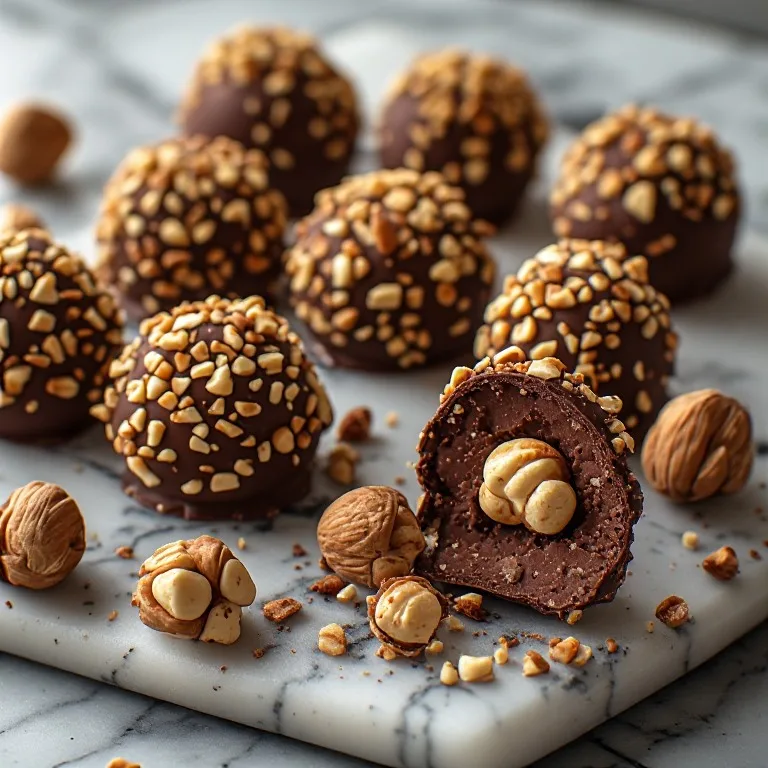
For a flavor variation, replace the cognac with 1 teaspoon raspberry extract in the ganache and roll the finished truffles in freeze-dried raspberry powder before the shell sets. This is the closest home version of Godiva’s dark chocolate raspberry truffle, one of the most searched pieces in the Gold Collection. See also: Lindt Lindor Milk Chocolate Truffles for a softer, instantly-melting center, and Homemade Ferrero Rocher for a nut-studded variation on the premium gift-box chocolate.