


Pin It

Guy Fieri's Donkey Sauce

Guy Fieri's Donkey Sauce
Jump to Recipe
Prep 5 min Cook 50 min Serves 10 (about 2 tablespoons each)
Quick answer: Roast a whole head of garlic: cut off the top quarter to expose the cloves, drizzle with olive oil, wrap tightly in foil, and roast at 400°F for 45–55 minutes until the cloves are golden brown, completely soft, and beginning to caramelize. Squeeze the roasted cloves into a bowl and mash until smooth — you need ¼ cup of paste. Stir together 1 cup prepared mayonnaise, ¼ cup roasted garlic paste, 1 tsp yellow mustard, 4 dashes Worcestershire sauce, and ¼ tsp kosher salt. Mix until combined. Season with black pepper. Use immediately or refrigerate up to 1 week.

Shop the tools

Gear matched to this recipe. These are Amazon affiliate links — we may earn a small commission if you buy, at no extra cost to you.

As an Amazon Associate, Copycat Spices earns from qualifying purchases. Product images are generic illustrations, not the exact item listed.

Guy Fieri's Donkey Sauce

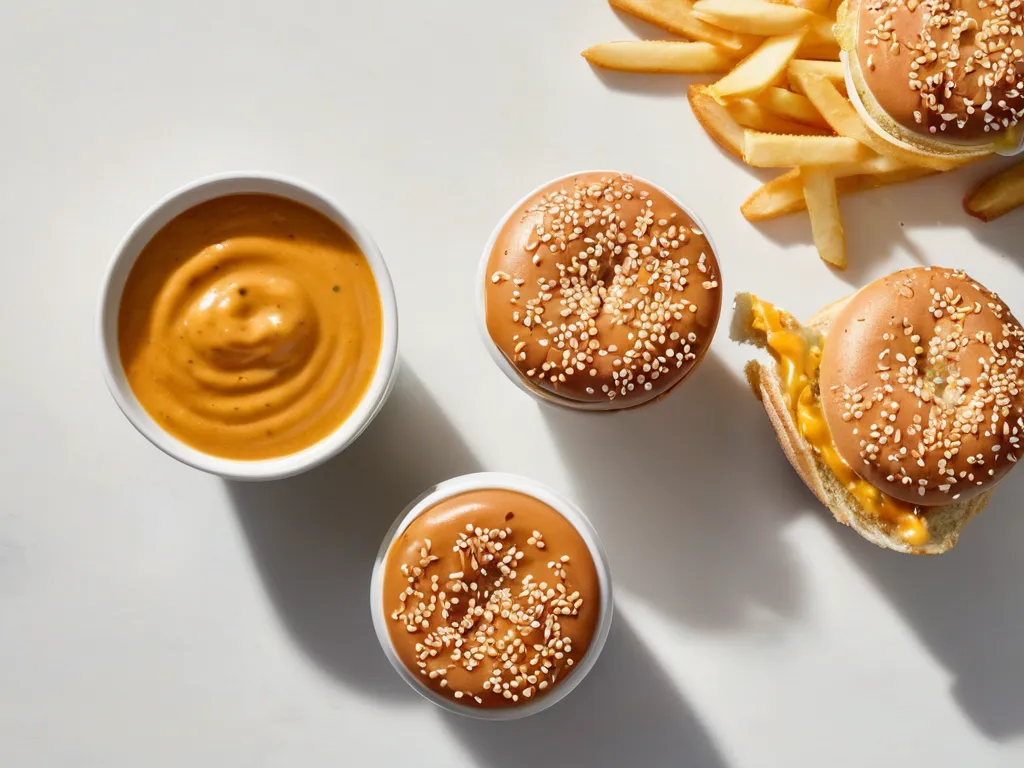
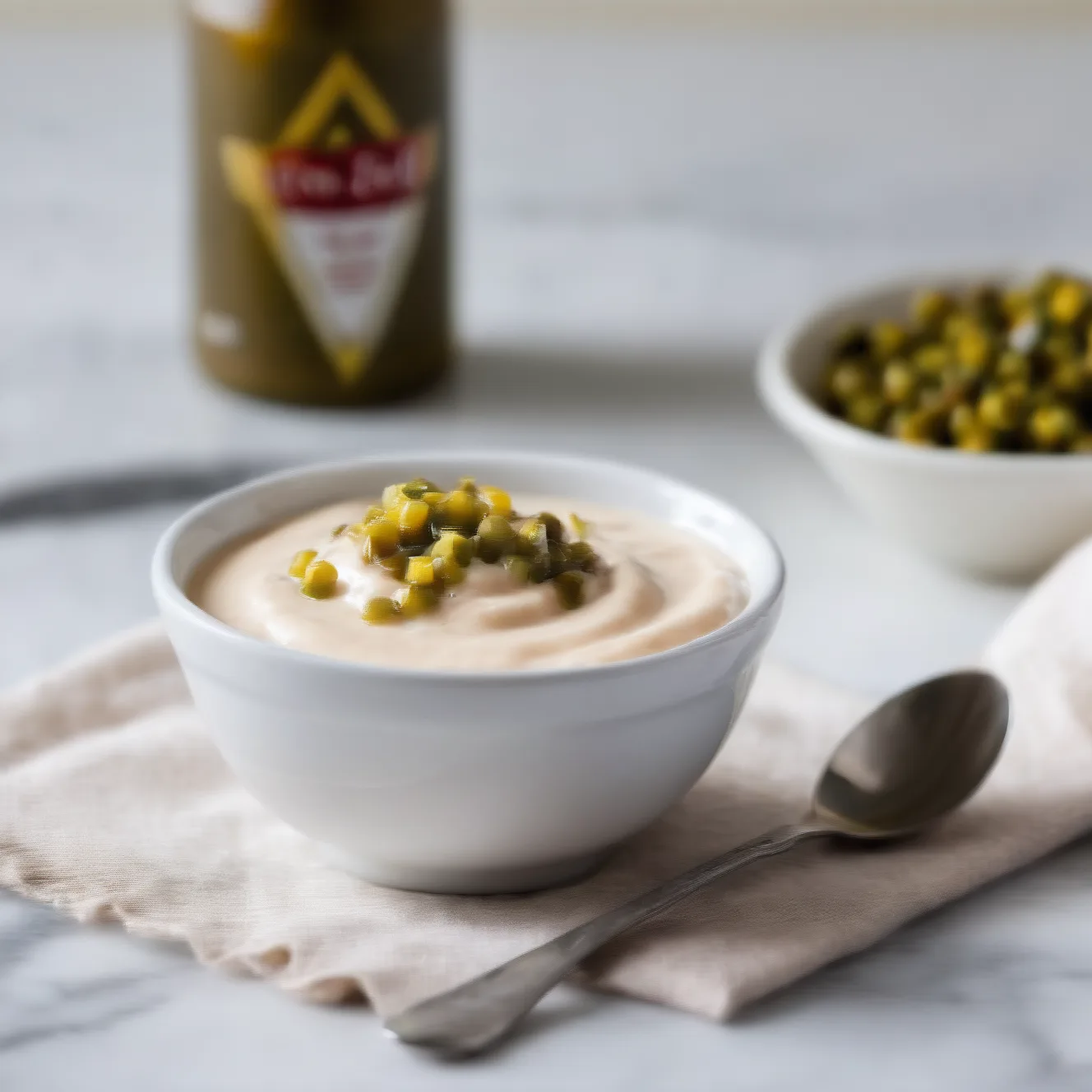
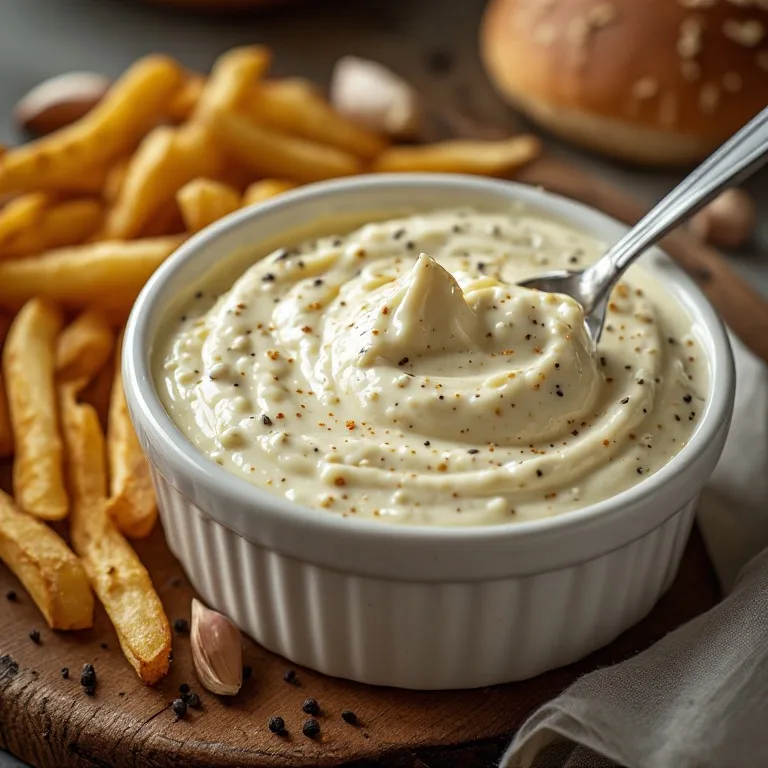
Guy Fieri's Donkey Sauce is his signature burger spread: roasted garlic mashed into prepared mayo with yellow mustard and a few dashes of Worcestershire. The official Food Network recipe uses 1 cup mayo, ¼ cup roasted garlic, 1 tsp yellow mustard, 4 dashes Worcestershire, and ¼ tsp kosher salt. Roasting the garlic — not skipping it, not using raw — is the only step that matters.

Easy Prep: 5 min Cook: 50 min Total: 55 min10 (about 2 tablespoons each) servings ~$3.85/serving
Prep5 min
Cook50 min
Total55 min
Servings
10
At home~$3.85/serving
vs
Restaurant~$17.32/serving
You save ~78%

The Story Behind the Recipe

Guy Fieri won The Next Food Network Star in 2006 and debuted Diners, Drive-Ins and Dives in 2007, turning his way-of-eating — big, messy, unapologetically American food — into one of cable's most-watched franchises. Donkey Sauce predates the TV fame; he'd been making a roasted-garlic mayo spread at his restaurants well before the network picked him up. The name has never been officially pinned down. Food Network's own profile traces it to Fieri telling a fellow cook you have to really slather the stuff on "or else you're a jackass"; a jackass is a donkey, and the name stuck. In a 2017 interview, Fieri described the sauce itself as essentially aioli: roasted garlic beaten into mayonnaise. The yellow mustard and Worcestershire are the two additions that separate his version from a straight garlic aioli.

The sauce became a national punchline — and an obsession — when Guy's American Kitchen & Bar opened in Times Square in October 2012. Restaurant critic Pete Wells wrote the New York Times review entirely in sarcastic questions ("Why is one of the few things on your menu that can be eaten without fork or spoon, the burger, so ... wet?"), a format so unusual it went viral. The sauce kept coming up in the review and in the coverage that followed. Guy's American Kitchen & Bar closed in December 2017, but Donkey Sauce outlasted it. The Food Network recipe — 1 cup mayo, ¼ cup roasted garlic, 1 tsp yellow mustard, 4 dashes Worcestershire, ¼ tsp salt — is the canonical version and takes about 5 minutes to make once the garlic is roasted.

Nutrition Facts

Per serving (10 (about 2 tablespoons each) servings)
Calories155
Total Fat17g
Total Carbs2g
Dietary Fiber0g
Sugars1g
Protein0g
Sodium185mg

* Estimated values based on standard recipe preparation. Actual values may vary.

Ingredients

  • For the roasted garlic (do this first — 50 min ahead)
  • For the Donkey Sauce

Instructions

💡
Pro tip: This recipe tastes even better the next day. The flavors need time to meld together in the fridge.
❄️
Storage: Keeps in an airtight container in the fridge for up to 2 weeks. Freezer-friendly for up to 3 months.
🎃 Free Halloween cookbook — download now The Copycat Halloween Cookbook A ready-made, photo-illustrated PDF of our best halloween copycat recipes — free to download, no building required. Pay what you want to support if you love it.

Free PDF — instant download. We'll also send new seasonal copycat recipes now and then; unsubscribe anytime. Or just download it →

Guy Fieri’s Donkey Sauce is roasted garlic mayo, and the name is better than the description suggests.

The official Food Network recipe is five ingredients: 1 cup mayo, ¼ cup roasted garlic paste, 1 tsp yellow mustard, 4 dashes Worcestershire sauce, and ¼ tsp kosher salt. That’s it. In a 2017 interview, Fieri described it himself as “just aioli.” The two things that make it taste like Donkey Sauce and not like garlic mayo are the roasted (not raw) garlic — which transforms pungent rawness into a sweet, caramelized paste — and the yellow mustard rather than Dijon, which adds a mellow, hot-dog-stand tang without sharpness.

The sauce takes 5 minutes to mix once the garlic is roasted. The roasting takes about 50 minutes, but it’s entirely hands-off — wrap the head in foil, put it in a 400°F oven, and do something else. It also stores well: roasted garlic keeps in the fridge for two weeks, so you can roast ahead and assemble on demand.

Why Roasting the Garlic Matters

Raw garlic’s sharpness comes from allicin — a compound that forms when the cell walls are broken (when you cut or crush a clove). Roasting at high heat deactivates the enzyme that creates allicin and simultaneously caramelizes the sugars in the garlic, shifting the flavor from harsh and pungent to sweet, mellow, and deeply savory.

Donkey Sauce made with raw garlic (or garlic powder) tastes like garlic mayo: fine, but sharp and one-dimensional. Made with roasted garlic, it’s richer, more complex, and noticeably sweeter. The bitterness disappears. This is the single step that cannot be skipped or substituted.

Mustard: Yellow, Not Dijon

Fieri’s published recipe specifies regular yellow mustard — the bright, mild, hot-dog-stand mustard. Yellow mustard is mostly water, vinegar, and mustard seed with added turmeric; it’s mild, slightly tangy, and low in volatile heat compounds. Dijon is sharper, more pungent, and more acidic. In a sauce where the primary flavor is the roasted garlic, Dijon competes; yellow mustard supports.

Some versions you’ll find online swap in Dijon. The result is a slightly more sophisticated sauce that tastes less like the one at Guy’s restaurants. If you prefer it that way, go ahead — but use yellow mustard if you’re trying to make Fieri’s version.

What the Sauce Goes On

The original home was Guy’s American Kitchen & Bar, where it appeared on nearly every burger on the menu. At Fieri’s Flavortown Kitchen virtual restaurant and his Guy Fieri’s Flavortown Kitchen locations, it remains the house burger spread.

Beyond burgers: sandwiches (it’s excellent on a Reuben or a chicken club), as a dip for fries or onion rings, smeared on a grilled flatbread, or as a vegetable dip. The roasted garlic flavor is mellow enough that it doesn’t overwhelm lighter ingredients the way a raw-garlic aioli would.

How Donkey Sauce Compares to Other Burger Sauces

Most famous burger sauces are built on the same mayonnaise base but take it in different directions. Donkey Sauce is the outlier: it’s the only one of the big four that’s garlic-forward rather than a sweet, ketchup-and-relish Thousand Island riff.

SauceBaseDefining flavorKey additions
Guy Fieri’s Donkey SauceMayoRoasted garlic, savoryYellow mustard, Worcestershire
Shake Shack ShackSauceMayo + ketchupTangy, pickle-yMustard, pickle brine, cayenne
McDonald’s Big Mac sauceMayoSweet-tangySweet relish, mustard, vinegar, onion, paprika
In-N-Out spreadMayo + ketchupSweetSweet relish, sugar

If you’ve only ever had the ketchup-based spreads, Donkey Sauce tastes noticeably different — there’s no sweetness and no ketchup tang, just mellow roasted garlic. That’s why it reads as a “fancy” burger sauce despite being the simplest of the four to make.

Make-Ahead and Storage

The sauce keeps well. Store in a sealed container in the refrigerator for up to 1 week. For longer shelf life, roast the garlic head up to 2 weeks ahead (keep it in a small jar covered with olive oil in the fridge) and mix the sauce within a few days of when you need it.

The sauce does not freeze — the mayonnaise breaks when thawed.

🥗

Make It Healthier

Love Guy Fieri's Donkey Sauce but want a lighter version? Try these simple swaps:

  • ✓Swap in avocado-oil mayo or light mayo (50–60 cal/tbsp vs the usual 90) — this cuts the calories per serving from ~155 to ~80–90 without changing the garlic flavor or the spreadability. Light mayo also has a slightly softer texture that blends more smoothly with the roasted garlic paste.
  • ✓Roast a double batch of garlic heads while the oven is on: roasted garlic keeps in the fridge for up to 2 weeks (whole heads, squeezed into a small jar and covered with olive oil) and is endlessly useful — stir it into mashed potatoes, smear it on toast, blend it into hummus. One 55-minute roast gives you garlic for multiple uses.
  • ✓Add 1 teaspoon of lemon juice just before serving: it brightens the sauce without changing the flavor profile, makes the garlic taste fresher, and slightly extends refrigerator life (acid slows oxidation). This is a minor improvement, not a transformation — the roasted garlic is the flavor here.
  • ✓Use as a vegetable dip instead of a burger spread: the garlic flavor is mellow enough (roasting removes the harsh allicin bite) that this works well with raw carrots, celery, or cucumber — it's lower-calorie than ranch and higher in umami from the Worcestershire.

Frequently Asked Questions

What exactly is Guy Fieri's Donkey Sauce?

It's a roasted garlic aioli: prepared mayonnaise mixed with mashed roasted garlic, yellow mustard, Worcestershire sauce, and kosher salt. Guy Fieri himself described it in a 2017 interview as 'just aioli.' The Food Network's official recipe lists 1 cup mayo, ¼ cup roasted garlic, 1 tsp yellow mustard, 4 dashes Worcestershire, and ¼ tsp kosher salt. What makes it different from standard garlic mayo is the roasted (not raw) garlic — roasting turns sharp, harsh raw allicin into sweet, caramelized, almost nutty paste — and the yellow mustard rather than Dijon.

Why yellow mustard and not Dijon?

Fieri's published recipe specifically calls for regular yellow mustard — the kind that goes on hot dogs, not the French-style Dijon. Yellow mustard is milder, less vinegary, and more neutral-flavored; it adds a faint tang without competing with the roasted garlic. Dijon has a sharper, more assertive flavor that can dominate a garlic mayo. You can use Dijon if that's what you prefer, but the official recipe is yellow. Some copycat versions use Dijon and call the result slightly more grown-up; some prefer the original.

How much roasted garlic is ¼ cup?

One medium head of garlic typically yields about 3–4 tablespoons (just under ¼ cup) of squeezed-out, mashed roasted garlic. For exactly ¼ cup, roast a medium-large head and mash the cloves thoroughly (no large chunks). The garlic shrinks substantially during roasting — a head that looks large raw produces surprisingly little paste. If you come up slightly short, a pinch of garlic powder won't be detectable at the small amount you'd be adding.

Can I use garlic powder instead of roasting a whole head?

Technically yes, but the result tastes meaningfully different. Raw garlic and garlic powder are both sharp and pungent; roasted garlic is sweet, mellow, and nutty. The roasting is what makes Donkey Sauce taste the way it does at Guy's restaurants — it has no harshness, no raw bite, just a deep savory sweetness. If you're in a hurry, roasting the garlic 2–3 days ahead and keeping it in the fridge is a better solution than skipping the step.

How long does Donkey Sauce keep?

Up to 1 week in the refrigerator in a sealed container. The sauce keeps for as long as the mayo you used stays fresh (check the use-by date). There is no fresh garlic or raw egg in this recipe, so refrigerator life is entirely about the mayo. It does not freeze well — the mayo breaks. Make it within a week of needing it, or roast the garlic ahead and assemble the day of.

Where does the name Donkey Sauce come from?

The name has never been officially explained, and Fieri has told it more than one way. Food Network's own write-up traces it to Fieri telling a fellow cook that you have to really slather the sauce on a burger 'or else you're a jackass' — and a jackass is a donkey. It became nationally known after appearing on the menu at Guy's American Kitchen & Bar in Times Square, which opened in October 2012 and closed in December 2017.

What do you put Donkey Sauce on?

Burgers are the primary use — Fieri serves it on most of the burgers at his Flavortown Kitchen restaurants and it appeared on every burger at Guy's American Kitchen & Bar. It also works well on sandwiches (especially Reubens, chicken sandwiches, and BLTs), as a dipping sauce for fries or onion rings, as a spread on grilled flatbreads, or as a component in a dipping platter with crudités. The roasted garlic flavor is mellow enough that it doesn't overwhelm delicate ingredients.

Love this recipe? Share it!

Free PDF: our 12 most-wanted copycat recipes — instant download.

Made it? Buy us a coffee

Every recipe here is free, with no paywalls. If this one was a hit at your table, a small tip keeps new copycats coming.

$

Ratings & Reviews

—
No ratings yet

Rate this recipe

Click a star to rate

Leave a Review

0/500

CS

Copycat Spices Editorial

Researched + fact-checked. Every recipe on Copycat Spices is built from published sources — official ingredient lists, brand-published recipes, interviews and food-science references — and fact-checked before it goes live, then written as clear, step-by-step instructions for home cooks of all skill levels.

Learn more about our mission →