
Pin It

Hershey's "Perfectly Chocolate" Chocolate Cake

Hershey's "Perfectly Chocolate" Chocolate Cake
Jump to Recipe
Prep 20 min Cook 35 min Serves 12 slices
Quick answer: Hershey's Perfectly Chocolate Chocolate Cake: whisk together 2 cups sugar, 1¾ cups flour, ¾ cup Hershey's Natural Cocoa, 1½ tsp baking powder, 1½ tsp baking soda, and 1 tsp salt. Add 2 eggs, 1 cup milk, ½ cup vegetable oil, and 2 tsp vanilla; beat 2 minutes. Stir in 1 cup boiling water — the batter will be very thin, which is correct. Divide between two greased 9-inch round pans and bake at 350°F for 30–35 minutes. Cool completely, then frost with Hershey's Chocolate Frosting: melt ½ cup butter, stir in ⅔ cup cocoa, then beat in 3 cups powdered sugar, ⅓ cup milk, and 1 tsp vanilla. The boiling water is the one step that makes this different from every other chocolate cake recipe.

Shop the tools

Gear matched to this recipe. These are Amazon affiliate links — we may earn a small commission if you buy, at no extra cost to you.

As an Amazon Associate, Copycat Spices earns from qualifying purchases. Product images are generic illustrations, not the exact item listed.

Hershey's "Perfectly Chocolate" Chocolate Cake

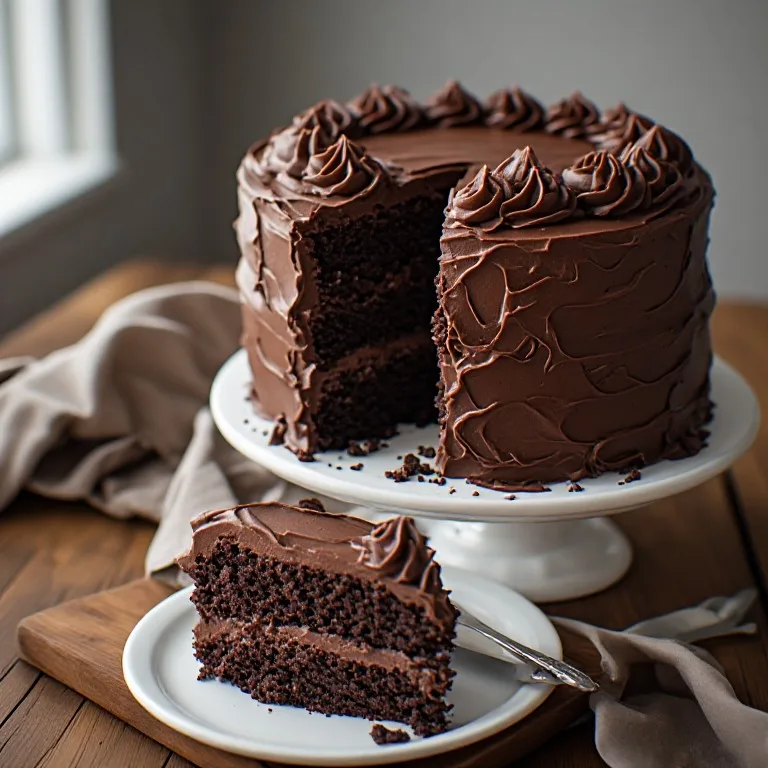
Hershey's Perfectly Chocolate Chocolate Cake made from scratch — the iconic back-of-the-can recipe with one secret: a full cup of boiling water that blooms the cocoa and makes a shockingly thin batter that bakes into the most tender, fudgy chocolate layer cake you've had.

Easy Prep: 20 min Cook: 35 min Total: 55 min12 slices servings ~$4.50/serving
Prep20 min
Cook35 min
Total55 min
Servings
12
At home~$4.50/serving
vs
Restaurant~$20.25/serving
You save ~78%

The Story Behind the Recipe

Milton S. Hershey was born in 1857 in rural Pennsylvania, and by 1886 he owned the Lancaster Caramel Company, one of the most successful candy businesses in the country. After watching a German chocolate-making demonstration at the 1893 World's Columbian Exposition in Chicago, he became convinced that milk chocolate — not caramels — was the future. He sold the Lancaster business in 1900 for $1 million, borrowed heavily against the proceeds, and built a factory in Derry Church, Pennsylvania, in 1903. He renamed the town Hershey in 1906. The company he left behind became America's largest chocolate manufacturer. The Hershey Company today generates roughly $11 billion in annual revenue, sells chocolate in more than 70 countries, and owns the plant Milton built, which is still operating in the small Pennsylvania town that bears his name.

The "Perfectly Chocolate" name is Hershey's own trademark label for the cake recipe that has appeared on the back of its Natural Unsweetened Cocoa cans for decades. Alongside Nestlé Toll House chocolate chip cookies and Campbell's green bean casserole, it is one of the three most iconic back-of-package recipes in American food history — a recipe so fundamental that food writers estimate tens of millions of people have made it. The version printed on the can is essentially unchanged. What makes it distinctive: a full cup of boiling water goes in last, after the eggs and milk, producing a batter so thin it looks wrong. That thin batter is correct. Boiling water blooms the natural cocoa — releasing water-soluble flavor compounds and intensifying the chocolate flavor — and the steam carries away some of the proteins that would otherwise make the crumb tough. The result is a layer cake that stays moist for days and tastes more deeply chocolatey than any recipe that uses less water.

Nutrition Facts

Per serving (12 slices servings)
Calories450
Total Fat18g
Total Carbs70g
Dietary Fiber3g
Sugars55g
Protein5g
Sodium320mg

* Estimated values based on standard recipe preparation. Actual values may vary.

Ingredients

  • For the cake
  • For the frosting

Instructions

💡
Pro tip: This recipe tastes even better the next day. The flavors need time to meld together in the fridge.
❄️
Storage: Keeps in an airtight container in the fridge for up to 2 weeks. Freezer-friendly for up to 3 months.
🎃 Free Halloween cookbook — download now The Copycat Halloween Cookbook A ready-made, photo-illustrated PDF of our best halloween copycat recipes — free to download, no building required. Pay what you want to support if you love it.

Free PDF — instant download. We'll also send new seasonal copycat recipes now and then; unsubscribe anytime. Or just download it →

Hershey’s “Perfectly Chocolate” Chocolate Cake

Active prep: 20 minutes Bake time: 30–35 minutes Total time: About 2½ hours (including cooling) Servings: 12 slices

This recipe has been printed on the back of Hershey’s Natural Unsweetened Cocoa cans for decades, and tens of millions of people have made it. The “Perfectly Chocolate” name is Hershey’s own — and the recipe earns it. One cup of boiling water goes in last, turning a normal-looking chocolate batter thin and almost pourable. That thin batter bakes into a layer cake that stays moist for three days, slices clean without crumbling, and tastes purely, deeply chocolatey without any competing notes.

The recipe looks unusual when you’re making it. The batter looks too thin. It’s correct. Trust it.

The One Step That Makes This Different

Every ingredient in this recipe serves a specific purpose, but the boiling water is the one you won’t see in most other chocolate cake recipes.

Natural cocoa — the kind Hershey’s Cocoa is — contains hundreds of flavor compounds, many of them water-soluble. Boiling water dissolves more of those compounds than room-temperature liquid, producing a more intense chocolate flavor from the same amount of cocoa. The same technique, applied to ground coffee, is called “blooming” — and it works the same way here.

The boiling water also does something structural: it creates steam that carries away some of the proteins that would otherwise tighten the crumb. Combined with vegetable oil (which stays liquid at room temperature, unlike butter) and the high hydration from all that water, the result is a crumb that stays moist longer than any butter-and-room-temperature-liquid formula.

The batter will look like it has too much water in it. It does not. Pour it into the prepared pans and bake it as written.

Natural Cocoa vs. Dutch-Process Cocoa

The recipe works because of a specific chemical reaction: Hershey’s Natural Unsweetened Cocoa is acidic (pH around 5.4), and the recipe uses baking soda (alkaline) to react with that acidity and help the cake rise. If you substitute Dutch-process cocoa, which has been alkaline-treated to neutralize its acidity, the baking soda loses the acid it needs — the cake rises less and the leftover baking soda can leave a faint soapy, metallic taste. (The 1½ teaspoons of baking powder still provide some lift on their own, so it isn’t a total loss — just a flatter, off-tasting cake than it should be.)

If you want a darker cake with a milder chocolate flavor, Hershey’s Special Dark Cocoa (a blend of natural and Dutch-process) works in this recipe — the partial natural cocoa content preserves enough acidity for the baking soda to work, though the rise may be slightly less dramatic.

Don’t substitute European Dutch-process cocoa (Valrhona, Cacao Barry, Droste) without adjusting the leavening to compensate.

Vegetable Oil vs. Butter

This cake uses ½ cup of vegetable oil, not butter. The choice is deliberate.

Oil is 100% fat with no water content. Butter is about 80% fat, 16% water, and 4% milk solids — and its fat is solid at room temperature. A cake made with oil coats the flour proteins more completely and evenly, produces a consistently tender crumb, and stays soft at refrigerator temperatures. A cake made with butter has a slightly richer flavor but a firmer, more closed texture — especially once it’s been in the fridge.

For a cake you want to stay moist at room temperature for three days, oil is the right call. The frosting carries the butter flavor.

Hershey’s Perfectly Chocolate Chocolate Frosting

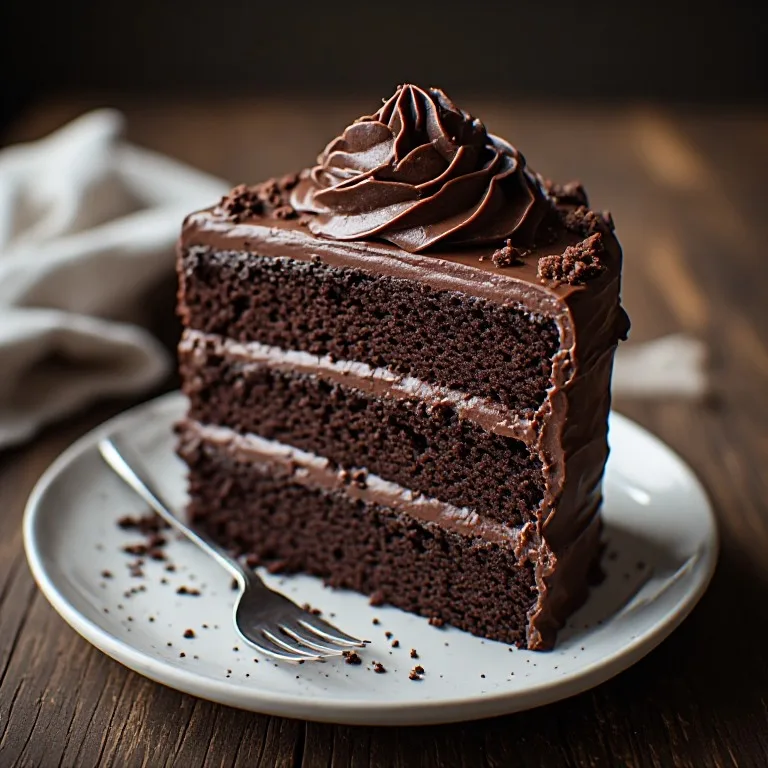
The frosting on the can is as specific as the cake. It starts with melted butter — not creamed, not at room temperature — with cocoa stirred in while the butter is hot. This creates a fluid, glossy base rather than the fluffy aerated texture you’d get by creaming butter and cocoa separately. Powdered sugar and milk go in alternately, keeping the frosting spreadable throughout.

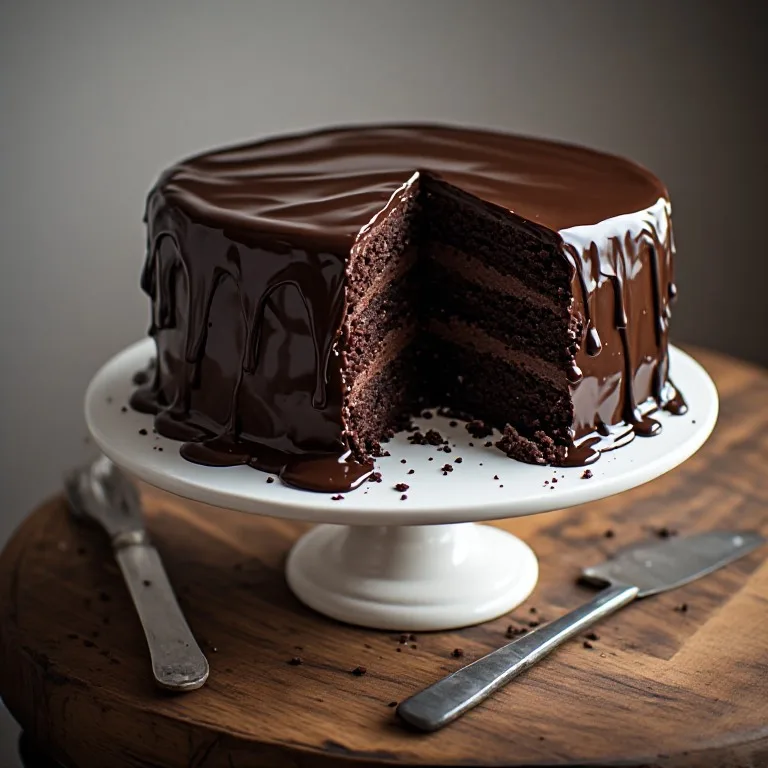
The frosting is intentionally thin enough to run down the sides of the cake slightly — it’s not a stiff decorator’s frosting. It sets up firm as it cools, with a slightly fudgy surface. If you let it cool too much before frosting the cake, it will start to set in the bowl; work with it warm and fluid.

Making It as a Sheet Cake

The full batter fits in a standard 9×13-inch baking pan. Pour it all in, bake at 350°F for 35–40 minutes, cool completely in the pan, and frost right in the pan. Sheet cake means one layer of frosting instead of two, which is less sweet per slice. Most people who grew up eating this recipe know it as a sheet cake from a church basement or a school potluck. That version is also easier to transport and serve.
14934882 types left
🥗

Make It Healthier

Love Hershey's "Perfectly Chocolate" Chocolate Cake but want a lighter version? Try these simple swaps:

  • ✓Reduce sugar in the cake to 1¾ cups (from 2) — the boiling water blooms the cocoa enough to carry the chocolate flavor without the full sweetness, and the crumb stays tender.
  • ✓Substitute ½ cup of the all-purpose flour with whole wheat pastry flour — adds fiber without noticeably affecting texture in this oil-based batter.
  • ✓Make a lighter frosting: beat 8 oz room-temperature cream cheese with ½ cup Hershey's Cocoa and 2 cups powdered sugar — half the calories of the butter frosting and slightly tangier.
  • ✓Serve as a single-layer sheet cake instead of a frosted two-layer round — one layer of cake, one thin layer of frosting, half the frosting per serving.

Frequently Asked Questions

Why is the batter so thin? Did I make a mistake?

No — the thin batter is correct and intentional. A cup of boiling water goes in last, which makes the batter significantly thinner than a standard cake batter. Two things are happening: the boiling water blooms the natural cocoa (hot water dissolves more of the cocoa's flavor compounds than room-temperature liquid), and the high water content produces extra steam in the oven, which keeps the crumb moist and prevents the proteins in the flour from setting up too tightly. The thin batter is part of why the cake stays moist for days. Pour it carefully into the prepared pans and bake it as written — it sets into a fully risen, level layer.

Can I use Dutch-process cocoa instead of Hershey's Natural Unsweetened Cocoa?

Not without adjusting the recipe. Hershey's Natural Unsweetened Cocoa is acidic — it has a pH around 5.4. The recipe uses baking soda (alkaline) specifically to react with that acidity and provide leavening. Dutch-process cocoa has been treated with alkali to neutralize its acidity; it won't react with the baking soda the same way, so the cake won't rise as well and the unreacted baking soda can leave a faint soapy, metallic aftertaste. If you want to use Dutch-process cocoa, drop the baking soda and add about 1 tablespoon of extra baking powder in its place — baking powder carries its own acid, and because it's roughly a third as strong as baking soda you need more of it to keep the same rise. Hershey's also makes a Special Dark Cocoa (a blend of natural and Dutch-process) — that works in this recipe with slight color and flavor differences, but the rise may be slightly less dramatic.

Can I use butter instead of vegetable oil?

You can, but the texture will be different. Vegetable oil is 100% fat with no water content; butter is about 80% fat, 16% water, and 4% milk solids. Oil coats the flour proteins more completely, producing a consistently tender crumb that doesn't firm up when cold. A butter version will taste richer and slightly more complex, but the cake will set firmer — especially refrigerated — and the crumb will be a little denser. If you prefer butter flavor, use ½ cup (1 stick) melted and cooled slightly. The boiling water step is unchanged.

How do I know when the cake is done?

A toothpick inserted into the center should come out clean or with just a few moist crumbs — not wet batter. The edges of the cake will also have pulled slightly away from the sides of the pan, and the top will spring back when lightly pressed. At 350°F in two standard 9-inch round pans, most ovens take 30–35 minutes. Start checking at 28 minutes. Overbaking is the most common way this cake goes wrong — a few extra minutes turns moist into dry. If your oven runs hot, check at 26 minutes.

Can I make this as a 9×13 sheet cake instead of two round layers?

Yes, and it's actually easier. Pour the full batter into a greased and floured 9×13-inch pan. Bake at 350°F for 35–40 minutes. The sheet cake bakes slightly longer because it's deeper in a single layer. Cool completely in the pan, frost right in the pan, and cut into squares. One layer of frosting instead of two also reduces the sweetness slightly, which a lot of people prefer.

What makes this different from a regular chocolate cake?

Three things set it apart: the boiling water (which blooms the natural cocoa and thins the batter in a way that produces an unusually moist crumb), the vegetable oil (which stays liquid at room temperature so the cake doesn't dry out or firm up as it sits), and the specific chemistry of natural cocoa reacting with baking soda. Most from-scratch chocolate cake recipes use butter, room-temperature liquid, and sometimes buttermilk. The Hershey's formula is built around oil and boiling water — it looks wrong when you're making it, but the result is a cake that slices cleanly on day one, stays moist on day three, and has a pure, deep chocolate flavor without any butterscotch notes that butter introduces.

How long does the cake stay moist, and should I refrigerate it?

The oil in the batter keeps this cake moist for 3–4 days at room temperature, covered. If you've frosted it with the butter-based Hershey's frosting, it can stay on the counter under a cake dome at room temperature for up to 3 days — refrigerating a butter-frosted cake firms up both the frosting and the crumb. If you need to store it longer than 3 days, refrigerate it and let slices come to room temperature for 30 minutes before serving. The baked, unfrosted layers freeze well: wrap each layer tightly in plastic wrap and then foil; freeze for up to 3 months. Frost after thawing.

Love this recipe? Share it!

Free PDF: our 12 most-wanted copycat recipes — instant download.

Made it? Buy us a coffee

Every recipe here is free, with no paywalls. If this one was a hit at your table, a small tip keeps new copycats coming.

$

Hershey's is a trademark of its owner, used here only to describe the dish this recipe recreates. This is an independent copycat written in our own words — Copycat Spices is not affiliated with, endorsed by or sponsored by Hershey's.

Ratings & Reviews

—
No ratings yet

Rate this recipe

Click a star to rate

Leave a Review

0/500

CS

Copycat Spices Editorial

Researched + fact-checked. Every recipe on Copycat Spices is built from published sources — official ingredient lists, brand-published recipes, interviews and food-science references — and fact-checked before it goes live, then written as clear, step-by-step instructions for home cooks of all skill levels.

Learn more about our mission →