
Matilda Chocolate Cake — The Most Famous Movie Cake Ever Made
Some recipes are technically interesting. Some are visually stunning. And some are mythologically powerful — they carry the weight of memory and story. The Matilda chocolate cake is the third kind. If you saw the 1996 film as a child, you have a cellular memory of Bruce Bogtrotter sitting at that long table in front of a towering dark chocolate cake, and a hunger you couldn’t quite explain.
TikTok turned that nostalgia into a movement.
The Origin: Roald Dahl and the Cake That Became Legend
Roald Dahl wrote the chocolate cake scene in Matilda (published 1988) as a story about dignity and endurance. Miss Trunchbull — the villainous headmistress — forces Bruce Bogtrotter to eat an entire enormous chocolate cake in front of the school as humiliation for allegedly stealing a slice. Instead, Bruce eats every bite. The school erupts in cheering. The scene is one of the most emotionally cathartic moments in children’s literature.
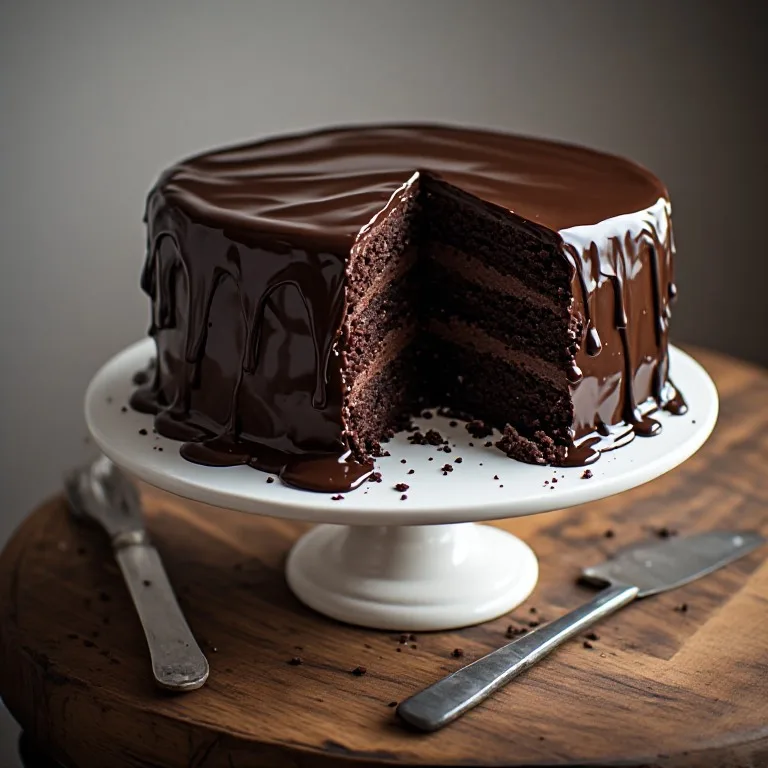
In Danny DeVito’s 1996 film adaptation, the scene was cast with a real, enormous chocolate cake — glossy, dark, ganache-covered — that became the most famous prop in food-adjacent cinema. Actor Jimmy Karz, who played Bruce, reportedly had to eat real cake across multiple takes. The cake itself is a character.
TikTok recreated it starting in 2022–2023, with creators filming the reveal of their layered, ganache-draped versions alongside the original movie scene. The before-and-after format, combined with pure nostalgia, made it reliably viral content.
The Right Cake for the Role
The Matilda cake needs to be exactly as rich as it looks. This recipe uses several techniques to achieve maximum chocolate depth:
Dutch-process cocoa is darker, smoother, and less acidic than natural cocoa. It gives the cake that deep brown-black color associated with the movie prop.
Hot coffee is the most powerful cocoa-amplifying ingredient in a baker’s toolkit. It doesn’t add coffee flavor — it dissolves the cocoa particles fully and deepens every chocolate note. The batter will smell phenomenally chocolatey when you add the hot coffee to the dry cocoa mixture.
Buttermilk adds tang and reacts with the baking soda to create lift, while keeping the crumb tender and slightly moist.
Oil instead of butter might seem counterintuitive in a rich cake, but oil produces a moister crumb that stays soft for days. Butter solidifies when chilled; oil stays liquid, so the cake texture is consistent from refrigerator to room temperature.
The Ganache: Where the Drama Lives
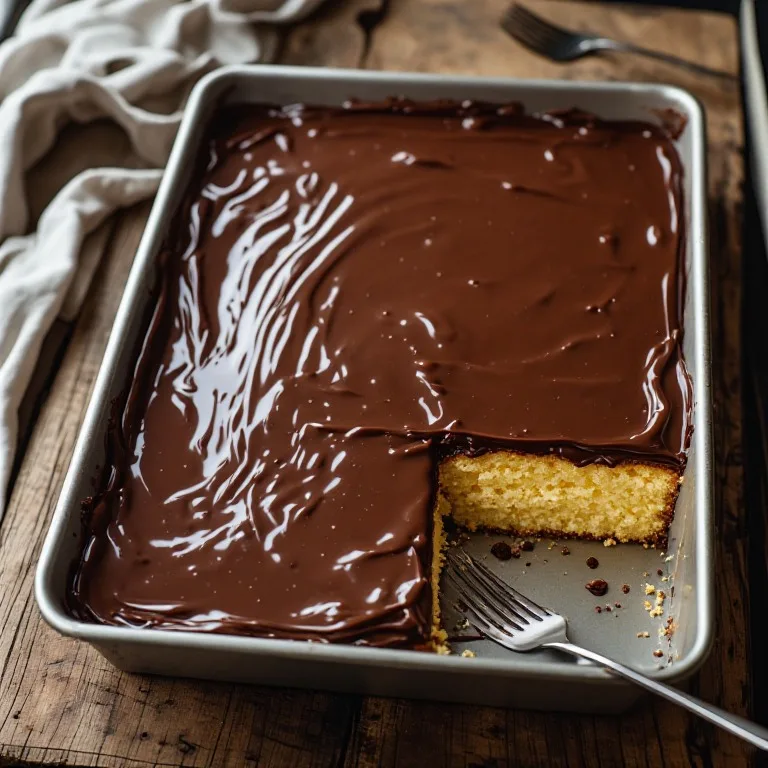
The glossy, dark ganache frosting is non-negotiable. It’s what makes the finished cake look exactly like the movie prop. The technique is simple: hot cream poured over chopped chocolate, left to sit, then stirred from the center outward (starting in the center prevents incorporating air bubbles from the edges). A tablespoon of butter stirred in at the end adds sheen.
The ganache needs to cool to a thick, spreadable consistency before frosting — if it’s too warm, it runs off the cake and doesn’t build up properly on the sides. If it’s too cold, it tears the cake. The target is the texture of peanut butter: spreadable but not liquid.
The Presentation
The Matilda cake should be frosted generously and dramatically. Don’t try to make it look bakery-perfect. Let the ganache pour over the top layer and drip in rivers down the sides. The original movie cake is beautifully uneven — rustic, massive, overwhelming. That’s the point.
Variations
Malted Chocolate: Add 3 tablespoons of malted milk powder to the dry ingredients. The malt note complements dark chocolate the way it complements an old-fashioned chocolate milkshake.
Espresso-Spiked: Dissolve 1 tablespoon of instant espresso powder in the hot coffee before adding to the batter, and add another teaspoon to the ganache. For the serious chocolate obsessive.
Three-Layer Tower: Make one and a half times the batter in three 8-inch pans for a taller, more imposing cake that looks even closer to the movie prop.