
Copycat IHOP Breakfast Sampler
Prep time: 15 min Cook time: 35 min Servings: 2
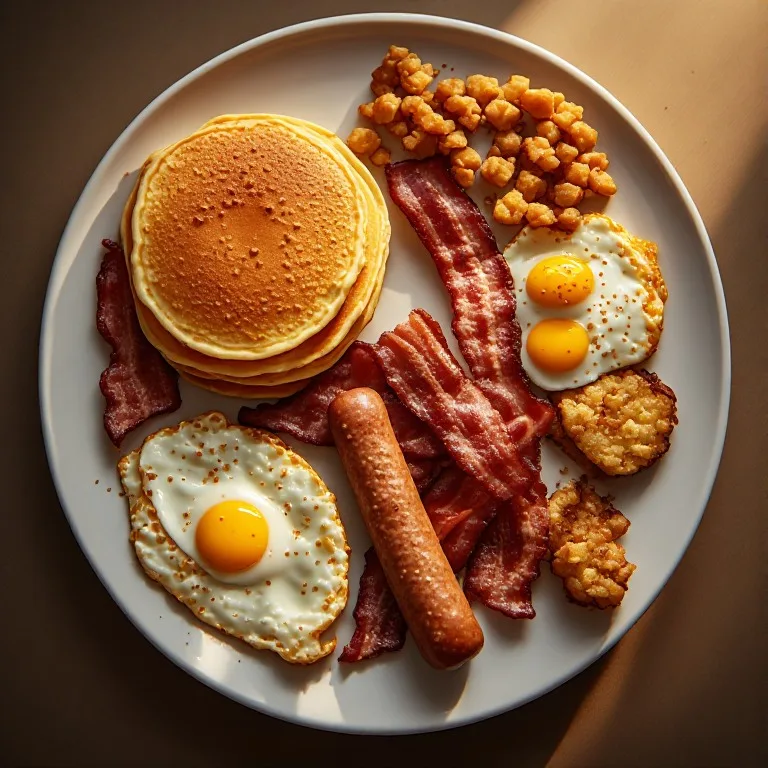
The IHOP Breakfast Sampler is one of the most comprehensive breakfast plates in casual dining: buttermilk pancakes, shredded hash browns, two strips of crispy bacon, two pork sausage links, a slice of grilled Canadian ham, and eggs any style, all on one platter. It runs about $14.79–$18.99 at the restaurant, depending on location. This recipe makes two full sampler plates at home for under $12.
The most important thing to know before you start: this is not a Grand Slam. The Denny’s Original Grand Slam is 4 components — pancakes, eggs, bacon, sausage. The IHOP Breakfast Sampler adds grilled ham and shredded hash browns. Most copycat recipes floating around online skip the ham entirely, which turns the Sampler into a clone of a different restaurant’s dish. The ham is a meaningful component, not an afterthought.
The other challenge with this recipe is logistics. Six hot components served simultaneously is the real test. Restaurants run a flat-top griddle and a separate egg station. At home, the oven at 200°F is your staging area — everything except the eggs can wait there for up to 20 minutes without overcooking. Start the bacon first, build in order, and cook the eggs last, right before you plate.
The Components, in Cooking Order
1. Hash Browns: Moisture Is the Enemy
IHOP’s hash browns are shredded flat patties — finely shredded potato cooked in butter on a hot griddle until the exterior is a deep, uniform golden and the interior is tender. They are not country-style crumbles, not a formed-and-pressed commercial patty, and not frozen hash brown rectangles.
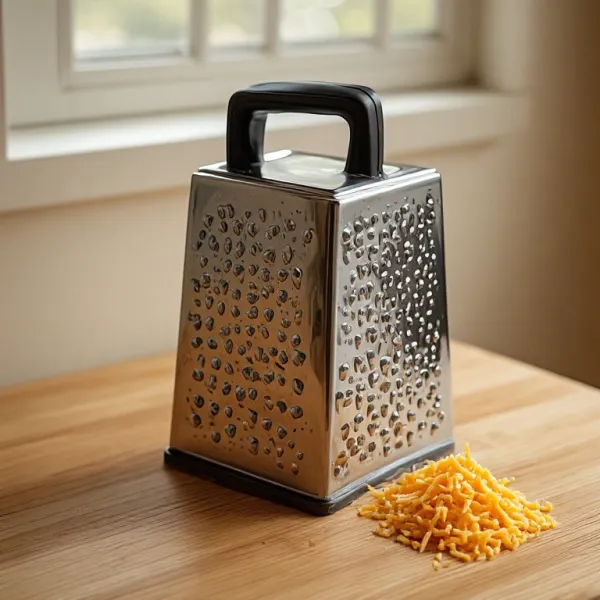
The technique is nearly foolproof as long as you eliminate moisture. Grate a russet potato on the large holes of a box grater, then wring it in a kitchen towel until you’ve expelled every tablespoon of liquid you can. The wetter the potato goes into the pan, the more it steams instead of crisps. Five minutes of undisturbed contact with a buttered, hot surface builds the crust — moving the potato breaks the crust before it forms. Flip once, press again, cook four to five more minutes. The result: crispy outside, soft inside, golden on both faces.
You can substitute frozen shredded hash browns. Thaw them completely and squeeze them just as aggressively as you would fresh shredded potato. Frozen potato holds more water than fresh.
2. Bacon and Sausage: Cold Start, Fat Forward
Start bacon in a cold pan. Fat renders from a slow cold start more completely than when the pan is already hot, and the result is uniformly crispy strips without burned edges. Applewood-smoked bacon is closest to IHOP’s flavor profile. After the bacon comes out, the sausage links go into the rendered fat — the bacon drippings add flavor and ensure the links brown evenly. Seven to eight minutes at medium heat, rolling every two minutes, produces browned links cooked through to 160°F.
3. The Grilled Ham: The Component Most Recipes Skip
IHOP’s Breakfast Sampler includes one slice of grilled Canadian-style ham (also called back bacon), about a quarter inch thick. It’s not thin deli ham — that curls immediately on a griddle and has the wrong texture. Canadian ham is lean, slightly smoky, and holds its shape. It’s already fully cooked, so you’re just warming it through and building light caramelization: 90 seconds per side in a lightly buttered pan at medium-high heat is enough. Look for it in the breakfast meat section near the regular bacon.
4. The Pancakes: Buttermilk and a Two-Leavener Rise
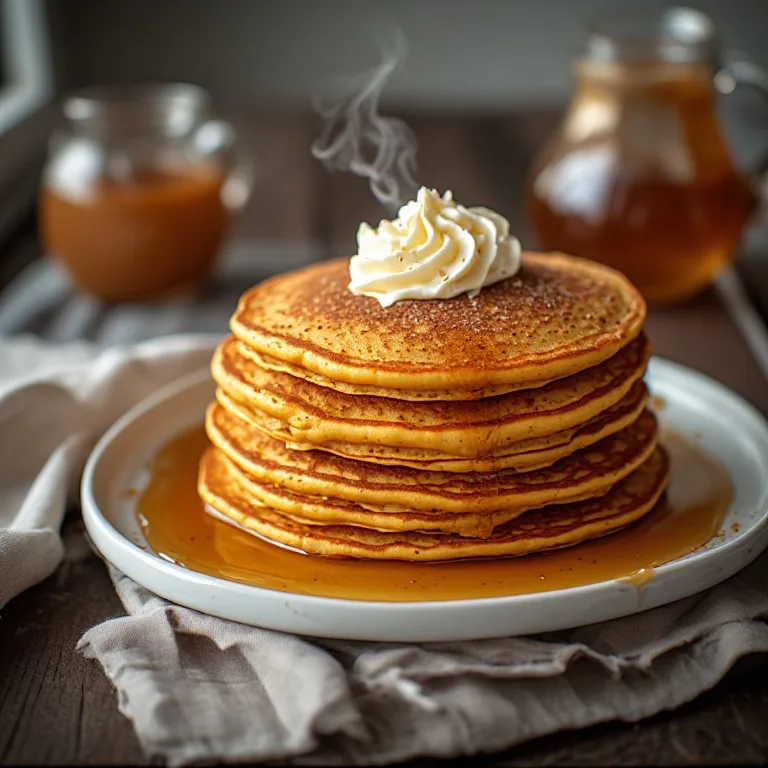
The fundamentals that actually make these pancakes fluffy are well established: real buttermilk plus two leaveners working in sequence. The buttermilk’s lactic acid activates the baking soda for an instant rise the moment the batter is mixed; the baking powder then delivers a second, heat-activated rise once the pancake hits the pan. That one-two lift, not any single secret ingredient, is why they stand taller than standard home pancakes.
A common copycat move — used in the CopyKat and Cozy Cook versions — is to add about a teaspoon of lemon juice alongside the buttermilk. The extra acid can nudge the baking-soda reaction for a touch more lift, and it isn’t detectable as “lemony” in the finished pancake. Worth noting: IHOP has never published its formula, so treat the lemon juice as an optional tweak rather than a confirmed IHOP ingredient. Leave it out and the pancakes are still excellent. (For a full batch on their own, the IHOP buttermilk pancakes recipe covers the deep-dive on ratios and griddle temperature.)
The other rules: baking soda and baking powder together (the soda handles the instant buttermilk reaction; the powder handles heat-activated rise in the pan), no more than 18 mixing strokes, and a 5-minute batter rest. These are not arbitrary — each step serves the specific structure that makes IHOP pancakes taller and fluffier than standard home pancakes.
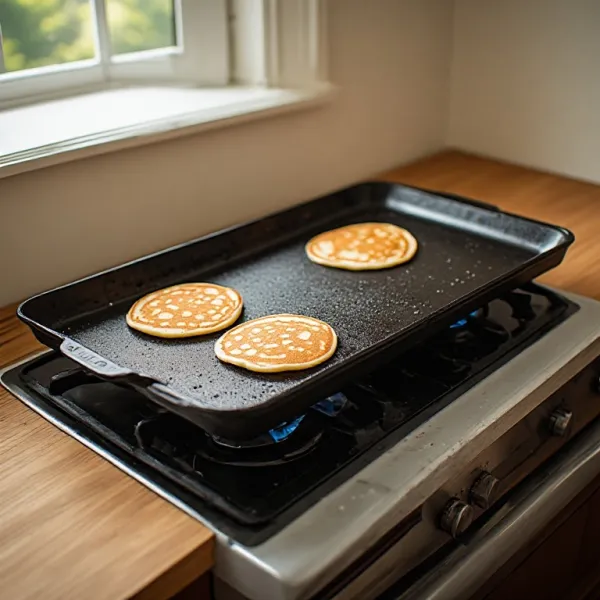
Cook over medium-low heat. Higher heat browns the exterior before the thick center sets, leaving a raw interior despite a golden surface. When bubbles form across the entire top and the edges look dry and set, the pancake is ready to flip — and not a moment before.
5. Eggs: Last, and Fast
Eggs are the only component that won’t hold in a 200°F oven without overcooking. They go last, right before plating. Scrambled eggs take about 90 seconds over medium-low heat in a buttered nonstick pan — pull them while they still look slightly glossy and underdone; they finish on the hot plate. For over-easy: cook in butter until the white is fully set, then flip and count 30 seconds. The goal is a yolk that’s warm throughout but still fully runny at the center.
Tips and Variations
-
Use clarified butter for the hash browns. Regular butter burns slightly at the extended medium-high heat needed for hash browns. Clarified butter (or a 50/50 mix of butter and a neutral oil) stays stable longer and produces a cleaner golden crust.
-
Make silver dollar pancakes. Pour 2 tablespoons of batter per pancake instead of ¼ cup. You get more surface area, more crispy edges, and the same amount of batter makes a more impressive platter. IHOP sometimes serves these as a side option.
-
Swap Canadian ham for a thick ham steak. A bone-in center-cut ham steak, about half an inch thick, griddled at higher heat with a little brown sugar, is a heartier and more flavorful option. Add 5 minutes to the cook time.
-
Add a waffle. IHOP’s chicken and waffles uses a Belgian-style waffle. If you want a waffle version of the Sampler, sub 2 waffles for the 2 pancakes — the batter base is similar; waffles just need more fat in the batter and a waffle iron.
Staging to Get Everything Hot at Once
This is the sequence that works:
- Shred and press the potato (5 min prep, done before you start the stove)
- Bacon: 10 min → oven
- Sausage: 8 min → oven
- Ham: 4 min → oven
- Hash browns: 10 min → oven
- Mix and rest pancake batter: 8 min total (5 min rest, 3 min mix)
- Pancakes: 5–6 min per batch → oven
- Eggs: 2 min → plate immediately
From cold start to plated, expect about 35 minutes. The oven is doing real work here — it’s not a warming tray, it’s active staging that lets you cook everything sequentially without losing temperature.
Storage
The Breakfast Sampler is a made-to-order dish — it doesn’t store or reheat gracefully as a complete plate. Individual components store fine:
- Pancakes: refrigerate up to 2 days, reheat in a toaster
- Bacon: room temperature for 4 hours, refrigerate up to 5 days, reheat in a skillet
- Sausage links: refrigerate up to 3 days, reheat in a pan
- Ham: refrigerate up to 4 days, warm briefly in a skillet
- Hash browns: best eaten fresh; leftover hash browns reheat in a 400°F oven for 8 minutes on a baking sheet — they regain some crispiness but never fully recover the fresh-cooked crust
Eggs do not store well after cooking. Make them fresh.
More IHOP copycat recipes: Buttermilk Pancakes · New York Cheesecake Pancakes · Chicken and Waffles · Stuffed French Toast
See all IHOP copycat recipes →