

Pin It

IKEA Swedish Meatballs (Köttbullar)

IKEA Swedish Meatballs (Köttbullar)
Jump to Recipe
Prep 20 min Cook 40 min Serves 4
Quick answer: IKEA's Swedish meatballs are made from a 2:1 beef-to-pork blend, bound with breadcrumbs soaked in milk, seasoned with salt and pepper (white pepper is the traditional Swedish choice), browned on the stovetop, and finished in the oven at 350°F. The cream sauce — gräddsås — is a roux-based sauce using equal parts vegetable stock, beef stock, and heavy cream, finished with soy sauce and Dijon mustard; the soy sauce is the surprise ingredient that adds umami depth without tasting like soy. IKEA released the official recipe in April 2020 when stores closed globally. At IKEA, a plate runs $5–7; at home, a full batch feeding four costs about $12 in ingredients.

Shop the tools

Gear matched to this recipe. These are Amazon affiliate links — we may earn a small commission if you buy, at no extra cost to you.

As an Amazon Associate, Copycat Spices earns from qualifying purchases. Product images are generic illustrations, not the exact item listed.

IKEA Swedish Meatballs (Köttbullar)

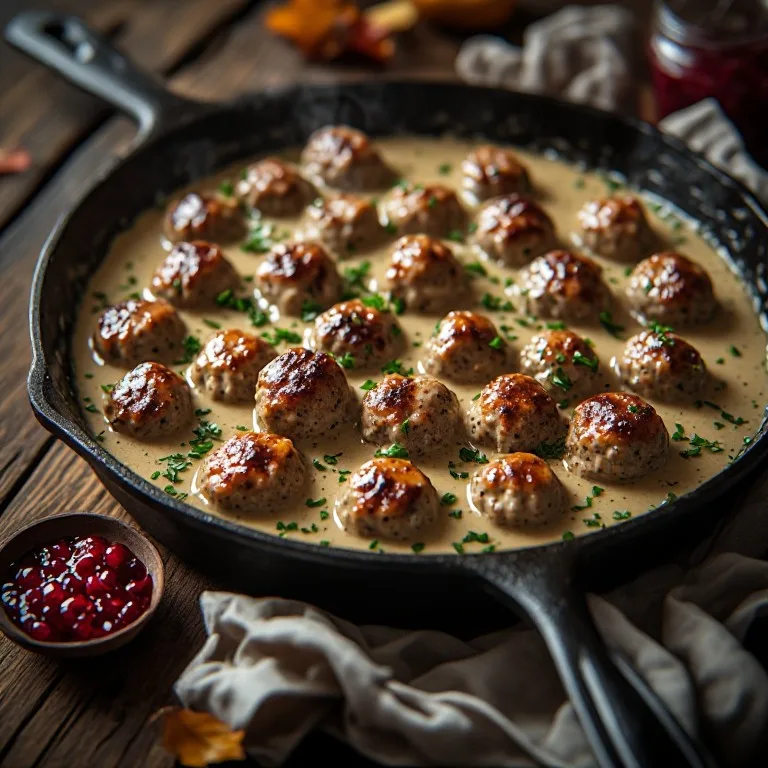
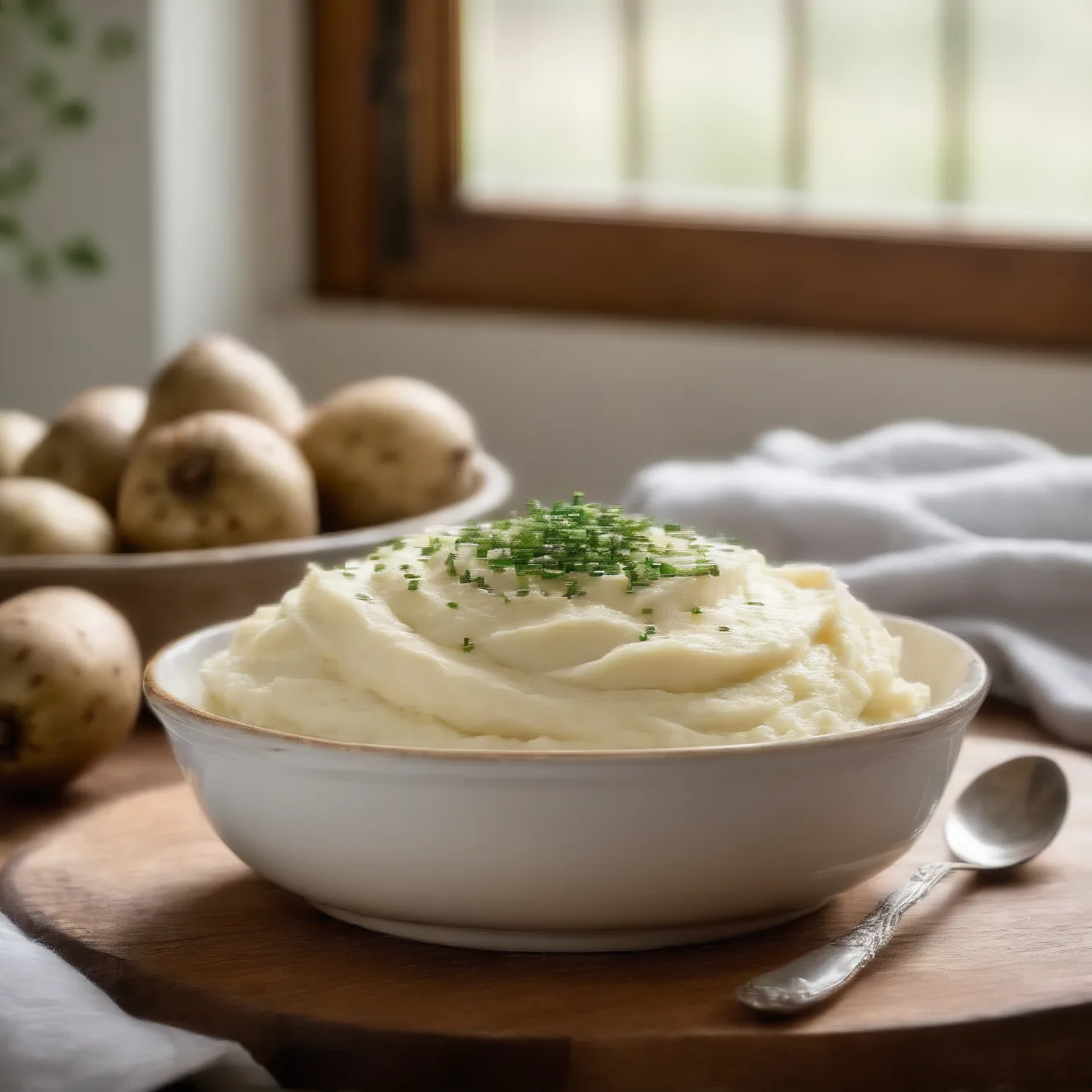
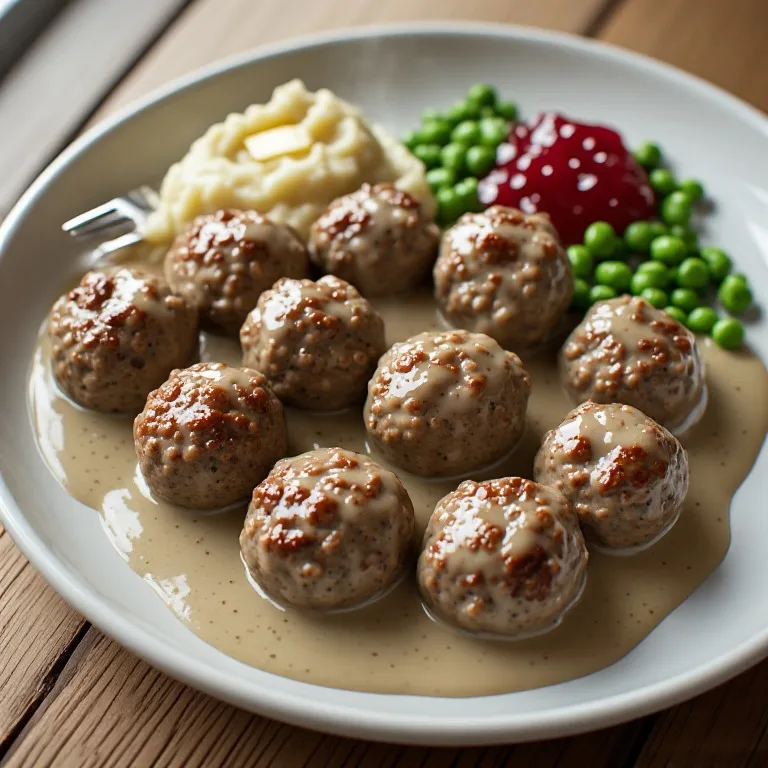
IKEA's famous Swedish meatballs — the official recipe they released in 2020 — made at home: small, dense beef-pork meatballs browned in butter, finished in the oven, and served in the signature cream sauce (gräddsås) with mashed potatoes and lingonberry jam.

Medium Prep: 20 min Cook: 40 min Total: 1h 0m4 servings ~$4.50/serving
Prep20 min
Cook40 min
Total1h 0m
Servings
4
At home~$4.50/serving
vs
Restaurant~$20.25/serving
You save ~78%

The Story Behind the Recipe

IKEA is known globally for two things: flat-pack furniture and Swedish meatballs. The company serves roughly 150 million meatballs per year across its in-store restaurants, making its cafeteria one of the world's largest food operations. In April 2020, when all IKEA stores closed during COVID lockdowns, the company posted the official meatball recipe to give people a way to recreate the experience at home — a gesture that went immediately viral. The dish had always been on the menu, but suddenly the recipe was public, and it turned out to be genuinely simple.

The cream sauce (gräddsås) is what separates IKEA's plate from generic meatballs: it is roux-based, built from two stocks and heavy cream, and finished with soy sauce and Dijon mustard. The soy sauce is the one trick most home recipes miss — it adds umami depth that makes the sauce taste like it has been cooking for hours, without a trace of soy flavor in the finished dish. At IKEA, the plate costs $5–7 with mashed potatoes and vegetables. At home, a full batch feeding four runs about $12 in ingredients — and the result is indistinguishable from what you get at the cafeteria, if not better.

Nutrition Facts

Per serving (4 servings)
Calories780
Total Fat57g
Total Carbs26g
Dietary Fiber1g
Sugars4g
Protein38g
Sodium720mg

* Estimated values based on standard recipe preparation. Actual values may vary.

Ingredients

  • For the meatballs
  • For the cream sauce (gräddsås)
  • To serve (traditional IKEA plate)

Instructions

💡
Pro tip: This recipe tastes even better the next day. The flavors need time to meld together in the fridge.
❄️
Storage: Keeps in an airtight container in the fridge for up to 2 weeks. Freezer-friendly for up to 3 months.
🎃 Free Halloween cookbook — download now The Copycat Halloween Cookbook A ready-made, photo-illustrated PDF of our best halloween copycat recipes — free to download, no building required. Pay what you want to support if you love it.

Free PDF — instant download. We'll also send new seasonal copycat recipes now and then; unsubscribe anytime. Or just download it →

IKEA Swedish Meatballs (Köttbullar)

Prep time: 20 min Cook time: 40 min Servings: 4

In April 2020, when IKEA closed every store worldwide, the company did something unexpected: it posted the official recipe for its Swedish meatballs. The release was meant as a gesture — a way for people to make the cafeteria dish at home while the restaurants were dark. It went immediately viral, because the recipe was genuinely unfamiliar in one key way.

The cream sauce uses soy sauce. Two teaspoons of it. In a Scandinavian cream sauce. It doesn’t taste like soy — it disappears into the sauce and adds a savory depth that makes the whole thing taste like it has been cooking for hours. That’s the one thing most copycat versions miss, and the reason the homemade versions people had been making for years tasted good but not quite right.

Why This Recipe Is Different From Generic Swedish Meatballs

Most Swedish meatball recipes online converge on a similar formula: a 50/50 beef-pork blend, spiced with allspice and nutmeg, served in a pan gravy. IKEA’s recipe differs in specific ways:

IKEA’s recipeGeneric recipes
Meat ratio2:1 beef-to-pork (500g/250g)Usually 50/50
SpiceSalt + pepper, kept simpleOften allspice + nutmeg
Sauce baseRoux (butter + flour)Often just a pan reduction
Sauce secretSoy sauce + Dijon mustardUsually omitted
FinishingBrown on stovetop, finish in ovenOften stovetop-only

The flavor difference is noticeable. The 2:1 beef-to-pork ratio gives a firmer, meatier bite. IKEA’s seasoning is deliberately restrained — just salt and pepper — rather than the allspice-and-nutmeg-spiced Swedish style you’ll see in many recipes (which is also traditional, just a different tradition); white pepper keeps the heat clean and invisible in the pale sauce. The oven finish produces even interior doneness that stovetop-only cooking struggles to achieve for small meatballs without burning the exterior.

The Meatball Texture Secret

The key to getting that compact, slightly dense, distinctly IKEA texture is soaking the breadcrumbs in milk before mixing. The milk-soaked breadcrumbs act as a panade — a binder that keeps the proteins from contracting too tightly during cooking. Without the soak, the same breadcrumbs would produce a drier, more crumbly texture.

The second variable is the size. These meatballs should be roughly 1 inch in diameter — noticeably smaller than the golf-ball-sized Italian-American meatball most people are used to making. The smaller size accomplishes two things:

  1. More surface area relative to volume means a higher crust-to-interior ratio after browning
  2. They cook through faster and more evenly in the oven, so there’s no risk of overdone exterior with raw center

Use a tablespoon measure or a small cookie scoop to keep them uniform — uniform size means uniform cooking time.

The Cream Sauce (Gräddsås)

The sauce is a roux-based cream sauce. It is not difficult, but the sequence matters:

  1. Make the roux first. Butter and flour in equal weights (40g each), cooked together until pale golden and nutty-smelling. This eliminates the raw flour taste and creates the thickening agent.

  2. Add the stocks gradually. Vegetable stock first, whisked in slowly to prevent lumps. Then beef stock, the same way. The dual stock base (rather than just beef stock) adds a rounded flavor that is less one-dimensional than beef stock alone.

  3. Add the cream last. Heavy cream goes in after both stocks are incorporated. It finishes the sauce’s richness and color.

  4. Add soy sauce and Dijon off the heat. Both are added at the end to preserve their character. The soy sauce (2 teaspoons) should be undetectable as soy in the finished sauce — it functions entirely as an umami amplifier. The Dijon (1 teaspoon) adds a barely-there sharpness that prevents the cream sauce from being heavy.

If the sauce is too thick, stir in stock a tablespoon at a time. If it’s too thin, simmer for an extra minute or two — it thickens as it reduces.

About Lingonberry Jam

Lingonberry jam is not optional at IKEA. The plate — mashed potatoes, meatballs in cream sauce, and lingonberry jam — is served all together, and the jam functions as a counter-element, not a side dish. A spoonful of the tart jam cut against the rich cream sauce is part of how the dish eats. Do not serve it without something tart.

If you can’t find lingonberry jam:

  • Whole-berry cranberry sauce is the closest substitute in flavor profile — slightly sweeter, still appropriately tart
  • Redcurrant jelly is a step closer to the actual lingonberry flavor
  • Homemade cranberry compote with a squeeze of lemon and less sugar than canned versions is excellent

Lingonberry jam is sold at IKEA stores (in the marketplace/food section near checkout) and at Scandinavian or specialty grocery stores. If you are near an IKEA, this is the easiest sourcing solution.

A Note on the Turkish Origin Story

Sweden’s official Twitter account made international news in 2018 by posting that Swedish meatballs are “actually based on a recipe King Charles XII brought back from Turkey” — from his exile in the Ottoman Empire between 1709 and 1714. The claim is contested: food historian Richard Tellström found Swedish cookbook references to meatball-adjacent dishes dating to the mid-1600s, and the first clear Swedish cookbook entry (Cajsa Warg, 1755) predates any documented Ottoman transfer. The connection is interesting and historically plausible, but not settled. The real origin of the dish is probably less dramatic: small pan-fried meatballs appear across Northern European cooking, and the word “köttbullar” (literally “meat balls”) is simply the Swedish version of a format that was widespread.

Cost Comparison
At IKEAAt Home (4 servings)
Plate (8 meatballs + sides)~$6.99 per person—
Meat (beef + pork)included~$7–9
Cream sauce ingredientsincluded~$3–4
Pantry (flour, butter, egg)included~$1–2
Total per serving~$6.99~$3.00

The IKEA version is already cheap by restaurant standards. The home version is cheaper still — and you get to control the size of the servings.


See also:

🥗

Make It Healthier

Love IKEA Swedish Meatballs (Köttbullar) but want a lighter version? Try these simple swaps:

  • ✓Use 90/10 lean ground beef and lean ground pork to reduce fat by roughly 15g per serving — the sauce provides richness so leaner meat still produces a good result
  • ✓Substitute half the heavy cream for whole milk to significantly reduce calories in the sauce (the sauce will be thinner; add an extra teaspoon of flour to the roux to compensate)
  • ✓Bake the meatballs without the initial browning step to eliminate the butter used for frying — you lose some crust and flavor depth, but baking alone from raw produces a completely acceptable result at about 40 fewer calories per serving
  • ✓Serve with cauliflower mash instead of potato mash — cuts carbs roughly in half while maintaining the cream-and-butter flavor profile that pairs with the cream sauce

Frequently Asked Questions

Did IKEA really release their official meatball recipe?

Yes. In April 2020, while IKEA's café operations were closed during COVID lockdowns, IKEA UK posted the official recipe for its Swedish meatballs (köttbullar) and cream sauce (gräddsås) on its website and social media as a simple at-home illustrated guide. The company wanted to give people a way to make the cafeteria classic at home. The recipe went widely viral, appearing on major food sites and news outlets. IKEA's release specified the 2:1 beef-to-pork ratio (500g beef to 250g pork), the milk-soaked breadcrumbs, and — the part that surprised everyone — the soy sauce and Dijon mustard in the cream sauce. The seasoning in IKEA's published version is listed simply as salt and pepper; white pepper, used below, is the traditional Scandinavian choice for this style of dish.

What is IKEA's cream sauce (gräddsås) made of?

IKEA's gräddsås is a roux-based cream sauce made from equal parts butter and flour cooked into a roux, then whisked with 150ml vegetable stock, 150ml beef stock, and 150ml heavy cream. The two finishing ingredients are 2 teaspoons soy sauce and 1 teaspoon Dijon mustard. The soy sauce is the element that surprises people — it adds umami depth and a rounded savory quality that makes the sauce taste long-cooked, but it is in too small an amount to read as soy. The Dijon adds subtle sharpness that prevents the cream sauce from being cloying. Together they're what separates IKEA's cream sauce from a generic béchamel.

What is the IKEA meatball meat ratio — beef to pork?

IKEA's official released recipe uses a 2:1 beef-to-pork ratio: 500g ground beef to 250g ground pork. This is different from the 50/50 blend many home copycat recipes use. The higher beef proportion gives a firmer, denser texture — which is part of why IKEA meatballs hold their shape and are distinctly chewier than Italian-style meatballs. The pork provides fat for flavor and some tenderness but does not dominate. Use 85/15 or 80/20 ground beef for the best flavor balance.

Should I use white pepper or black pepper?

IKEA's published recipe just says 'salt and pepper,' but white pepper is the traditional choice for Swedish köttbullar and the one we recommend. White pepper is standard in Swedish and other Scandinavian cooking, particularly for delicate dishes, because it provides heat without the visible black flecks and without the slightly floral, more complex flavor of black pepper. For a pale cream-sauced dish, white pepper delivers clean background heat that stays invisible in the finished sauce. Using black pepper is not a dealbreaker — the flavor is close, you'll just see the flecks. Ground white pepper is sold in the spice aisle of most grocery stores.

What can I use instead of lingonberry jam?

Whole berry cranberry sauce is the most common substitute and the one IKEA itself suggested for North American kitchens where lingonberries are hard to find. Lingonberry jam is available at IKEA stores (sold in the marketplace area) and at Scandinavian specialty grocers. If you want a closer flavor match than cranberry, look for redcurrant jam — slightly tarter and less sweet than cranberry, and closer to the real lingonberry tang. Avoid smooth cranberry sauce (the jellied kind): you want texture. Whole berry cranberry sauce, either store-bought or homemade, works well.

How many meatballs does this recipe make and how are they served at IKEA?

This recipe (500g beef + 250g pork) makes approximately 16–20 meatballs at roughly 1-inch diameter, serving 4 people at 4–5 meatballs each. At IKEA, the standard plate is 8 meatballs with mashed potatoes, lingonberry jam, and cream sauce. The meatballs are notably smaller than Italian-American meatballs — the compact size helps them cook through evenly and gives each one the right ratio of browned exterior to interior. If you shape them larger, increase the oven time to compensate.

How do you reheat IKEA-style meatballs?

The best method is a 300°F oven for 15–20 minutes, covered loosely with foil to prevent drying out, with a splash of beef stock added to the pan to loosen the sauce. You can also reheat on the stovetop over low heat, stirring the cream sauce gently and adding stock or cream to restore its consistency. Avoid microwave reheating if possible — the cream sauce can separate and the meatballs turn rubbery. Both the meatballs and sauce refrigerate well up to 4 days, and the meatballs freeze well (without sauce) for up to 3 months. Freeze them on a sheet pan first, then transfer to a bag.

Love this recipe? Share it!

Free PDF: our 12 most-wanted copycat recipes — instant download.

Made it? Buy us a coffee

Every recipe here is free, with no paywalls. If this one was a hit at your table, a small tip keeps new copycats coming.

$

IKEA is a trademark of its owner, used here only to describe the dish this recipe recreates. This is an independent copycat written in our own words — Copycat Spices is not affiliated with, endorsed by or sponsored by IKEA.

Ratings & Reviews

—
No ratings yet

Rate this recipe

Click a star to rate

Leave a Review

0/500

CS

Copycat Spices Editorial

Researched + fact-checked. Every recipe on Copycat Spices is built from published sources — official ingredient lists, brand-published recipes, interviews and food-science references — and fact-checked before it goes live, then written as clear, step-by-step instructions for home cooks of all skill levels.

Learn more about our mission →