

Pin It

Rao's Famous Meatballs (The Famous One, Made at Home)

Rao's Famous Meatballs (The Famous One, Made at Home)
Jump to Recipe
Prep 20 min Cook 40 min Serves 6
Quick answer: Combine 1 pound of 80/20 ground beef, 1/2 pound ground veal, and 1/2 pound ground pork in a large bowl. Add 2 beaten eggs, 1 cup freshly grated Pecorino Romano, 2 tablespoons chopped flat-leaf parsley, 1 small minced garlic clove, and salt and pepper. Mix with your hands until just combined. Work in 2 cups of fresh breadcrumbs, then add lukewarm water slowly — up to 2 cups, 1 cup at a time — until the mixture is quite moist. This is the step most copycat recipes skip, and the amount of water is the reason the meatballs are so tender. Shape into balls 2.5 to 3 inches wide (roughly baseball size). Heat 1 cup of good olive oil in a large heavy sauté pan over medium-high heat. Drop in a smashed garlic clove, let it brown, and remove it. Fry the meatballs in batches, not touching, until the bottom half is very brown and slightly crisp — 4 to 5 minutes. Turn once and brown the other side. Do not turn constantly. Transfer to simmering marinara sauce and braise for 15 minutes. Serve in the sauce. At Rao's, entrées run $30 to $50 and a full night is $100-plus a head. This batch makes twelve meatballs for roughly $18 total.

Rao's Famous Meatballs (The Famous One, Made at Home)

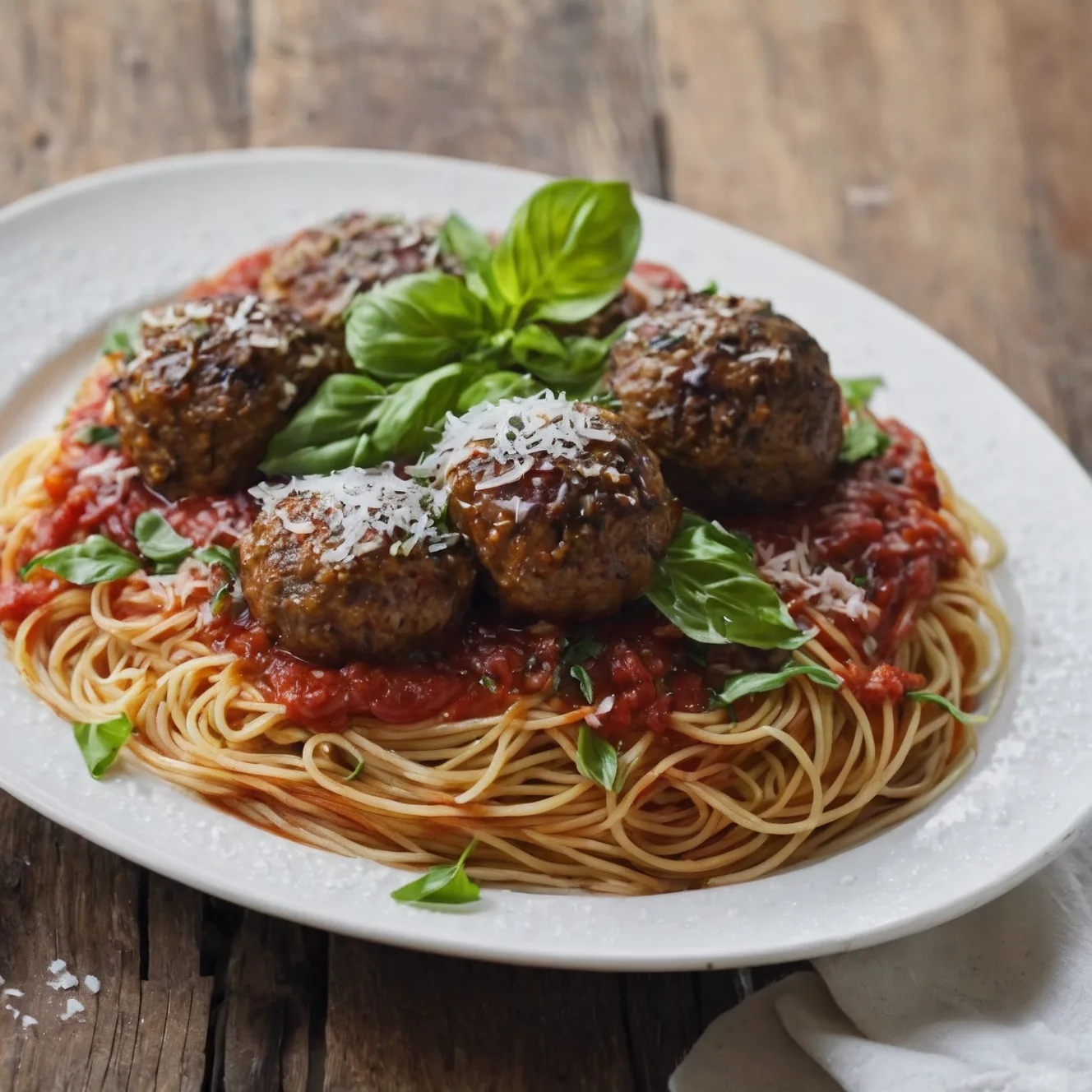
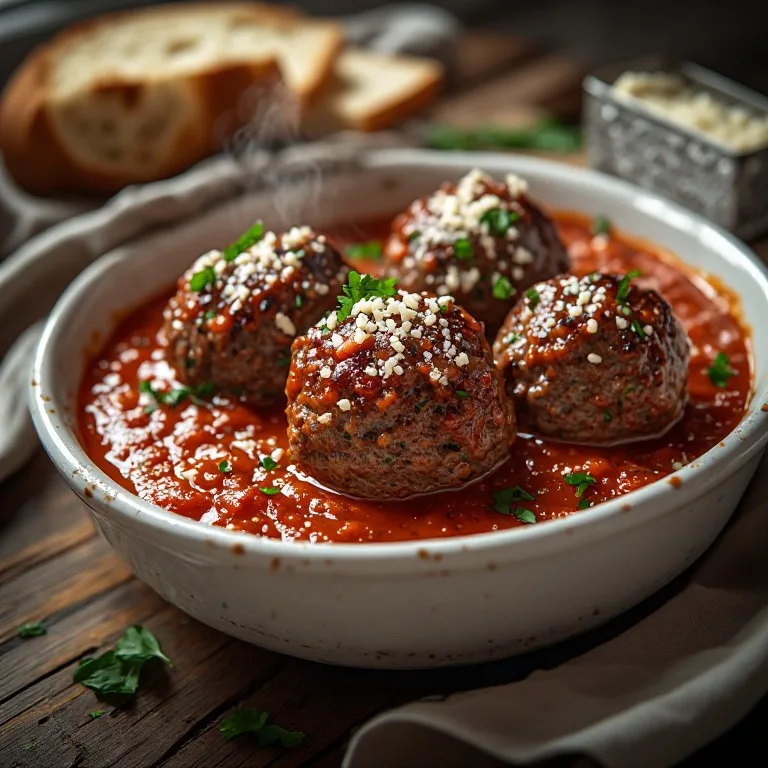
The famous Rao's meatballs, made at home: the three-meat blend, up to 2 cups of lukewarm water for impossible tenderness, Pecorino Romano for bite, and pan-fried in olive oil until a real crust forms. The most impossible reservation in NYC, solved at your stove.

Medium Prep: 20 min Cook: 40 min Total: 1h 0m6 servings ~$4.50/serving
Prep20 min
Cook40 min
Total1h 0m
Servings
6
At home~$4.50/serving
vs
Restaurant~$20.25/serving
You save ~78%

The Story Behind the Recipe

The famous Rao's meatballs, made at home: the three-meat blend, up to 2 cups of lukewarm water for impossible tenderness, Pecorino Romano for bite, and pan-fried in olive oil until a real crust forms. The most impossible reservation in NYC, solved at your stove.

Nutrition Facts

Per serving (6 servings)
Calories520
Total Fat34g
Total Carbs18g
Dietary Fiber1g
Sugars2g
Protein38g
Sodium620mg

* Estimated values based on standard recipe preparation. Actual values may vary.

Ingredients

  • Meatballs
  • For frying
  • For serving

Instructions

💡
Pro tip: This recipe tastes even better the next day. The flavors need time to meld together in the fridge.
❄️
Storage: Keeps in an airtight container in the fridge for up to 2 weeks. Freezer-friendly for up to 3 months.
🎃 Free Halloween cookbook — download now The Copycat Halloween Cookbook A ready-made, photo-illustrated PDF of our best halloween copycat recipes — free to download, no building required. Pay what you want to support if you love it.

Free PDF — instant download. We'll also send new seasonal copycat recipes now and then; unsubscribe anytime. Or just download it →

Copycat Rao’s Famous Meatballs (The Famous One, Made at Home)

Prep time: 20 min Cook time: 40 min Servings: 6 (2 meatballs per serving)

Rao’s has been at 455 East 114th Street in East Harlem since 1896. It started as a simple corner saloon — one room with a bar — opened by Charles Rao. It has had roughly ten tables since anyone can remember. That is 10 tables in 130 years, in a room that has not meaningfully changed, in a neighborhood the rest of the city mostly overlooked for decades.

The restaurant became what it is today in 1977, when New York Times dining critic Mimi Sheraton gave it a three-star review. Before that point, Rao’s was a beloved local institution — East Harlem regulars, neighborhood families, people who had been going for decades. After the review, the phone rang continuously and never stopped.

Seven of the 10 tables are now effectively owned by regular customers who have held them for years or decades. They have right of first refusal. They can come every week, lend their table to friends, donate their seat at charity auctions. The other three tables — the fraction that is theoretically available to the public — are the entire accessible inventory for everyone else.

Frank Pellegrino Sr. ran the restaurant for decades. He was called “Frankie No” because he turned away so many people, including Warren Buffett, who reportedly called repeatedly and was always politely declined. He played FBI Agent Frank Cubitoso on The Sopranos in a recurring role from 1999 to 2004. He died in February 2017 at age 72, and his son, Frank Pellegrino Jr., runs the restaurant today.

Rao’s now has outposts in Las Vegas, Hollywood, and Miami Beach, all of which have normal reservation systems. The original East Harlem room does not. The most practical way to eat Rao’s food — particularly the meatballs — remains making them at home.

The Published Recipe (And What It Actually Means)

Rao’s has published their meatball recipe through multiple channels: the Rao’s Cookbook: Over 100 Years of Italian Home Cooking (published in 1998), the James Beard Foundation website, and their own brand site. The recipe is not a secret. It is attributed to Frank Pellegrino’s Aunt Anna, who ran the kitchen for decades, who inherited it from her mother Paolina. The recipe is presented as unchanged for over a century. What it has is one step that most home cooks either skip, misread, or do halfway — and that step is why the meatballs are what they are.

The step is water. Up to two cups of lukewarm water, worked into the meat and breadcrumb mixture gradually until the mix is, as the recipe says, “quite moist.” Most copycat recipes either omit this entirely or cap it at half a cup, producing a denser, tighter meatball that is good but not the same thing.

Fresh breadcrumbs — made from day-old Italian bread, not the dried canister version — are the vehicle for that water. They absorb the liquid before the meatball hits the pan and release it slowly during cooking, keeping the interior soft and cloud-like even as the outside gets a genuine crust from the olive oil fry. The result is a meatball that is contradictory in the best way: crunchy and browned on the outside, almost fluffy inside, substantially larger than most people expect.

The Three-Meat Blend

The standard Rao’s ratio is 1 pound of 80/20 ground beef, 1/2 pound ground veal, and 1/2 pound ground pork.

Each contributes something specific. Beef provides the primary flavor and body. Pork brings fat and a mild sweetness that softens the overall taste. Veal — the most unusual inclusion for home cooks — has a higher ratio of collagen-rich proteins that help the meatball hold together while staying tender; it also has a delicate, light flavor that prevents the blend from tasting too aggressively beefy.

Ground veal is increasingly hard to find at standard grocery stores. The best substitute is more ground pork: go to a 1:1 beef-to-pork ratio (1 pound each) rather than replacing veal with more beef. Pork’s fat profile does more of what veal does than beef would. An all-beef meatball is denser and less complex, though still very good.

The Pecorino Romano Question

The cheese in the recipe is Pecorino Romano, not Parmesan — and it is not interchangeable. Pecorino is made from sheep’s milk, Parmesan from cow’s. Sheep’s milk has more fat and a much sharper, saltier, more pungent character. In a meatball, that sharpness distributes through the interior of the ball during mixing and becomes a background note — you do not identify it as cheese flavor, but you notice a complexity and edge that plain-beef meatballs lack. Parmesan is milder and rounder; it produces a good meatball but a different one. A 50/50 split is a reasonable middle ground if the full Pecorino character seems strong. Either way, grate it fresh from a block — pre-grated contains anti-caking agents that affect texture and dilute flavor.

Cost Comparison: Rao’s vs. Home

Rao’s is not a cheap dinner under any circumstances. Entrées run roughly $30 to $50, and a full night out — with the wine, the courses, the experience — runs upward of $100 per person. The meatballs are among the signature orders. (Rao’s doesn’t publish a fixed à la carte menu, so treat these as the restaurant’s overall price band rather than a posted meatball price.)

Rao’sHomemade (12 meatballs, serves 6)
The meatballsa signature order, within the $30–50 entrée bandfull batch for ~$18
Per serving (2 meatballs)part of a $100-plus-per-person night~$3
Reservationfamously near-impossiblenone needed

The value differential isn’t really about the food cost — the ingredients (beef, pork, veal, Pecorino, eggs, breadcrumbs) are inexpensive, and the meatballs are among the cheaper things to reproduce at home. What you can’t buy at the grocery store is the table. That’s the part the home version replaces.

The Three Most Important Technique Points

1. Add more water than feels comfortable

Two cups of lukewarm water is a lot. Most recipes that call for any water stop at half a cup because the mixture starts to feel loose and hard to handle. Push through it. Wet your hands with cold water before shaping, which prevents sticking, and you can form balls from a substantially wetter mix than you would expect. The payoff — an interior that is light and almost steamed-soft despite the fry — is the whole point.

2. Fry in olive oil, undisturbed, until genuinely brown

The urge to move meatballs around the pan to prevent burning produces pale, unevenly colored, soft-sided meatballs. Put them in the hot oil and leave them alone for four to five minutes. The surface needs sustained contact with the hot fat to develop real color and a slight crust. If you’re moving them after 90 seconds, you’re working against yourself. When the bottom is genuinely deep brown — not pale tan, not golden, but caramel to dark brown — turn once and repeat on the other side.

3. Braise after frying, not instead of it

The fry crust is for flavor and texture. The braise in sauce is what finishes the center and integrates the meatballs with the sauce — it also allows the meat’s flavor to permeate the tomatoes, which is why a sauce that has braised meatballs in it for 15 minutes tastes richer than one that hasn’t. The meatball you take out after both steps has a browned, slightly firm exterior and a moist, tender center. Skip the fry and the texture collapses; skip the braise and the center stays underdone and the sauce stays thin.

Tips & Variations
  • Fresh breadcrumbs vs. dry. Day-old Italian bread, pulsed in a food processor to coarse crumbs, absorbs the water differently than dried, fine commercial breadcrumbs. Fresh crumbs are more irregular in size and more porous; they soak up more liquid and hold it better during cooking. If you can only source dry breadcrumbs, use 1 cup instead of 2 and add the water more conservatively — the texture will be denser but still good.
  • The garlic in the oil is not optional. Dropping a smashed clove into the olive oil before the first meatballs go in is a small step that adds a subtle garlic-olive flavor to the crust on every meatball. Remove the clove before it burns. This takes about 2 minutes and makes a noticeable difference.
  • Don’t skip the sauce braise. The pan-fry alone doesn’t fully cook the interior of a baseball-sized meatball. The 15-minute simmer in sauce is functional, not decorative.
  • The jarred Rao’s marinara is genuinely good. For a weeknight version, Rao’s Homemade Marinara is one of the better commercial pasta sauces available — it is made from quality Italian tomatoes without added sugar or starch. Using it saves 25 minutes and the result is excellent. Homemade from whole San Marzano tomatoes is better; this is a real option.
  • Make the meatballs in advance, add to fresh sauce. Fried meatballs hold well in the refrigerator for 3 days before braising. The full dish (meatballs + sauce) keeps for 4 days. Reheat gently in sauce over low heat; avoid aggressive boiling, which can crack the meatballs.
  • One batch makes 12 meatballs. The 2.5-to-3-inch size is not negotiable for the texture to work properly — smaller meatballs have a different interior-to-crust ratio and lose the fluffy quality. Six people get 2 meatballs each, which is a proper portion with pasta or bread.
Storage & Reheating

Store meatballs in the sauce in an airtight container in the refrigerator for up to 4 days. To reheat: add to a saucepan with the sauce and warm over medium-low heat, covered, until heated through — about 8 to 10 minutes. Do not microwave if you can avoid it; microwaving unevenly heats the dense meat center while overcooking the outer edge. Frozen meatballs (in sauce) keep for up to 3 months; thaw overnight in the refrigerator before reheating.

More Famous NYC Italian-American Dishes Made at Home
🥗

Make It Healthier

Love Rao's Famous Meatballs (The Famous One, Made at Home) but want a lighter version? Try these simple swaps:

  • ✓Substitute ground turkey (dark meat) for the veal and reduce the pork to 1/4 lb — the texture changes but the water technique still produces an unusually moist result. Brings each serving to roughly 390 calories.
  • ✓Bake at 425°F for 20 minutes instead of frying to cut the fat significantly — you lose the crust character, but braising in sauce afterward partially compensates by adding surface moisture back.
  • ✓Serve two meatballs over zucchini noodles instead of pasta to keep the carbs below 20g per serving while keeping all the sauce and meatball flavor.

Frequently Asked Questions

Why does Rao's add so much water to their meatball mix?

The up-to-2-cups-of-water technique is the defining feature of the Rao's recipe — and the step most home cooks either skip or drastically undershoot. The published recipe pairs roughly equal amounts of breadcrumbs and water: about 2 cups of fresh breadcrumbs worked into the meat, then lukewarm water added slowly, 1 cup at a time, until the mixture is quite moist. Raw ground meat is dense; as it cooks, fat and moisture escape, and without anything binding that moisture in, the interior contracts and toughens. Fresh breadcrumbs act as a sponge: they absorb the water before the meatball goes into the hot pan, and during cooking they release that moisture slowly into the surrounding meat, keeping the interior soft and cloud-like even after a hard fry. The result is a meatball with a genuinely crisp, browned exterior and a center that gives immediately under pressure — almost fluffy. Recipes that use only eggs and dry breadcrumbs without water produce meatballs that are fine but significantly denser. Add the water in stages rather than all at once — the mix should feel almost too wet by the end, and lukewarm water absorbs faster than cold.

Do I need all three meats — beef, pork, and veal?

The three-meat blend is what the published Rao's recipe specifies, and each meat contributes something different. Beef (1 pound, 80/20) provides the primary flavor and iron-rich depth. Pork (1/2 pound) contributes fat and a subtle sweetness that softens the beef. Veal (1/2 pound) adds a fine, delicate texture and binds the mix in a way that pure beef does not — ground veal has a higher ratio of connective tissue proteins that help hold the ball together while staying tender. Ground veal can be hard to find at some grocery stores; a reasonable substitute is a second 1/2 pound of pork rather than more beef, since pork's fat content is closer to veal's role than beef would be. A 1:1 beef-to-pork blend (1 pound each) works acceptably. All-beef meatballs are denser and less nuanced. They will still be good meatballs — they will not be Rao's meatballs.

Why Pecorino Romano and not just Parmesan?

Pecorino Romano is made from sheep's milk; Parmesan (Parmigiano-Reggiano) is made from cow's milk. Sheep's milk has a higher fat content and a distinctly sharper, saltier, more pungent flavor — it reads differently on the palate even at the same quantity. In a meatball, the cheese does two things: it seasons the interior (Pecorino's natural saltiness penetrates the meat during mixing and cooking) and it adds depth of flavor throughout the ball, not just on the surface. A Parmesan-only meatball tastes milder and rounder; Pecorino gives it a slight edge. Rao's specifies Pecorino Romano. A 50/50 split is a popular middle ground if the full Pecorino flavor seems strong. Do not use pre-grated cheese from a canister — it contains anti-caking agents that prevent it from melting smoothly and dilute the flavor.

Should I fry or bake the meatballs?

Rao's fries them in olive oil, and it matters. Baking produces a meatball with a dehydrated, uniformly dry exterior — the oven surrounds the meatball with dry heat, which evaporates surface moisture rather than searing it. Pan-frying in hot oil is a Maillard reaction: intense direct contact with a fat-coated hot surface browns the proteins at the surface quickly, creating a crust that is genuinely crisp and flavorful in a way baked meatballs cannot match. The crust also seals the outside, slowing moisture loss from the interior. The fry in olive oil also flavors the meatball's exterior in a way that a neutral-oil fry does not. Use 1 cup of good olive oil — this sounds like a lot, but the meatballs do not absorb it all, and shallow-frying rather than deep-frying means the oil goes a long way. Do not crowd the pan. Turn once when the bottom is deep brown and crisp, not before.

What sauce does Rao's serve the meatballs in?

Rao's is as famous for its marinara as for the meatballs themselves — their jarred Rao's Homemade Marinara became the most talked-about jarred pasta sauce in the country. The restaurant's version is built from good-quality imported Italian canned tomatoes (San Marzano-style), olive oil, garlic, fresh basil, salt, and not much else. The simplicity is intentional: quality canned tomatoes with good olive oil and 25 minutes of simmering are all this sauce needs. For the home version, the Rao's jarred marinara is a genuinely good shortcut — it is one of the better supermarket pasta sauces available. Making fresh from canned whole San Marzano tomatoes takes about 25 minutes and is better still. The meatballs braise in the finished sauce for 15 minutes after frying, which both warms the center (the fry alone does not cook them all the way through) and adds meatball flavor back to the sauce.

Why is Rao's so impossible to get a reservation?

Rao's has 10 tables — four tables and six booths — in the original East Harlem location. Seven of those 10 tables are effectively 'owned' by regular customers who have held them for years or decades and have right of first refusal. The remaining three tables or seats that turn over are essentially the entire available inventory for the general public. The story changed in 1977 when New York Times critic Mimi Sheraton gave Rao's a three-star review — until that point it was a beloved local secret. After the review, the phone rang continuously and never really stopped. Frank Pellegrino Sr. — who ran the restaurant and was nicknamed 'Frankie No' because he had to turn away so many people, including Warren Buffett — became a kind of keeper-of-the-table. The exclusivity became self-reinforcing: the harder it was to get in, the more people wanted in. Rao's has since expanded to Las Vegas, Hollywood, and Miami Beach — restaurants with normal reservation systems and real availability — but the original East Harlem room remains famously inaccessible for most people.

How is Rao's different from a standard Italian-American meatball?

Several ways. Most Italian-American meatballs outside of fine-dining contexts use dry breadcrumbs soaked in milk, a single meat (usually beef), and are baked or braised without frying. Rao's uses fresh breadcrumbs soaked in water (up to 2 cups), a three-meat blend with proportions that weight the beef but bring in pork fat and veal texture, Pecorino Romano for sharpness, and a hard pan-fry in olive oil before braising. The result is a meatball that is larger (baseball-sized versus golf-ball-sized in many recipes), lighter in texture despite its size, crispier on the exterior, and more complex in flavor because of the three meats and the Romano. The Olive Garden meatball — to take a well-known comparison point — is a decent, tender, all-beef ball braised directly in sauce. It is reliably good. Rao's version is structurally different.

Love this recipe? Share it!

Free PDF: our 12 most-wanted copycat recipes — instant download.

Made it? Buy us a coffee

Every recipe here is free, with no paywalls. If this one was a hit at your table, a small tip keeps new copycats coming.

$

Rao's is a trademark of its owner, used here only to describe the dish this recipe recreates. This is an independent copycat written in our own words — Copycat Spices is not affiliated with, endorsed by or sponsored by Rao's.

Ratings & Reviews

—
No ratings yet

Rate this recipe

Click a star to rate

Leave a Review

0/500

CS

Copycat Spices Editorial

Researched + fact-checked. Every recipe on Copycat Spices is built from published sources — official ingredient lists, brand-published recipes, interviews and food-science references — and fact-checked before it goes live, then written as clear, step-by-step instructions for home cooks of all skill levels.

Learn more about our mission →