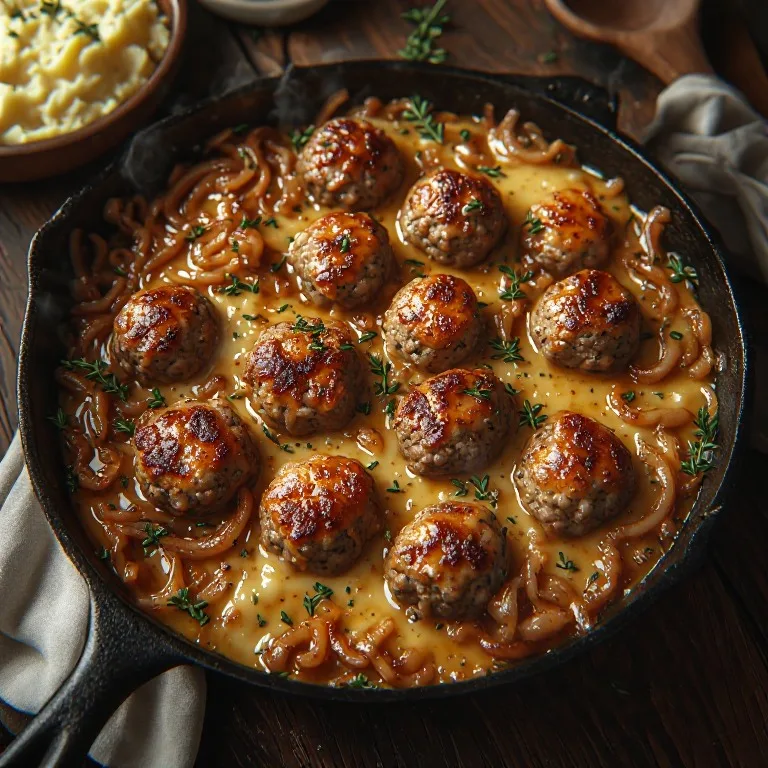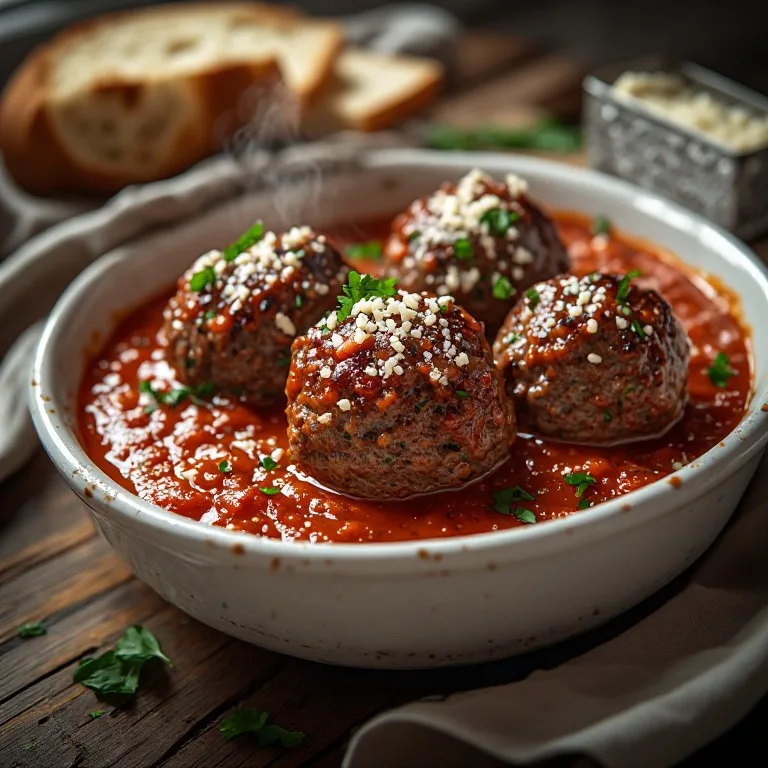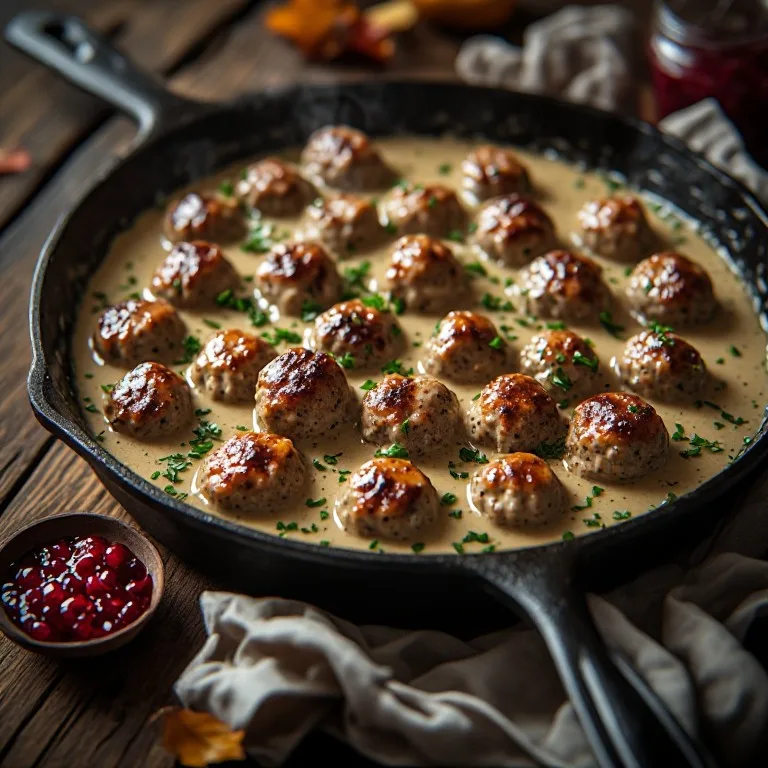

The Swedish meatballs recipe that broke the internet did not come from a restaurant or a food blogger. It came from IKEA.
In April 2020, with their stores closed across the world and millions of people stuck at home craving the Swedish meatballs from their cafeteria, IKEA did something unusual: they published their full recipe online. The cream sauce they revealed included two ingredients that almost nobody expected — soy sauce and Dijon mustard. Within days, it had spread to every cooking forum, recipe site, and TikTok corner of the food internet. The IKEA Swedish meatball became the COVID comfort food project of 2020, and the recipe has stayed viral ever since.
This version follows the IKEA-confirmed method closely, with American measurements and a few refinements drawn from well-documented technique notes.
The secret in the sauce
Every cream-based gravy risks tasting flat — rich, yes, but one-dimensional. The IKEA sauce avoids this with two moves:
Soy sauce adds a background layer of umami that makes the gravy taste as though it simmered over meat bones for hours rather than being built from a butter-flour roux in ten minutes. Two teaspoons per batch is enough. You will not taste the soy sauce directly, but you will notice the difference — the sauce tastes meatier, rounder, and deeper.
Dijon mustard adds a very subtle sharpness. One teaspoon per batch does not make the gravy taste mustardy, but it prevents the cream from feeling cloying or heavy. It is the same trick used in a classic French sauce dijonaise, where mustard acts as an emulsifier and flavor balancer rather than as a featured ingredient.
Together, these two additions are the delta between a cream sauce that tastes homemade in the best sense and one that tastes generic.
Why allspice — and not Italian seasoning
Most meatball recipes available in the US use Italian herbs — oregano, basil, parsley. Swedish meatballs use a completely different spice: ground allspice. Despite the name, allspice is a single berry, not a blend. Its flavor sits somewhere between clove, nutmeg, and cinnamon — warm and aromatic without tasting like either a holiday spice or an Italian herb.
One quarter teaspoon per pound of meat is a very small amount. It functions as a background note, not a lead flavor. You probably will not be able to identify it by name when you eat the finished meatball, but you will recognize that it tastes distinctly different from any Italian-style meatball you have made before. That recognition is the authentic Swedish meatball experience, and allspice is the ingredient creating it.
Do not substitute it. Nutmeg alone is too medicinal. Italian seasoning takes the dish in the wrong direction entirely.
Searing beats baking
IKEA’s restaurant version bakes the meatballs first before adding them to sauce. For home cooking, a skillet sear in butter produces better results. The direct contact between the meatball and hot butter creates a Maillard-browned crust in two minutes — the same deep golden color that takes 15 minutes in an oven. That crust adds flavor and, critically, leaves fond in the pan.
The fond — the dark sticky layer stuck to the skillet bottom after searing — is the base of the cream gravy. When the broth deglazes the pan, it lifts that concentrated layer of browned protein and fat into the sauce. An oven-baked meatball transferred to a separate saucepan for the gravy loses all of that. The skillet method builds the sauce on top of the flavor from the meatball itself.
The lingonberry question
Lingonberry jam is not a garnish. It is a flavor component designed to work against the cream sauce.
The cream gravy is rich, savory, and dense. A spoonful of lingonberry jam is tart, slightly sweet, and fruity. The combination is the point. Each bite that captures both is a different flavor experience from the meatball in gravy alone — the jam does for this dish what mint sauce does for roast lamb or applesauce does for pork chops.
In the United States, IKEA sells their lingonberry preserve in the market section near the cafeteria exit. Trader Joe’s and World Market also stock it. In a pinch, whole-berry cranberry sauce from a can replicates the tartness and texture closely enough to work.
Pickled cucumber slices on the side are traditional in Sweden and are worth making or buying if you can find them. Their sharpness echoes the lingonberry’s acidity and cuts through the same richness from a different angle.
What to serve it on
Egg noodles are the closest match to what you get at IKEA — wide noodles soak up the cream gravy without competing with the meatball flavor. Cook them in well-salted water according to the package; drain just before the meatballs are done so everything hits the plate at the same temperature.
Creamy mashed potatoes are the traditional Swedish serving vessel at home — the Swedish word for this dish is köttbullar med potatismos. A simple butter-and-cream mash works; the gravy handles the rest.
Avoid rice — the cream gravy does not absorb into rice grains the way it soaks into pasta or mashed potato, so the two elements stay separate on the plate instead of integrating. Every other starchy base has this same weakness against a gravy this thick.
Make extra. These reheat better than almost any meatball dish because the sauce only improves after a night in the refrigerator.