
Pin It

Maialino Orange Olive Oil Cake

Maialino Orange Olive Oil Cake
Jump to Recipe
Prep 15 min Cook 1 hr Serves 12
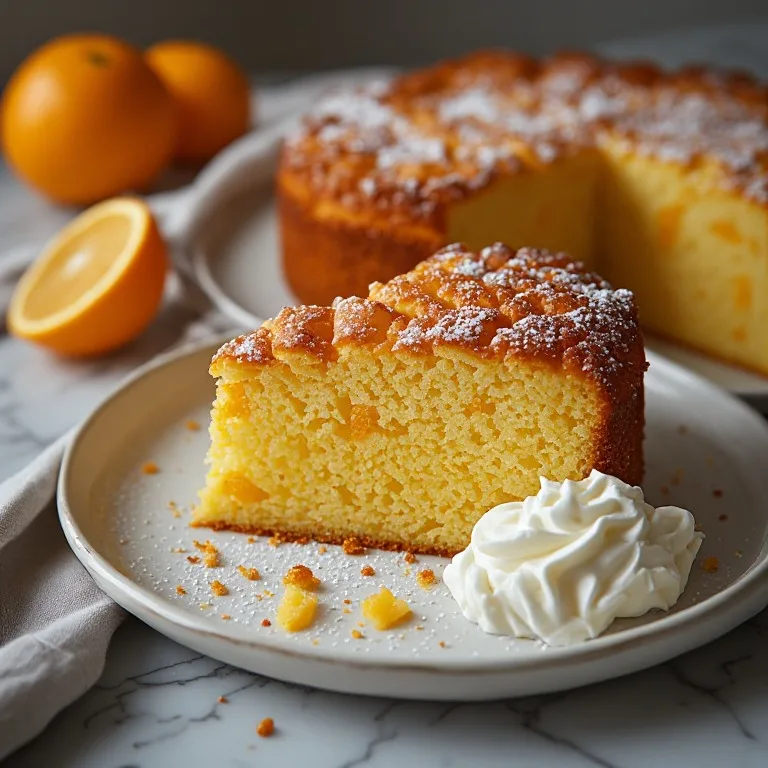
Quick answer: Heat oven to 350°F and butter and flour a 9-inch round cake pan. In a large bowl, whisk together 1¾ cups all-purpose flour, 1½ cups granulated sugar, ¾ teaspoon baking soda, ¾ teaspoon baking powder, and ½ teaspoon fine salt. In a separate bowl, whisk together 1⅓ cups extra-virgin olive oil, 1¼ cups whole milk, 3 large eggs, 1½ tablespoons finely grated orange zest (from 2 medium navel oranges or 3 blood oranges), ¼ cup fresh orange juice, and ¼ cup Grand Marnier. Pour the wet ingredients into the dry and fold with a spatula until just combined — a few flour streaks are fine, overmixing makes it tough. Pour into the prepared pan and bake 55 to 65 minutes, until a toothpick inserted in the center comes out clean and the top is deeply golden. Cool in the pan 20 minutes, then turn out onto a rack. Dust with powdered sugar and serve with softly whipped cream. The olive oil replaces butter entirely, which is why the cake stays moist for 3 days. A slice at Maialino ran about $20; at home the whole cake costs roughly $3.

Shop the tools

Gear matched to this recipe. These are Amazon affiliate links — we may earn a small commission if you buy, at no extra cost to you.

As an Amazon Associate, Copycat Spices earns from qualifying purchases. Product images are generic illustrations, not the exact item listed.

Maialino Orange Olive Oil Cake

The legendary orange olive oil cake from Danny Meyer's Maialino, made at home — dense, moist, and deeply citrusy from whole orange zest and Grand Marnier. The recipe Food52 crowned a Genius Recipe in 2014, outlasting the original Gramercy Park Hotel restaurant itself. About $3 to make vs. ~$20 a slice.

Easy Prep: 15 min Cook: 1 hr Total: 1h 15m12 servings ~$4.50/serving
Prep15 min
Cook1 hr
Total1h 15m
Servings
12
At home~$4.50/serving
vs
Restaurant~$20.25/serving
You save ~78%

The Story Behind the Recipe

Maialino — "little pig" in Italian — opened in 2009 inside the Gramercy Park Hotel, a few steps from one of the only private parks in Manhattan. It was Danny Meyer's tribute to the Roman trattoria: simple, seasonal, deeply olive-oil-forward cooking in a room that felt like a family-run restaurant in Trastevere had been airlifted to Gramercy. The orange olive oil cake was there from the first day of service and never left the menu. When the Gramercy Park Hotel closed in March 2020, Maialino went with it — an early pandemic casualty — and Meyer spent the next several years working to bring it back to the neighborhood, ultimately at a new Gramercy address on Irving Place rather than the old hotel.

But the cake had long since outgrown the restaurant. Food52 crowned it a Genius Recipe in February 2014, adapting Maialino's recipe for home bakers, and cooking blogs have been republishing it ever since. It became one of the few NYC restaurant recipes with a life genuinely independent of the room it came from — home bakers who never set foot inside the Gramercy Park Hotel bake it weekly. What makes it worth obsessing over is the olive oil itself — specifically the decision to use 1⅓ cups of it, more than most Italian olive oil cakes call for, producing a crumb that is dense but not heavy, with a shattering, almost custard-like quality that butter cakes cannot replicate. The orange zest baked into the batter plus the Grand Marnier in the wet mix give it a citrus flavor that comes through at every temperature — warm from the oven, room temperature the next day, cold from the fridge. A slice ran about $20 at the restaurant; the whole cake at home costs roughly $3 in ingredients.

What makes the cake worth obsessing over is the olive oil itself — specifically the decision to use 1⅓ cups of it, which is more oil than most Italian olive oil cakes call for, and which produces a crumb that is dense but not heavy, with a shattering, almost custard-like quality that butter cakes cannot replicate. The orange zest baked into the batter plus the Grand Marnier in the wet mix give it a citrus flavor that comes through at every temperature — warm from the oven, room temperature the next day, cold from the fridge. Dessert at Maialino runs about $20 per slice; the whole cake at home costs roughly $3 in ingredients.

Nutrition Facts

Per serving (12 servings)
Calories375
Total Fat21g
Total Carbs42g
Dietary Fiber1g
Sugars28g
Protein4g
Sodium170mg

* Estimated values based on standard recipe preparation. Actual values may vary.

Ingredients

  • Cake
  • To serve

Instructions

💡
Pro tip: This recipe tastes even better the next day. The flavors need time to meld together in the fridge.
❄️
Storage: Keeps in an airtight container in the fridge for up to 2 weeks. Freezer-friendly for up to 3 months.
🎃 Free Halloween cookbook — download now The Copycat Halloween Cookbook A ready-made, photo-illustrated PDF of our best halloween copycat recipes — free to download, no building required. Pay what you want to support if you love it.

Free PDF — instant download. We'll also send new seasonal copycat recipes now and then; unsubscribe anytime. Or just download it →

Maialino Orange Olive Oil Cake

Prep time: 15 min Cook time: 1 hr Servings: 12

Danny Meyer’s Roman trattoria Maialino served this cake from the day it opened inside the Gramercy Park Hotel in 2009 until the hotel closed in March 2020. It is the rare restaurant dessert that earns its reputation — dense and moist from 1⅓ cups of olive oil, deeply citrusy from both orange zest and Grand Marnier, and almost shatteringly tender in a way that butter cakes simply are not. Food52 made it a Genius Recipe in 2014, and it has been in perpetual rotation on food blogs ever since — the cake outlived its own dining room. A slice ran about $20 at the restaurant. At home, the entire cake costs about $3.

The technique is about as simple as cake gets: dry ingredients in one bowl, wet in another, fold together until just combined, bake for an hour. The only decisions that matter are (1) use a good, fruity extra-virgin olive oil — this is the flavor of the cake, not a background note — and (2) don’t overbake. Deep golden means done; pale gold means it needs more time. A toothpick comes out clean when it is ready.

🥗

Make It Healthier

Love Maialino Orange Olive Oil Cake but want a lighter version? Try these simple swaps:

  • ✓Reduce olive oil to 1 cup and add ¼ cup plain whole-milk Greek yogurt — the yogurt keeps the cake moist, adds about 2g of protein per slice, and drops the fat by roughly 3g per serving.
  • ✓Cut sugar to 1¼ cups (from 1½) — the orange zest and Grand Marnier provide enough sweetness that the cake barely registers the reduction, saving about 15 calories per slice.
  • ✓Serve with a tablespoon of Greek yogurt instead of whipped cream — saves about 50 calories per serving and the tang of the yogurt is a nice contrast to the sweet orange cake.
  • ✓Use a whole-wheat pastry flour blend (50/50 AP and whole-wheat) for a nuttier flavor and more fiber — the crumb becomes slightly denser but the texture difference is minimal in an oil-based cake.

Frequently Asked Questions

What makes Maialino's olive oil cake different from a standard Italian olive oil cake?

Most Italian olive oil cakes — torta all'olio d'oliva — use roughly equal volumes of oil and a liquid (milk, juice, wine). Maialino's version pushes olive oil to a 1⅓ cup quantity for a 9-inch cake, which is unusually generous, and builds a double citrus structure: fresh orange zest baked into the batter plus orange juice and Grand Marnier in the wet mix. The result is a cake that is denser and moister than a classic American yellow cake, with a crumb that almost shatters under a fork and a citrus flavor that hits all the way through, not just on top. It also uses a full ¾ teaspoon each of baking soda and baking powder, which together give enough lift to keep the oil from weighing it down — the cake rises to about 1½ inches, which is correct and deliberate.

Can I use blood oranges, and does it change the flavor?

Yes — blood oranges are the traditional and most dramatic version, and they are at their best in season (roughly January through March in the U.S.). Blood orange zest is slightly more floral and less sharp than navel orange, and the juice adds a faint berry-like note the cake would otherwise lack. The visual difference in the baked cake is minimal — the batter turns the same golden color regardless — but the flavor is noticeably more complex with blood oranges. Use them if you can find them. Out of season, navel oranges are the correct substitute; mandarins or tangerines also work but tip the flavor sweeter.

What olive oil should I use, and does the quality really matter here?

Yes, noticeably. Olive oil is the fat and the flavor in this cake — there is no butter to compete with it, so a bland or stale oil produces a flat-tasting cake. Use a young, fruity extra-virgin olive oil: Sicilian (like Frantoi Cutrera or Zingerman's Sicilian) or Ligurian styles work best because they are grassy and peppery rather than bitter. Robust, peppery Tuscan oils can overwhelm the orange. The standard supermarket pick is California Olive Ranch EVOO — it's reliably fresh, slightly fruity, and widely available. Avoid olive oils labeled 'pure' or 'light' — those are refined and contribute nothing. The recipe uses 1⅓ cups of oil; the cost difference between a mid-tier and a premium bottle is roughly $0.50 per serving.

Can I skip the Grand Marnier?

You can replace it with 2 extra tablespoons of fresh orange juice and 1 tablespoon of orange extract, but the Grand Marnier adds more than flavor: the alcohol slightly relaxes the gluten structure as the cake bakes, contributing to the open, delicate crumb Maialino's version is known for. The alcohol fully bakes off. If you want a completely alcohol-free version, adding 1 teaspoon of orange extract with the extra juice gets you close. Cointreau and Triple Sec are identical substitutes.

Why does the recipe call for both baking soda and baking powder?

Baking soda reacts with the slight acidity in the orange juice to provide immediate lift when the batter hits the oven. Baking powder — which contains its own acid — provides a second, sustained lift during baking. Used together at the same quantity (¾ teaspoon each), they give the cake enough rise to stay light despite the weight of 1⅓ cups of oil, without making it taste metallic (which happens when too much baking soda is used with insufficient acid). This is a standard double-acting lift for oil-based cakes and is part of why the Maialino recipe has been republished for more than a decade without modification.

How long does it keep, and should I refrigerate it?

The olive oil makes this cake significantly more shelf-stable than a butter cake. At room temperature, covered loosely, it stays moist and good for 3 days. In the refrigerator it lasts 5 to 6 days, though you should let it return to room temperature before serving — cold oil-based cakes lose most of their characteristic silkiness. Do not freeze: the texture becomes slightly gummy after thawing. If you are making it ahead for a dinner party, bake it the night before, cool it fully, then wrap it tightly in plastic at room temperature.

Love this recipe? Share it!

Free PDF: our 12 most-wanted copycat recipes — instant download.

Made it? Buy us a coffee

Every recipe here is free, with no paywalls. If this one was a hit at your table, a small tip keeps new copycats coming.

$

Maialino is a trademark of its owner, used here only to describe the dish this recipe recreates. This is an independent copycat written in our own words — Copycat Spices is not affiliated with, endorsed by or sponsored by Maialino.

Ratings & Reviews

—
No ratings yet

Rate this recipe

Click a star to rate

Leave a Review

0/500

CS

Copycat Spices Editorial

Researched + fact-checked. Every recipe on Copycat Spices is built from published sources — official ingredient lists, brand-published recipes, interviews and food-science references — and fact-checked before it goes live, then written as clear, step-by-step instructions for home cooks of all skill levels.

Learn more about our mission →