


Pin It

Molly Baz's Cae Sal

Molly Baz's Cae Sal
Jump to Recipe
Prep 15 min Cook 15 min Serves 4
Quick answer: Toast the croutons first: tear half a crusty baguette into rough pieces (about 3 cups), toss with 2 tablespoons extra-virgin olive oil and ½ teaspoon salt, spread on a sheet pan, and roast at 400°F (200°C) until deeply golden and crunchy, 10–15 minutes. For the dressing, finely chop 4 oil-packed anchovy fillets and mash them to a paste with the side of your knife; add to a large bowl with 2 large egg yolks, 1 finely grated garlic clove, 1 teaspoon Dijon mustard, 1 teaspoon Worcestershire sauce, the zest of ½ lemon, the juice of ½ lemon, ¾ teaspoon salt, and ¾ teaspoon black pepper. Whisk smooth. Whisking constantly, stream in ½ cup neutral oil (canola, vegetable, or grapeseed) a few drops at a time at first, then in a thin ribbon, until the dressing thickens into a glossy, creamy emulsion. Whisk in ¼ cup (1 oz) finely grated Parmigiano-Reggiano. Tear 4 romaine hearts into 2-inch pieces, squeeze the juice of the other ½ lemon over them with a pinch of salt, toss, and wait a minute. Add the dressing and another ¼ cup grated Parmesan, toss to coat, then fold in the croutons. Finish with more grated Parmesan and black pepper.

Shop the tools

Gear matched to this recipe. These are Amazon affiliate links — we may earn a small commission if you buy, at no extra cost to you.

As an Amazon Associate, Copycat Spices earns from qualifying purchases. Product images are generic illustrations, not the exact item listed.

Molly Baz's Cae Sal

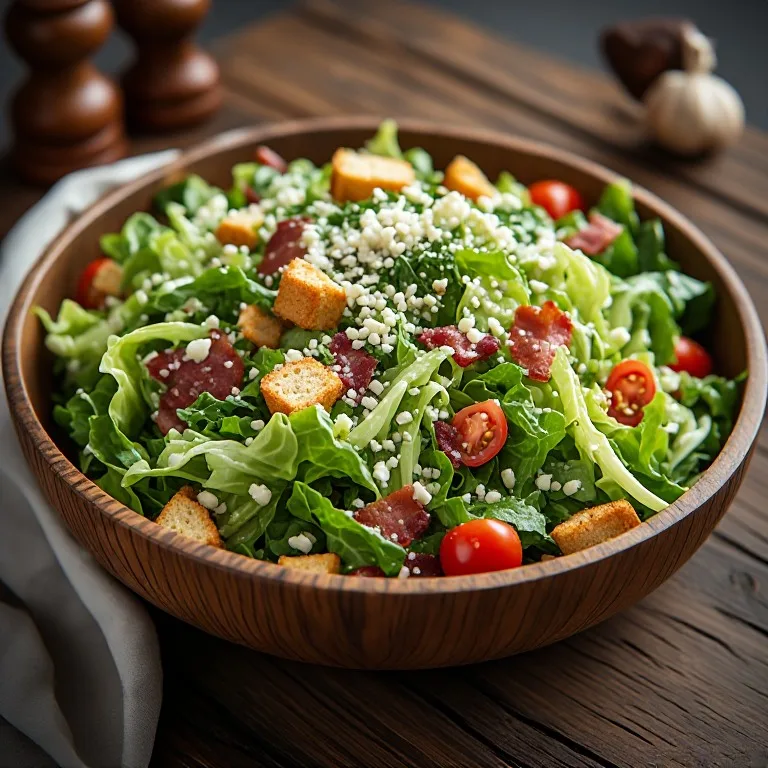
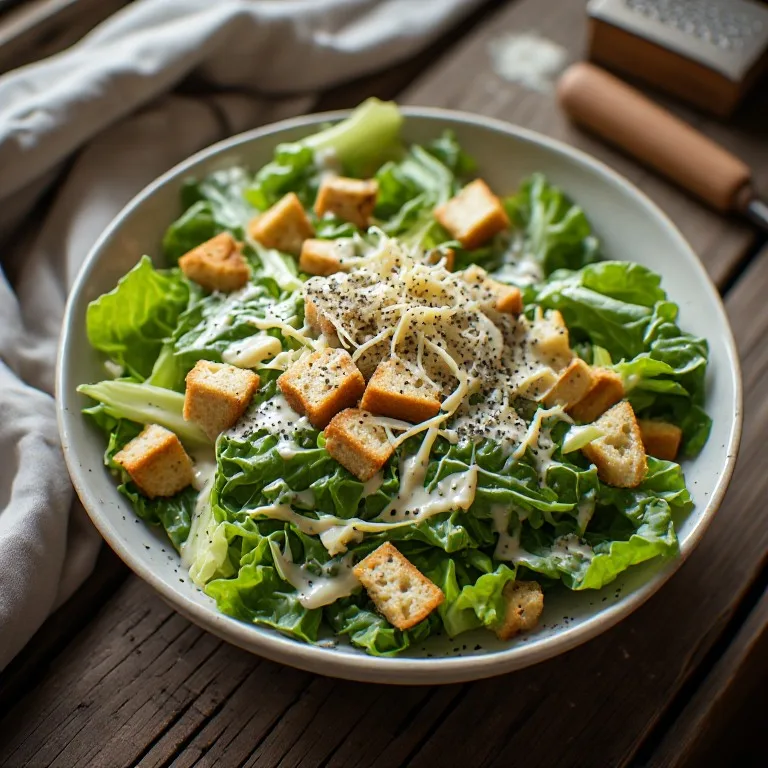
Molly Baz's Cae Sal from Cook This Book — a from-scratch Caesar built on an egg-yolk-and-anchovy emulsion, Worcestershire and Parmesan whisked right into the dressing, torn baguette croutons, and pre-seasoned romaine. The exact amounts and the moves most home Caesars skip. About $10 for four.

Easy Prep: 15 min Cook: 15 min Total: 30 min4 servings ~$4.50/serving
Prep15 min
Cook15 min
Total30 min
Servings
4
At home~$4.50/serving
vs
Restaurant~$20.25/serving
You save ~78%

The Story Behind the Recipe

Molly Baz came up as a food editor in the Bon Appétit test kitchen and left in 2020 to write her first cookbook. Cook This Book (Clarkson Potter, April 2021) became a New York Times bestseller, and the recipe most tied to her public identity is the Cae Sal — her own shorthand for Caesar salad, in the same playful register as "morty-d" for mortadella and "smoo" for smoothie. The name stuck hard enough to end up on merch, and it's the dish people search for when they want a Caesar that tastes like a restaurant made it rather than a bottle poured it.

The Cae Sal is a home recipe, not a restaurant plate — it runs about $10 for four servings, with Parmigiano-Reggiano and oil-packed anchovies the two biggest costs. What sets it apart from a standard home Caesar is that the dressing is a true emulsion, not a shaken vinaigrette: two egg yolks and a teaspoon of Dijon stabilize a half cup of neutral oil whisked in a slow stream, the way you'd build a mayonnaise. Four anchovies and a grated garlic clove are mashed to a paste and whisked in with Worcestershire and lemon, Parmesan goes into the dressing and again onto the leaves, and the torn romaine gets a head start with lemon and salt before any dressing touches it. That emulsion is the whole difference.

Nutrition Facts

Per serving (4 servings)
Calories490
Total Fat36g
Total Carbs24g
Dietary Fiber3g
Sugars2g
Protein12g
Sodium740mg

* Estimated values based on standard recipe preparation. Actual values may vary.

Ingredients

  • For the croutons
  • For the dressing
  • For the salad

Instructions

💡
Pro tip: This recipe tastes even better the next day. The flavors need time to meld together in the fridge.
❄️
Storage: Keeps in an airtight container in the fridge for up to 2 weeks. Freezer-friendly for up to 3 months.
🎃 Free Halloween cookbook — download now The Copycat Halloween Cookbook A ready-made, photo-illustrated PDF of our best halloween copycat recipes — free to download, no building required. Pay what you want to support if you love it.

Free PDF — instant download. We'll also send new seasonal copycat recipes now and then; unsubscribe anytime. Or just download it →

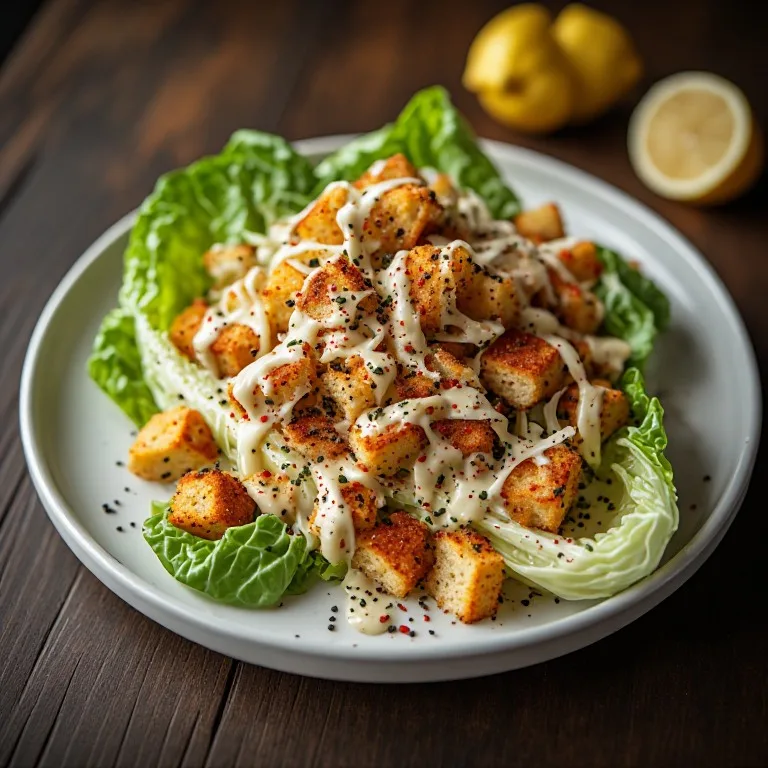
Molly Baz’s Cae Sal is an emulsified Caesar, not a dressed one — and that single distinction drives everything about how it tastes. A shaken vinaigrette-style dressing stays thin and slides to the bottom of the bowl. An emulsion, where two egg yolks and Dijon stabilize a half cup of oil streamed in slowly, has the body of a loosened mayonnaise and coats every piece of romaine in a glossy, clinging sheet.

You need no equipment beyond a knife, a cutting board, a large bowl, and a whisk. A few specific moves separate it from a standard home Caesar:

A true egg-yolk emulsion. Two raw yolks and a teaspoon of Dijon are the backbone. Streaming the oil in slowly while whisking is what turns liquid into a thick, creamy dressing — rush it and it breaks. A teaspoon of cold water whisked in will usually bring a broken dressing back.

Anchovies and Worcestershire, both whisked in. Four anchovy fillets, mashed to a paste, plus a teaspoon of Worcestershire (itself anchovy-based) give the dressing deep, even savoriness with no identifiable fishiness. Both dissolve fully into the emulsion, so every bite tastes the same.

Parmesan twice. A quarter cup of finely grated Parmigiano-Reggiano goes into the dressing so the coating carries cheese, and another quarter cup is tossed with the leaves so you also get distinct bites of it. Finishing cheese goes on at the plate.

Pre-seasoned romaine. A squeeze of lemon and a pinch of salt on the torn leaves, rested a minute before the dressing arrives, pulls surface moisture out in advance. The leaves go in drier, so the dressing clings rather than pooling — and you use less of it. Note that the olive oil lives only in the croutons; the dressing is built on neutral oil, which keeps it from turning bitter.
🥗

Make It Healthier

Love Molly Baz's Cae Sal but want a lighter version? Try these simple swaps:

  • ✓Cut the dressing oil to ⅓ cup instead of ½ cup: it still emulsifies and clings to the leaves while saving roughly 70 calories per serving. Add 1 extra teaspoon of Dijon to keep the body.
  • ✓Tear whole-grain sourdough for the croutons instead of white baguette: you add 2–3g of fiber per serving and swap refined carbs for whole grain, and the denser crust holds its crunch longer once the salad is dressed.
  • ✓Keep Parmesan in the dressing but skip the extra handful tossed with the leaves: the whisked-in cheese already seasons every bite, and dropping the second ¼ cup trims about 55 calories and 180mg of sodium per serving.
  • ✓Add two halved soft-boiled eggs over the finished salad: protein per serving climbs to roughly 18g, turning a side into a full meal, and the runny yolk enriches the dressing without adding refined carbs.

Frequently Asked Questions

What does 'Cae Sal' mean?

Cae Sal is Molly Baz's own shorthand for Caesar salad — part of a pattern of playful abbreviations she uses throughout her cookbooks and online, like 'morty-d' for mortadella and 'smoo' for smoothie. The name became a personal brand marker and ended up on Cae Sal merch. It's her informal coinage, not a trademark or a different dish.

Does the Cae Sal use a raw egg or mayonnaise?

It uses two raw egg yolks, not mayonnaise. The yolks and Dijon mustard are what stabilize the emulsion when you stream in the oil, giving the dressing its thick, creamy, cling-to-every-leaf body. Reserve the whites for another use. If you'd rather not use raw egg, see the make-it-safe note below.

How many anchovies does the Cae Sal use, and will it taste fishy?

Four oil-packed anchovy fillets, finely chopped and mashed to a smooth paste before they go into the bowl. Mashing disperses them evenly through the emulsion, so they read as deep, savory umami rather than anything fishy. If you're anchovy-averse, four mashed fillets is a gentle amount; vegetarians can substitute 1 tablespoon of drained capers, mashed, for a similar briny hit.

Why is there Worcestershire sauce in a Caesar?

Worcestershire is itself anchovy-based and fermented, so a teaspoon layers in extra savory depth and a faint tang that rounds out the dressing. It's a traditional Caesar ingredient that a lot of quick home versions drop — Baz keeps it, and it's part of why the Cae Sal tastes more complete than a lemon-and-Parmesan shortcut.

What oil should I use for the dressing — olive oil?

Use a neutral oil for the dressing: ½ cup of canola, vegetable, or grapeseed oil. Extra-virgin olive oil, whisked into a heavily emulsified dressing at that concentration, turns bitter and overpowering. The olive oil in this recipe is used only on the croutons, where its flavor works. Keep the two jobs separate.

Why whisk Parmesan into the dressing and then add more to the leaves?

Parmesan goes in twice: ¼ cup (1 oz) whisked into the emulsion so every drop of dressing carries cheese, and another ¼ cup tossed with the romaine so you also get bites of distinct grated cheese. Parmesan scattered only on top clumps and dissolves unevenly; splitting it between the dressing and the leaves spreads the flavor through the whole bowl. Shave a little more over each plate to finish.

Why pre-season the romaine with lemon and salt before adding the dressing?

Romaine carries surface moisture that dilutes dressing on contact — you end up using more and it still tastes thin. Squeezing the juice of half a lemon over the torn leaves with a pinch of salt and waiting a minute draws that moisture out first. The pre-seasoned leaves are drier, so the dressing clings instead of pooling and you need less of it.

Can the Cae Sal dressing be made ahead?

Yes. The emulsified dressing keeps in a sealed jar in the refrigerator for up to 3 days, and the garlic flavor deepens overnight, which most people prefer. Toast the croutons the day you serve — they lose crunch fast; if you must make them ahead, store them loosely at room temperature in a paper bag, not sealed in a container where trapped steam softens them. Dress the salad only right before serving.

Is the dressing safe to eat with raw egg yolks?

The dressing uses two raw yolks. For most healthy adults the risk is very low. If you're immunocompromised, pregnant, elderly, or feeding young children, use pasteurized eggs (Davidson's is the most widely available brand) — or replace the yolks with 2 tablespoons of store-bought mayonnaise whisked in before the oil, which gives a similar emulsified base without raw egg.

Love this recipe? Share it!

Free PDF: our 12 most-wanted copycat recipes — instant download.

Made it? Buy us a coffee

Every recipe here is free, with no paywalls. If this one was a hit at your table, a small tip keeps new copycats coming.

$

Ratings & Reviews

—
No ratings yet

Rate this recipe

Click a star to rate

Leave a Review

0/500

CS

Copycat Spices Editorial

Researched + fact-checked. Every recipe on Copycat Spices is built from published sources — official ingredient lists, brand-published recipes, interviews and food-science references — and fact-checked before it goes live, then written as clear, step-by-step instructions for home cooks of all skill levels.

Learn more about our mission →