
Pin It

Charlie Bird Farro Salad (The Famous One, Made at Home)

Charlie Bird Farro Salad (The Famous One, Made at Home)
Jump to Recipe
Prep 10 min Cook 35 min Serves 4 to 6
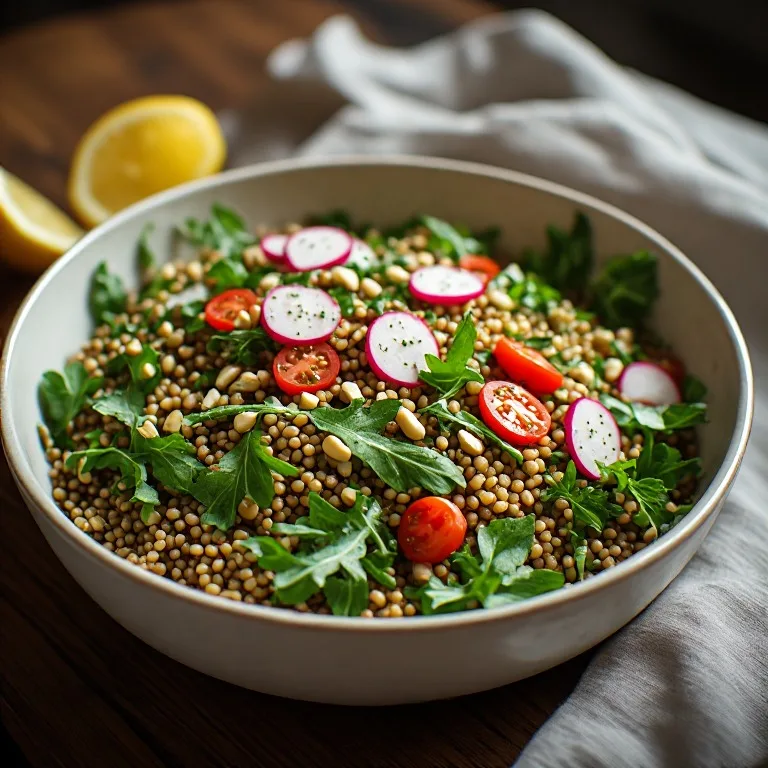
Quick answer: Combine 1 cup semi-pearled farro, 2 cups unfiltered apple cider, 2 cups water, 2 bay leaves, and 2 teaspoons kosher salt in a medium saucepan. Bring to a boil, reduce to a steady simmer, and cook uncovered for 30 to 35 minutes until the farro is tender and most of the liquid has been absorbed. Drain any excess liquid and discard the bay leaves. Immediately — while the farro is still hot — whisk together ¼ cup extra-virgin olive oil, 3 tablespoons freshly squeezed lemon juice, 1 teaspoon salt, and ½ teaspoon black pepper, and stir the vinaigrette into the hot farro. Spread the dressed farro on a sheet pan or leave it in the saucepan and let it cool for at least 15 minutes. Once cooled but still slightly warm, stir in ½ cup toasted pistachios, ¼ cup flat-leaf parsley leaves, ¼ cup fresh mint leaves, 1 cup cherry tomatoes halved, and 6 radishes thinly sliced. Right before serving, gently fold in 2 packed cups of baby arugula and 2 ounces of Parmesan shaved into large flakes with a vegetable peeler. Finish with flaky sea salt and an extra squeeze of lemon. Serves 4 as a main, 6 as a side.

Shop the tools

Gear matched to this recipe. These are Amazon affiliate links — we may earn a small commission if you buy, at no extra cost to you.

As an Amazon Associate, Copycat Spices earns from qualifying purchases. Product images are generic illustrations, not the exact item listed.

Charlie Bird Farro Salad (The Famous One, Made at Home)

Charlie Bird's famous farro salad — the dish that made this SoHo restaurant nationally iconic — made at home. The secret is cooking the farro in apple cider instead of water, then dressing it while it's still warm so the grain absorbs the lemon vinaigrette. Ina Garten loved it enough to put it in a cookbook and cook it on Food Network. Most copycat versions miss both steps.

Easy Prep: 10 min Cook: 35 min Total: 45 min4 to 6 servings ~$4.50/serving
Prep10 min
Cook35 min
Total45 min
Servings
4
At home~$4.50/serving
vs
Restaurant~$20.25/serving
You save ~78%

The Story Behind the Recipe

Charlie Bird's famous farro salad — the dish that made this SoHo restaurant nationally iconic — made at home. The secret is cooking the farro in apple cider instead of water, then dressing it while it's still warm so the grain absorbs the lemon vinaigrette. Ina Garten loved it enough to put it in a cookbook and cook it on Food Network. Most copycat versions miss both steps.

Nutrition Facts

Per serving (4 to 6 servings)
Calories390
Total Fat20g
Total Carbs42g
Protein11g

* Estimated values based on standard recipe preparation. Actual values may vary.

Ingredients

  • Farro base
  • Lemon vinaigrette
  • Fold-ins

Instructions

💡
Pro tip: This recipe tastes even better the next day. The flavors need time to meld together in the fridge.
❄️
Storage: Keeps in an airtight container in the fridge for up to 2 weeks. Freezer-friendly for up to 3 months.
🎃 Free Halloween cookbook — download now The Copycat Halloween Cookbook A ready-made, photo-illustrated PDF of our best halloween copycat recipes — free to download, no building required. Pay what you want to support if you love it.

Free PDF — instant download. We'll also send new seasonal copycat recipes now and then; unsubscribe anytime. Or just download it →

Copycat Charlie Bird Farro Salad (The Famous One, Made at Home)

Charlie Bird opened in 2013 at 5 King Street in SoHo, and by every measure that matters — reservations, press coverage, the number of people who walk in hoping for a table and leave with a wait — it became one of New York City’s essential restaurants almost immediately. Chef Ryan Hardy and co-owner Robert Bohr built a tight menu of Italian-inspired dishes executed with real precision, and the wine list became its own destination. But the dish that made the restaurant nationally famous is a grain salad.

The farro salad should not be famous. It is farro, pistachios, herbs, a few vegetables, Parmesan, and a lemon vinaigrette. Nothing about that list explains why Ina Garten put it in a cookbook, why food writers from The New York Times to Bon Appétit wrote about it, or why home cooks have been trying to recreate it for over a decade. The technique explains it. Two decisions turn a generic grain salad into something that tastes genuinely restaurant-quality: the farro cooks in apple cider instead of water, and the vinaigrette goes in while the farro is still hot, so the grain absorbs it rather than wearing it. Both steps are simple. Both are easy to skip if you don’t know they’re there.

The Two Things That Make This Salad Different

Most farro salads are built on grain cooked in salted water — which is fine, but produces a neutral, slightly grassy base that relies entirely on dressing and toppings for flavor. Charlie Bird cooks the farro in a 1:1 ratio of unfiltered apple cider and water. The cider infuses the grain with a subtle sweetness and tartness that makes the farro itself taste interesting — not apple-flavored, just more. The kitchen smells remarkable while it simmers.

The second decision is timing. Cooked farro goes hot into the lemon vinaigrette. Hot grains are porous and actively absorbing; they take the olive oil and lemon deep into the interior of each kernel rather than leaving the dressing as a coating. Cold farro holds the dressing at arm’s length. If you wait until the farro has cooled to dress it, the vinaigrette pools at the bottom of the bowl. If you dress it while hot, it disappears into the grain, and every bite carries the full flavor.

The rest — pistachios, parsley, mint, cherry tomatoes, radishes, arugula, Parmesan — is about texture and freshness layered on top of that foundation. The arugula folds in at the very end, right before serving, which is the third thing most home versions miss. Arugula added to warm farro more than a few minutes before serving wilts into wet ribbons. Added at the last moment, it provides peppery crunch against the soft grain.

What You Need to Know Before You Start

Apple cider, not apple juice. Apple juice is filtered, sweetened, and thin. Apple cider (unfiltered) has body, tartness, and complexity from the whole fruit. The difference in the finished farro is real. Trader Joe’s, Whole Foods, and most grocery stores carry unfiltered apple cider, especially in fall and winter. In a pinch, filtered cider still produces a better result than water — but unfiltered is worth finding.

Semi-pearled farro. The most common variety at grocery stores. It cooks in 30 to 35 minutes and holds a pleasant, slightly chewy bite. Pearled (quick-cooking, 15 to 20 minutes) will produce a softer, starchier result; whole-grain farro needs soaking and 45+ minutes. The package should specify; if it says “quick-cooking,” it is pearled.

Freshly squeezed lemon juice. The vinaigrette is lemon-forward. Bottled lemon juice is acidic but flat — it lacks the brightness that makes the salad feel alive. One large lemon gives you about 3 tablespoons.

Shaved Parmesan, not grated. Use a vegetable peeler to shave large, flat flakes off a wedge of Parmigiano-Reggiano. Grated Parmesan has anti-caking agents that prevent it from melting cleanly and distributes as fine powder that dissolves into the dressing within minutes. Shaved Parmesan stays as visible, savory shards.

Three Mistakes That Produce a Flat Result

The first is using water. Without the apple cider, you get a competent grain salad — but the farro is neutral, and the whole structure depends on the dressing doing all the work.

The second is dressing cold farro. If you cook the farro, let it cool, then add the vinaigrette, the oil and lemon sit on the surface. The salad tastes like dressed grain rather than seasoned grain.

The third is adding everything at once. The arugula and Parmesan go in last, within 20 minutes of serving. Add them too early and you get wilted greens and dissolved cheese in a puddle of lemony water.

Make-Ahead Notes

The farro base — cooked, dressed, cooled, mixed with pistachios, herbs, tomatoes, and radishes — keeps in the refrigerator for up to 3 days and genuinely improves overnight. The arugula and Parmesan must stay separate until serving. This makes the salad excellent for dinner parties: all prep finished ahead, 2-minute final assembly right before the table is called.
Frequently Asked Questions

Why does this recipe use apple cider to cook the farro instead of water?

This is the single most important thing Charlie Bird does that every home cook skips. Cooking the farro in apple cider instead of plain water infuses the grain itself with a subtle, fruity sweetness and a faint tartness that makes the farro taste like something rather than just a neutral vessel for dressing. When you cook farro in water, you get a clean, grassy grain. When you cook it in apple cider — especially unfiltered, which has more depth — the grain soaks up warmth, a whisper of sweetness, and a brightness that makes each bite interesting on its own. The apple flavor doesn't taste like apple pie; it just makes the farro taste more. You also get a pleasant aroma while it simmers. Chef Ryan Hardy developed this technique and it is what elevated the dish from a fashionable grain salad to something people wrote about and returned to restaurants specifically to eat again.

What kind of farro should I buy — whole, semi-pearled, or pearled?

Use semi-pearled farro, which is the most common type sold in American grocery stores and what the restaurant uses. Semi-pearled farro has had some (but not all) of its bran removed, giving it a cook time of roughly 25 to 35 minutes. Whole-grain farro (with the full bran intact) takes 45 to 60 minutes and benefits from overnight soaking — it is nutty and chewy but inconsistent unless you start planning the day before. Pearled farro (fully husked, sometimes labeled 'quick-cooking') takes only 15 to 20 minutes and produces a softer, less textured result. For this salad, you want a grain that holds its shape and has a pleasant chewiness — semi-pearled hits that mark. Brands like Bob's Red Mill, Trader Joe's, and Rancho Gordo are widely available and reliable. The package label will tell you the variety; if it just says 'farro' and cooks in under 20 minutes, it is pearled.

Why does it matter to add the dressing while the farro is still hot?

Hot farro is porous and actively steaming — it absorbs dressing the way a hot potato absorbs butter, pulling the olive oil and lemon into the grain rather than leaving it on the surface. Cold farro has a sealed surface; the dressing coats the outside and then pools at the bottom of the bowl, so you get grains that taste of farro and a puddle that tastes of lemon oil, never the two together. This step is not about softening the grain — it is about flavor fusion. Let the dressed farro cool for at least 15 minutes before adding the fresh components, so you are not wilting the arugula or cooking the tomatoes. The timing matters: dress immediately while hot, rest until warm, fold in the fresh ingredients close to serving.

Can I make this salad ahead of time?

Yes, with one important division. The farro base — cooked in apple cider, dressed with the lemon vinaigrette, cooled, and mixed with the pistachios, parsley, mint, tomatoes, and radishes — keeps beautifully in the refrigerator for up to 3 days. The flavor actually deepens overnight as the grain soaks up the vinaigrette and the herbs. What you must not add ahead are the arugula and the Parmesan. Arugula collapses into limp, wet strips within 30 minutes of being dressed; it must go in right before you serve. Parmesan shavings soften and lose their clean snap after a few hours. Keep the farro base covered in the refrigerator and the arugula and Parmesan separate; assemble the final salad within 20 minutes of eating. This makes it an excellent party dish — all the work is done ahead, and the last step takes 2 minutes.

Ina Garten made this salad famous — is her version the same as the original?

Very close. Ina Garten featured the Charlie Bird farro salad in her cookbook Cook Like a Pro, which is a big part of why it became known outside of New York food circles, and she has cooked it on Food Network. Her published version is faithful to the original technique — farro simmered in apple cider (she lists apple juice or cider) with bay leaves, the vinaigrette stirred into the warm farro and rested to cool, then pistachios, parsley, mint, tomatoes, and radishes stirred in, with the arugula and shaved Parmesan folded in at the very end. The recipe here follows the same method and includes the radishes and the full herb load you get at the restaurant, with a lemon-forward vinaigrette. If you've made Ina's version, this will feel familiar — it's the same dish, tuned toward what arrives at the table in SoHo.

Is Charlie Bird still open and can I get a reservation?

Yes. Charlie Bird at 5 King Street in SoHo is open as of September 2026, serving dinner nightly plus weekend brunch (check Resy for current hours, which shift seasonally). Reservations run through Resy; peak Friday and Saturday dinner slots tend to book out one to two weeks ahead, while weeknight tables are more accessible. The farro salad remains one of its signature dishes. Charlie Bird is part of Delicious Hospitality Group, which also runs Pasquale Jones and Legacy Records. If you can get a table, the wine program — long associated with co-owner and sommelier Robert Bohr — is worth arriving for as much as the food.

What can I substitute for pistachios — are they essential?

Pistachios are the restaurant's choice and they work well: they are buttery, slightly sweet, and visually striking against the green herbs and arugula. That said, they are not load-bearing to the technique. Toasted pine nuts are the most seamless swap — similar richness, similar neutral sweetness, slightly smaller. Toasted walnuts add an earthier, more bitter quality that pairs well with the arugula but shifts the flavor profile. Toasted almonds (blanched, sliced) keep things mild. What you should not do is use raw, untoasted nuts — the flavor is flat and starchy, and they do not hold up texturally against the dressed farro. Toast whatever nut you use in a dry skillet over medium heat for 3 to 4 minutes, stirring, until fragrant and lightly golden.

Love this recipe? Share it!

Free PDF: our 12 most-wanted copycat recipes — instant download.

Made it? Buy us a coffee

Every recipe here is free, with no paywalls. If this one was a hit at your table, a small tip keeps new copycats coming.

$

Charlie Bird is a trademark of its owner, used here only to describe the dish this recipe recreates. This is an independent copycat written in our own words — Copycat Spices is not affiliated with, endorsed by or sponsored by Charlie Bird.

Ratings & Reviews

—
No ratings yet

Rate this recipe

Click a star to rate

Leave a Review

0/500

CS

Copycat Spices Editorial

Researched + fact-checked. Every recipe on Copycat Spices is built from published sources — official ingredient lists, brand-published recipes, interviews and food-science references — and fact-checked before it goes live, then written as clear, step-by-step instructions for home cooks of all skill levels.

Learn more about our mission →