

Pin It

The Original Pancake House Dutch Baby (German Pancake)

The Original Pancake House Dutch Baby (German Pancake)
Jump to Recipe
Prep 10 min Cook 22 min Serves 2
Quick answer: Preheat oven to 425°F with a 10-inch cast iron skillet inside for at least 15 minutes. Whisk 4 room-temperature eggs until blended, then whisk in 1/2 cup powdered sugar. In a separate bowl, whisk together 3/4 cup all-purpose flour, 1/2 tsp kosher salt, and 1/8 tsp grated nutmeg, then stir in 3/4 cup heavy whipping cream until smooth. Combine both mixtures. Remove the hot skillet from the oven, add 1/4 cup unsalted butter and swirl to coat. Immediately pour in the batter. Bake 20–22 minutes without opening the oven door until the edges are deep golden and the pancake has puffed dramatically. Dust with powdered sugar, squeeze lemon over the top, and add a pat of whipped butter. Serve directly from the skillet.

Shop the tools

Gear matched to this recipe. These are Amazon affiliate links — we may earn a small commission if you buy, at no extra cost to you.

As an Amazon Associate, Copycat Spices earns from qualifying purchases. Product images are generic illustrations, not the exact item listed.

The Original Pancake House Dutch Baby (German Pancake)

The Original Pancake House has served this cast iron German pancake since 1953, barely changing the recipe. Two things set it apart from every other Dutch baby: heavy whipping cream instead of milk, and powdered sugar whisked into the batter. Here's the authentic version with the techniques that produce the dramatic oven puff.

Easy Prep: 10 min Cook: 22 min Total: 32 min2 servings ~$3.85/serving
Prep10 min
Cook22 min
Total32 min
Servings
2
At home~$3.85/serving
vs
Restaurant~$17.32/serving
You save ~78%

The Story Behind the Recipe

Les Highet and Erma Huenke opened the first Original Pancake House at 8601 SW 24th Avenue in Portland, Oregon on February 12, 1953 — a 24-seat diner that seated guests at a counter and collected recipes from around the world to serve for breakfast. The Dutch Baby was on the menu from opening day. The name itself is older than the restaurant: it was coined at Manca's Cafe in Seattle in the early 1900s (owner Victor Manca's young daughter couldn't say 'Deutsch,' so 'Dutch' stuck, and Manca's trademarked it in 1942), but the Original Pancake House did more than anyone to turn it into a household term as the chain spread. The restaurant earned a James Beard America's Classics Award in 1999. By 2026, the OPH franchise has grown to more than 100 locations across 23 states, and the original Portland location still draws lines on weekends. The recipe hasn't meaningfully changed in over 70 years.

The OPH Dutch Baby costs around $14–$16 at the restaurant. It costs about $2.50 to make at home. The technique is simple enough to master in one attempt — but two things separate the OPH version from most home recipes: heavy whipping cream in place of milk (36% fat versus 3.5%, yielding a custard-like center rather than a spongey one), and powdered sugar whisked into the batter rather than only dusted on top. The powdered sugar's cornstarch content subtly tenderizes the batter; it also caramelizes faster than granulated sugar, producing the lacquered golden edges that define the dish. Get the skillet truly hot before the batter goes in, don't open the oven, and serve within 60 seconds of pulling it out — the puff is fleeting, and that's the whole show.

Nutrition Facts

Per serving (2 servings)
Calories480
Total Fat29g
Total Carbs43g
Dietary Fiber0.5g
Sugars22g
Protein12g
Sodium390mg

* Estimated values based on standard recipe preparation. Actual values may vary.

Ingredients

  • For serving

Instructions

💡
Pro tip: This recipe tastes even better the next day. The flavors need time to meld together in the fridge.
❄️
Storage: Keeps in an airtight container in the fridge for up to 2 weeks. Freezer-friendly for up to 3 months.
🎃 Free Halloween cookbook — download now The Copycat Halloween Cookbook A ready-made, photo-illustrated PDF of our best halloween copycat recipes — free to download, no building required. Pay what you want to support if you love it.

Free PDF — instant download. We'll also send new seasonal copycat recipes now and then; unsubscribe anytime. Or just download it →

The Original Pancake House Dutch Baby at Home

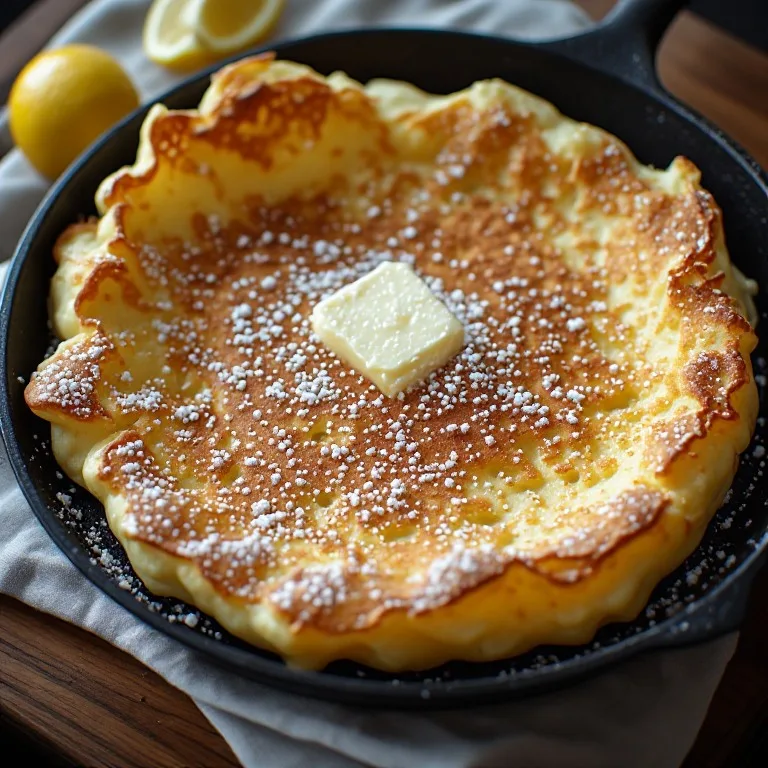
The Original Pancake House’s Dutch Baby arrives at the table still puffed, edges climbing three inches up a cast iron skillet, dusted with powdered sugar that begins to melt on contact. Servers carry it from kitchen to table at a clip because the window is narrow — within a minute of leaving the oven it will settle flat.

The recipe has been on the menu since 1953 and has barely changed. Two things separate it from the many Dutch baby recipes that have appeared since:

Heavy whipping cream, not milk. Most recipes use whole milk. The Original Pancake House uses heavy cream — 36% fat versus 3.5%. The fat coats the flour proteins and slows gluten development, producing a center that is custardy and silky rather than spongey. It also changes the color: the higher fat content caramelizes faster, giving the edges their deep, lacquered golden-brown.

Powdered sugar in the batter, not just on top. Standard recipes add a tablespoon of granulated sugar or nothing at all. The OPH batter uses 1/2 cup of powdered sugar whisked in. The cornstarch in powdered sugar (about 3% by weight) tenderizes the batter gently; the finer grind disperses without grainy texture; and it begins caramelizing at lower temperatures than granulated sugar, contributing to those darkened edges.

The third element is technique: a preheated cast iron skillet at 425°F. When the batter hits the hot, buttered surface, the steam begins generating immediately before any of the batter has set — this is what drives the dramatic puff. A cold pan produces a flat one.


What is a Dutch Baby vs. a German Pancake?

They are the same dish. The name “Dutch Baby” predates the Original Pancake House by decades. It was coined at Manca’s Cafe in Seattle in the early 1900s, when owner Victor Manca’s young daughter mispronounced “Deutsch” (German) as “Dutch”; Manca’s trademarked the name in 1942. The dish’s German name is Pfannkuchen, and older American menus also called it a Bismarck. The Original Pancake House didn’t invent the term when it opened in 1953, but its menu and nationwide franchise did more than anyone to make “Dutch baby” the dominant American name. OPH’s own menu still carries both: Dutch Baby with (German Pancake) in smaller type beneath.


The Physics of the Puff

The puff is entirely steam-driven. Eggs are mostly water; heavy cream is roughly 60% water; even the butter contributes moisture. When the batter lands in a 425°F cast iron pan, that moisture vaporizes almost instantly. The egg proteins in the batter are elastic when raw — they can expand as the steam pushes against them. As the steam expands, it pushes the batter up and outward along the hot walls of the pan; the edges climb, the center billows, and the whole structure rises into the dramatic dome you see at the table.

At around the 18-minute mark, the egg proteins finish coagulating. They set in the puffed position. The steam inside begins to escape through the golden surface. When you remove it from the oven, the remaining steam condenses rapidly and the structure collapses — this happens in about 60 seconds. The collapsed Dutch Baby tastes identical to the puffed one; only the show is gone.

Opening the oven during baking causes a temperature drop that can collapse the puff before the proteins have set. Don’t open the oven door.
🥗

Make It Healthier

Love The Original Pancake House Dutch Baby (German Pancake) but want a lighter version? Try these simple swaps:

  • ✓Use whole milk instead of heavy cream to cut about 200 calories per serving and 20g of fat — the result is a leaner Dutch baby with a slightly spongier (rather than custardy) center. Reduce the milk to 1/2 cup to compensate for the thinner consistency.
  • ✓Serve with fresh berries instead of (or in addition to) the lemon-sugar finish — strawberries, raspberries, or sliced peaches add natural sweetness and fiber without the extra powdered sugar dusting. The batter's mild sweetness pairs well with tart fruit.
  • ✓Cut to 3 eggs instead of 4 to reduce cholesterol and fat while keeping the dish essentially intact — the puff will be slightly less dramatic but still impressive. Don't reduce below 3 eggs or the structure won't hold.
  • ✓The whipped butter at the table is optional — the Dutch Baby already has 1/4 cup of butter cooked into it. Skipping the serving butter saves about 100 calories per person and you'll still get the full flavor profile from the lemon and powdered sugar.

Frequently Asked Questions

Why does the Dutch Baby deflate as soon as I take it out of the oven?

Every Dutch baby deflates — this is not a mistake. The puff is driven by steam expanding inside the egg-rich batter in the heat of the oven. The moment you remove it, the steam cools and contracts and the structure collapses back on itself. At the Original Pancake House, the Dutch Baby is brought to the table while it is still puffed and dramatically tall, so guests see it at its peak before it settles. At home, have your powdered sugar, lemon, and whipped butter ready so you can serve it within 60 seconds of pulling it from the oven. The collapsed version tastes identical to the puffed version — the visual is the only thing you lose by waiting.

Why does preheating the cast iron skillet matter so much?

The cast iron needs to be searingly hot when the batter lands in it — as hot as a sauté pan on high heat. That heat does two things simultaneously: it immediately begins setting the bottom of the batter (preventing the pancake from sitting in raw egg and soaking up butter before structure forms), and it vaporizes moisture in the batter instantly, creating the steam that drives the puff. A cold or room-temperature skillet allows the batter to sit and warm up slowly — by the time steam generates, the batter has already set partially in an uneven, flat shape and you lose most of the lift. Fifteen minutes at 425°F is the minimum; 20 minutes is better. The skillet should be too hot to touch the handle with a bare hand.

What is the difference between a Dutch Baby and a German Pancake?

They are the same dish. The term 'Dutch Baby' is older than the Original Pancake House — it was coined at Manca's Cafe, a family-run restaurant in Seattle, in the early 1900s. The widely repeated story is that owner Victor Manca's young daughter couldn't pronounce 'Deutsch' (German for 'German') and said 'Dutch' instead; Manca's trademarked the name 'Dutch Baby' in 1942, more than a decade before OPH opened. The dish itself is a German oven-baked pancake (Pfannkuchen), and older American menus sometimes called it a Bismarck. The Original Pancake House didn't invent the name when it put the dish on its 1953 menu, but its menu and nationwide franchise did more than anyone to make 'Dutch baby' a household word. The OPH menu carries both terms — 'Dutch Baby' as the headline and 'German Pancake' in parentheses beneath it. Today 'Dutch baby' is the dominant American term and 'German pancake' is increasingly rare, though both still appear on menus.

Can I use milk instead of heavy whipping cream?

You can, and the result will be a Dutch baby — but not the Original Pancake House Dutch Baby. The cream makes two concrete differences. First, fat content: heavy cream is 36–38% fat, whole milk is 3.5% fat. That fat coats the flour proteins and slows gluten development, producing a more tender, custardy interior that's distinctly richer. Second, steam: cream's higher fat content changes the steam profile in the oven. It produces a slightly softer, more custard-like center even at 425°F. Many standard Dutch baby recipes use whole milk (and they're good); the OPH version uses cream, which is why the center of their pancake has a texture closer to a baked custard than a pancake — slightly silky, not spongey. If you use whole milk, reduce it to 1/2 cup and add 1/4 cup half-and-half as a midpoint between milk and cream.

What skillet size should I use, and can I use something other than cast iron?

A 10-inch cast iron skillet is the standard, which is what the Original Pancake House uses. A 9-inch produces a thicker, more deeply custardy result; a 12-inch produces a thinner, crispier pancake with more dramatic edges. For this recipe (4 eggs), 10 inches is the right size — it gives the batter enough surface area to cook through in the center while the edges climb the sides dramatically. Can you use something other than cast iron? A stainless steel skillet or carbon steel pan works well if it is truly oven-safe to 425°F (check the handle — many stainless steel skillets have rubber or plastic grip elements that aren't safe that high). A nonstick pan technically works but the thin metal doesn't hold heat as well after you add the cold batter, which blunts the initial puff. Do not use a ceramic or glass baking dish: they take too long to heat up and don't transfer heat to the batter quickly enough for the dramatic rise.

What does the Original Pancake House serve with the Dutch Baby?

The classic OPH presentation is simple: the Dutch Baby arrives in the cast iron skillet still puffed, with a ramekin of whipped butter, a ramekin of powdered sugar, and fresh lemon wedges on the side. The standard service is to dust the top with powdered sugar immediately, add a pat of whipped butter into the center (it melts from the residual heat), and squeeze lemon wedges over everything. The lemon juice and powdered sugar interact to form a light citrus-sweet glaze that hits the crispy edges and pools in the center. Some OPH locations offer maple syrup as an alternative, and the restaurant's full menu includes seasonal variations with fresh berries, apple compote, and other fruit toppings — but the purist order is just butter, powdered sugar, and lemon.

Why does the OPH Dutch Baby have powdered sugar in the batter, not just on top?

Powdered sugar in the batter serves a different function than granulated sugar would. The cornstarch in powdered sugar (typically 3% by weight, added as an anti-caking agent) acts as a small tenderizer, interfering with gluten development in the same way that a pinch of cornstarch does in delicate cake recipes. More importantly, fine powdered sugar disperses evenly through the batter without creating the graininess that undissolved granulated sugar would produce, and it begins caramelizing at lower temperatures — this contributes to the golden, slightly caramelized edges of the OPH Dutch Baby. Standard home Dutch baby recipes often use a small amount of granulated sugar or no sugar at all; the powdered sugar in the batter is one of the two OPH-specific techniques (the other being the heavy cream) that make their version distinct.

Love this recipe? Share it!

Free PDF: our 12 most-wanted copycat recipes — instant download.

Made it? Buy us a coffee

Every recipe here is free, with no paywalls. If this one was a hit at your table, a small tip keeps new copycats coming.

$

The Original Pancake House is a trademark of its owner, used here only to describe the dish this recipe recreates. This is an independent copycat written in our own words — Copycat Spices is not affiliated with, endorsed by or sponsored by The Original Pancake House.

Ratings & Reviews

—
No ratings yet

Rate this recipe

Click a star to rate

Leave a Review

0/500

CS

Copycat Spices Editorial

Researched + fact-checked. Every recipe on Copycat Spices is built from published sources — official ingredient lists, brand-published recipes, interviews and food-science references — and fact-checked before it goes live, then written as clear, step-by-step instructions for home cooks of all skill levels.

Learn more about our mission →