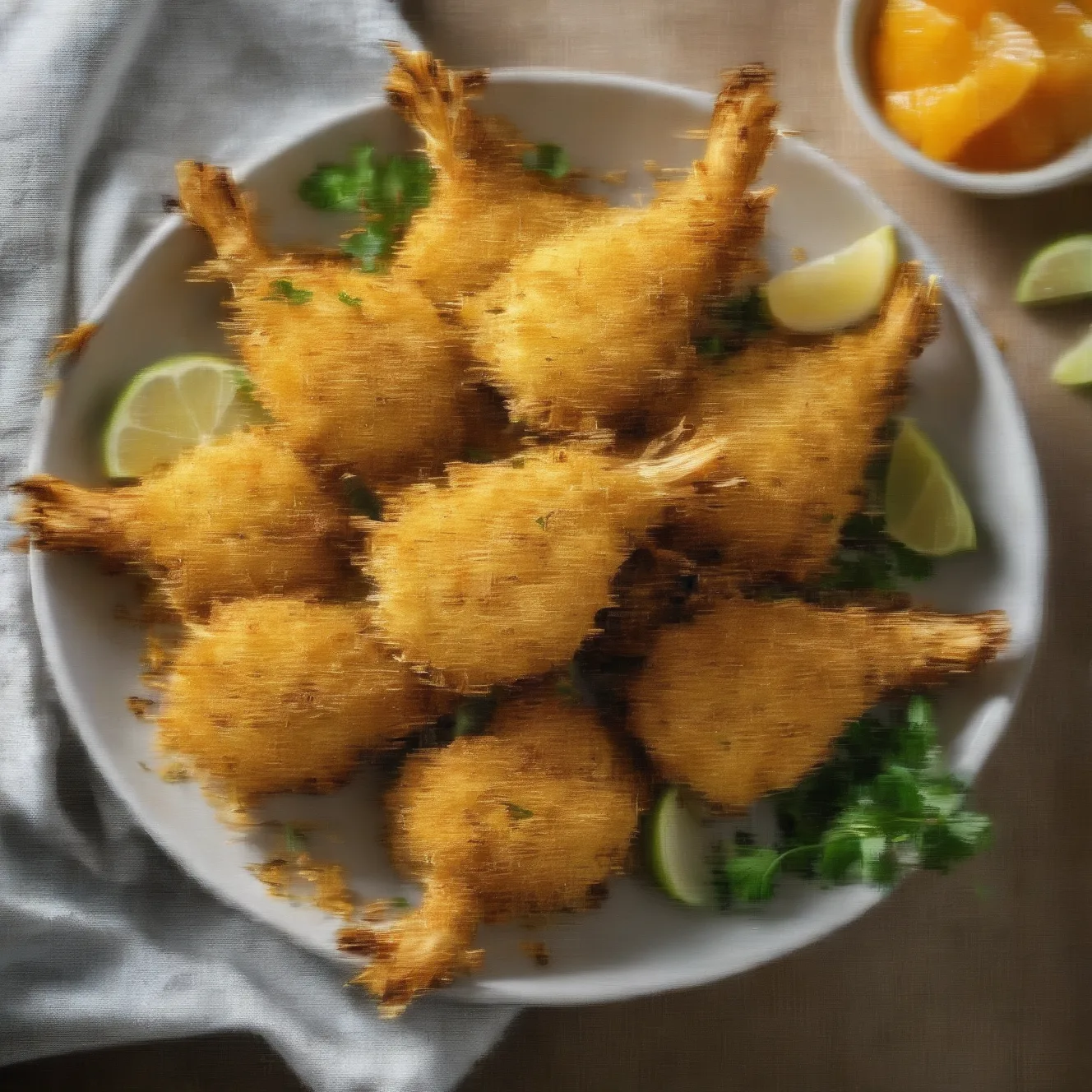
What Makes Outback’s Coconut Shrimp Different
The defining move in Outback’s Gold Coast Coconut Shrimp isn’t a seasoning secret — it’s the coating method that most copycat recipes get wrong.
Most home recipes dip shrimp in egg, then press them into a coconut-panko mixture. Outback’s documented process is different: shrimp go into a beer batter first — self-rising flour plus flat beer — and then roll directly in sweetened shredded coconut. No panko, no breadcrumbs. The beer batter creates a thin, slightly airy shell that bonds the coconut directly to the shrimp without a crumb layer in between. Every bite is shrimp, then coconut, without a breadcrumb midlayer competing for texture.
The second thing most recipes miss is the dipping sauce. Outback calls it “creole marmalade” — orange marmalade cut with Grey Poupon country Dijon (the chunky, seed-flecked one) and honey, finished with a few drops of Tabasco. It’s not the Bloom Sauce (no mayo), not sweet chili sauce — it’s bright, sweet, and tangy with visible mustard seeds.
The butterfly cut matters too. Flattening the shrimp before coating means it lies flat in the oil, both sides fry simultaneously, and the coconut has maximum surface area to adhere to.
Common Mistakes (and How to Avoid Them)
- Wet shrimp. Batter and coconut slide right off shrimp that aren’t bone-dry. Pat every butterflied shrimp with paper towels until the surface looks matte, not glossy.
- Fresh, fizzy beer. Live carbonation makes the batter foam up and thin out unevenly. Let the beer sit 20–30 minutes until flat, or use club soda that’s gone still.
- Oil above 350°F. Sweetened coconut carries a lot of sugar and scorches fast. The single biggest reason home coconut shrimp come out dark outside and cold inside is oil that crept to 375–390°F. Watch the thermometer, not the clock.
- Cold shrimp straight from the fridge. They tank the oil temperature the moment they hit it, so people crank the heat — and overshoot. Rest coated shrimp at room temperature for about 10 minutes before frying.
- Crowding the pot. Six shrimp is the right batch for a wide pot; more than that drops the temperature and steams the coating instead of crisping it.
- Plating ahead. These lose their crunch within roughly five minutes. Fry them last and serve straight from the rack.
How the Homemade Version Compares to Outback’s
The restaurant order is 6 shrimp with creole marmalade for about $15 and 940 calories. Made at home, six comparable 16/20 shrimp run around $6, and the batter, coconut, and sauce add a couple of dollars more — so you land near $8–9 for the same portion, with leftover sauce for next time. The flavor tracks closely because the two hard-to-guess details are handled: the flat-beer batter (not a panko crust) and the creole marmalade formula (not sweet chili sauce). The one thing a home fryer can’t fully match is Outback’s commercial fryer holding a rock-steady temperature — which is exactly why the thermometer matters so much in a home pot.
TL;DR
- 16/20 jumbo shrimp — butterflied, tail-on, completely dry
- Dip in flat-beer batter (self-rising flour + flat beer), then roll in sweetened shredded coconut
- Fry at exactly 350°F for 3½–4 minutes
- Dipping sauce: orange marmalade + Grey Poupon country Dijon + honey + Tabasco
For more Outback copycat recipes: Copycat Outback Bloomin’ Onion (with the real Bloom Sauce), Copycat Outback Alice Springs Chicken, and Copycat Outback Bread.