Pin It

Panera Cinnamon Crunch Bagel (Copycat)

Panera Cinnamon Crunch Bagel (Copycat)
Jump to Recipe
Prep 25 min + 1 hr rise Cook 22 min Serves 6
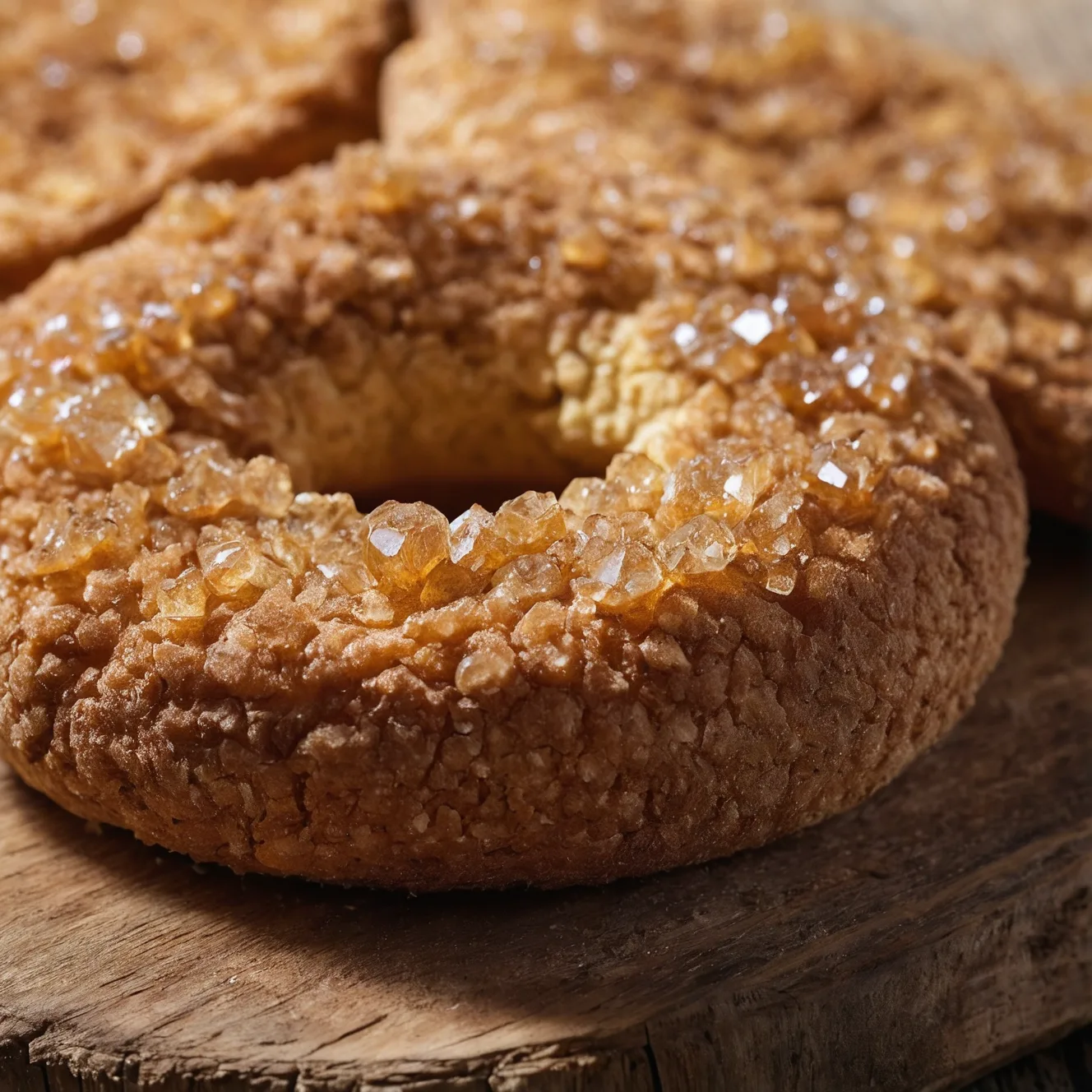
Quick answer: Panera's Cinnamon Crunch Bagel is a chewy boiled-then-baked bagel topped with caramelized cinnamon-sugar clusters — not a uniform coating of fine sugar. The crunch comes from Demerara or turbinado sugar (large crystals), mixed with cinnamon and a touch of butter, pressed firmly onto the shaped bagel before baking. Standard fine granulated sugar melts flat and vanishes; coarse-crystal sugar caramelizes unevenly, with the crystal centers staying intact while the edges fuse to the crust, creating the distinct cluster texture Panera is known for. The bagel itself is a honey boil (water + honey rather than malt syrup), which adds slight sweetness to the chewy exterior. One bagel runs about 420 calories at Panera; this home version is roughly 385 calories with the same topping technique.

Panera Cinnamon Crunch Bagel (Copycat)

The secret to Panera's Cinnamon Crunch Bagel isn't cinnamon sugar — it's coarse Demerara sugar that caramelizes into crunchy clusters on a chewy boiled bagel. 20-minute bake, makes 6.

Medium Prep: 25 min + 1 hr rise Cook: 22 min Total: 1h 47m6 servings ~$4.50/serving
Prep25 min + 1 hr rise
Cook22 min
Total1h 47m
Servings
6
At home~$4.50/serving
vs
Restaurant~$20.25/serving
You save ~78%

Ingredients

Instructions

💡
Pro tip: This recipe tastes even better the next day. The flavors need time to meld together in the fridge.
❄️
Storage: Keeps in an airtight container in the fridge for up to 2 weeks. Freezer-friendly for up to 3 months.
~350-550 cal/serving · Rich & Indulgent🔥

The Story Behind the Recipe

TL;DR: The crunch in Panera’s Cinnamon Crunch Bagel is coarse Demerara or turbinado sugar pressed onto a wet-from-boiling bagel. Fine granulated sugar melts flat — it will never produce the cluster texture. Use coarse crystal sugar, press firmly onto the wet surface right after boiling, and bake at 450°F until the topping caramelizes (18–22 minutes).


What Actually Makes the Crunch

Most copycat recipes for Panera’s Cinnamon Crunch Bagel use regular granulated cinnamon sugar. The results look right in photos but miss the entire point of the original: the distinctive caramelized clusters on the top that create a crunchy, slightly candied exterior against the chewy bagel beneath.

The cluster texture is not a coating — it’s a structure, and that structure depends entirely on using coarse-crystal sugar. Granulated sugar has crystals roughly 0.5mm across. Demerara or turbinado sugar has crystals 1.5–3mm across — three to six times the size. When these larger crystals hit 450°F oven heat, their outer edges melt and fuse to the bagel surface and to each other, while the crystal centers remain partially intact. The result is a surface of caramelized clusters — each one a fused island of sugar with a slightly crunchy interior. Fine sugar has no mass to preserve: it melts completely into a thin caramel sheet, which either burns to bitterness before the bagel is done, or disappears entirely and leaves you with a slightly sticky surface.

“Sugar in the Raw” is turbinado and works well. Demerara is the closest match to what produces Panera’s texture. Both are available in most supermarkets. This single ingredient change is what separates a successful copycat from one that looks like a pale imitation.

The Bagel Base: Stiff Dough, Honey Boil

Bagel dough is fundamentally different from bread dough: it’s much stiffer (about 55% hydration vs. 65–75% for bread), it gets only one real rise before shaping, and it’s boiled before baking. Each of those things is load-bearing.

The stiffness is why bagels have dense, chewy crumb rather than an open, airy structure. There isn’t enough water to create large air pockets; the gluten network stays tight and the finished texture is accordingly firm and chewy. If you’ve ever made pizza dough or focaccia and found them too airy to feel like a bagel — that’s the hydration difference at work.

The boil gelatinizes the starch on the outer surface before any oven crust can form, creating the characteristic exterior texture that you can’t achieve any other way. When starch gelatinizes in boiling water, it creates a smooth, slightly glossy surface that remains chewy after baking rather than crackling or drying. It also seals the surface, which is what allows the cinnamon-sugar topping to sit in distinct clusters rather than bleeding into the dough.

This recipe uses a honey boil (water + 2 tablespoons of honey) rather than the malt syrup boil common in New York bagel shops. Honey gives the exterior a subtle sweetness that reinforces the cinnamon-sugar topping; malt syrup would add a slightly savory, pretzel-adjacent note that doesn’t suit the Cinnamon Crunch profile. Either works structurally.

Shaping: Why the Hole Needs to Be Bigger Than You Think

Bagel holes shrink during both the boil and the bake. A ring that looks right on the counter will come out of the oven with a hole barely half the original size, or no hole at all if you weren’t aggressive enough. When shaping, aim for a hole diameter of at least 1.5 inches after stretching — it should feel comically large relative to the dough ring. A 30-minute rest after shaping lets the gluten relax slightly, which prevents the ring from springing back as aggressively when you try to maintain the hole size.

The two most common shaping methods: (1) poke-and-stretch — push your thumb through the center of a dough ball and gradually stretch the ring; (2) rope method — roll the dough into a 10-inch rope and join the ends, overlapping by about 1.5 inches and pressing firmly to seal. Both work; the rope method produces a more uniform ring and is less likely to have a thick spot at the base.

Boiling Timing Matters

45 seconds per side. This is not a range — it’s a specific time that produces the right surface without overcooking the interior. Less than 30 seconds per side and the crust won’t set fully; more than 60 seconds per side and the interior gets dense in the wrong direction (not chewy-dense, just heavy). Set a timer.

The bagels float as soon as you add them, which is normal — the gas from the yeast keeps them buoyant. You’ll need to flip them gently with a slotted spoon at the 45-second mark.

Adding the Topping: Wet Bagels, Firm Press

The window to apply the topping is narrow: the bagels must be wet from the boil — that surface moisture is what bonds the sugar clusters to the crust. Once they dry (which happens within 2–3 minutes), the topping won’t adhere the same way and you’ll end up with loose sugar that falls off during baking.

Press firmly. Lay the cinnamon-Demerara mixture on a flat plate or shallow bowl, invert each wet bagel (top-side down) into the mixture, and press with moderate pressure for about 5 seconds so the sugar bonds to the curved surface. Then flip right-side up onto the baking sheet. Alternatively, spoon the topping on generously and press with your palm. Either way: firm contact, wet surface, immediate transfer to the oven within 5–10 minutes.

Baking: 450°F, Don’t Pull Too Early

The high oven temperature (450°F) is necessary for two things: the bagel exterior needs the intense heat to fully set and develop color, and the cinnamon-sugar topping needs that heat to caramelize properly rather than just drying out. At a lower temperature (375°F), the sugar dries before it caramelizes, producing a sandy, dull surface without the cluster structure.

Watch the topping, not just the bagel color. At minute 16, the topping will still look sandy and pale — not done. By minute 20–22, it should look darkened, slightly glossy-candied in spots, and you’ll be able to see distinct caramelized clusters rather than a uniform powder. The bagel dome will be deep golden-brown. If the bagel is browning but the topping still looks pale, give it another 2 minutes.

The topping will feel slightly soft and tacky right out of the oven — that’s normal. It firms up and crisps as it cools. Give it 10 minutes on a rack before slicing.


For more Panera bread baking: the Panera Bread Bowl uses a sourdough boule as the vessel — same high-heat baking principle, completely different crumb structure. For more sweet baked goods in this style, the Cinnabon Classic Cinnamon Roll uses Korintje cinnamon for a similar intensified-cinnamon effect, though in enriched-dough form rather than bagel form.
Nutrition Facts

Per serving (6 servings)
Calories385
Total Fat5g
Total Carbs74g
Dietary Fiber3g
Sugars14g
Protein11g
Sodium380mg

* Estimated values based on standard recipe preparation. Actual values may vary.

🥗

Make It Healthier

Love Panera Cinnamon Crunch Bagel (Copycat) but want a lighter version? Try these simple swaps:

  • Reduce the topping to 1 teaspoon per bagel to cut sugar to about 8g per bagel — you still get the cluster texture, just less of it.
  • Whole wheat bread flour can replace up to half the bread flour for added fiber, though the texture will be slightly less chewy.
  • Skip the butter in the topping and use a light spritz of water to help the sugar adhere — saves about 10 calories per bagel and still works.
  • Pair with plain cream cheese instead of flavored (honey walnut, brown sugar) to avoid adding another 6–8g of sugar to the pairing.

Equipment You'll Need

Stand Mixer or Strong Arms

Bagel dough is stiff — a dough hook at medium-low for 8 minutes saves significant effort; hand-kneading works but takes 10–12 minutes

Wide Pot or Deep Skillet

For boiling; needs to be wide enough to hold 2–3 bagels at once without crowding

Slotted Spoon

For lowering bagels into the water and retrieving without tearing

Kitchen Scale

For dividing the dough evenly into 6 portions; visual division produces unevenly sized bagels

Parchment-Lined Baking Sheets

Two sheets — one for the rise after shaping, one for the final bake; parchment prevents sticking with the sugary topping

Frequently Asked Questions

Why does my cinnamon-sugar topping melt flat instead of forming clusters like Panera's?

Almost certainly because you used fine granulated sugar. Panera's crunch comes from coarse-crystal sugar — Demerara, turbinado, or raw cane sugar — with crystals roughly 3–4x larger than granulated. When large sugar crystals hit oven heat, their outer edges melt and fuse to the bagel surface while the crystal centers remain partially intact, creating the bumpy, clustered texture. Fine granulated sugar has no mass to preserve — it melts completely into a thin caramel sheet, then either burns or vanishes. Demerara sugar is the closest widely available match; turbinado works almost identically. Sugar in the Raw is turbinado and works well. If you can only find granulated sugar, mix in 2 teaspoons of light brown sugar for slight clumping, but results won't match the real cluster texture.

Why do you boil bagels before baking — can you skip it?

Boiling sets the outer crust before the interior bakes, creating the glossy, chewy-smooth exterior that's the defining texture of a real bagel. The boiling water gelatinizes the surface starches before a crust can form in the oven, which is what produces that characteristic chew-and-slight-resistance rather than the soft, bready texture of a dinner roll. Skipping the boil produces something closer to a bread roll in bagel shape. The boil also seals the surface so the topping adheres cleanly in distinct clusters rather than bleeding into the dough. Adding honey to the boiling water (as this recipe does) gives the exterior a subtle sweetness and helps the crust brown more evenly in the oven.

What's the best flour for bagels — all-purpose or bread flour?

Bread flour, always. Bagels need high gluten development to achieve that characteristic dense, chewy crumb; all-purpose flour (lower protein, around 10–11%) produces a softer, less chewy result. Bread flour (12–13% protein) develops a stronger gluten network that holds its shape through the boiling step without becoming soft or puffy. If you only have all-purpose flour, the recipe will still work, but the texture will be noticeably softer and less chew-forward. King Arthur bread flour is the most widely available high-protein option and produces excellent results.

Can I make the dough the night before?

Yes, and the overnight cold-proof produces a slightly deeper flavor. After the first knead, divide the dough into 6 portions, shape into balls, cover tightly with plastic wrap, and refrigerate overnight (up to 18 hours). The next morning, let the shaped dough balls rest at room temperature for 30–40 minutes, then shape into bagel rings and proceed with the boil and bake. The longer, slower fermentation gives the yeast more time to develop organic acids that add complexity. Do not cold-proof for more than 18–20 hours or the dough may over-ferment and lose its structure.

How is Panera's Cinnamon Crunch Bagel different from a plain cinnamon-raisin bagel?

Three things: no raisins (the Cinnamon Crunch Bagel has no fruit), the topping is external (coarse caramelized cinnamon sugar on the outside) rather than mixed into the dough, and the texture is specifically crunchy-on-soft rather than the uniform sweetness of a raisin bagel where the sweetness comes from inside. The crunch exterior and chewy interior create a textural contrast that a cinnamon-raisin bagel doesn't have. The Cinnamon Crunch Bagel is sweet enough to eat plain or toasted without any spread; a cinnamon-raisin bagel is better with cream cheese as a flavor contrast.

What cream cheese goes best with this bagel?

Honey walnut or brown sugar cinnamon cream cheese amplifies the cinnamon-sweet angle and is the classic Panera pairing. Plain cream cheese (slightly tangy) balances the sweetness and is the safest choice if you want contrast rather than more sweetness. Avoid savory cream cheeses (chive, vegetable) — the flavor profile fights the sweet topping. If you want to go further: spread softened cream cheese, drizzle with honey, and toast lightly for 2–3 minutes in a toaster oven so the cream cheese warms slightly and the caramelized topping re-crisps. That preparation makes this a genuinely excellent breakfast.

How long do homemade bagels stay good, and should I freeze them?

Homemade bagels are best within 12–18 hours of baking. Without commercial preservatives, they go stale faster than store-bought. For longer storage: freeze immediately after fully cooling (within 2 hours of baking), not after they've sat out overnight. Slice before freezing so you can toast directly from frozen — no thawing needed. The cinnamon crunch topping softens slightly in the freezer but re-crisps within 90 seconds in a toaster or 3–4 minutes in a 375°F oven. Do not refrigerate bagels — the fridge accelerates staling faster than room temperature.

Love this recipe? Share it!

Shop the tools

Gear matched to this recipe's equipment list. We may earn a small commission if you buy through these links — at no extra cost to you.

As an Amazon Associate, Copycat Spices earns from qualifying purchases.

Free PDF: our 12 most-wanted copycat recipes — instant download.

Ratings & Reviews

No ratings yet

Rate this recipe

Click a star to rate

Leave a Review

0/500

CS

Copycat Spices Test Kitchen

Every recipe on Copycat Spices is developed and tested in our home test kitchen. We reverse-engineer beloved restaurant dishes and refine each one until the flavors and the instructions work reliably for home cooks of all skill levels.

Learn more about our mission →