Prince's Hot Chicken (The Original Nashville Recipe, Made at Home)
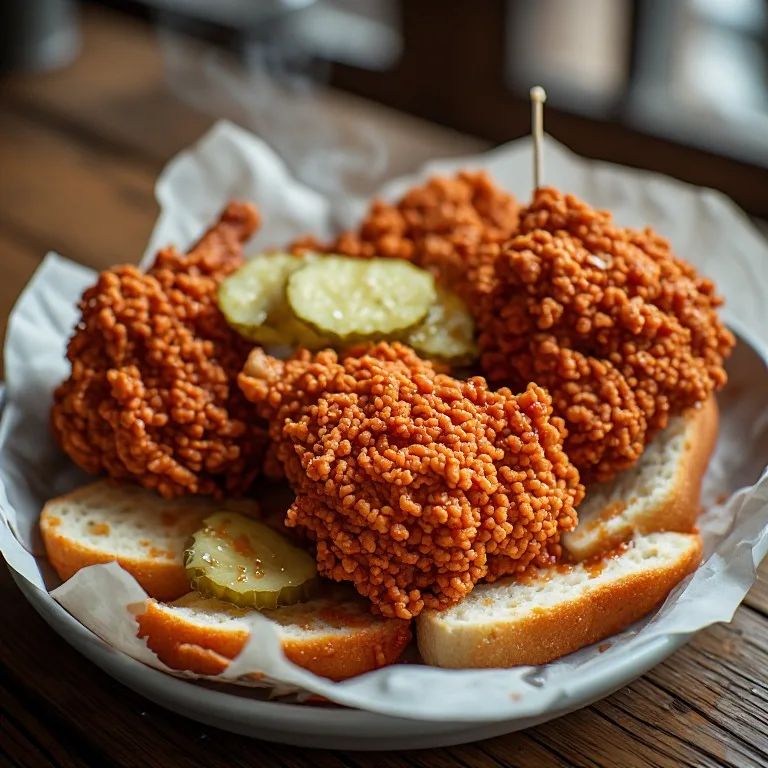
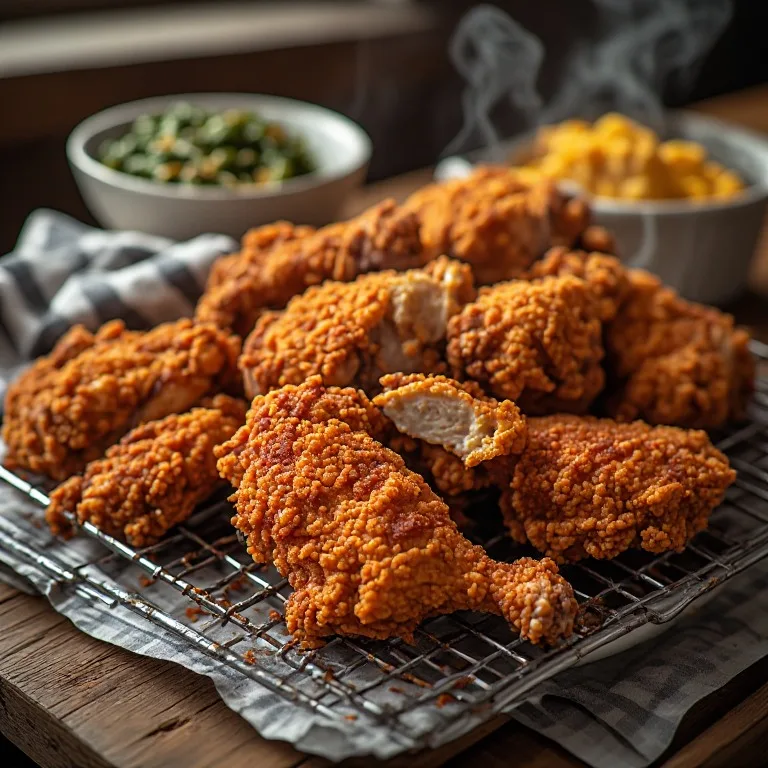
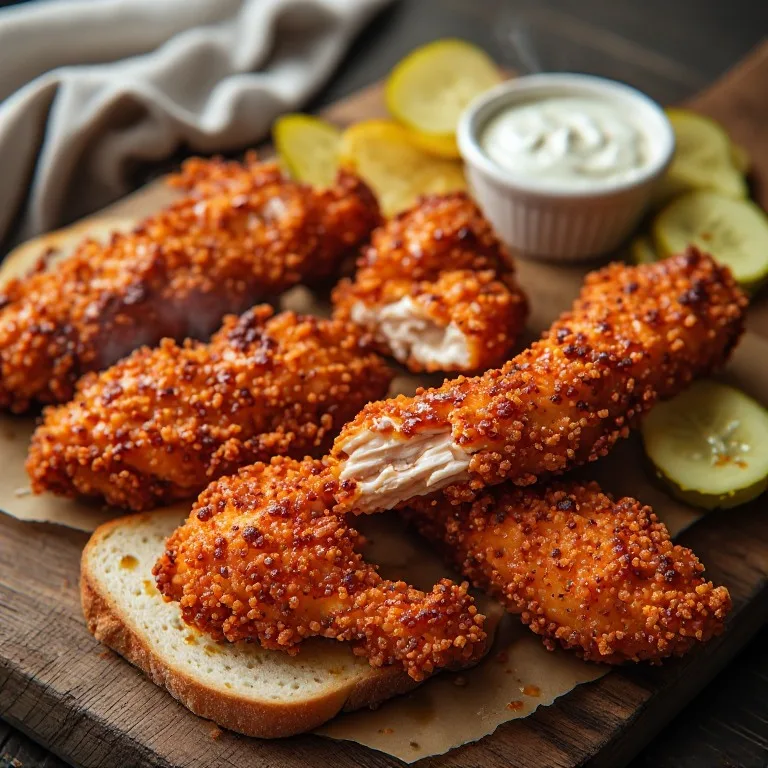
Quick answer: Dry-brine 3 lbs bone-in skin-on chicken pieces (thighs and drumsticks) with 1 tablespoon kosher salt rubbed all over; rest 2 to 4 hours uncovered in the refrigerator. Make the dredge: combine 2 cups all-purpose flour with 1 teaspoon each of kosher salt, black pepper, and garlic powder, plus 1/2 teaspoon paprika. Pat the chicken dry, dredge each piece firmly through the flour so every surface is coated, and rest on a rack for 10 minutes. Heat 3 inches of lard or peanut oil to 350°F in a Dutch oven. Fry 2 to 3 pieces at a time — thighs 14 to 16 minutes, drumsticks 12 to 14 minutes — until golden and 165°F internal. While the last batch fries, make the hot oil paste: ladle 3 tablespoons of the very hot frying lard from the pot directly into a heatproof bowl, then immediately whisk in 2 tablespoons cayenne, 1 teaspoon brown sugar, 1 teaspoon paprika, 1/2 teaspoon garlic powder, and 1/4 teaspoon salt (this is Medium heat — see FAQ for the full heat scale). As each piece finishes frying, brush it immediately and generously with the paste while still sizzling hot. Serve directly on two slices of plain soft white sandwich bread with dill pickle chips.
Shop the tools
Gear matched to this recipe. These are Amazon affiliate links — we may earn a small commission if you buy, at no extra cost to you.
 Illustrative imageLodge 10.25" Cast Iron SkilletThe restaurant-grade sear most copycats depend onCheck price on Amazon →
 Illustrative imageInstant-Read Digital ThermometerNail fry-oil and doneness temps every timeCheck price on Amazon →
 Illustrative imageNordic Ware Half Sheet PanCommercial-quality aluminum, bakes dead evenCheck price on Amazon →
As an Amazon Associate, Copycat Spices earns from qualifying purchases. Product images are generic illustrations, not the exact item listed.
Prince's Hot Chicken (The Original Nashville Recipe, Made at Home)
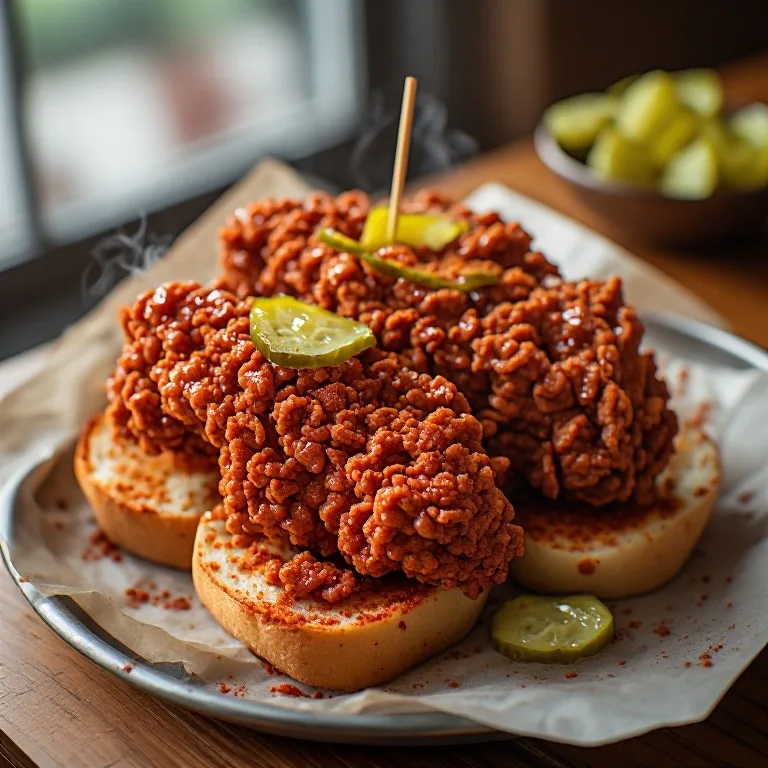
The original Nashville hot chicken at home: bone-in pieces fried in lard, hit immediately with a sizzling cayenne paste made from the same hot oil you just fried in. The dish that inspired Dave's, Hattie B's, and every hot chicken restaurant in America. One location since the 1940s — about $14 at the shack, under $12 at home for four.
Medium
Prep: 20 min (plus 2–4 hr dry brine)
Cook: 35 min
Total: 4h 55m4 servings
~$4.50/serving
At home~$4.50/serving
vs
Restaurant~$20.25/serving
You save ~78%
The Story Behind the Recipe
Thornton Prince opened the Bar-B-Q Chicken Shack in Nashville in the 1940s. The origin story has been told so many times it has reached the status of Nashville mythology: a woman who'd had enough of Prince's wandering ways deliberately loaded his fried chicken with cayenne and hot pepper, intending it as punishment. Prince loved it. He refined the recipe and turned it into a business. André Prince Jeffries, Thornton's great-niece, took over running the kitchen in 1980 and still runs Prince's today. She has not changed the recipes.
The beloved original on Ewing Drive — where generations of Nashvillians lined up, often more than an hour on a weekend — was destroyed by a fire in 2018 and never rebuilt on that spot. Prince's now serves from a flagship at 5814 Nolensville Pike in South Nashville, with additional outposts at the downtown Assembly Food Hall and the Tanger Outlets in Antioch. What hasn't changed is the chicken itself: the same spice paste, the same bone-in pieces, the same white-bread-and-pickle service that started the whole thing.
For most of its existence, Prince's was a Nashville institution largely unknown outside the South. That changed in the 2010s when a new generation of Nashville hot chicken restaurants — Hattie B's in 2012, Bolton's, and eventually Dave's Hot Chicken going national — sent food writers searching for the origin. The dish they found at Prince's differed from all its successors in one crucial technical way: the spice paste is made from the same hot lard used to fry the chicken, ladled directly from the fryer while still at frying temperature. The frying fat, now carrying flavor from the chicken itself, becomes the paste vehicle when mixed with cayenne, a little brown sugar, garlic, and paprika. Dave's uses tenders and a separately-prepared cayenne oil. Hattie B's uses a paste made with fresh oil. Prince's uses the hot cooking lard itself, right from the pot — the simplest and most concentrated method, unchanged since it began.
Nutrition Facts
Per serving (4 servings)Calories620
Total Fat44g
Total Carbs18g
Dietary Fiber1g
Sugars2g
Protein35g
Sodium760mg
* Estimated values based on standard recipe preparation. Actual values may vary.
Ingredients
- For the chicken and dry brine
- For the dredge
- For frying
- For the hot oil paste (Medium heat — see FAQ for the full heat scale)
- For serving
Instructions
Pro tip: This recipe tastes even better the next day. The flavors need time to meld together in the fridge.
Storage: Keeps in an airtight container in the fridge for up to 2 weeks. Freezer-friendly for up to 3 months.
Free PDF — instant download. We'll also send new seasonal copycat recipes now and then; unsubscribe anytime. Or just download it →
🎉 Your Halloween Cookbook is ready!
It's free — but if it's worth something to you, you can pay what you want. It keeps the recipes coming.
$
✓ Downloading your free Halloween Cookbook — check your downloads folder. Happy cooking!
Make It Healthier
Love Prince's Hot Chicken (The Original Nashville Recipe, Made at Home) but want a lighter version? Try these simple swaps:
- ✓Switch from lard to peanut oil: you lose a fraction of the distinctive richness but cut roughly 40 calories per serving, and the paste works identically — the hot frying oil carries the same cayenne-depth regardless of which fat you used.
- ✓Air fryer version: spray dredged pieces generously with cooking spray, air fry at 400°F for 22–25 minutes turning once. For the paste, heat 3 tablespoons of lard or neutral oil until almost smoking, then whisk in your cayenne blend. Cuts about 160 calories per serving.
- ✓One slice of white bread under the chicken still absorbs the dripping paste and saves 70 calories without losing the essential eating experience.
- ✓For Medium heat, reducing the cayenne from 2 tablespoons to 1.5 cuts about 10% of heat intensity with no change to flavor depth — the brown sugar and garlic components remain the same.
Frequently Asked Questions
What makes Prince's Hot Chicken different from Hattie B's or Dave's Hot Chicken?
Three things separate Prince's from every restaurant it inspired. First, the chicken is always bone-in whole pieces — thighs, drumsticks, sometimes breast — not tenders, not sandwiches. Second, Prince's fries in lard, not vegetable oil; the rendered pork fat is part of the flavor in a way that neutral oils cannot replicate. Third, and most importantly, the spice paste is made from the actual hot lard you just fried in — not a separately prepared cayenne oil. When you ladle smoking hot frying fat that has been cooking chicken for 30 minutes into cayenne and spices, the paste picks up a savory depth that no fresh oil can match. Dave's Hot Chicken uses tenders and a prepared cayenne oil — it's excellent but a descendant of Prince's, not the original. Hattie B's is also very good, with six named heat levels, table service, and multiple locations. Prince's is the simpler and more concentrated original: bone-in only, fried in lard, and a paste technique that hasn't changed since the 1940s.
What are Prince's heat levels and how do I scale them at home?
Prince's traditionally offers Plain, Mild, Medium, and Hot, with an informal Extra Hot and XXX for those who ask and should probably know better. The recipe here uses 3 tablespoons of hot frying oil as the paste base throughout; what changes is the cayenne: Plain — no paste at all. Mild — 1/2 tablespoon cayenne. Medium — 2 tablespoons cayenne. Hot — 3 tablespoons cayenne. Extra Hot — 4 tablespoons cayenne plus 1/2 teaspoon habanero powder. XXX — 5 tablespoons cayenne plus 1 teaspoon habanero powder plus 1/4 teaspoon ghost pepper powder (you will feel this for several hours). Keep the brown sugar, garlic powder, and paprika constant across all levels — the sugar is not about sweetness, it balances the cayenne so the paste tastes like something rather than just unrelenting burn.
Why is the paste made from the hot frying oil rather than a separately prepared oil?
This is the core technique that makes Prince's paste different from every recipe that came after it. Lard that has been frying chicken for 30 to 45 minutes is not just hot fat — it's fat that has absorbed rendered chicken juices, caramelized flour particles from the dredge, and small amounts of dry seasoning that fell off each piece. When you ladle this oil into a bowl and whisk it with cayenne and spices, the paste has a baseline of chicken-fat depth built in before you've added anything. A fresh neutral oil produces a brighter, sharper cayenne hit. The frying-fat paste produces something rounder and more savory. You can only do this correctly by scooping the oil right from the fryer while it's still above 300°F — if it cools, lard congeals and becomes difficult to whisk. Have your spice bowl measured and ready before the last piece of chicken goes into the oil.
Do I need lard, or can I use vegetable oil?
Lard is the traditional and preferred choice. Rendered leaf lard (from butcher shops) has the cleanest flavor; regular rendered lard from grocery stores works well. The flavor difference between lard and vegetable oil is subtle but real: lard produces a richer crust and a paste with more savory depth. If lard isn't accessible, peanut oil is the best substitute — high smoke point, neutral flavor, excellent frying performance. The important point in either case: use the actual hot frying fat (whatever kind) to make the paste — do not substitute fresh or room-temperature oil. Vegetable shortening (Crisco) is a reasonable middle option that fries similarly to lard and produces a usable paste.
Does Prince's use a buttermilk brine like Hattie B's?
No. Prince's does not use a buttermilk brine — this is one of the clearest technical distinctions between the original and its successors. Hattie B's and most modern Nashville hot chicken recipes soak in buttermilk because the lactic acid tenderizes the meat and helps the flour build a thicker, craggier crust. Prince's approach is simpler: the chicken is not marinated or soaked, just dredged in seasoned flour. The crust at Prince's is thinner and crisper than a buttermilk-brined version; the interior stays moist because the lower frying temperature gives bone-in pieces time to cook through without drying out. This recipe uses a dry brine — salt rubbed on the chicken and left to absorb for 2 to 4 hours — as a practical middle path: it seasons the interior without changing the dredge mechanics, and you get most of the moisture benefit without the buttermilk coating that would make this recipe more like Hattie B's.
Can I use boneless chicken or tenders instead of bone-in pieces?
Yes, but the result is a different dish. Boneless chicken thighs work well and fry in 8 to 10 minutes at 350°F — they keep the paste-soaking crust surface and dark-meat richness of the original. Tenders (the tenderloin strip from the breast) fry in 5 to 6 minutes and are what Dave's Hot Chicken built an empire on. They're excellent, but they're the modern descendant of this recipe. Bone-in whole pieces produce a thicker crust with more surface area for the paste to soak into, and the longer fry time drives out more surface moisture so the crust absorbs the paste rather than repelling it. If you want to make the dish the way Prince's makes it, use bone-in dark meat.
Why is it served on plain white bread, and do I need the pickles?
The white bread is not a placeholder — it's load-bearing. Plain soft sandwich bread soaks up the cayenne-oil that drips off the chicken while you eat, and the last bite of bread, now deeply saturated with spiced lard, delivers a concentrated hit that nothing else on the plate provides. Use Wonder Bread or a generic soft white loaf — thick artisan bread doesn't absorb properly and disrupts the ratio. Dill pickle chips are equally important: the acid and brine cut through the fat between bites and reset your palate so the next bite reads at full heat intensity rather than cumulative numbness. Do not skip the pickles. Eat the bread last.
Where is Prince's Hot Chicken and what are the hours?
Prince's flagship is now at 5814 Nolensville Pike in South Nashville, generally open Monday through Saturday from late morning to about 10 p.m. and closed Sunday — always confirm current hours before visiting, since they shift. There are also locations at the downtown Assembly Food Hall (5055 Broadway Place) and the Tanger Outlets in Antioch. The original Ewing Drive shack — the cash-only room with lines out the door that built the legend — was destroyed by a fire in 2018 and never rebuilt on that site. André Prince Jeffries, who has run Prince's since 1980, kept the recipes exactly as they were, so the hot chicken you get today is the same chicken that started the entire Nashville tradition.
Love this recipe? Share it!
Made it? Buy us a coffee
Every recipe here is free, with no paywalls. If this one was a hit at your table, a small tip keeps new copycats coming.
$
💛 Support checkout is coming soon — the cookbook stays free either way.
Prince's Hot Chicken Shack is a trademark of its owner, used here only to describe the dish this recipe recreates. This is an independent copycat written in our own words — Copycat Spices is not affiliated with, endorsed by or sponsored by Prince's Hot Chicken Shack.
Ratings & Reviews
Rate this recipe
Click a star to rate