Quick answer: Combine 2 cups of whole buttermilk with 2 tablespoons of Louisiana-style hot sauce, 1 tablespoon of cayenne pepper, 1 tablespoon of kosher salt, 1 teaspoon of black pepper, and 1 teaspoon of garlic powder in a large bowl. Add one 3.5 to 4 pound chicken cut into 8 pieces, making sure every piece is submerged. Refrigerate for at least 8 hours — overnight is ideal; this is where all the heat lives. When ready to fry, whisk together 2 cups of all-purpose flour with 1.5 teaspoons of kosher salt, 1 teaspoon of black pepper, 1.5 teaspoons of cayenne, 1 teaspoon of garlic powder, 1 teaspoon of onion powder, and 1 teaspoon of paprika in a wide shallow dish. Lift each piece from the brine (let the excess drip but keep the chicken wet — the buttermilk film is the adhesive), press it firmly into the seasoned flour, and set on a wire rack. Let the dredged pieces rest 10 minutes so the flour hydrates and bonds. Pour 1 inch of lard, peanut oil, or vegetable oil into a 12-inch cast iron skillet. Heat over medium-high until a probe thermometer reads 325°F. Working in batches of 2 to 3 pieces, fry skin-side down for 12 to 14 minutes, then flip and fry another 10 to 12 minutes, until the crust is deep golden and a probe reads 165°F in the thickest part of the thigh. The crust should shatter when you break it, not bend. Drain on a wire rack, never paper towels. Serve with white bread alongside.
Shop the tools
Gear matched to this recipe. These are Amazon affiliate links — we may
earn a small commission if you buy, at no extra cost to you.
As an Amazon Associate, Copycat Spices earns from qualifying purchases.
Product images are generic illustrations, not the exact item listed.
Gus's World Famous Fried Chicken (Memphis Spicy Fried Chicken, Made at Home)
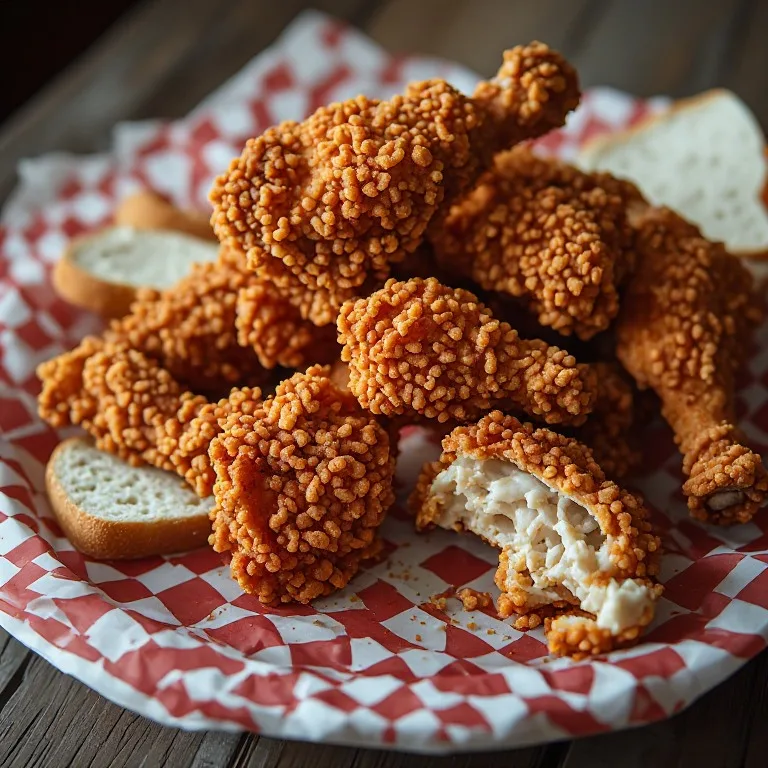
The real Gus's World Famous Fried Chicken at home: whole chicken pieces brined overnight in buttermilk spiked with cayenne and hot sauce, then shallow-fried in a cast iron skillet until the crust shatters and the heat hits slow. A half chicken at the Front Street Memphis location runs $15 — this batch feeds four for under $12 total.
Medium
Prep: 20 min
Cook: 35 min
Total: 55 min4 servings
~$4.50/serving
Prep20 min
Cook35 min
Total55 min
Servings
4
At home~$4.50/serving
vs
Restaurant~$20.25/serving
You save ~78%
The Story Behind the Recipe
Napoleon "Na" Bonner and his wife Maggie ran a small chicken business in Mason, Tennessee, a rural town between Jackson and Memphis — the family dates its chicken there to the 1950s. The spiced buttermilk fried chicken that would eventually make the Bonner name famous was built into the brine rather than applied as a paste, which meant the heat permeated the meat from the inside instead of coating the surface. For decades it was a local secret, the kind of place regulars drove out of their way to reach but that appeared on no national list.
After Na and Maggie died in the early 1980s, their son Vernon "Gus" Bonner and his wife Gertrude reopened the restaurant in 1984 as Gus's World Famous Hot and Spicy Fried Chicken — "Gus" was Vernon's own nickname. The chain began franchising in 2001, and the Downtown Memphis location on Front Street near the Mississippi riverfront is the one that launched the national reputation; waits there routinely exceed an hour on weekends, and a half chicken runs about $15. This recipe costs under $12 for four people, and the technique — all of it in the brine, cast iron, 1 inch of lard at 325°F — takes it exactly where it needs to go.
Nutrition Facts
Per serving (4 servings)
Calories680
Total Fat42g
Total Carbs22g
Dietary Fiber1g
Sugars2g
Protein50g
Sodium820mg
* Estimated values based on standard recipe preparation. Actual values may vary.
Ingredients
Chicken and brine
Seasoned flour dredge
For frying
To serve
Instructions
💡
Pro tip: This recipe tastes even better the next day. The flavors need time to meld together in the fridge.
❄️
Storage: Keeps in an airtight container in the fridge for up to 2 weeks. Freezer-friendly for up to 3 months.
🎃 Free Halloween cookbook — download now
The Copycat Halloween Cookbook
A ready-made, photo-illustrated PDF of our best halloween copycat
recipes — free to download, no building required. Pay what you want to support if you love it.
Free PDF — instant download. We'll also send new seasonal copycat recipes now
and then; unsubscribe anytime.
Or just download it →
🎉 Your Halloween Cookbook is ready!
It's free — but if it's worth something to you, you can pay what you want.
It keeps the recipes coming.
$
✓ Downloading your free Halloween Cookbook — check your downloads folder. Happy cooking!
CopycatSpices
Gus's World Famous Fried Chicken (Memphis Spicy Fried Chicken, Made at Home)
The real Gus's World Famous Fried Chicken at home: whole chicken pieces brined overnight in buttermilk spiked with cayenne and hot sauce, then shallow-fried in a cast iron skillet until the crust shatters and the heat hits slow. A half chicken at the Front Street Memphis location runs $15 — this batch feeds four for under $12 total.
gus · american · southern · chicken
🕑Prep20 min
🍳Cook35 min
⏱Total55 min
🍽Serves4
⭐DifficultyMedium
Ingredients
Chicken and brine
One 3.5 to 4 lb whole chicken, cut into 8 pieces (or 3 lb bone-in thighs and drumsticks)
2 cups whole buttermilk
2 tbsp Louisiana-style hot sauce (Crystal, Frank's, or Louisiana brand)
1 tbsp cayenne pepper
1 tbsp kosher salt
1 tsp black pepper
1 tsp garlic powder
Seasoned flour dredge
2 cups all-purpose flour
1.5 tsp kosher salt
1 tsp black pepper
1.5 tsp cayenne pepper
1 tsp garlic powder
1 tsp onion powder
1 tsp paprika
For frying
Lard, peanut oil, or vegetable shortening — enough to fill a 12-inch cast iron skillet to 1 inch (roughly 2 to 3 cups)
To serve
4 to 6 slices soft white sandwich bread
Louisiana-style hot sauce for the table
Instructions
1.Make the brine. In a large bowl, whisk together the buttermilk, hot sauce, cayenne, kosher salt, black pepper, and garlic powder until the salt dissolves and the brine is uniformly orange-red. This is where all of Gus's heat comes from — unlike Nashville hot chicken, there is no paste applied after frying. Taste the brine: it should be assertively spicy and salty, more than feels right for drinking. The chicken will absorb and dilute it.
2.Brine the chicken. Submerge all 8 pieces in the brine, making sure each is fully coated. Seal the bowl with plastic wrap or transfer to a zip-lock bag, pressing out air so the brine contacts every surface. Refrigerate for at least 8 hours; overnight (12 to 16 hours) is ideal. Do not go beyond 24 hours or the lactic acid softens the surface proteins and the crust loses its snap.
3.Make the dredge. In a wide shallow dish or rimmed sheet pan, whisk together the flour, kosher salt, black pepper, cayenne, garlic powder, onion powder, and paprika until evenly combined. Taste a pinch — it should be noticeably seasoned but slightly bland relative to the brine. The layers work together.
4.Dredge the chicken. Lift each piece from the brine, letting the excess drip off but leaving the chicken wet — that buttermilk film is the adhesive, and this is why there's no egg wash. Press each piece firmly and evenly into the seasoned flour, turning it and pressing again so every surface, joint, and crevice is completely coated. Set the dredged pieces on a wire rack. Let them rest 10 minutes: the flour hydrates, bonds to the buttermilk, and forms a tighter crust that absorbs less oil during the fry.
5.Heat the oil. Pour 1 inch of lard or peanut oil into a 12-inch cast iron skillet (or a heavy-bottomed Dutch oven). Heat over medium-high. Use a deep-fry thermometer and wait until the oil reaches exactly 325°F before adding any chicken. At this temperature, the crust sets and seals before the oil penetrates — higher temperatures burn the thin Gus's crust before the interior reaches 165°F.
6.Fry in batches. Add 2 to 3 pieces maximum, skin-side down (or presentation-side down for thighs). The oil should bubble vigorously but not spit violently; if it's splattering aggressively, lower the heat slightly. Fry thighs and drumsticks 12 to 14 minutes on the first side, until the crust is pale gold. Flip and fry another 10 to 12 minutes until a probe thermometer reads 165°F in the thickest part of the thigh (not touching bone). Breast pieces take less time: 10 to 11 minutes per side. Wings take 8 to 10 minutes total, turning once. Maintain 325°F throughout by adjusting heat between batches.
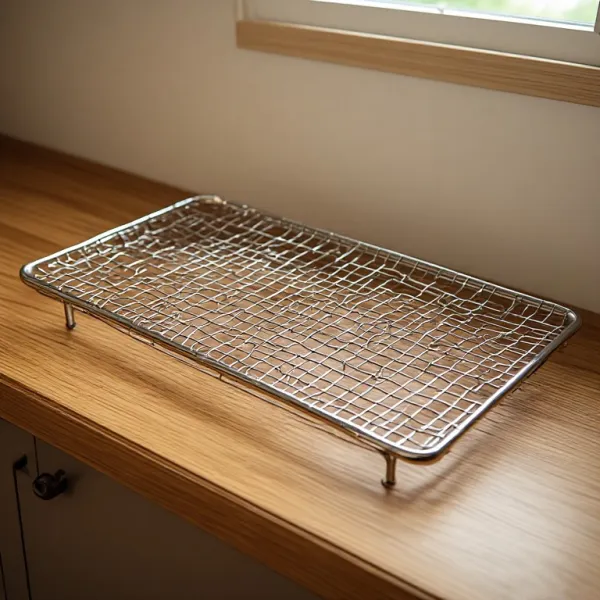
7.Drain on a rack. Transfer finished pieces to a clean wire rack set over a sheet pan — not paper towels. Paper towels trap steam under the crust and make it soft within two minutes. The rack lets air circulate, keeping the crust shattery while you finish subsequent batches.
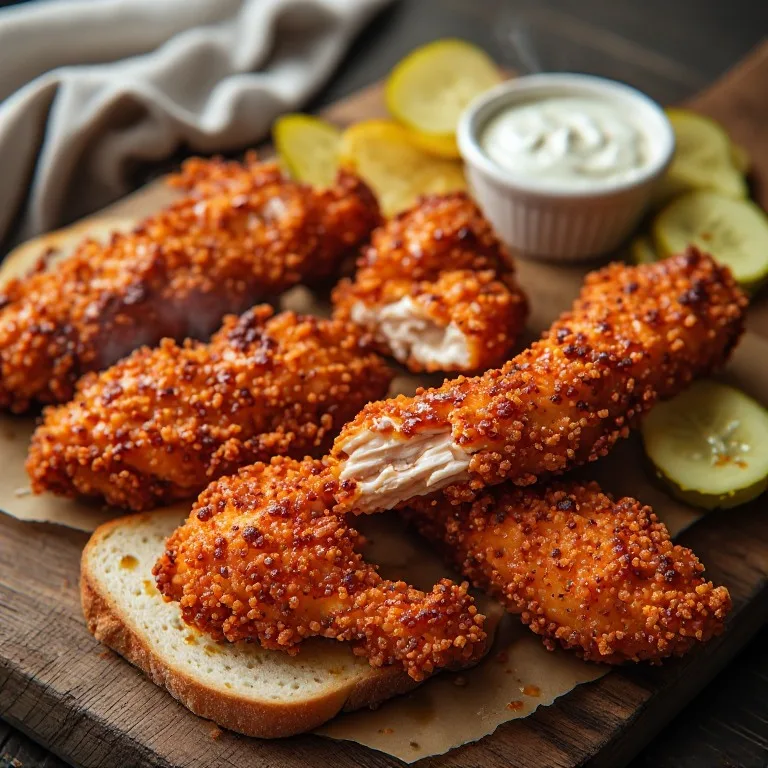
8.Serve. Lay white bread on each plate (the bread absorbs the drippings and is part of the meal, not a garnish). Arrange chicken pieces on top. Put hot sauce on the table. The heat in the meat is already there from the brine; the table hot sauce is for the exterior if you want to amplify it. Eat immediately.
Notes
Gus’s World Famous Fried Chicken (Memphis Spicy Fried Chicken, Made at Home)
Prep time: 20 min (plus 8–24 hours brine)
Cook time: 35 min
Servings: 4
The hour-plus wait outside the Front Street Memphis location, the white butcher paper, the chicken that arrives golden and already emanating heat before you’ve touched it — Gus’s World Famous Fried Chicken is the rare restaurant experience where the dish actually lives up to the line. The secret is what it isn’t: there’s no cayenne paste applied after frying, no theatrical coating process, no crackly thick crust. The crust is thin, almost cracker-delicate, and shatters on contact. The heat is inside the meat. Both effects come from the same decision: brine the chicken overnight in buttermilk spiked with cayenne and hot sauce, then shallow-fry it in cast iron at 325°F.
The Gus’s technique traces to the Bonner family’s chicken business in Mason, Tennessee, built around letting the brine do the work. What you’re replicating here is that logic — an assertive buttermilk brine that penetrates the meat deeply, a single-pass seasoned flour dredge that forms the thinnest possible crispy coating, and a cast iron skillet with 1 inch of lard at exactly the right temperature.
The key distinctions from other spicy fried chicken:
All the heat is in the brine, not a paste applied after cooking
One dredge pass only, no egg wash between brine and flour
Shallow-fry in cast iron (1 inch of oil), not deep-fry
325°F oil temperature — lower than most fried chicken recipes
Pale gold crust, not deep brown — that’s correct, not underdone
🥗
Make It Healthier
Love Gus's World Famous Fried Chicken (Memphis Spicy Fried Chicken, Made at Home) but want a lighter version? Try these simple swaps:
✓Air-fry after brining: spray the dredged pieces with neutral oil and air-fry at 390°F for 22 to 24 minutes (thighs/drumsticks), flipping once at 12 minutes. The crust won't shatter as dramatically but the interior stays just as juicy, and each serving drops to roughly 460 calories.
✓Use skinless bone-in thighs: removing the skin before brining cuts fat by about 10 grams per serving while the buttermilk brine still keeps the interior moist. The crust forms directly on the meat and is slightly thinner but still crispy.
✓Reduce sodium in the brine to 2 teaspoons of kosher salt (from 1 tablespoon) and use a low-sodium hot sauce — this cuts sodium by roughly 200mg per serving without affecting the heat level.
✓Extend the brine time rather than increasing flour-dredge seasoning — a full 24-hour soak delivers more heat with less spice in the crust, which means less sodium in the flour coating.
Frequently Asked Questions
What makes Gus's World Famous Fried Chicken different from Nashville hot chicken?
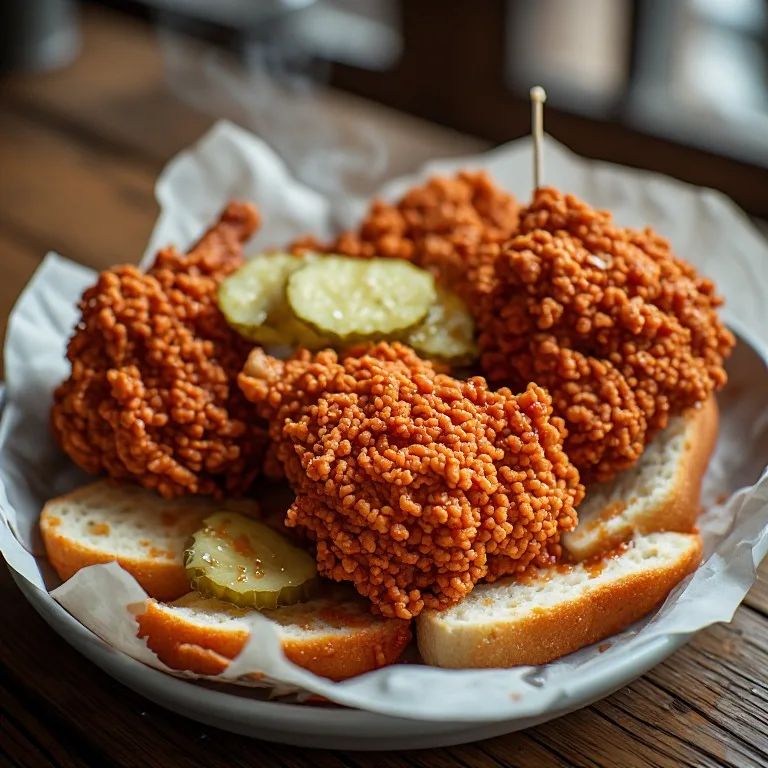
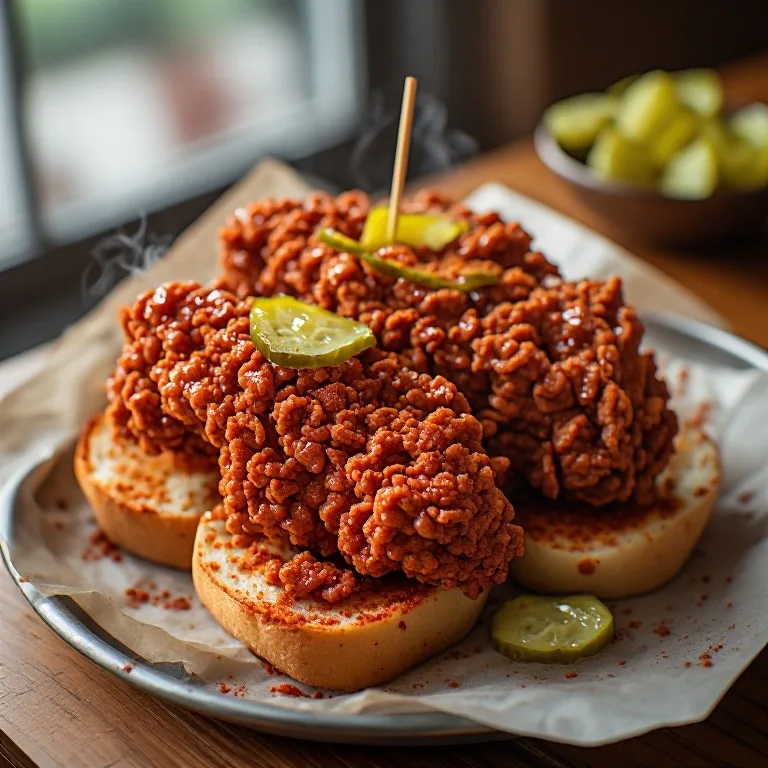
The fundamental difference is where the heat lives. At Gus's, the cayenne and hot sauce are in the brine — the chicken soaks in spiced buttermilk for 8 to 24 hours, so the heat penetrates the meat itself before the flour ever touches it. When you bite through the crust, the heat is already inside. Nashville hot chicken (Prince's, Hattie B's) brines in plain buttermilk and then applies a cayenne-oil paste immediately after frying — the heat is a coating on the exterior crust. The crust texture is also fundamentally different: Gus's has a thin, almost crackle-chip crust, very delicate and shattery, from a single buttermilk-to-flour pass. Nashville hot chicken builds a thick, deeply craggly crust through heavier dredge and often an egg wash between brine and flour. Both traditions are essential to Southern fried chicken history, but they're solving different problems — Gus's is about heat permeating the bird; Nashville is about heat armoring the exterior.
Why do you shallow-fry Gus's chicken in a cast iron skillet instead of deep-frying?
This is one of the defining characteristics of the Gus's technique. A cast iron skillet with about 1 inch of oil creates a different thermal environment than a deep fryer: the bottom of the chicken piece touches very hot oil and sears almost like a pan-roast, while the top renders from retained heat. The crust develops faster on the side that contacts the skillet directly, which is why you get that distinctive thin-crispy result rather than a uniformly puffed deep-fried exterior. Cast iron was the rural Southern standard for fried chicken long before commercial deep fryers, and that shallow-skillet method is what produces this style's signature thin crust. Using a heavy-bottomed skillet or Dutch oven with just 1 inch of oil replicates that result. Keep the oil at 325°F by frying in small batches; cold chicken pieces dropped into underfilled oil cause the temperature to plummet and the crust to absorb oil before it seals.
How long does the buttermilk brine actually need to soak?
Minimum 8 hours. Overnight is ideal. 24 hours is perfectly fine and produces more pervasive heat. Beyond 24 hours, the lactic acid begins to break down the surface proteins noticeably, giving the exterior a slightly mushy quality after frying — still edible but not the shatteringly crispy crust you're after. The buttermilk does two things: the lactic acid tenderizes the muscle fibers so the interior stays moist through a 25-minute fry, and the fat and protein in the buttermilk create the adhesive film that bonds the seasoned flour into a tight crust without an egg wash. A 4-hour brine works in a pinch but produces less heat penetration and a slightly thinner adhesion layer. If you're brining less than 8 hours, increase the cayenne in the flour dredge by half a teaspoon to compensate.
Where is Gus's World Famous Fried Chicken from, and how did it get famous?
Gus's traces to a small chicken business the Bonner family ran in Mason, Tennessee — a town between Jackson and Memphis. Napoleon 'Na' Bonner and his wife Maggie are the originators of the spicy fried chicken; the family dates its chicken in Mason to the 1950s. After Na and Maggie died in the early 1980s, their son Vernon 'Gus' Bonner and his wife Gertrude reopened the restaurant in 1984 as Gus's World Famous Hot and Spicy Fried Chicken — 'Gus' was Vernon's own nickname, which is where the name comes from. The chain began franchising in 2001, and the Downtown Memphis location on Front Street — near the Mississippi riverfront and Beale Street, in the heart of the city's tourist and food scene — became the one that launched the national reputation. Food journalists made pilgrimages and national 'best fried chicken' lists celebrated it for years. As of 2026 the chain operates more than 40 locations across 14 states, but the Front Street Memphis location remains its spiritual center.
Should I use a whole cut-up chicken or specific pieces?
A whole chicken cut into 8 pieces — 2 breasts, 2 thighs, 2 drumsticks, 2 wings — is the traditional Gus's order and gives you the most variety. In practice, bone-in thighs and drumsticks are the most forgiving for home cooks: they stay juicy through a 25-minute fry and have enough fat to absorb the spiced brine deeply. Bone-in breasts are trickier — they go from 155°F to overcooked in under a minute, and a whole breast half is thick enough that the exterior can over-brown before the interior is done. If using breasts, butterfly them to about 3/4-inch thickness. Wings are great because they fry in 10 minutes and the thin crust-to-meat ratio makes the spiced exterior very pronounced. A 3.5 to 4 pound chicken cut into 8 pieces gives you exactly 4 generous servings at 2 pieces per person.
What oil should I fry in for the most authentic result?
Lard is the traditional Southern choice for cast-iron fried chicken. It produces a slightly more flavorful, crisper crust because animal fat has a higher solid content than vegetable oil at room temperature, which changes how the crust sets. Leaf lard (rendered from around the kidneys) has the cleanest flavor. Regular rendered lard from a butcher or grocery store works well. If lard isn't available, peanut oil is the best substitute — high smoke point, neutral flavor, and it produces excellent fried chicken crust. Vegetable shortening (Crisco) is the most common home alternative and works perfectly. Do not use olive oil or butter — they burn below frying temperature. The single most common mistake is not using enough oil: 1 inch in the pan allows pieces to cook through contact heat; less than 3/4 inch means the top of the chicken piece is frying in steam, not oil, and the crust develops unevenly.
Why does the crust at Gus's look pale gold instead of deep brown like other fried chicken?
Gus's crust color comes from a lower frying temperature (325°F versus the 350°F used by thick-crust Nashville hot chicken recipes) and the thin, single-dredge flour layer. The thin flour coating caramelizes to a pale, almost blonde gold rather than a deep mahogany, and it stays that way because the lower temperature doesn't push Maillard browning hard. If your crust is browning too fast before the interior reaches 165°F, your oil is too hot — drop the temperature by 10 to 15 degrees and extend the fry time slightly. The pale gold appearance is correct; deep brown often means the crust has dried out and the interior is still undercooked. The texture, not the color, is the indicator: the crust should shatter cleanly when you break a piece open, not bend or peel.
Every recipe here is free, with no paywalls. If this one was a hit at your table, a small tip keeps new copycats coming.
$
💛 Support checkout is coming soon — the cookbook stays free either way.
Gus's World Famous Fried Chicken is a trademark of its owner, used here only to describe the dish this recipe recreates.
This is an independent copycat written in our own words — Copycat Spices is not affiliated with,
endorsed by or sponsored by Gus's World Famous Fried Chicken.
Researched + fact-checked. Every recipe on Copycat Spices is built from published sources — official ingredient lists, brand-published recipes, interviews and food-science references — and fact-checked before it goes live, then written as clear, step-by-step instructions for home cooks of all skill levels.
Before you go — grab The Copycat Halloween Cookbook 🎃
Our best Halloween copycat recipes in one photo-illustrated PDF. Free, instant download.
Free PDF — instant download. We'll also send new seasonal copycat recipes now
and then; unsubscribe anytime.
Or just download it →
✓ Downloading your free Halloween Cookbook — check your downloads folder. Happy cooking!
We use privacy-friendly analytics to understand what recipes people love. By continuing, you consent to our use of cookies. Learn more
🎃 Get The Copycat Halloween Cookbook — freeInstant PDF, no sign-in. Pay what you want only if you'd like to support us. One email a week, unsubscribe anytime.