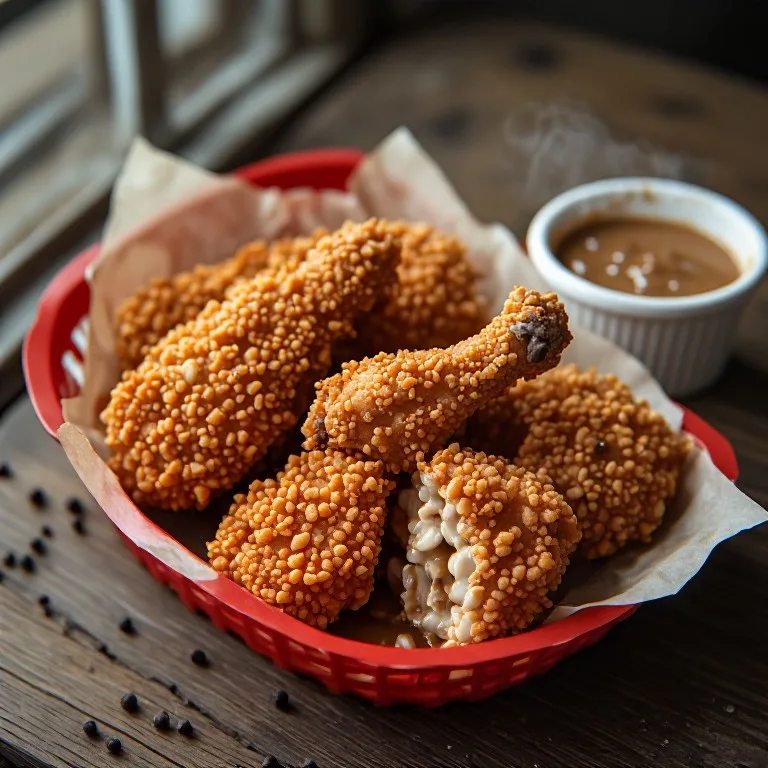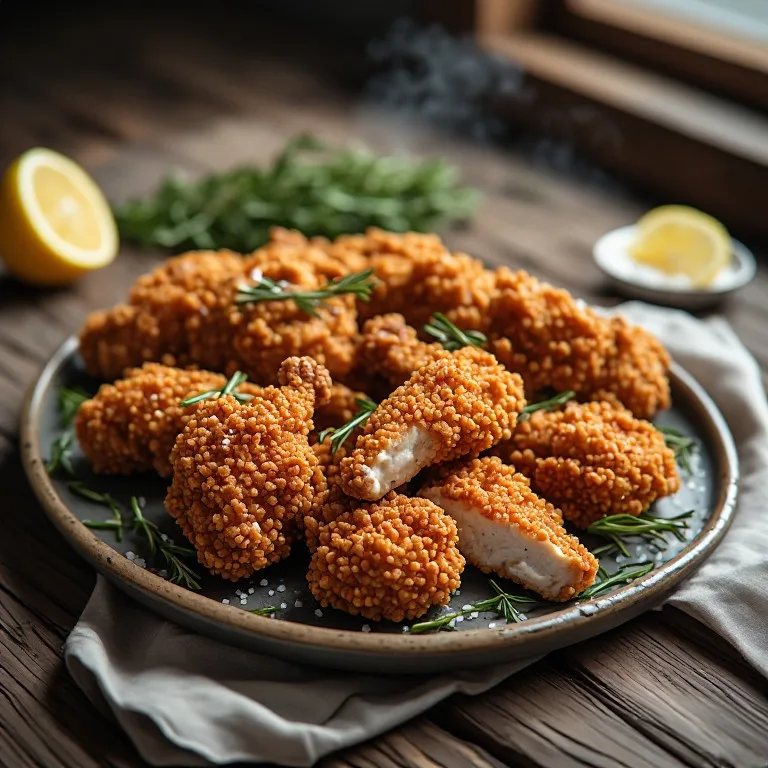



Copycat Ad Hoc Buttermilk Fried Chicken (Thomas Keller’s Famous Napa Valley Recipe)
Prep time: 45 min (plus 12-hr brine + 1½-hr rest) Cook time: 45 min Servings: 6 to 8
The short version: Ad Hoc’s fried chicken is brined for exactly 12 hours in a cooked herb-lemon-honey brine — this is not a buttermilk soak — then rested at room temperature for 1½ hours, double-dredged through seasoned flour and buttermilk, and fried at two different temperatures: 320°F for dark meat, 340°F for white. The recipe is from the cookbook Ad Hoc at Home by Thomas Keller, published in 2009. The restaurant opened in 2006 as a temporary placeholder in Yountville, California. It never closed.
Thomas Keller opened Ad Hoc in September 2006 at 6476 Washington Street in Yountville, Napa Valley — one block from The French Laundry, his three-Michelin-star flagship. The name was honest: ad hoc means “for this specific purpose,” and the specific purpose was to fill a building while Keller’s team figured out what the permanent concept would be. They served simple American comfort food in a family-style format. Four-course menus changed nightly and were written in chalk on boards throughout the dining room. Prices were a fraction of the tasting menu at The French Laundry. Locals showed up. Visitors on their way through wine country showed up. Word spread.
Fried chicken appeared on the menu from the beginning. It became, over time, the most talked-about dish — not just at Ad Hoc but in American restaurants generally. The temporary restaurant became permanent. The cookbook came in 2009. The fried chicken recipe from that cookbook has since been reproduced on hundreds of food blogs, but most versions misunderstand one of its core elements: the buttermilk does not appear in the soak. It appears only in the double-dredge. The primary marinade is a cooked brine of salt, honey, lemon, bay, garlic, and fresh herbs — and it is the brine, not the buttermilk, that defines the flavor of the meat.
Three things most copycat versions get wrong
The first mistake: using buttermilk as the soak. The phrase “buttermilk fried chicken” refers to the dredging process — the chicken is dipped in buttermilk to create adhesion for the second flour coat. The chicken is not soaked overnight in buttermilk. It is soaked for 12 hours in a cooked water-based brine that includes honey and lemon alongside salt. The buttermilk is a 30-second dip in the double-dredge sequence, not the primary marinade. Recipes that substitute a buttermilk soak for this brine produce chicken that tastes like most other buttermilk fried chicken — good, but not this.
The second mistake: skipping the room-temperature rest after brining. After 12 hours in cold brine, the chicken comes out near 38°F. Cold chicken dropped into hot oil drops the oil temperature immediately, which extends the time the crust needs to be in the oil before the interior is done, which leads to greasy or overcooked exterior crust. The 1½-hour room-temperature rest before frying is not about flavor; it is about frying physics. An hour and a half out of the refrigerator brings the pieces to within range of room temperature, and the oil recovers its target temperature within the first minute after the pieces go in, rather than spending the first several minutes climbing back.
The third mistake: frying everything at the same temperature. Dark meat and white meat are fundamentally different pieces. Thighs and drumsticks are thick, contain significantly more intramuscular fat, and need more time in the oil to cook through. White meat — split breasts and wings — is thinner and dries out quickly at high heat. The solution is straightforward: start the dark meat at 320°F, fry it for 13 to 14 minutes, then raise the oil to 340°F for the white meat, which takes only 6 to 7 minutes. The crust on both comes out the same depth of mahogany; the meat inside each is correctly cooked.
The brine
The brine is cooked — brought to a boil for one minute to dissolve the honey and bloom the aromatics — then cooled fully before the chicken goes in. The lemons are halved and squeezed into the brine before being dropped in whole. The garlic is smashed but unpeeled; the skins contribute to the brothy depth of the liquid. The fresh herbs (thyme and parsley primarily, with optional rosemary) infuse the brine with their volatile oils during the boil, then continue to steep as it cools.
Twelve hours is the correct window. Eight is workable but you lose some of the flavor penetration into the deeper meat. Fourteen produces a noticeable over-salted quality and a slightly cured texture in the thighs. Set a timer when the chicken goes in.
The brine recipe scales to two chickens at 2½ to 3 pounds each — 10 pieces per bird. If you are cooking for a smaller group, halve the recipe or brine a single bird; the brine is not reusable once raw chicken has been in it.
The double-dredge
The seasoned flour includes garlic powder, onion powder, paprika, cayenne, salt, and pepper — more seasoning than appears necessary, because a significant portion of the flour is discarded in the dredging process. The coating that ends up on the chicken is fully seasoned.
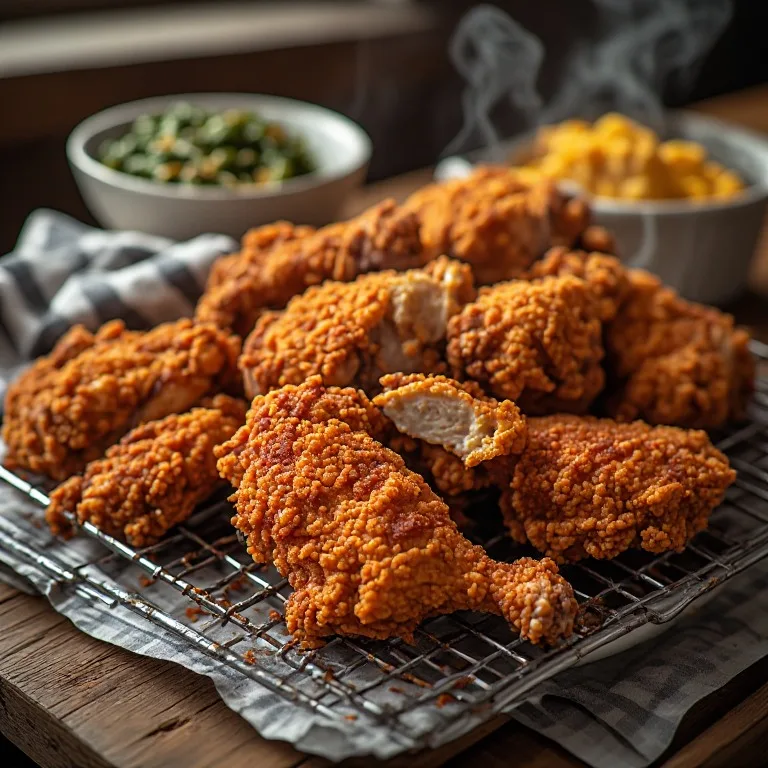
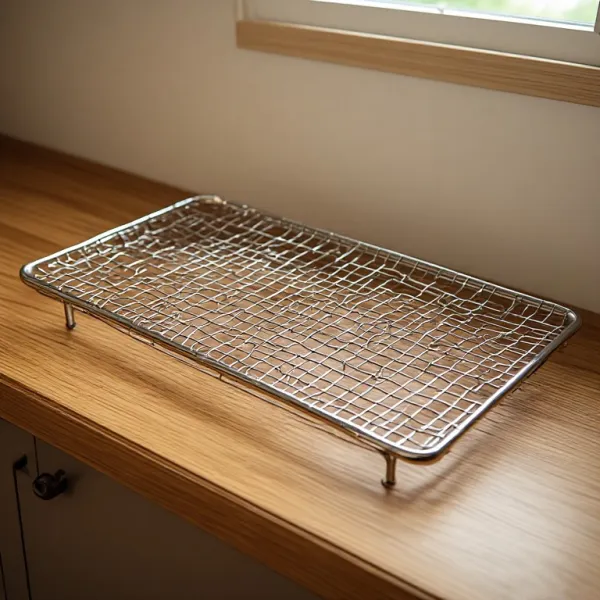
The sequence: flour (press firmly, shake off excess) → buttermilk (let the excess drip) → flour again (press firmly, irregular shaggy coat is the goal). Do not smooth the second coat. The peaks and valleys in the second flour layer are what produce the craggy, shattering crust that distinguishes this fried chicken from smooth-coated versions. A five-minute rest on a rack after the final dredge helps the coating hydrate and adhere before it hits the oil.
What Ad Hoc is now
The restaurant is still open as of 2026. Addendum, a seasonal outdoor window behind Ad Hoc, has served the fried chicken as takeout with champagne since 2011 — it operates in warmer months. Fried chicken appears on the Ad Hoc menu once a week; it is consistently the hardest reservation to get in Napa Valley for people who know the restaurant. The dish is less complicated than almost anything else associated with Thomas Keller’s name, and that simplicity is part of what makes it distinctive: no complex technique, no unusual equipment, no impossible-to-source ingredient. The work is in the brine, the rest, and the oil temperature. Do those three things correctly and the result is genuinely exceptional.