Pin It

Copycat Red Robin Whiskey River BBQ Burger

Copycat Red Robin Whiskey River BBQ Burger
Jump to Recipe
Prep 25 min Cook 20 min Serves 4
Quick answer: Red Robin's Whiskey River BBQ Burger is a fresh 1/3-lb beef patty, melted cheddar, crispy fried onion straws, Whiskey River BBQ sauce, lettuce, tomato, and mayo on a toasted bun. The onion straws — sliced thin and fried until crackly — are what make it distinct from every other restaurant BBQ burger; they go on last so they stay crispy above the sauce rather than going soggy underneath it. Red Robin sells their Whiskey River BBQ sauce in bottles at most grocery stores (look in the condiment/BBQ aisle), which is the most direct path to the authentic flavor — the real sauce contains tamarind extract that most from-scratch copycat recipes miss. Restaurant price approximately $15–16; home version costs about $5 per burger.

Copycat Red Robin Whiskey River BBQ Burger

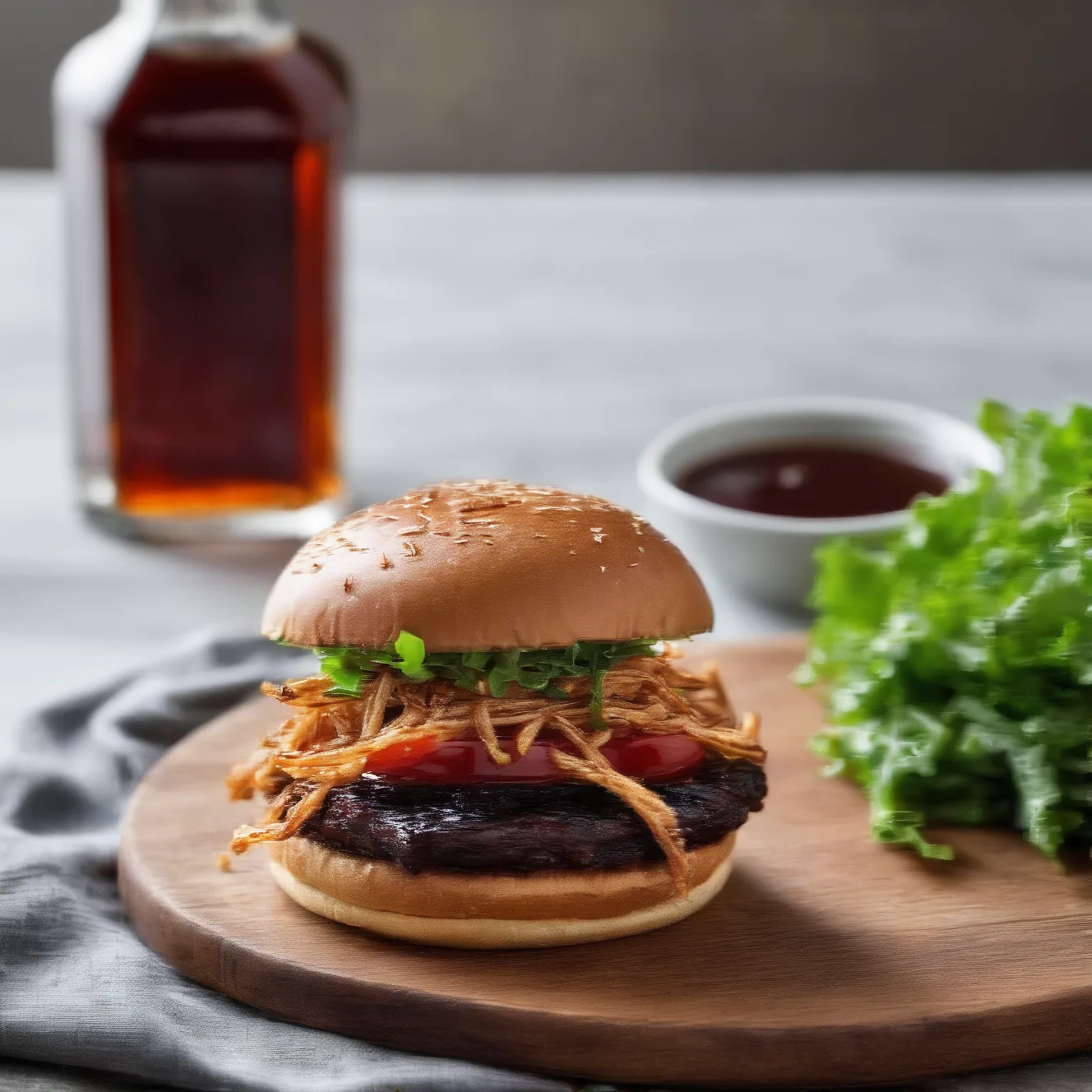
Red Robin's Whiskey River BBQ Burger at home: fresh beef patty, sweet-smoky BBQ sauce, crispy fried onion straws, cheddar, lettuce, tomato, and mayo on a toasted bun. The onion straws need to be paper-thin — here's how to get them crackly, not soggy.

Medium Prep: 25 min Cook: 20 min Total: 45 min4 servings ~$4.50/serving
Prep25 min
Cook20 min
Total45 min
Servings
4
At home~$4.50/serving
vs
Restaurant~$20.25/serving
You save ~78%

Ingredients

Instructions

💡
Pro tip: This recipe tastes even better the next day. The flavors need time to meld together in the fridge.
❄️
Storage: Keeps in an airtight container in the fridge for up to 2 weeks. Freezer-friendly for up to 3 months.
~350-550 cal/serving · Rich & Indulgent🔥

The Story Behind the Recipe

Red Robin has been serving the Whiskey River BBQ Burger since the 1990s, and it’s stayed on their menu through multiple rounds of simplification because the formula genuinely works: sweet-smoky BBQ sauce, crispy fried onion straws, and a fresh 1/3-lb beef patty on a toasted bun. The onion straws are what make it distinct from every other restaurant BBQ burger. They are not onion rings — they are thin, crackly threads of fried onion piled high on top, and they stay crispy because they go on last, above the sauce, not buried underneath it.

Getting the straws right is 80% of this recipe. The rest is a well-cooked fresh beef patty, a good BBQ sauce (or the bottled Red Robin version from the grocery store), and a properly toasted brioche bun.

What Most Copycat Recipes Get Wrong

The onion straws are made thick, like rings. Restaurant onion straws are sliced on a mandoline at 1/8 inch or less, giving you a fine, crackly network of fried onion threads. Home copycats slice them too thick, and you get a soggy fried onion ring instead of a crackly straw. A mandoline isn’t optional here — a knife makes consistent 1/8-inch cuts very hard to achieve.

The straws go under the toppings. Every photo and recipe that piles the sauce ON TOP of the straws misses the point. The straws need to be the last thing added before the top bun, sitting above the bacon and sauce, where they stay in contact with the dry air rather than soaking in warm BBQ sauce.

The sauce gets over-complicated — or under-complicated. Red Robin’s Whiskey River BBQ sauce is sold in bottles at grocery stores (Kroger, H-E-B, Menards, Hy-Vee, and Amazon). The bottled version IS the authentic version — it contains tamarind extract, which gives it an unusual complexity that most from-scratch copycat recipes miss entirely. If you find it at the store, use it. The from-scratch recipe in this article is for when the bottle isn’t available; just know that tamarind is the ingredient that makes the real sauce different from a standard BBQ sauce + bourbon mixture.

The bun doesn’t get toasted properly. A brioche bun buttered and toasted on the flat griddle until golden is meaningfully better than a microwave-warmed bun or an untoasted bun. The butter + egg-enriched brioche toasts to a caramelized layer that holds up against the BBQ sauce.

The Whiskey River BBQ Sauce

Red Robin sells their Whiskey River BBQ sauce in 14-oz bottles at Kroger, H-E-B, Menards, and Hy-Vee, and as a multi-pack on Amazon — look in the condiment or BBQ sauce aisle. If you find it, this is the cleanest path to the authentic flavor and you can skip the sauce-making step entirely.

For the scratch version: start with a good sweet BBQ sauce as the base (Sweet Baby Ray’s Original or Stubb’s Sweet Heat), add 2 tablespoons of bourbon, a splash of apple cider vinegar, smoked paprika, and a pinch of chipotle for smokiness. To get closer to the real sauce’s complexity, add 1 teaspoon of tamarind concentrate (available at Indian or Asian grocery stores) — this is the ingredient that gives the bottled sauce its unusual depth. Simmer 3–4 minutes to cook off the alcohol and let the flavors meld. The result is sweet-dominant, lightly smoky, slightly tangy — not boozy.

The Onion Straws: Step by Step

Getting onion straws crackly instead of soggy comes down to four things:

  1. Thickness. Paper-thin slices (1/8 inch) = crackly straws. Anything thicker = soggy rings.
  2. Oil temperature. 375°F maintained throughout. Use a thermometer. The oil temperature drops when you add cold, wet onions — start at 385°F so it settles to 375°F once they’re in.
  3. Batch size. A quarter of the onions at a time, maximum. Overcrowding causes the oil to boil instead of fry, and the straws go steamed and soft.
  4. Resting surface. Wire rack only, single layer. Paper towels trap steam and make straws limp.
Pro Tips
  • Mandoline for straws — every time. A 1/8-inch knife cut is hard to do consistently across a whole onion. A mandoline set to its thinnest setting takes 30 seconds per onion and produces uniform, crackly straws. If you don’t own one, slice as thin as humanly possible and expect slightly variable results.
  • Fry the straws before the patties. The straws hold at room temperature on the wire rack for 15–20 minutes without going soggy. The patties do not hold well. Fry, then cook the patties so everything is done at the same time.
  • The straws go on LAST. This cannot be overstated: add them after the BBQ sauce and bacon, not under them. The sauce is the warm, wet layer; the straws need to sit above it so they stay crackly through the first half of the burger.
  • Use a thermometer for the oil. The most common mistake with fried onion straws is underpowered oil. If the oil isn’t around 375°F, the straws absorb fat before they can form a crispy shell. A cheap clip-on thermometer is the fix.
Make It a Double

Red Robin offers a double-patty Whiskey River BBQ Burger. To replicate it: use 3 oz patties (8 patties from about 1.5 lbs beef), stack two patties per burger, and add a second slice of cheddar between the patties. Everything else stays the same. The thinner patties cook faster (2–3 minutes per side) and the crust-to-interior ratio improves.

What to Serve With It

Red Robin’s bottomless steak fries are the natural pairing — see the Red Robin Steak Fries copycat recipe for the oven method. Red Robin Campfire Sauce on the side as a dipping sauce for the fries gives you the full Red Robin table experience. For a lighter side, the burger’s richness pairs well with a simple coleslaw or a green salad.
Nutrition Facts

Per serving (4 servings)
Calories1200
Total Fat78g
Total Carbs75g
Dietary Fiber5g
Sugars8g
Protein44g
Sodium1580mg

* Estimated values based on standard recipe preparation. Actual values may vary.

🥗

Make It Healthier

Love Red Robin Whiskey River BBQ Burger but want a lighter version? Try these simple swaps:

  • Bake the onion straws instead of frying — 425°F for 15–18 minutes on a wire rack set over a baking sheet, flipping once. They won't be quite as crackly but they work.
  • Use 90/10 ground beef instead of 80/20 — the burger will be slightly less juicy but still solid.
  • Skip the bacon (saves ~100 calories and 400mg sodium per burger).
  • Red Robin sells a lower-calorie 'Simply' version with a 1/4-lb patty on a brioche bun without the straws — replicate it by halving the patty size and using a light brush of BBQ sauce instead of two tablespoons.

Equipment You'll Need

Mandoline slicer (strongly recommended)

Paper-thin onion slices are the entire secret to crackly onion straws — a knife alone makes it very hard to get consistent 1/8-inch cuts

Medium pot or Dutch oven

For frying the onion straws with enough oil depth to submerge them

Instant-read thermometer

For monitoring oil temperature (375°F) and burger doneness

Wire rack over baking sheet

Drained fried straws steam-off here; never rest them on paper towels or they go limp

Cast iron skillet or flat griddle

Gets hot enough to properly sear a fresh beef patty with a good crust

Frequently Asked Questions

Does the Whiskey River BBQ Burger actually taste like whiskey?

No — not strongly. The 'Whiskey River' name is more brand identity than flavor description. Red Robin's bottled Whiskey River BBQ sauce has a very faint bourbon depth, but the dominant notes are sweet, smoky, and lightly tangy. In the copycat sauce, the 2 tablespoons of bourbon cook off during simmering and contribute more aroma than boozy taste. If you want to skip the bourbon entirely, the burger is still excellent — just use a good sweet-smoky BBQ sauce on its own.

Can I buy Red Robin's Whiskey River BBQ sauce at the grocery store?

Yes. Red Robin sells their Whiskey River BBQ Sauce in 14-oz bottles through Kroger, H-E-B, Menards, Hy-Vee, Instacart, and Amazon (as a multi-pack). Look in the BBQ/condiment aisle. The bottled sauce lists tamarind concentrate on its label — an ingredient that gives it a complexity most scratch recipes miss. If you can find it, use the real sauce: it's not expensive, it's the authentic baseline, and it saves you the scratch-sauce step entirely. The recipe in this article is for when the bottle isn't available.

Why are my onion straws soggy instead of crispy?

Three common causes: (1) the slices were too thick — they need to be 1/8 inch or thinner; (2) the oil wasn't hot enough — 375°F is non-negotiable, and the temperature will drop when you add cold onions, so start slightly higher (385°F) to compensate; (3) you fried too many at once, which overwhelms the oil and prevents crisping. Fry in very small batches, and rest straws on a wire rack, not paper towels (paper towels trap steam underneath and make them limp).

What's the difference between this and Red Robin's Campfire Burger?

The Campfire Burger uses Red Robin's smoky chipotle-mayo Campfire Sauce (a mayo-based sauce) instead of Whiskey River BBQ sauce, and typically features the same fried onion straws and bacon but with a slightly smokier, creamier sauce character. The Whiskey River version is sweeter and more BBQ-forward. Both burgers use the same onion straws — the sauce is the main differentiator.

Does Red Robin use fresh or frozen beef?

Red Robin uses fresh, never-frozen beef and has prominently marketed this as a brand differentiator for years. The claim appears on their packaging and website. For this copycat recipe, use fresh ground beef purchased the day you plan to cook it — 80/20 chuck blend is the right fat ratio for a restaurant-style burger with good juiciness.

What bun does Red Robin use for the Whiskey River Burger?

In the restaurant, Red Robin serves its Gourmet burgers on a toasted sesame-seed bun. For a home version, a brioche bun is a worthwhile upgrade — enriched with eggs and butter, it's softer and richer, browns to a caramelized layer when buttered and toasted, and holds up to the wet BBQ sauce without disintegrating. Most grocery bakery sections carry brioche buns (Trader Joe's, Pepperidge Farm, and store-brand versions all work). A potato bun (Martin's brand) or a plain toasted sesame bun both stay true to the original.

Love this recipe? Share it!

Free PDF: our 12 most-wanted copycat recipes — instant download.

Ratings & Reviews

No ratings yet

Rate this recipe

Click a star to rate

Leave a Review

0/500

CS

Copycat Spices Test Kitchen

Every recipe on Copycat Spices is developed and tested in our home test kitchen. We reverse-engineer beloved restaurant dishes and refine each one until the flavors and the instructions work reliably for home cooks of all skill levels.

Learn more about our mission →