

Copycat Ruth’s Chris Sweet Potato Casserole (The Famous Praline Crust, Made at Home)
Prep time: 20 min Cook time: 30 min (plus 55 min to bake sweet potatoes) Servings: 8
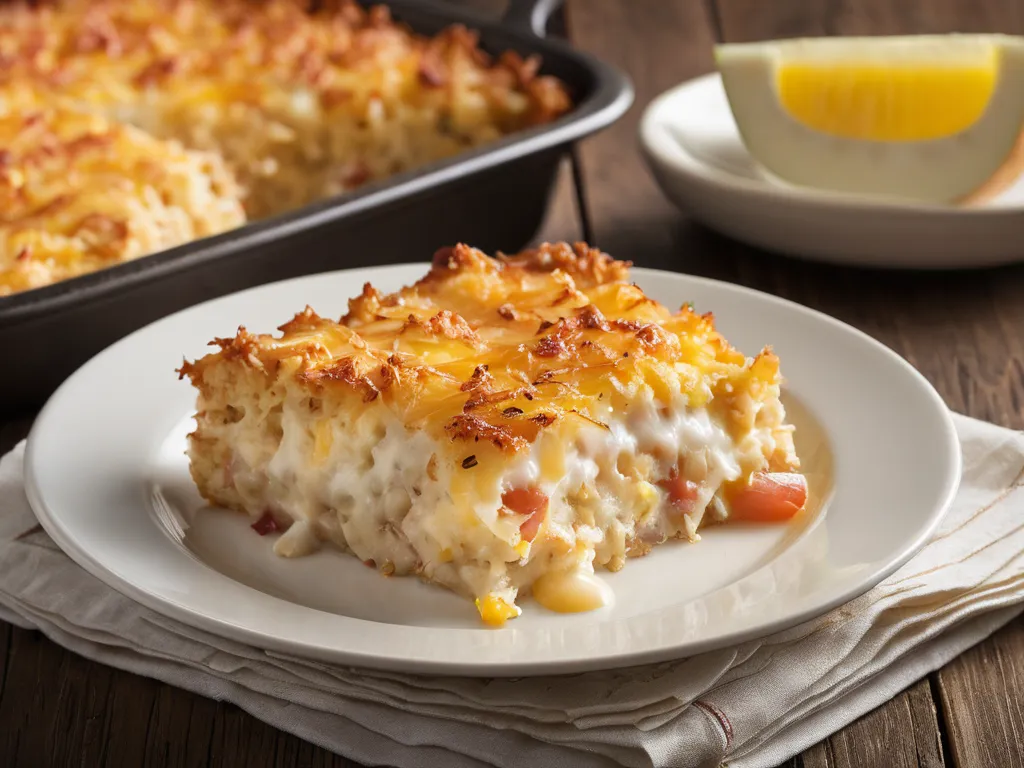
Ruth’s Chris Sweet Potato Casserole sits in a strange and successful category: a steakhouse side dish that tastes like dessert. The base is whipped sweet potatoes sweetened with a full cup of sugar and enriched with butter, eggs, and vanilla — already rich on its own. The topping is a brown sugar, butter, and pecan praline that caramelizes in the oven into a crackly candy crust. Together, the dish is sweet, buttery, and unapologetically indulgent. It’s also one of the most-replicated recipes the restaurant has produced.
At Ruth’s Chris, the side costs $13 to $16 depending on location. A full home casserole serving eight costs about $12 to $14 in total ingredients — roughly $1.50 per serving versus $15 at the restaurant.
Why This Dish Exists at a Steakhouse
Ruth’s Chris built its reputation on USDA Prime steaks, served on 500°F cast-iron plates with clarified butter, sizzling at the table. The food is intensely savory, heavily seasoned, and expensive. The Sweet Potato Casserole provides contrast: sweetness, softness, a different richness. In the context of a $70 ribeye, a sweet side dish that would otherwise seem unusual feels like exactly the right thing.
Ruth Fertel opened her first restaurant in New Orleans in 1965 — a city with an existing tradition of sweet potato dishes in everything from holiday tables to po’boy shops. The casserole’s roots are in that Southern tradition: sweet potato pies and puddings with praline toppings are a standard part of Louisiana cooking. Ruth’s Chris took that regional dish and made it a steakhouse staple served nationally.
The Topping Is the Point
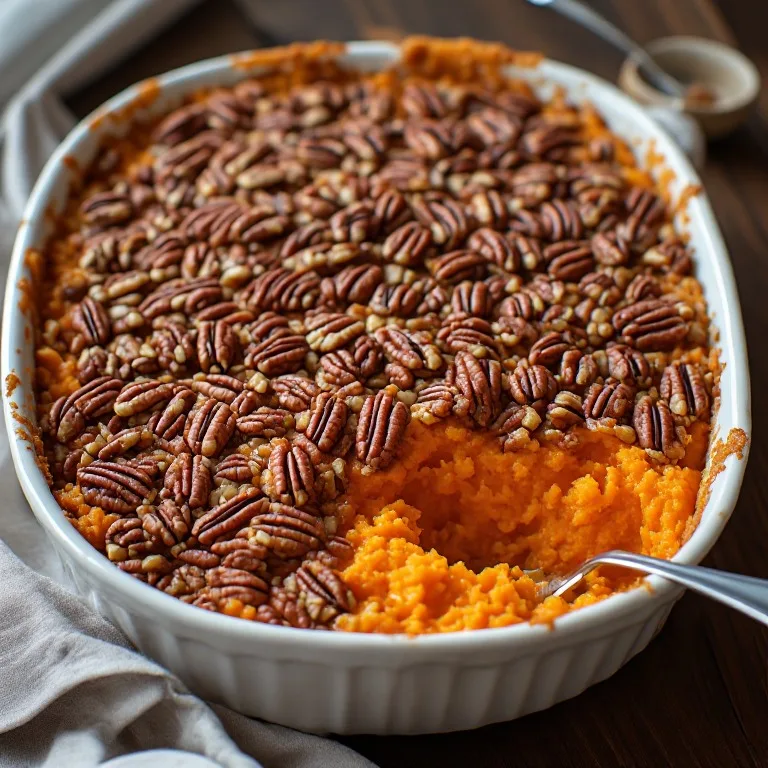
Most sweet potato casseroles have a crumble topping — a thin scatter of brown sugar and nuts across the surface. Ruth’s Chris is different: the topping is thick, covers the entire filling completely, and bakes into a continuous praline layer rather than individual crumbs.
The mechanics: brown sugar melts at a relatively low temperature (around 250°F), liquefies, and then begins to caramelize as the pan reaches higher heat. The melted butter distributes evenly through the sugar and keeps the topping from hardening into a brittle sheet. The flour holds the whole mixture together on top of the filling rather than running off. The pecans toast inside the caramelizing sugar, absorbing some of the brown sugar glaze and contributing their own fat to the texture.
When fully caramelized, the topping looks amber and glassy — like a praline, not a streusel. It cracks slightly when pressed. The inside remains slightly soft; the surface is crackly. A pale, granular topping is underbaked. Most home cooks pull the casserole 5 to 7 minutes before the topping finishes because the filling is already set — resist this. Let the topping drive the timing.
Bake, Don’t Boil
The most common mistake home cooks make with this recipe: boiling the sweet potatoes instead of baking them. Boiling introduces water into the flesh that the potato cannot shed. The result is a wetter, paler filling that takes longer to set in the oven and never achieves the dense, concentrated sweetness of the restaurant version.
Baking whole sweet potatoes directly in the oven — no foil, on the oven rack — concentrates the natural sugars as the water evaporates. A baked sweet potato at 350°F for 55 minutes has a dry, dense interior and noticeably more pronounced sweetness than a boiled one. The difference is significant enough that skipping this step produces a recognizably different dish.
If you are short on time, pierce each sweet potato and microwave for 6 to 8 minutes until completely soft, turning halfway. The flavor is between boiled and oven-baked — better than boiled, not as good as oven-roasted. It works for weeknights.
The Fill-to-Topping Ratio
This recipe uses the classic Ruth’s Chris proportions: equal volumes of filling (3 cups mashed sweet potato) and topping (by weight, about 2 cups of topping mixture). This produces a substantial topping layer that is visible from the side of the dish — thick enough to snap when broken, not just a thin caramel film.
If you double the recipe for a large Thanksgiving table, keep the same topping proportions. The filling scales easily; the topping needs to maintain its thickness to caramelize correctly. A thin topping layer spread over a large dish will dry out and burn rather than caramelize.
Building the rest of the holiday spread? This casserole is made to sit beside a HoneyBaked-style glazed ham — the crackly sugar crust on the ham and the praline topping here echo each other, so the plate reads as one savory-sweet holiday centerpiece rather than two competing sides.
Make-Ahead Strategy
This is one of the best dishes for Thanksgiving prep because it handles make-ahead well at two different stages:
Assembled but unbaked: Fill the dish, add the topping, cover tightly with plastic wrap, and refrigerate up to 2 days. Remove from the refrigerator 30 minutes before baking. Bake as directed, adding 5 minutes if the dish is still cold.
Fully baked and reheated: Bake completely, cool, cover with foil, and refrigerate up to 3 days. To reheat: 325°F covered with foil for 15 to 20 minutes, then uncover for the last 5 minutes to re-crisp the topping. The topping will be slightly less crackly than fresh-baked — the caramel absorbs ambient moisture in the refrigerator — but the flavor is completely intact.
For the best topping texture, option 1 (assemble-and-refrigerate) is marginally better. For maximum make-ahead convenience with barely-detectable quality loss, option 2 is fully reliable.
Ruth’s Chris at Home vs. the Restaurant: The Comparison
| Ruth’s Chris | Homemade | |
|---|---|---|
| Serving | Individual ramekin or shared casserole | Shared casserole |
| Price | $13–$16 per side | ~$1.50 per serving |
| Topping | Thick praline crust | Thick praline crust (matching) |
| Filling texture | Silky, very smooth | Silky when beaten well |
| Occasion | Any dinner, steak-focused | Thanksgiving to year-round |
The dish is genuinely easy to replicate at home — the techniques (baking sweet potatoes, making the praline topping) are not difficult, and the ingredients are supermarket staples. The main gap in most home versions is pulling the casserole before the topping fully caramelizes. Give it the full time.