


Pin It

Ruth's Chris New Orleans BBQ Shrimp (The Famous Butter Sauce, Made at Home)

Ruth's Chris New Orleans BBQ Shrimp (The Famous Butter Sauce, Made at Home)
Jump to Recipe
Prep 10 min Cook 15 min Serves 4
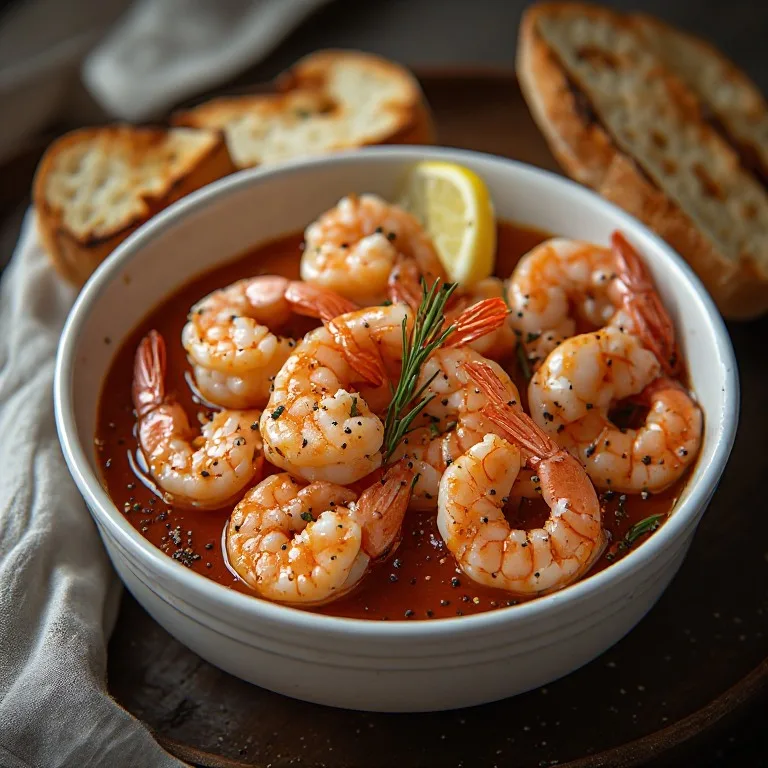
Quick answer: Peel and devein 1½ lb large-jumbo (16-20 count) shrimp, leaving tails on. Pat dry thoroughly — moisture in the pan will break the sauce. In a 12-inch cast-iron skillet over high heat, add 1 tablespoon neutral oil (canola or vegetable). When shimmering hot, add the shrimp in a single layer and cook 60 seconds per side just until pink on the outside but still translucent in the center. Do not fully cook them — they finish in the sauce. Transfer shrimp to a plate. Reduce heat to medium. In the same skillet, add 2 minced garlic cloves and sauté 30 seconds. Add ¼ cup dry white wine and scrape up any fond. Add 4 tablespoons Worcestershire sauce (Lea & Perrins, specifically — the depth here is the whole point), 1 tsp Tabasco, 1 tablespoon fresh lemon juice, 1 teaspoon finely chopped fresh rosemary, ½ teaspoon freshly cracked black pepper, ¼ teaspoon smoked paprika, and ¼ teaspoon cayenne. Simmer 2 minutes to reduce slightly. Remove the pan from heat entirely — this is the critical step. Add 8 tablespoons (1 stick) cold unsalted butter cut into tablespoon-sized pieces, swirling the pan constantly and adding 2 to 3 pieces at a time. The residual heat melts the cold butter into an emulsion; if the pan is still on the burner at this point, the sauce will break (split into greasy puddles). The finished sauce should be glossy and creamy, not oily. If it breaks, add 1 tablespoon heavy cream and whisk vigorously. Return to low heat, return the shrimp to the skillet, toss to coat, and cook 1 to 2 more minutes until fully cooked through. Season with salt. Serve immediately in warm bowls with sliced French bread alongside — the bread is not optional, it is where most of the sauce ends up. The barbecue shrimp appetizer at Ruth's Chris runs roughly $24 to $28 depending on location. At home, each serving costs roughly $5.

Shop the tools

Gear matched to this recipe. These are Amazon affiliate links — we may earn a small commission if you buy, at no extra cost to you.

As an Amazon Associate, Copycat Spices earns from qualifying purchases. Product images are generic illustrations, not the exact item listed.

Ruth's Chris New Orleans BBQ Shrimp (The Famous Butter Sauce, Made at Home)

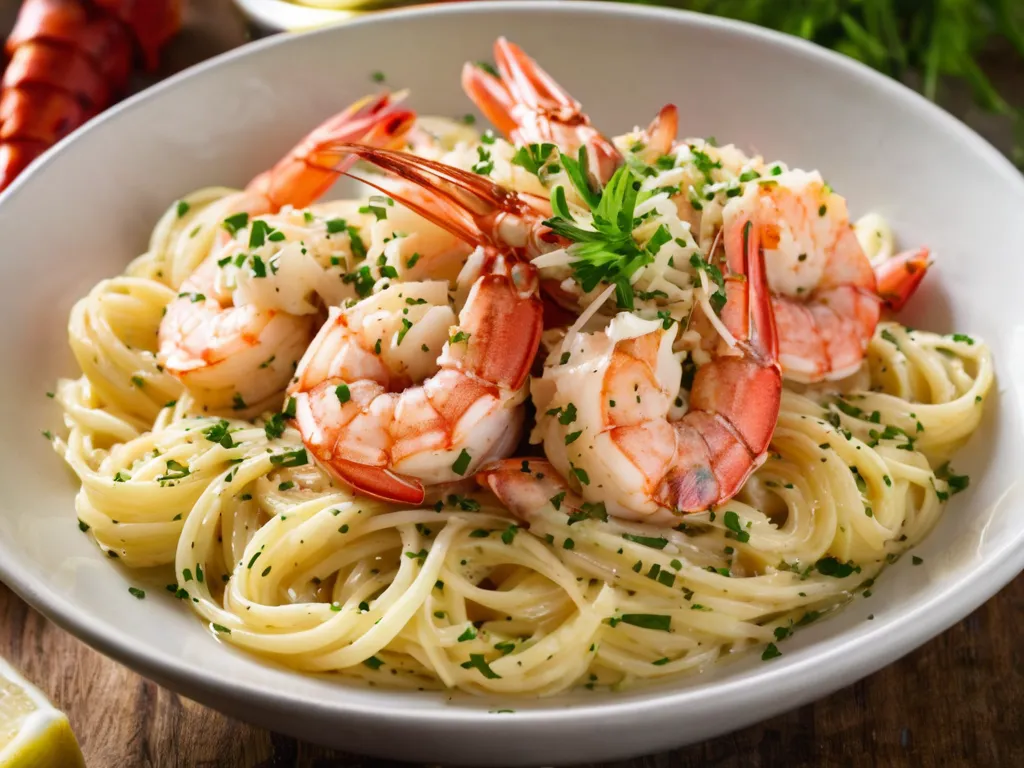
Ruth's Chris New Orleans BBQ Shrimp made at home: the buttery Worcestershire-and-rosemary sauce that has nothing to do with a grill, everything to do with a cast-iron skillet and a lot of butter. Under $20 to feed four.

Easy Prep: 10 min Cook: 15 min Total: 25 min4 servings ~$4.50/serving
Prep10 min
Cook15 min
Total25 min
Servings
4
At home~$4.50/serving
vs
Restaurant~$20.25/serving
You save ~78%

The Story Behind the Recipe

Ruth's Chris New Orleans BBQ Shrimp made at home: the buttery Worcestershire-and-rosemary sauce that has nothing to do with a grill, everything to do with a cast-iron skillet and a lot of butter. Under $20 to feed four.

Nutrition Facts

Per serving (4 servings)
Calories420
Total Fat32g
Total Carbs6g
Dietary Fiber0g
Sugars2g
Protein28g
Sodium720mg

* Estimated values based on standard recipe preparation. Actual values may vary.

Ingredients

  • For the shrimp
  • For the sauce
  • For serving

Instructions

💡
Pro tip: This recipe tastes even better the next day. The flavors need time to meld together in the fridge.
❄️
Storage: Keeps in an airtight container in the fridge for up to 2 weeks. Freezer-friendly for up to 3 months.
🎃 Free Halloween cookbook — download now The Copycat Halloween Cookbook A ready-made, photo-illustrated PDF of our best halloween copycat recipes — free to download, no building required. Pay what you want to support if you love it.

Free PDF — instant download. We'll also send new seasonal copycat recipes now and then; unsubscribe anytime. Or just download it →

Copycat Ruth’s Chris New Orleans BBQ Shrimp (The Famous Butter Sauce, Made at Home)

Prep time: 10 min Cook time: 15 min Servings: 4

Ruth’s Chris Steak House was founded in New Orleans in 1965 by Ruth Fertel, a single mother who mortgaged her house to buy a steak restaurant for $22,000. The “Chris” in the name came from the original owner, Chris Steak House, whose name she had to keep per the sale contract. When the original location burned down in 1976, she rebuilt a few blocks away — technically violating her contract by moving the restaurant — and added her own name in front. She kept going. Today Ruth’s Chris has more than 150 locations worldwide and is one of the most recognizable fine-dining steakhouse chains in the country.

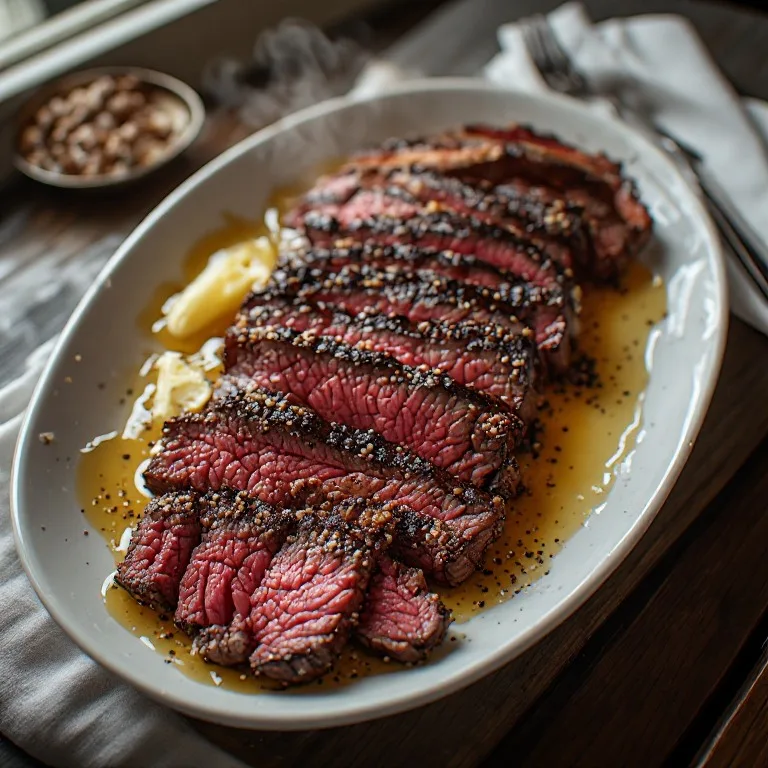
The New Orleans BBQ Shrimp is not the restaurant’s most famous dish (that is the USDA Prime bone-in ribeye served on a 500°F cast-iron plate with clarified butter). But it is the most distinctive — because it has essentially nothing to do with barbecue. It is a New Orleans style dish: a rich, savory butter sauce with Worcestershire, rosemary, garlic, lemon, and a serious amount of black pepper, with large shrimp cooked directly in the sauce. It is messy, deeply flavored, and served with bread that you use to scoop up whatever remains in the skillet after the shrimp are gone.

At the restaurant: approximately $24 to $28 for the appetizer portion, depending on location.
At home: approximately $5 per person.

Where New Orleans BBQ Shrimp Actually Comes From

The dish was invented at Pascal’s Manale restaurant on Napoleon Avenue in the Uptown neighborhood of New Orleans. The founding story, told by the restaurant: in the early 1950s, a regular customer returned from a Chicago trip describing a shrimp dish he had eaten there. A cook at Pascal’s Manale improvised a version based on the verbal description — butter, Worcestershire, spices, shrimp cooked in the skillet. The result was different enough from what the customer remembered that it became its own dish. Pascal’s Manale put it on the menu, and it stayed.

The original Pascal’s Manale version uses head-on, unpeeled Gulf shrimp — the heads and shells dissolve into the sauce and add a depth that the peeled-shrimp version cannot fully match. The dish is meant to be messy; bibs are provided. Ruth’s Chris uses a cleaner version: peeled shrimp, a refined sauce, and presentation in a dish rather than a skillet. The flavor profile is similar; the experience is more controlled.

Both restaurants serve it with warm French bread. The bread is not a side dish — it is what happens after the shrimp are gone, when you press it against the bottom of the skillet and drag up the remaining sauce. At Pascal’s Manale, regulars order extra bread with the first round.

The BBQ Question, Answered

The name confuses almost everyone on first encounter: there is no grill, no BBQ sauce, and nothing remotely barbecue-adjacent. The term refers to the intensely savory, complex character of the sauce rather than any cooking method. New Orleans food historians generally trace the “BBQ” naming to the mid-20th century, when “barbecued” was sometimes used loosely in Southern cooking to mean a robust, strongly seasoned preparation — distinct from the backyard-grill definition that dominates American usage today.

The sauce is fundamentally a warm butter emulsion: Worcestershire (anchovy, tamarind, molasses, vinegar), butter, garlic, rosemary, lemon, and black pepper. A lot of black pepper — substantially more than most people expect. The pepper is structural here, not background: it cuts through the butter’s richness and gives the sauce its signature bite. Do not reduce it.

The Technique That Makes or Breaks It

This is a butter sauce, which means it can break — and breaking is the one thing home cooks get wrong most often.

A butter sauce is a warm emulsion: butter fat dispersed in the pan’s water-based liquid (wine, Worcestershire, lemon juice) in a suspension that holds together only within a specific temperature range. Too cool, and the fat congeals. Too hot (above about 180°F, a gentle simmer), and the emulsion breaks — the fat separates from the liquid and you end up with greasy, thin puddles rather than a glossy, creamy sauce.

The three rules:

1. Cold butter, added in pieces. Do not melt the butter before adding it. The cold center of each piece of butter cools the sauce as it incorporates, moderating the temperature. Adding butter too fast overwhelms the emulsion capacity of the pan liquid.

2. Constant motion. Keep the pan moving — swirl it, or use a whisk. This keeps the fat droplets dispersed as they melt. Stop for 15 seconds and the fat droplets begin to clump and separate.

3. Off heat, or lowest possible. The Ruth’s Chris technique removes the pan from the burner entirely before butter goes in. The residual heat in the cast iron melts the cold butter gradually. If your pan cools too much and the butter stops melting, return it to the lowest burner setting briefly, swirling constantly.

If you see the sauce beginning to look greasy or oily — keep the pan off heat and whisk in 1 to 2 tablespoons of heavy cream immediately. The cream’s fat and protein help reconstitute the suspension. Once the sauce has fully split, it cannot be recovered; make the sauce again with fresh butter.

Two-Stage Shrimp Cooking

Shrimp overcook in about 60 seconds — there is almost no margin. The technique here deliberately undercooks the shrimp in the first sear (pink outside, translucent center, roughly 70 percent done) and finishes them gently in the butter sauce.

This works for two reasons. First, the sauce temperature — medium-low, never boiling — is lower than the sear temperature, so the shrimp finish gently and it is nearly impossible to push them past done during that final minute. Second, letting the shrimp cook fully in the first sear almost guarantees overcooking by the time they spend 1 to 2 more minutes in the sauce.

The visual tells: pull the shrimp from the first sear at the 60-second mark per side — they should be pink on the outside but translucent at the thickest part of the center. When you return them to the sauce, you are looking for them to complete their color change from translucent pink to fully opaque white-pink throughout, and to form a loose “C” shape. A tightly coiled “O” shape means they are overcooked and have contracted.

Dry Shrimp, Hot Pan

Moisture is the enemy twice in this recipe. Wet shrimp do not sear — they steam, which means no browning, no fond, and thinner sauce. Pat the shrimp thoroughly dry before they go in. Thorough means 30 seconds per side with paper towels, pressing down.

The second moisture issue is the sauce itself: too much liquid in the pan before the butter goes in makes the emulsion weak and prone to breaking. The 2-minute reduction step between the wine addition and the butter mounting matters. You want the sauce slightly syrupy and reduced, not watery.

Ruth’s Chris vs. Homemade vs. Pascal’s Manale: The Comparison
Ruth’s ChrisPascal’s ManaleHomemade
ShrimpPeeled, 16-20 countHead-on, unpeeled GulfPeeled, 16-20 count
Sauce depthVery refinedMore complex (shell/head)Very close to Ruth’s Chris
Bread servedYes, toastedYes, Leidenheimer’sYes, baguette
Price (appetizer)~$24–28~$20–26~$5/serving
MessinessLowHighLow

The head-on version from Pascal’s Manale produces a genuinely more complex sauce — the shells and heads dissolve fat and gelatin into the butter, adding body and depth. If you can source head-on Gulf shrimp and are willing to eat messily, try it that way once. The experience is different enough to be worth it.

Serving and Timing

This dish does not hold. Butter sauces are unstable once off heat — within 10 to 15 minutes, the emulsion will break as the pan cools unevenly. Serve directly from the skillet into warm bowls, and eat immediately. Warm your bowls in the oven (200°F for 5 minutes) so the sauce does not hit a cold surface on the way to the table.

The French bread should be hot — a baguette split and warmed in the oven for 5 minutes, not microwaved (microwave softens the crust and it will fall apart in the sauce). You need the crust’s firmness to drag across the bottom of the skillet.

Plan to serve this as a starter before a main course you can hold. If this is the main course, increase the shrimp to 2 lb and the butter to 10 tablespoons.

Make It a Full New Orleans Meal

The shrimp is a starter at Ruth’s Chris. At home, it works as a main course if you scale up the shrimp quantity. Alongside:

  • Creamy stone-ground grits (not quick-cook polenta — the texture is different)
  • White rice, with the sauce poured over
  • Crusty baguette as the primary vehicle (the traditional choice)
  • Simple green salad dressed with lemon vinaigrette to cut through the butter

The sauce is rich enough that most people do not need more than 6 to 7 shrimp per person as a starter, but as a main course over grits, 8 to 10 shrimp per person is appropriate.
🥗

Make It Healthier

Love Ruth's Chris New Orleans BBQ Shrimp (The Famous Butter Sauce, Made at Home) but want a lighter version? Try these simple swaps:

  • ✓Reduce the butter to 6 tablespoons instead of 8 — the sauce is slightly less rich but still fully emulsifies and coats the shrimp. This cuts approximately 55 calories and 6 grams of fat per serving without affecting the technique.
  • ✓Serve over zucchini noodles or cauliflower rice instead of (or in addition to) French bread. The sauce is the caloric driver, not the shrimp — this swap cuts about 150 calories per serving if you skip the bread while keeping the sauce portion the same.
  • ✓Cut the added salt entirely — the 4 tablespoons of Worcestershire and the French bread already carry meaningful sodium, and the sauce tastes fully seasoned without it. This drops each serving well below the 720mg listed here.

Frequently Asked Questions

Why is it called BBQ shrimp when there is no grill and no BBQ sauce?

New Orleans BBQ shrimp has nothing to do with American backyard barbecue. The dish was invented at Pascal's Manale restaurant in the Uptown neighborhood of New Orleans in the 1950s — according to the most-cited account, a customer returned from a Chicago trip describing shrimp he had eaten there, and a cook at the restaurant improvised a butter-and-Worcestershire shrimp dish from the verbal description. The name 'BBQ' appears to refer to the robust, savory, slightly spiced character of the sauce rather than any cooking method involving a grill or barbecue. Today the dish is a New Orleans classic: shrimp cooked in a heavily buttered, Worcestershire-forward sauce with garlic, rosemary, lemon, and black pepper, served with French bread to absorb the sauce. Pascal's Manale still serves the original version with head-on, unpeeled shrimp — messy, but the shells and heads add depth to the sauce. Ruth's Chris uses a refined version with peeled shrimp and a cleaner presentation, and their version is the one most home cooks are trying to recreate.

What is the most important technique for keeping the butter sauce from breaking?

The butter sauce is a warm emulsion — butter fat dispersed in the pan liquid rather than separating from it. Three things destroy it. First, and most critically: pan temperature. The official Ruth's Chris technique pulls the pan entirely off heat before adding butter. The residual heat in the pan (plus the cold butter itself) creates the controlled temperature zone you need for the emulsion to hold — if the burner is still on, the sauce routinely reaches the break point. Second, adding butter too fast: add 2 to 3 tablespoons at a time, whisking or swirling constantly, waiting for each addition to incorporate before adding the next. Dumping in all the butter at once overwhelms the emulsification capacity of the liquid. Third, room-temperature butter: the chemistry depends on the fat droplets dispersing as they melt from cold — pre-melted or softened butter disperses too quickly and breaks the emulsion. If your sauce does break — the butter fat visibly separates — add 1 to 2 tablespoons of heavy cream and whisk vigorously off heat. This rescues a breaking emulsion better than cold water because the cream's fat and protein help reconstitute the suspension. If the sauce has fully split, start the sauce again with fresh butter — it cannot be completely recovered.

What size shrimp should I use, and does it matter?

Use large-jumbo shrimp in the 16-20 count range (meaning 16 to 20 shrimp per pound). Ruth's Chris's official recipe specifies this size: large enough to stay moist and tender through the two-stage sear-plus-sauce cook, substantial enough to anchor a starter portion at 5 to 6 shrimp per person. Smaller shrimp (21-25 count) overcook easily — the 60-second sear is already at their limit, and 1 to 2 more minutes in the sauce tips them rubbery. Very large shrimp (11-15 count) require longer cooking that forces the sauce temperature higher. Fresh Gulf shrimp are ideal for the New Orleans connection, but frozen 16-20 count shrimp thawed overnight in the refrigerator work exactly as well. The most important thing: the shrimp must be completely dry when they hit the pan. Wet shrimp steam rather than sear, leave no fond, and water down your sauce.

Can I use beer instead of white wine in the sauce?

Yes, and many New Orleans recipes — including some versions of Pascal's Manale's original — use Worcestershire sauce with lager or pilsner beer instead of white wine. Beer works particularly well in this recipe: a mild lager adds a slight bitterness that cuts through the richness of the butter and complements the Worcestershire's molasses and tamarind notes. Use a light lager or pilsner (Abita Amber or Turbodog for a New Orleans connection, or any light American lager). Avoid hoppy IPAs — their bitterness becomes aggressive when reduced. Chicken broth is also a common substitute and produces a slightly less complex but entirely satisfactory sauce. The white wine gives a crisp acidity that beer lacks; the beer gives a slight toastiness that wine lacks. Either works; use what you have.

Do I need to use Worcestershire sauce — is there a substitute?

Worcestershire sauce is not a background ingredient in this dish — it is a co-lead with butter. Ruth's Chris's published recipe specifies Lea & Perrins by name and calls for 4 tablespoons for a starter serving of 20 shrimp. That is a substantial amount, and it is deliberate: the sauce is built from fermented anchovies, tamarind, molasses, onion, and vinegar — all of those layers produce the depth that distinguishes New Orleans BBQ shrimp from simple garlic butter shrimp. If you have only 2 tablespoons and are in the middle of making this, finish the recipe — but the result will taste thinner and less complex than the restaurant version. The Ruth's Chris recipe specifies Lea & Perrins specifically; it behaves differently from store-brand Worcestershire because its fermentation is longer. If you need a rough substitute: soy sauce (2 tsp) + a splash of apple cider vinegar + a pinch of brown sugar + a dash of anchovy paste — but do not expect the same flavor.

How do I prevent the shrimp from overcooking?

Shrimp cook in about 3 to 4 total minutes — faster than almost any other protein and with almost no margin for error. Overcooked shrimp are rubbery and tough; the line between just-done and overdone is about 60 seconds. The solution in this recipe is to undercook the shrimp on purpose during the initial sear. In the first step, you pull them from the pan when they are pink on the outside but still translucent in the center — they are roughly 70 percent done. They then finish cooking during the 1 to 2 minutes they spend in the hot butter sauce. This two-stage method prevents overcooking because the sauce temperature (medium-low heat, never boiling) is lower than the sear temperature, so the shrimp finish gently. The shrimp are done when they are fully opaque throughout and form a loose 'C' shape — not a tight coiled 'O,' which indicates they are overcooked and have contracted. When in doubt, pull them 30 seconds earlier than you think.

What does Ruth's Chris serve this dish with, and does the French bread matter?

Ruth's Chris serves the BBQ shrimp with a large piece of toasted French bread on the side — not as a garnish but as a functional component. The butter sauce produced by this recipe is generous and extremely flavorful; the French bread is literally how you eat the remaining sauce after the shrimp are gone, and for many diners that is the best part of the dish. A thin-crusted baguette or a pull-apart French loaf works best — the porous interior absorbs the sauce while the crust gives you something to press against the bottom of the skillet. Thick, dense sandwich bread does not work because it sits on top of the sauce rather than absorbing it. In New Orleans, this dish is traditionally served with warm French bread from a local bakery; Leidenheimer's is the most famous. At home, a supermarket baguette warmed in the oven for 5 minutes is completely appropriate and genuinely good.

Love this recipe? Share it!

Free PDF: our 12 most-wanted copycat recipes — instant download.

Made it? Buy us a coffee

Every recipe here is free, with no paywalls. If this one was a hit at your table, a small tip keeps new copycats coming.

$

Ruth's Chris Steak House is a trademark of its owner, used here only to describe the dish this recipe recreates. This is an independent copycat written in our own words — Copycat Spices is not affiliated with, endorsed by or sponsored by Ruth's Chris Steak House.

Ratings & Reviews

—
No ratings yet

Rate this recipe

Click a star to rate

Leave a Review

0/500

CS

Copycat Spices Editorial

Researched + fact-checked. Every recipe on Copycat Spices is built from published sources — official ingredient lists, brand-published recipes, interviews and food-science references — and fact-checked before it goes live, then written as clear, step-by-step instructions for home cooks of all skill levels.

Learn more about our mission →