Pin It

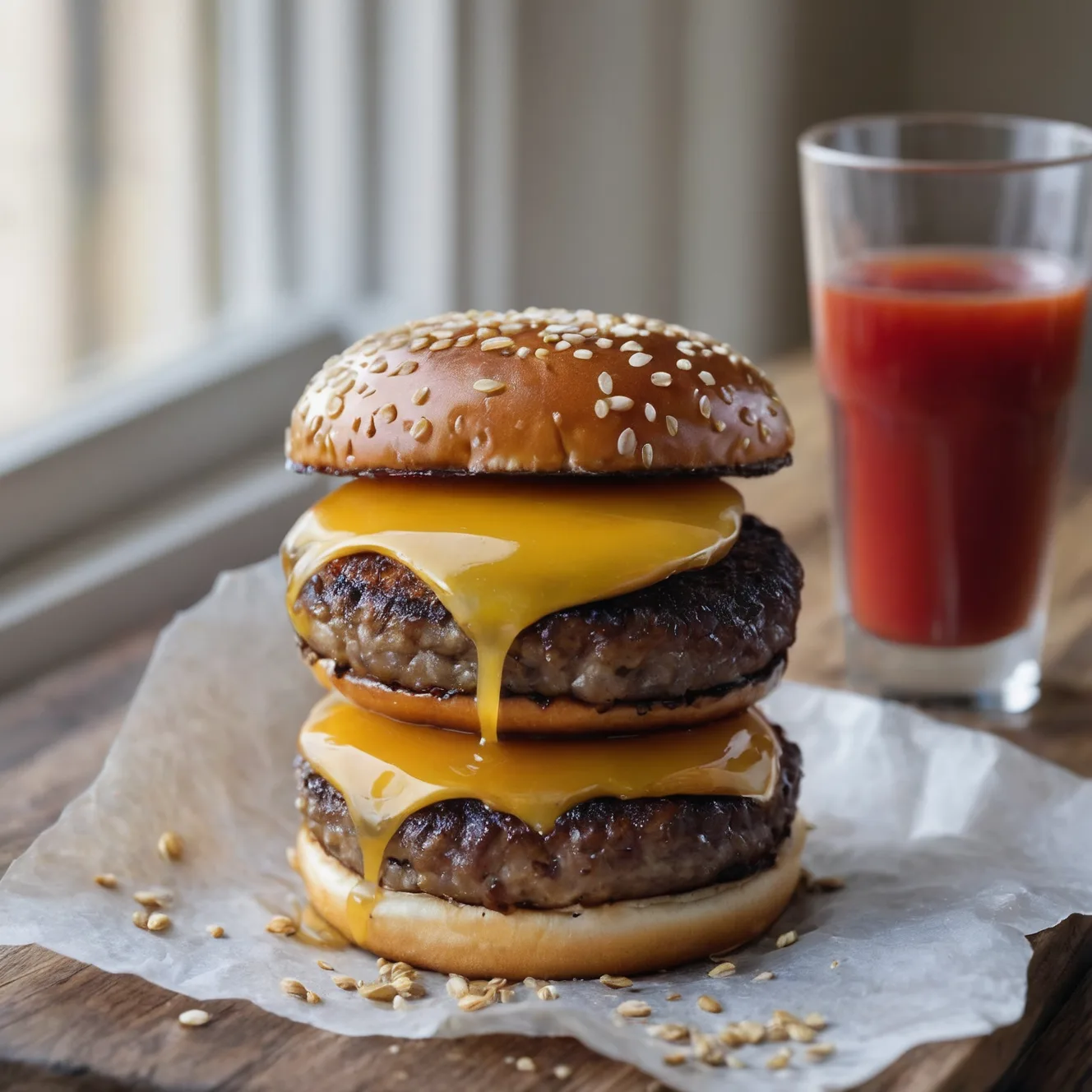
Copycat Sonic Double Cheeseburger

Copycat Sonic Double Cheeseburger
Jump to Recipe
Prep 10 min Cook 12 min Serves 2
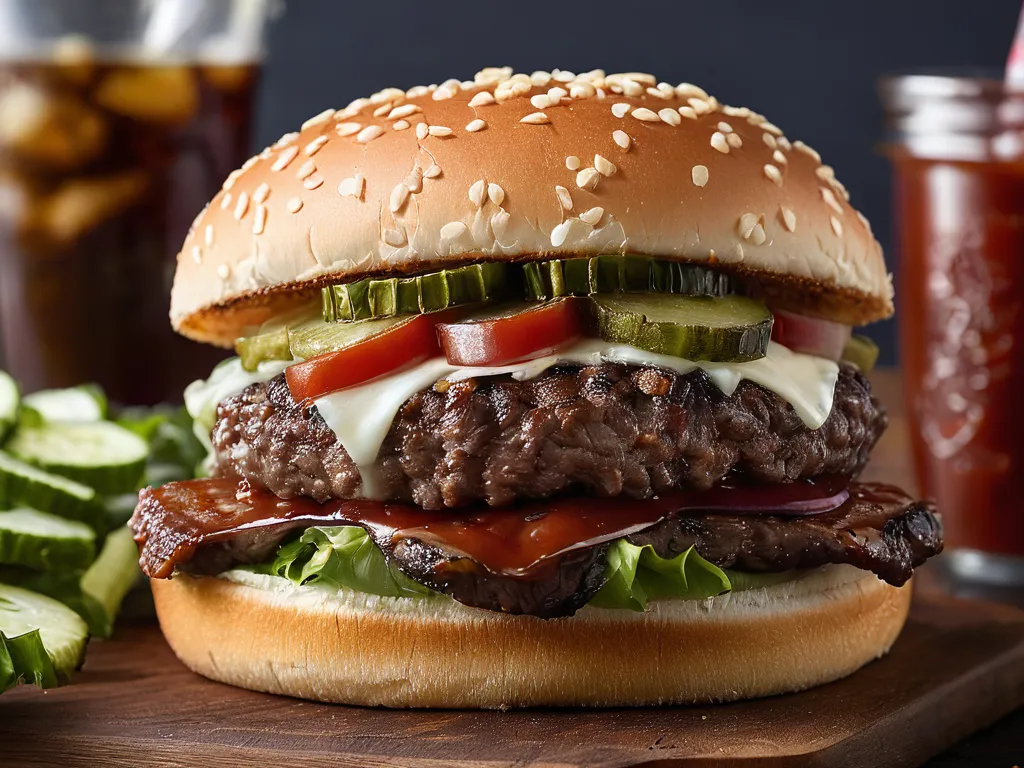
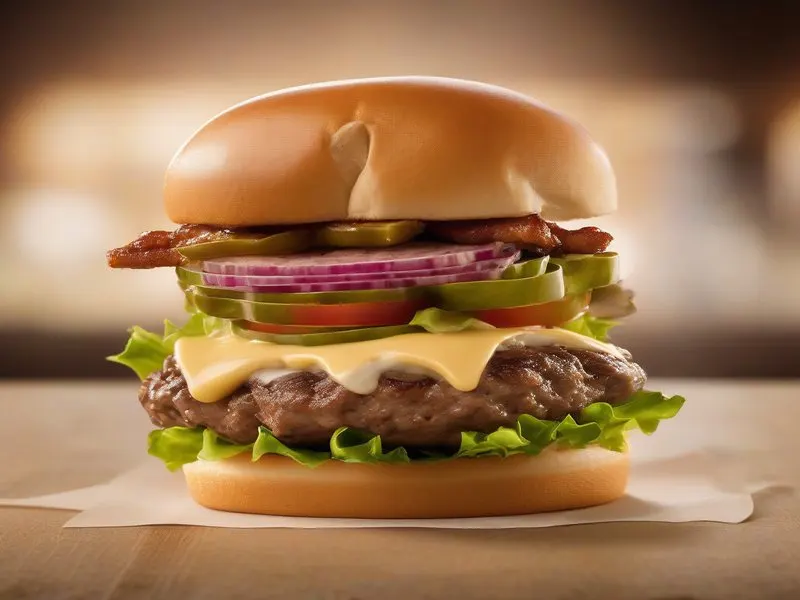
Quick answer: Sonic's Double Cheeseburger uses two thin 80/20 beef patties cooked on a flat-top griddle, two slices of American cheese steam-melted with a water-and-lid trick, a buttered-and-toasted sesame seed bun, and a classic mustard-ketchup-pickle-diced-onion condiment stack — no mayo on the standard build. To replicate at home: form two thin patties per burger (about 3 oz each, pressed to 3/8 inch thick), cook on a cast-iron skillet over high heat, flip once, steam-melt two slices of American cheese, and assemble bottom-to-top: bottom bun, yellow mustard, ketchup, dill pickle chips, diced white onion, double patty stack, top bun. This homemade version (two 3 oz patties, 6 oz beef total) runs about 830 calories, 47g fat, 43g protein, and 1,440mg sodium per burger — larger than Sonic's own menu doubles (the Jr. Double Cheeseburger is 500 calories, the Quarter Pound Double is 570). A home batch of two costs about $6–8 total vs. ~$5.49–$6.99 per burger at the restaurant.

Copycat Sonic Double Cheeseburger

Sonic's Double Cheeseburger is a mustard-ketchup-pickle-onion stack, not a mayo burger. Two thin beef patties, American cheese, a toasted sesame bun, and the correct condiment order. Here's how to replicate it on a cast-iron griddle at home in under 25 minutes.

Easy Prep: 10 min Cook: 12 min Total: 22 min2 servings ~$4.50/serving
Prep10 min
Cook12 min
Total22 min
Servings
2
At home~$4.50/serving
vs
Restaurant~$20.25/serving
You save ~78%

Ingredients

Instructions

💡
Pro tip: This recipe tastes even better the next day. The flavors need time to meld together in the fridge.
❄️
Storage: Keeps in an airtight container in the fridge for up to 2 weeks. Freezer-friendly for up to 3 months.
~350-550 cal/serving · Rich & Indulgent🔥

The Story Behind the Recipe

Copycat Sonic Double Cheeseburger

Sonic’s Double Cheeseburger is a mustard-ketchup burger, not a mayo burger. That’s the first thing most copycat recipes get wrong — they add mayonnaise or a special sauce because that’s what California-style fast food (In-N-Out, Shake Shack) taught people to expect. Sonic’s flavor profile is older: yellow mustard, ketchup, dill pickles, diced white onion, American cheese, and a beef patty pressed thin on a flat-top griddle. It’s the Midwest drive-in stack, unchanged since 1953.

Two patties, two slices of American cheese, a buttered and toasted sesame bun — about 20 minutes start to finish, 12 of them at the stove.

TL;DR

Form two thin 3 oz patties per burger. Cook on screaming-hot cast iron, 2 minutes first side, flip, cheese on top, steam-melt with water-and-lid for 15 seconds. Toast the bun cut-side-down. Stack: bottom bun → mustard → ketchup → pickles → onion → double patty → top bun. No mayo. Eat immediately.

What Makes a Sonic Burger a Sonic Burger

Sonic Drive-In opened in Shawnee, Oklahoma in 1953. Troy Smith’s original concept was a root beer stand with speakers at the parking stalls — no drive-through lanes, no indoor seating, just a car-hop coming to you. The burger on that original menu was a straightforward diner cheeseburger: beef, American cheese, mustard, ketchup, pickles, onion. That stack has not changed in 70 years.

This is why Sonic burgers taste different from Shake Shack or Five Guys despite using similar ingredients. The flavor reference point is a 1950s American diner, not a contemporary “better burger” restaurant. The mustard-forward condiment profile, the thin well-done patty, the American cheese — these are design choices, not limitations.

The Copycat Shake Shack Burger and Copycat In-N-Out Double-Double both use proprietary mayo-based sauces that define their flavor. Sonic’s equivalent “special sauce” is yellow mustard plus ketchup. Once you accept that’s intentional, the flavor makes sense.

The Patty: Thin, Well-Done, Flat-Top

Sonic’s beef patties are thin and pre-formed, cooked on a flat-top griddle to well-done. This is not the same as a live smash burger — the Shake Shack / Smashburger technique presses fresh beef balls onto the griddle at the moment of cooking, using the weight of the press to force beef-to-griddle contact and create the crust. Sonic’s patties arrive pre-pressed and go down flat.

The practical difference: a live-smash creates an irregular, lacy edge and a very thin interior (often 1/4 inch or less). Sonic’s pre-pressed patty produces cleaner edges and a slightly thicker, more uniform patty (about 3/8 inch). Both cook fast and brown well; the visual and textural result is slightly different.

At home, pressing your patties before they hit the pan (not during cooking) replicates the pre-formed Sonic style. The key technique is the same as any flat-top burger: very hot surface, no moving the patty, minimal touching, one flip. Every time you press or move a patty on the griddle, you interrupt the Maillard reaction forming the crust and squeeze out moisture.

80/20 ground beef is the correct choice for well-done burgers. The fat doesn’t disappear — it renders and coats the proteins, keeping the patty moist despite the full cook. A leaner 90/10 patty cooked to 160°F loses enough moisture to turn noticeably dry and chalky. If you want to go leaner, stop at medium-well (150°F) and rest the patty for 2 minutes to let the juices redistribute.

American Cheese and the Steam Melt

American cheese is the correct cheese for a Sonic burger. This isn’t nostalgia — it’s chemistry. American cheese contains sodium citrate, which keeps the milk proteins and fats emulsified under heat. Real cheddar, Swiss, or provolone seize at high temperatures: the proteins tighten, the fat separates, and you get a greasy, broken melt rather than a smooth blanket.

The steam-melt technique — water in the pan, lid on top, 15 to 20 seconds — is how short-order cooks achieve a glossy, draping melt without either burning the patty or waiting for ambient heat to do the work. The steam raises the humidity around the cheese and melts it from all sides at once. The patty stops cooking because the lid traps the steam above, not between the patty and the pan.

Add the water along the edge of the pan, not directly on the patties or cheese — a drop of cold water hitting a 400°F cast iron pan creates steam instantly and splatters violently if it contacts the hot oil. Add it to the perimeter and cover immediately.

Condiment Order and Why It Matters
LayerWhatWhy
Bottom bun (base)Yellow mustardMustard closest to the bread anchors the flavor
Above mustardKetchupKetchup on top of mustard layers the sweetness above the tang
Above ketchupDill pickle chipsPickles sit in the condiment layer, not floating above
Above picklesDiced white onionOnion between condiments and beef releases some flavor into the patty heat
TopDouble patty stackCheese-side of first patty faces up; second patty on top
Top bunNothing (standard)The heat from the patty warms the top bun underside during eating

The onion placement matters more than it sounds: onion between the condiment layer and the hot patty allows the heat radiating from the beef to soften the raw onion bite slightly. Onion placed on top of the patty stays fully raw and crunchy, which is sharper and less balanced.

For the SuperSonic build: add mayonnaise to the top bun (not the bottom — mayo on the bottom soaks into the bread), shredded iceberg lettuce, and one thick tomato slice between the top bun and the patty. This converts the Classic stack into the fuller SuperSonic profile.

Cost vs. Sonic
Sonic Double CheeseburgerHome Batch (2 burgers)
Price$5.49–$6.99 each~$6–8 total
Per burger$5.49–$6.99~$3–4
Beef100% beef80/20 ground beef
CheeseAmericanAmerican (same)
Cook methodCommercial flat-topCast iron (equivalent result)
More Drive-In and Fast-Food Burgers

Nutrition Facts

Per serving (2 servings)
Calories830
Total Fat47g
Total Carbs47g
Dietary Fiber2g
Sugars8g
Protein43g
Sodium1440mg

* Estimated values based on standard recipe preparation. Actual values may vary.

🥗

Make It Healthier

Love Sonic Double Cheeseburger but want a lighter version? Try these simple swaps:

  • Use 90/10 ground beef instead of 80/20 — the patty will be slightly drier but saves about 12g fat per burger. Compensate by not overcooking: 160°F internal and off the heat immediately.
  • Make it a Single Cheeseburger (one patty instead of two) — cuts to roughly 530 calories and 26g fat while keeping the full condiment flavor profile.
  • Swap the bun for a sturdy lettuce wrap (two large iceberg leaves) — removes ~150 calories and most of the 47g carbs; the mustard-pickle-onion stack still works identically.

Equipment You'll Need

Large cast-iron skillet or flat griddle

Cast iron holds heat evenly for an even flat-top crust; a thin non-stick pan runs cold under the patties and steams instead of sears

Tight-fitting lid or large metal bowl

For steam-melting the American cheese — essential for the flowing, draping melt that defines the Sonic style

Thin metal spatula

A flexible fish spatula gets under thin patties without tearing; a thick spatula lifts and breaks the crust

Instant-read thermometer

Ground beef should reach 160°F for food safety; thin patties cook fast enough that timing alone can undershoot

Frequently Asked Questions

What's the difference between Sonic's Classic, Double, and SuperSonic Cheeseburger?

Three tiers, same condiment DNA. The Classic Sonic Cheeseburger is a single patty (roughly 3 oz pre-cook) with one slice of American cheese and the standard mustard-ketchup-pickle-onion stack. The Double Cheeseburger stacks two patties with two slices of American cheese — same condiments, more beef. The SuperSonic Cheeseburger is a separate line: it uses a larger quarter-pound patty and adds mayo, shredded lettuce, and tomato to the build — closer to a 'loaded' burger. The Standard Double is the most popular everyday order because it delivers the full Sonic flavor profile without the premium price of the SuperSonic.

Does Sonic use fresh or frozen beef?

Frozen. Unlike Wendy's (fresh, never-frozen) or McDonald's Quarter Pounders (switched to fresh in 2018), Sonic's pre-formed patties go straight from the freezer to the flat-top griddle — that's part of why they're thin and uniform rather than hand-pressed. Sonic cooks them well-done to a food-safe internal temperature of 160°F per USDA ground-beef guidelines, not pink-in-the-middle like a made-to-order smash shop. For the home version you have an advantage: fresh 80/20 ground beef (80% lean, 20% fat) cooked well-done stays juicy because the rendered fat coats the proteins even without a pink interior. Don't bother freezing your patties to 'match' Sonic — Sonic freezes for supply-chain and consistency reasons, not flavor.

What condiments does Sonic put on their Double Cheeseburger by default?

The standard Sonic Double Cheeseburger comes with: yellow mustard (on the bottom bun), ketchup (on the bottom bun above the mustard), dill pickle chips, and diced white onion. There is no mayo, no lettuce, and no tomato on the standard build — those are add-ons or belong to the SuperSonic line. This is an 'East Coast' or 'Midwest-style' condiment stack (mustard-forward, pickle-forward) rather than a 'California-style' mayo-and-spread burger. If you want the SuperSonic experience, add mayo to the top bun, shredded iceberg lettuce, and one thick tomato slice.

Why does American cheese melt better than real cheddar on a smashed burger?

American cheese contains sodium citrate, a salt that acts as an emulsifier — it keeps the proteins and fats suspended in a smooth, flowing melt even under high heat. Real cheddar's proteins seize at high temperatures and the fat separates, leaving a greasy broken mess rather than a smooth blanket. For a flat-top drive-in burger, American cheese is not a compromise — it's the technically correct choice. The steam-melt technique (a few drops of water in the pan, cover with a dome or lid for 15–20 seconds) accelerates the melt without overcooking the patty, replicating the short-order line technique Sonic uses.

Can I cook Sonic-style burgers on an outdoor grill instead of a flat-top?

You can, but you lose two things: the flat-top crust and the easy steam-melt. A grill gives you grill marks and more char; Sonic's griddle gives you an even, dark-brown Maillard crust across the entire patty surface (more surface area = more crust = more flavor). If you use a grill, use a griddle insert or cast-iron skillet placed on the grates to approximate the flat-top. For the steam-melt, add the cheese immediately after flipping, then place a metal bowl over the patty to trap heat and steam-melt for 15–20 seconds — it works on a grill too.

How thin should I press the patties for a Sonic-style burger?

About 3/8 of an inch thick before cooking — not a true smash burger (1/4 inch or less) but noticeably thinner than a pub-style thick burger. Sonic's patties are pre-formed and thin-pressed before hitting the griddle, not live-smashed like Shake Shack or Smashburger. At home, flatten the patty with your palm or a burger press before it goes in the pan. Make it slightly wider than your bun diameter because it will shrink 10–15% during cooking as the proteins tighten. For two patties per burger, 3 oz pre-cook each (totaling 6 oz per burger, down to ~5 oz cooked) replicates the Sonic Double's patty-to-bun ratio.

What bun does Sonic use and does it matter?

Sonic uses a standard sesame-seed hamburger bun — nothing proprietary. What matters is the toast: Sonic toasts buns cut-side-down on the flat-top griddle with a thin layer of butter, just 30–45 seconds until golden. A toasted bun adds structural integrity (it doesn't collapse under the weight of two patties and condiments), a slight nutty flavor, and a surface that grips the mustard and ketchup without absorbing them immediately. An untoasted bun goes soggy within 2–3 minutes. If you want the closest experience to a fresh Sonic order, toast the bun in the same pan you just cooked the patties in — the residual beef fat does most of the work.

Love this recipe? Share it!

Shop the tools

Gear matched to this recipe's equipment list. We may earn a small commission if you buy through these links — at no extra cost to you.

As an Amazon Associate, Copycat Spices earns from qualifying purchases.

Free PDF: our 12 most-wanted copycat recipes — instant download.

Ratings & Reviews

No ratings yet

Rate this recipe

Click a star to rate

Leave a Review

0/500

CS

Copycat Spices Test Kitchen

Every recipe on Copycat Spices is developed and tested in our home test kitchen. We reverse-engineer beloved restaurant dishes and refine each one until the flavors and the instructions work reliably for home cooks of all skill levels.

Learn more about our mission →