

The Chain That Branded the Smash
Before Smashburger, the smash technique was anonymous. Short-order diner cooks had been pressing ground beef against flat-tops with spatulas for decades — it was practical, not philosophical. Tom Ryan, a food scientist who had previously invented the stuffed crust pizza and the McFlurry, opened the first Smashburger in Denver in 2007 and made the technique the entire point. Never-frozen Certified Angus Beef. A specific temperature. A specific thickness. A specific sauce.
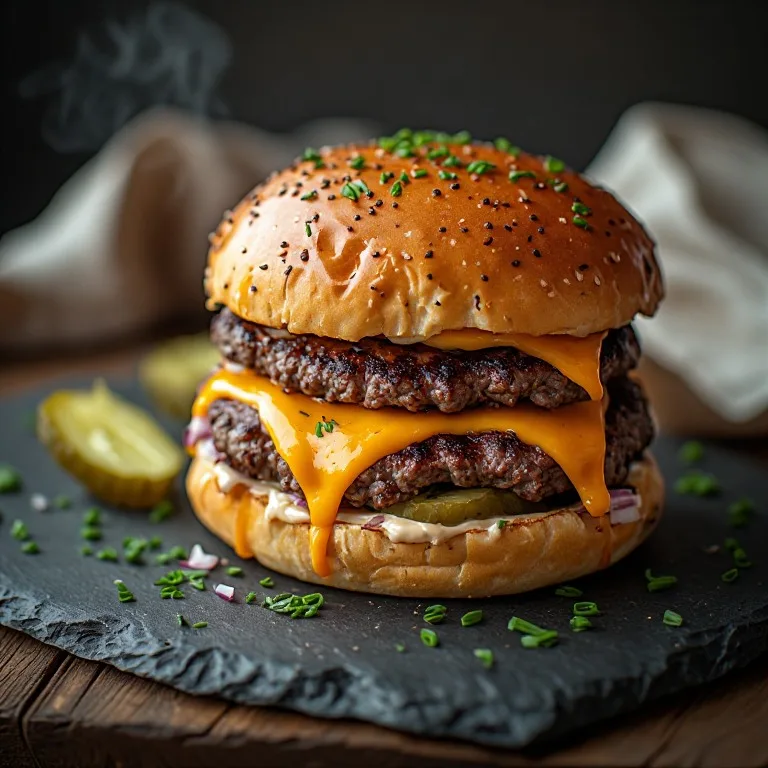
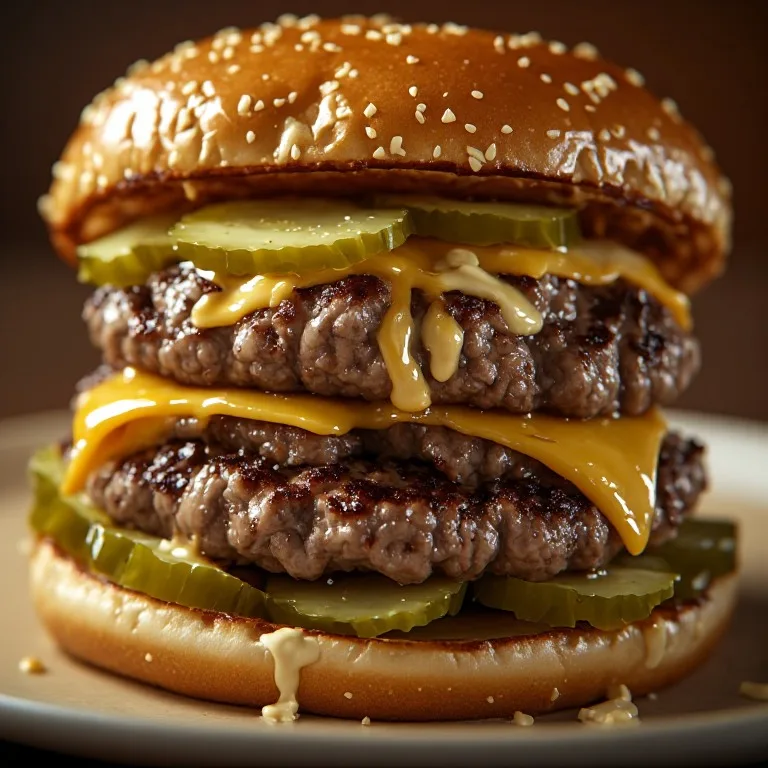
The Classic Smash is the menu’s anchor and the most-searched item the chain has. Two elements define it: the Maillard crust from the smash technique, and the Smash Sauce that ties the assembly together. Get both right and the burger is instantly recognizable. Get either wrong and it tastes like any other smash burger.
Make the Smash Sauce Before Anything Else
The Smash Sauce needs at least 20 minutes in the refrigerator before serving — not because it is complicated, but because the rest time lets the garlic powder and mustard bloom into the mayo base. Make it first, then do everything else.
Whisk together: 1/2 cup mayo, 1 tablespoon ketchup, 1 teaspoon yellow mustard, 1 tablespoon finely chopped dill pickles, 1/4 teaspoon garlic powder, and a pinch of salt. Cover and refrigerate. This makes enough for 4 burgers with a little left over for dipping fries.
The sauce reads tangy-creamy-slightly sweet — closer to a fry sauce or classic burger sauce than to a thousand island or aioli. French’s yellow mustard (not Dijon) replicates Smashburger’s flavor most closely.
The Smash Technique: What Actually Matters
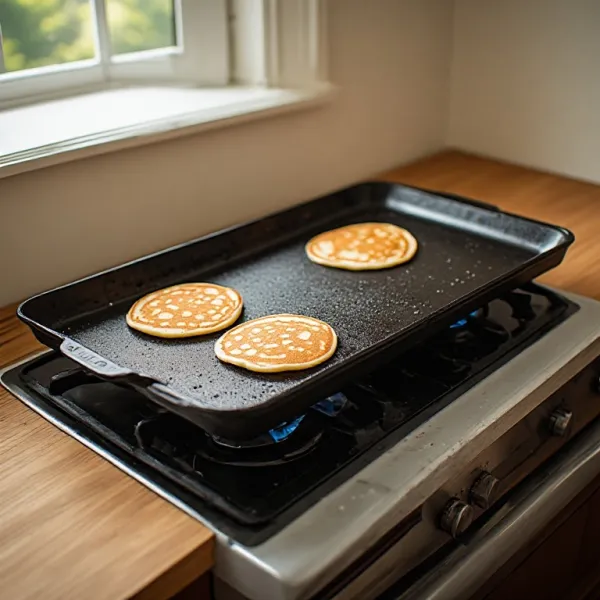
Preheat a cast iron skillet over high heat for at least 5 minutes. Not 2 minutes. Not 3. Five minutes, until the skillet reads 400–450°F on an infrared thermometer or a drop of water evaporates on contact in under a second. Smashburger’s commercial flat-tops run at approximately 400°F; underpowered home pans are the most common reason copycat smash burgers disappoint.
Portion the beef into 4 round balls, roughly 5 oz each. Do not pre-season, do not pre-flatten. The round ball shape is what allows the smash to work — it concentrates the downward pressure into a single point that then radiates outward.
Place a beef ball on the surface. Within 10 seconds — immediately — press down hard with a heavy flat spatula. Hold the pressure for 8–10 full seconds until the patty is roughly 1/4 inch thick. Season the exposed top face with the Smash Spice (the side touching the griddle gets no seasoning — salt draws moisture out and creates steam that undermines the sear).
Leave it alone for 2 to 3 minutes. The crust needs to form fully, bond to the skillet surface, and then release on its own. When it releases cleanly with a gentle nudge — dark mahogany bottom, browning edges — flip it. Lay American cheese on top immediately. The residual patty heat melts the cheese in 60 to 90 seconds.
Why the Thin Patty Tastes Different
The science behind the smash is straightforward: at 1/4-inch thickness, almost the entire bottom face of the patty undergoes the Maillard reaction simultaneously. Maillard browning produces several hundred flavor compounds — nutty, savory, caramelized — that do not exist in unbrowned beef. A thick, formed patty achieves browning only around the bottom edge; the center cooks via conduction from the outside in, with the majority of the surface steaming rather than searing. The thin smashed patty inverts this almost entirely: more than 90% of the surface browns versus less than 20% on a 3/4-inch-thick patty. That is why the same beef tastes more intensely beefy and caramelized at 1/4 inch than at 3/4 inch — it is not the beef quality, it is the geometry.
Assemble in the Right Order
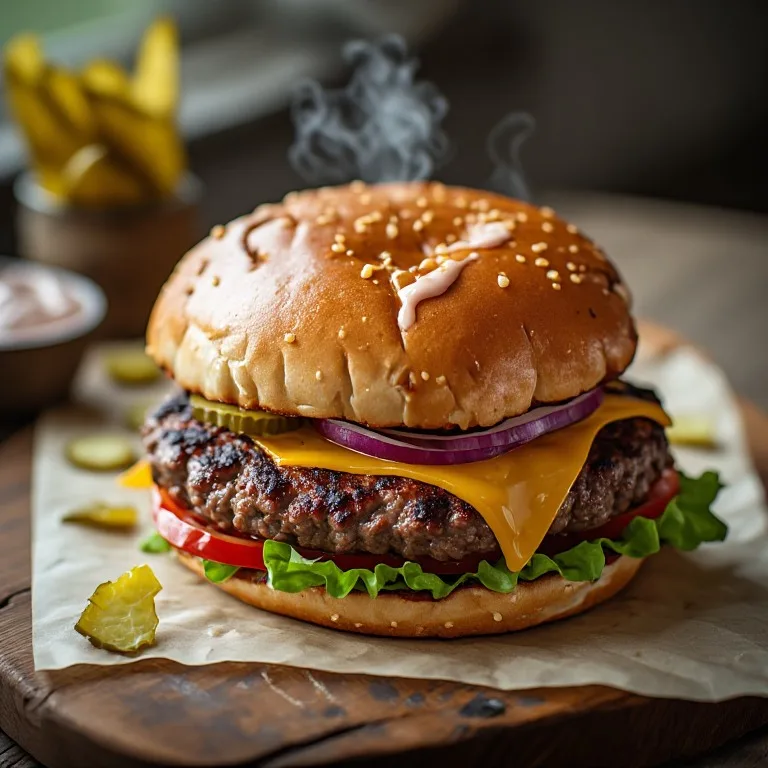
Order matters. Bottom bun first: pickles, then red onion rings directly on the bun (they grip the patty from below). Cheesy patty goes on top of the onion, cheese-side up. Two tomato slices, then lettuce. Top bun: Smash Sauce generously spread on the cut side. Close the burger, press gently to seat everything, and serve immediately. The thin patty drops temperature fast — a Smashburger is a 5-minute-window burger.