

Pin It

Southern Comfort Old-Fashioned Eggnog

Southern Comfort Old-Fashioned Eggnog
Jump to Recipe
Prep 10 min Cook 20 min Serves 4
Quick answer: To make homemade eggnog in the Southern Comfort style: whisk 4 egg yolks with ⅓ cup sugar until pale and thick. Heat 2 cups whole milk to 180°F in a saucepan. Slowly stream the hot milk into the yolks, whisking constantly to temper. Return to the pan and cook over medium-low heat, stirring, until the mixture registers 160°F (about 5–8 minutes). Remove from heat. Stir in 1 cup heavy cream, 1 teaspoon vanilla extract, ¾ teaspoon freshly grated nutmeg, and ⅛ teaspoon cinnamon. Strain through a fine-mesh sieve into a container. Refrigerate at least 2 hours until cold and thickened. Serve in a chilled glass with an extra grating of nutmeg on top. The cooked custard base — not raw eggs — is what gives Southern Comfort eggnog its signature thick, spoonable consistency.

Southern Comfort Old-Fashioned Eggnog

Homemade eggnog recipe in the style of Southern Comfort's iconic holiday carton — a cooked custard base of egg yolks, whole milk, and heavy cream, loaded with freshly grated nutmeg. Rich, thick, and ready in 30 minutes of active time. Keeps 4 days in the fridge.

Medium Prep: 10 min Cook: 20 min Total: 30 min4 servings ~$3.50/serving
Prep10 min
Cook20 min
Total30 min
Servings
4
At home~$3.50/serving
vs
Restaurant~$15.75/serving
You save ~78%

The Story Behind the Recipe

Southern Comfort Eggnog is the most recognizable holiday carton in the American dairy aisle — not because of the liqueur brand it shares a name with, but because of HP Hood, the Massachusetts dairy that manufactures the non-alcoholic drink under a brand license. Hood — a privately held, independent dairy processor, not the spirits company — bottles it from late September through December, and it reliably becomes one of the best-selling dairy products of the holiday season in the Northeast and Mid-Atlantic. The carton — cream-colored with holly-and-ribbon graphics and a red cap — is what many American families think of when they think of eggnog: thick enough to coat a glass, sweet-custard forward, with a warm nutmeg note that lands immediately on the palate.

The detail that makes Southern Comfort style eggnog different from lighter homemade versions is the cooked custard base. Many recipes call for raw or lightly tempered eggs, which produces a frothy, thin, almost cocktail-like texture. The carton product uses a heat-processed formula that results in the dense, silky consistency people associate with the brand — it pours slowly and clings to the glass. Replicating that at home means cooking the yolk-milk mixture to 160°F, which both pasteurizes the eggs and lets the proteins set just enough to create that body. Freshly grated nutmeg is the flavor driver; pre-ground nutmeg lacks the oils that make it aromatic. A whole nutmeg and a Microplane cost about $4 total and will last through several holiday seasons. A 32-oz carton of Southern Comfort Eggnog retails for about $4.49–5.99; a homemade batch of the same volume from whole milk, heavy cream, and four eggs runs about $3.00 at regular grocery prices.

Nutrition Facts

Per serving (4 servings)
Calories340
Total Fat22g
Total Carbs29g
Dietary Fiber0g
Sugars28g
Protein7g
Sodium100mg

* Estimated values based on standard recipe preparation. Actual values may vary.

Ingredients

  • For serving (optional, adults only)

Instructions

💡
Pro tip: This recipe tastes even better the next day. The flavors need time to meld together in the fridge.
❄️
Storage: Keeps in an airtight container in the fridge for up to 2 weeks. Freezer-friendly for up to 3 months.
🎃 Free Halloween cookbook — download now The Copycat Halloween Cookbook A ready-made, photo-illustrated PDF of our best halloween copycat recipes — free to download, no building required. Pay what you want to support if you love it.

Free PDF — instant download. We'll also send new seasonal copycat recipes now and then; unsubscribe anytime. Or just download it →

Southern Comfort Old-Fashioned Eggnog Recipe

Prep time: 10 min
Cook time: 20 min + 2 hours chill
Servings: 4 (1 cup each)

The Southern Comfort carton is what most Americans picture when they think of eggnog. Not the frothy, raw-egg cocktail from the 18th century, and not the ultra-thin commercial dairy products — but the thick, slow-pour, nutmeg-heavy custard that shows up in the dairy aisle from October through December and sells out completely by Christmas week.

Making it at home takes about 30 minutes of active time and a kitchen thermometer. The cooked-custard method is what sets this style apart: you cook the yolk-milk base to exactly 160°F, which pasteurizes the eggs, thickens the mixture, and produces the dense, spoonable consistency that makes this eggnog feel like a dessert in a glass rather than a sweetened milk drink.

Carton vs. Homemade: What Changes
Southern Comfort cartonThis homemade version
TextureThick, slow-pouring, coats the glassSame — the cooked-custard method matches it
Dominant flavorNutmeg, sweet-custardNutmeg (fresh-grated is stronger than the carton)
EggsPasteurized, cookedCooked to 160°F — pasteurized, no raw-egg risk
SugarFixed, fairly sweetYou control it (⅓ cup, or cut to taste)
AlcoholNone (the carton is non-alcoholic)None in the base; add bourbon/rum per glass
Shelf lifePrinted date, weeks (stabilizers)3–4 days refrigerated, no stabilizers
Cost (32 oz)~$4.49–5.99, October–December only~$3.00 in ingredients, any time of year
AvailabilitySeasonal; sells out by Christmas weekMake a fresh batch whenever you want
Why the Cooked Custard Method Matters

Most “homemade eggnog” recipes fall into two camps: fully raw (beaten yolks, unheated cream, maybe a raw egg white fold-in) or barely tempered (hot liquid added to cold eggs, then served without cooking the combined mixture). Both produce eggnog that tastes fine but pours thin and foamy — closer to a milkshake base than to the carton product.

Southern Comfort style is a cooked custard. The yolk-milk mixture is heated to 160°F, which partially sets the egg proteins in a way that creates viscosity without turning them into scrambled eggs. That temperature window — 160°F to 165°F — is narrow, which is why a thermometer is the one piece of equipment in this recipe that isn’t optional. Go under 155°F and the custard won’t thicken enough. Go over 165°F and you get grainy, egg-forward eggnog with cooked bits.

The refrigeration step after cooking is the second crucial element. The custard looks thinner than you’d expect when it comes off the heat — cream-colored, pourable, slightly warm. After 2 hours in the refrigerator, it transforms: the proteins tighten, the fat in the cream sets, and the texture becomes the thick, slow-pour consistency the carton is known for. If you serve it immediately after straining, you’ll think something went wrong. Chill it overnight and you’ll see exactly what the brand achieves.

Nutmeg: The One Thing You Can’t Fake

Southern Comfort eggnog tastes like nutmeg. Not in a subtle background-note way — nutmeg is the dominant flavor, the thing that reads as “eggnog” to American palates. The commercial product achieves this through “spices” on its label, and the spice is primarily nutmeg.

Pre-ground nutmeg loses most of its aromatic volatile oils within weeks of the container being opened. If your ground nutmeg jar has been in the pantry for a year, it contributes almost nothing. Freshly grated whole nutmeg is a different ingredient — warm, resinous, immediately aromatic. Three or four passes of a whole nutmeg on a Microplane over the top of the finished glass will do more for flavor than a quarter teaspoon of pre-ground stirred into the base.

A single whole nutmeg costs $1–2 at most grocery stores and lasts an entire holiday season of eggnog, mulled wine, and baked goods. A small Microplane zester (the same tool used for citrus and parmesan) is $12–15 and will outlast a decade of holiday cooking. The flavor difference is worth both purchases.

Tempering: The Step People Rush and Regret

Tempering — slowly adding hot liquid to cold eggs before combining them — is what prevents scrambled eggnog. The physics: egg proteins begin to coagulate at around 145°F when in concentrated form (just yolks), but they tolerate higher temperatures when diluted with milk. By adding the hot milk a small amount at a time, you raise the yolk temperature gradually, giving the proteins time to relax into the liquid rather than seizing and clumping.

The two mistakes people make: adding too much hot milk too fast (the yolks seize at the edges before the center can equalize), or stopping whisking while pouring (same result). Pour the first ¼ cup in a thin stream while whisking with your other hand. Then another ¼ cup. By the time roughly half the milk is in, the temperature is equalized enough that you can add the rest more quickly.

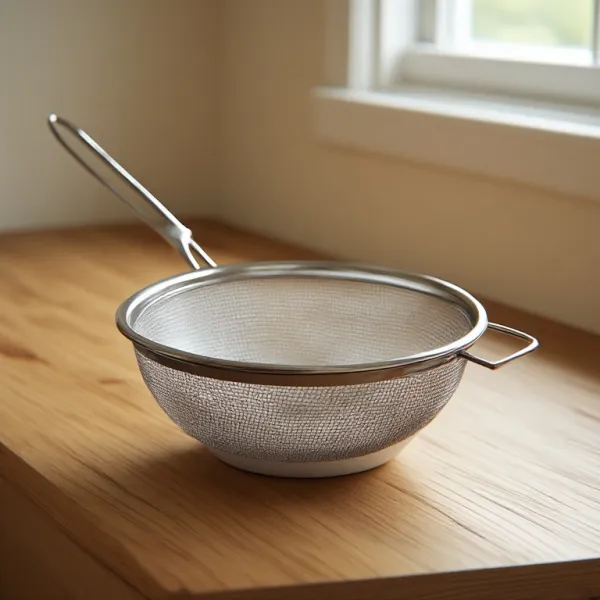
The fine-mesh sieve at the end catches any bits that curdled despite the tempering. Use it even if you think the tempering went perfectly — a few stray cooked proteins are nearly always present and are invisible until you see what collects in the sieve.

Scaling and Variations

The recipe scales directly: double all ingredients for 8 servings. The cook time in the saucepan increases to about 10–12 minutes to reach 160°F with a larger volume.

Lighter texture: fold in 2 stiffly beaten egg whites just before refrigerating. This adds the airy quality of a classic “Tom and Jerry” style eggnog while keeping the cooked-custard base.

Stronger spice: add ¼ teaspoon of allspice along with the cinnamon. Allspice appears in some Colonial-era eggnog recipes and is what gives certain brands a more complex, warming spice note beyond nutmeg alone.

Coffee eggnog: add 1 teaspoon of espresso powder to the hot milk before tempering. The coffee note reinforces the vanilla and nutmeg without tasting like coffee — it reads more as “depth” than “latte.”

Serving

The standard serve: chilled glass, no ice (ice dilutes it and changes the texture), a grating of fresh nutmeg directly over the surface. Southern Comfort carton eggnog is not meant to be shaken or blended — it’s meant to be poured slowly and sipped.

For a holiday drink: 2 tablespoons of bourbon in the glass first, then the cold eggnog poured gently over the top. A cinnamon stick as garnish is traditional and adds a subtle warmth on the palate. For the full nog experience, use a chilled wide-mouthed glass (an Old Fashioned glass or a short tumbler) rather than a tall glass — the cold glass slows the temperature rise, and the wide mouth lets the nutmeg aroma hit you with the first sip.

🥗

Make It Healthier

Love Southern Comfort Old-Fashioned Eggnog but want a lighter version? Try these simple swaps:

  • ✓Swap the heavy cream for whole milk (use 3 cups total whole milk instead of 2 cups milk + 1 cup cream) to cut fat to about 10g per serving and calories to roughly 230 — the texture will be thinner but still rich by eggnog standards.
  • ✓Reduce the sugar from ⅓ cup to 3 tablespoons and use a tablespoon of maple syrup instead — the maple reinforces the vanilla note and adds complexity without increasing total sweetness.
  • ✓Use only 2 egg yolks instead of 4 to cut cholesterol by half; compensate with an extra teaspoon of vanilla and a slightly longer cook time to achieve the same custard thickness.
  • ✓Freshly grated nutmeg has roughly three times the aromatic punch of pre-ground, so you can use a smaller amount (½ teaspoon) and still get the full flavor — a single whole nutmeg ($1–2) lasts an entire holiday season on a Microplane.

Frequently Asked Questions

How do you make homemade eggnog from scratch?

Whisk 4 egg yolks with ⅓ cup sugar until the mixture turns pale yellow and thick (about 2 minutes). Heat 2 cups whole milk in a saucepan over medium heat to about 180°F — steaming steadily but not boiling. Slowly pour the hot milk into the yolk mixture one ladleful at a time, whisking constantly (this tempering step prevents scrambled eggs). Return the tempered mixture to the saucepan and cook over medium-low heat, stirring with a silicone spatula, until it reaches 160°F on an instant-read thermometer — this takes 5–8 minutes. Remove from heat immediately. Stir in 1 cup heavy cream, 1 teaspoon pure vanilla extract, ¾ teaspoon freshly grated nutmeg, and ⅛ teaspoon cinnamon. Strain through a fine-mesh sieve into a storage container, pressing gently. Refrigerate at least 2 hours until cold and thickened to a pourable custard. Serve in a chilled glass with a fresh grating of nutmeg on top.

What makes Southern Comfort eggnog thicker than other homemade eggnogs?

The cooked custard method. Many homemade eggnog recipes use raw eggs or only lightly temper the yolks, which produces a thin, frothy texture. Southern Comfort's formula is a heat-processed dairy product, meaning the yolk-milk mixture has been cooked to the point where the egg proteins partially set — giving the final product its signature thick, slow-pouring consistency. To replicate it at home, cook the tempered mixture to 160°F on an instant-read thermometer, then let it cool and refrigerate for at least 2 hours. The chilling step is as important as the cooking step: the custard continues to thicken as it cools. If your homemade eggnog turns out thin, the mixture didn't reach temperature, or it didn't chill long enough.

Is homemade eggnog safe to drink, or is it a food safety risk?

This recipe is safe. Cooking the tempered yolk-milk mixture to 160°F on an instant-read thermometer pasteurizes the eggs — the FDA food safety standard for egg-containing dishes is 160°F. If you use a thermometer and reach that temperature, the finished eggnog poses no greater food safety risk than any other cooked custard. The risk in eggnog comes from recipes that use raw or only slightly warmed eggs, which may not reach the temperature required to kill Salmonella. Do not skip the thermometer: visual cues (the mixture 'coating the back of a spoon') are unreliable for food-safety purposes, though they're useful for texture assessment.

What's the best alcohol to add to homemade eggnog?

Bourbon is the classic pairing — its caramel and vanilla notes complement the custard without competing with the nutmeg. Add 2 tablespoons (1 oz) per glass for a traditional holiday drink, or 3 tablespoons if you want a more pronounced spirit flavor. Dark rum is the second most popular choice and works especially well if you add a pinch of allspice to the base recipe. Brandy is the traditional European and colonial American choice — lighter and slightly fruity. Spiced rum adds cinnamon and vanilla notes that double down on the base flavors. Add the spirit to individual glasses rather than to the whole batch, so the eggnog stays family-friendly until serving.

Can you make eggnog dairy-free?

Yes. Substitute the 2 cups of whole milk with 2 cups full-fat oat milk (Oatly Barista or similar) and the 1 cup of heavy cream with 1 cup of canned full-fat coconut cream. The oat milk heats and tempers well; the coconut cream provides the fat that gives the finished drink its body. The flavor will be slightly different — a faint oat or coconut note depending on your brand — but the texture will be close to the original. Avoid thin plant milks like rice milk, which won't thicken properly at 160°F.

How long does homemade eggnog keep in the refrigerator?

Up to 4 days in a sealed container in the refrigerator. Because this recipe cooks the eggs to 160°F, it behaves like any cooked custard: it stays fresh 3–4 days. You may notice it thickens slightly more over the first day as the proteins continue to set — this is normal and actually improves the texture. Stir before serving if a slight skin forms on top. Homemade eggnog does not freeze well: the custard separates and the texture becomes grainy when thawed. Make it fresh for each occasion.

Love this recipe? Share it!

Free PDF: our 12 most-wanted copycat recipes — instant download.

Made it? Buy us a coffee

Every recipe here is free, with no paywalls. If this one was a hit at your table, a small tip keeps new copycats coming.

$

Southern Comfort is a trademark of its owner, used here only to describe the dish this recipe recreates. This is an independent copycat written in our own words — Copycat Spices is not affiliated with, endorsed by or sponsored by Southern Comfort.

Ratings & Reviews

—
No ratings yet

Rate this recipe

Click a star to rate

Leave a Review

0/500

CS

Copycat Spices Editorial

Researched + fact-checked. Every recipe on Copycat Spices is built from published sources — official ingredient lists, brand-published recipes, interviews and food-science references — and fact-checked before it goes live, then written as clear, step-by-step instructions for home cooks of all skill levels.

Learn more about our mission →