

Pin It

Stove Top Stuffing (From Scratch)

Stove Top Stuffing (From Scratch)
Jump to Recipe
Prep 15 min Cook 10 min Serves 6
Quick answer: Homemade Stove Top stuffing uses dried white bread cubes, butter, chicken broth, and a blend of sage, thyme, dried onion, celery flakes, and parsley. Dry the bread in a 300°F oven for 15 minutes, then sauté onion and celery in butter, add 1½ cups broth, bring to a boil, stir in the bread cubes, cover, and let stand 5 minutes off heat. The whole process takes about 25 minutes and produces the same small-cubed, sage-forward stuffing that makes Stove Top so useful — with real herbs instead of additives and better flavor throughout.

Stove Top Stuffing (From Scratch)

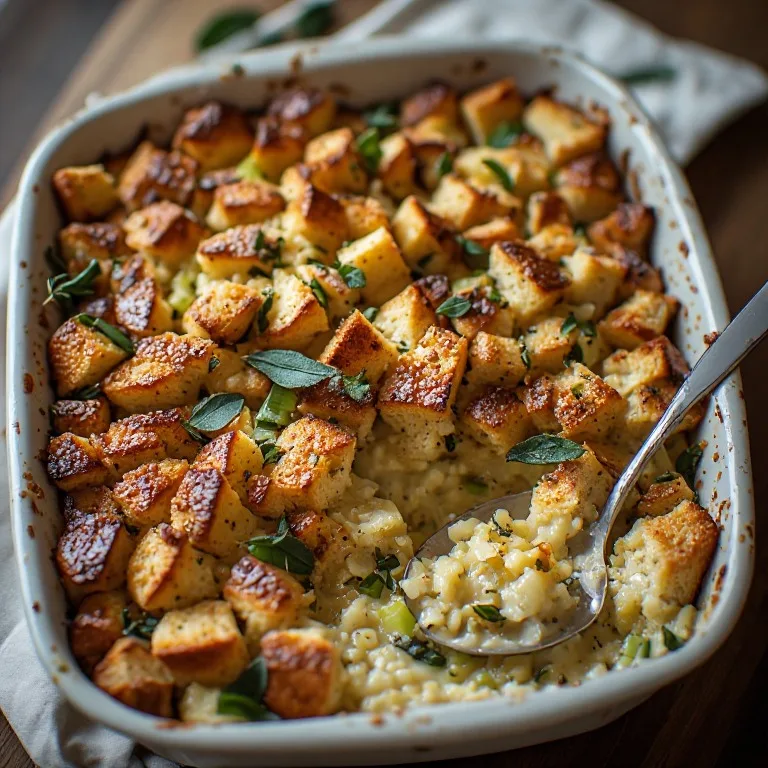
Copycat Stove Top stuffing made from scratch in 25 minutes: the same small-cubed, sage-forward, buttery stovetop stuffing — no box needed. Includes the make-ahead dry mix method so you can cook it instantly on demand.

Easy Prep: 15 min Cook: 10 min Total: 25 min6 servings ~$4.50/serving
Prep15 min
Cook10 min
Total25 min
Servings
6
At home~$4.50/serving
vs
Restaurant~$20.25/serving
You save ~78%

The Story Behind the Recipe

Stove Top Stuffing launched in 1972, the work of a General Foods research team tasked in 1971 with creating an instant stuffing. Ruth Siems, a Purdue-trained food scientist and home economist, is listed first on the resulting patent (U.S. Patent 3,870,803, granted in 1975), ahead of co-inventors Anthony Capossela Jr., John Halligan, and C. Robert Wyss. Her breakthrough was precise and physical: a specific size of dried bread crumb that rehydrates evenly in a few minutes on the stove — which is exactly why cube size matters so much when you make it from scratch. The brand later passed to Kraft Heinz, where it remains one of the best-selling Thanksgiving sides in the country.

The box costs around $3 and takes 5 minutes to prepare, which is genuinely hard to beat. The case for making it from scratch: real herbs instead of dried flavoring compounds, far less sodium (the box runs 450mg per half-cup serving), real butter absorption into fresh bread, and the ability to scale it exactly. The from-scratch version also doubles as a dry mix you can store in a jar — measure out into jars, refrigerate, and reconstitute on demand the same way the box does, with prep time that's essentially identical once the mix is made.

Nutrition Facts

Per serving (6 servings)
Calories195
Total Fat8g
Total Carbs27g
Dietary Fiber2g
Sugars2g
Protein6g
Sodium420mg

* Estimated values based on standard recipe preparation. Actual values may vary.

Ingredients

  • For the stuffing
  • Seasoning blend

Instructions

💡
Pro tip: This recipe tastes even better the next day. The flavors need time to meld together in the fridge.
❄️
Storage: Keeps in an airtight container in the fridge for up to 2 weeks. Freezer-friendly for up to 3 months.
🦃 Free Thanksgiving cookbook — download now The Copycat Thanksgiving Cookbook A ready-made, photo-illustrated PDF of our best thanksgiving copycat recipes — free to download, no building required. Pay what you want to support if you love it.

Free PDF — instant download. We'll also send new seasonal copycat recipes now and then; unsubscribe anytime. Or just download it →

Stove Top Stuffing (From Scratch)

Prep time: 15 min (including drying the bread)
Cook time: 10 min
Yield: 6 servings (about ¾ cup each)

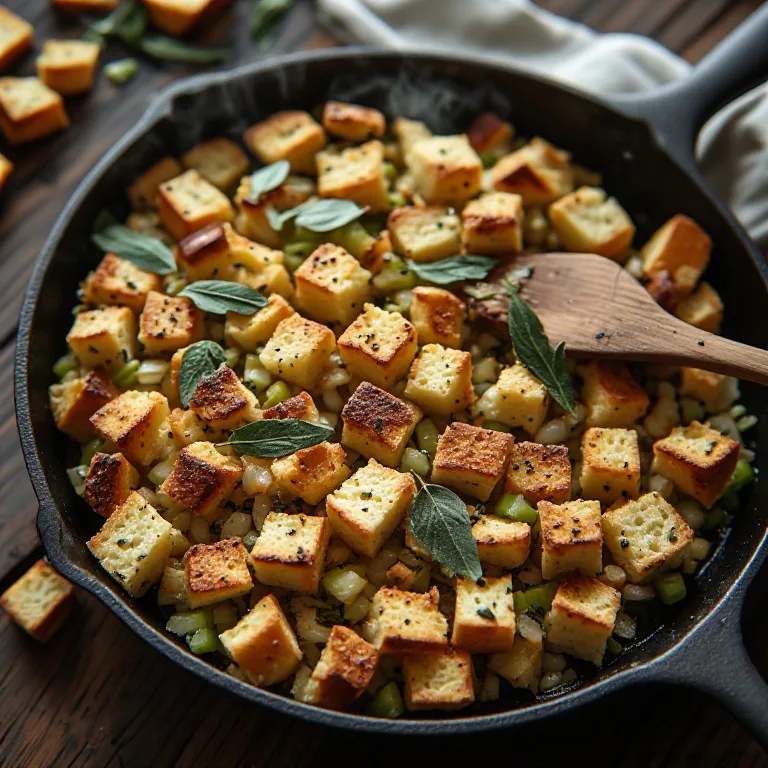
The from-scratch copycat for Stove Top stuffing matches the distinctive character of the box — small, sage-forward cubes with a buttery, brothy base — while using real herbs, real butter, and real bread. It takes about 25 minutes total and costs about $3 to make (roughly the same as a box), but tastes noticeably better and has a fraction of the sodium.

The technique is exactly what the box does: dry bread cubes + seasoning + boiling broth + 5-minute covered steam. The only additions are fresh onion and celery sautéed in butter for 2 minutes before the broth goes in. That one step is the difference.

The Stove Top Story

A General Foods research team was tasked in 1971 with creating an instant stuffing, and the product reached shelves in 1972. Ruth Siems — a Purdue-trained food scientist and home economist — is listed first on the patent that resulted (U.S. Patent 3,870,803, granted in 1975), ahead of co-inventors Anthony Capossela Jr., John Halligan, and C. Robert Wyss. The heart of her invention was deceptively simple: a specific size of dried bread crumb that rehydrates evenly in a few minutes on the stove — no stuffing the bird, no roasting, no timing. Kraft Heinz eventually absorbed the brand, and Stove Top remains one of the best-selling Thanksgiving sides in the country, with the chicken variety the one most people picture.

The case for making it from scratch is a real one. The box stuffing is cheap and fast. But the from-scratch version uses real dried herbs instead of dehydrated flavoring compounds, runs 100–150mg lower in sodium per serving, and lets the butter absorb into fresh bread rather than into a preserved dry mix. The flavor reads cleaner — you can taste the sage and thyme distinctly rather than as a background note. And the dry-mix approach below means you can pre-make a batch in October and have instant Stove Top on demand through the holidays, with prep time identical to the box.

Why Small Cubes Matter

Stove Top’s signature is not just the flavor — it’s the texture. The cubes are small (about ½ inch), uniform, and just soft enough that each bite is buttery and cohesive without being mushy. That’s the opposite of a traditional baked stuffing, where larger cubes get a crispy top and custardy interior.

To match it at home:

  • Cut the bread into ½-inch pieces. Smaller than you’d think for a stuffing.
  • Dry them completely before cooking. Hard, snapping cubes absorb the broth during the steam step. Underdried cubes absorb unevenly and collapse.
  • Don’t skip the covered-steam step. Five minutes off heat with a lid on is what reconstitutes the bread. Lift the lid early and you lose the steam; stir during it and you break the cubes.
The Seasoning Breakdown
IngredientAmountRole
Dried sage1 tspThe dominant note — what makes it taste like Stove Top
Dried thyme½ tspHerbal undertone, supports the sage
Dried parsley½ tspBackground green note
Dried minced onion1 tbspSavory depth throughout every cube
Dried celery flakes1 tspClassic stuffing character
Salt + pepper¾ tsp + ¼ tspSeasoning

Toss these dry spices with the bread cubes before adding any liquid. Each cube should be lightly coated. This is how the box delivers consistent seasoning — the herbs are embedded in the dry bread rather than stirred in during cooking.

The Make-Ahead Dry Mix Method

This is the practical move for the holidays:

Step 1: Dry the bread cubes completely (300°F, 15 minutes).
Step 2: Toss with the seasoning blend.
Step 3: Store in an airtight jar or zip bag. Keeps at room temperature for 2 weeks, freezes for 3 months.

To cook from the mix: Sauté 2 tablespoons each diced onion and celery in 3 tablespoons butter for 2 minutes. Add 1½ cups broth and bring to a boil. Fold in 4 cups of the dry mix, cover, off heat, 5 minutes. Done.

One batch makes a single 6-serving recipe. For a Thanksgiving table, triple or quadruple the dry mix and store in quart jars. Each jar is one-recipe.

Variations

Turkey variety: Replace the sage with ½ teaspoon sage + ½ teaspoon rosemary. Turkey broth instead of chicken broth.

Herb variety: Skip the dried sage entirely; use 1 teaspoon dried thyme + 1 teaspoon dried marjoram for a lighter, more floral version. This is closer to the Stove Top “Garden Herb” variety.

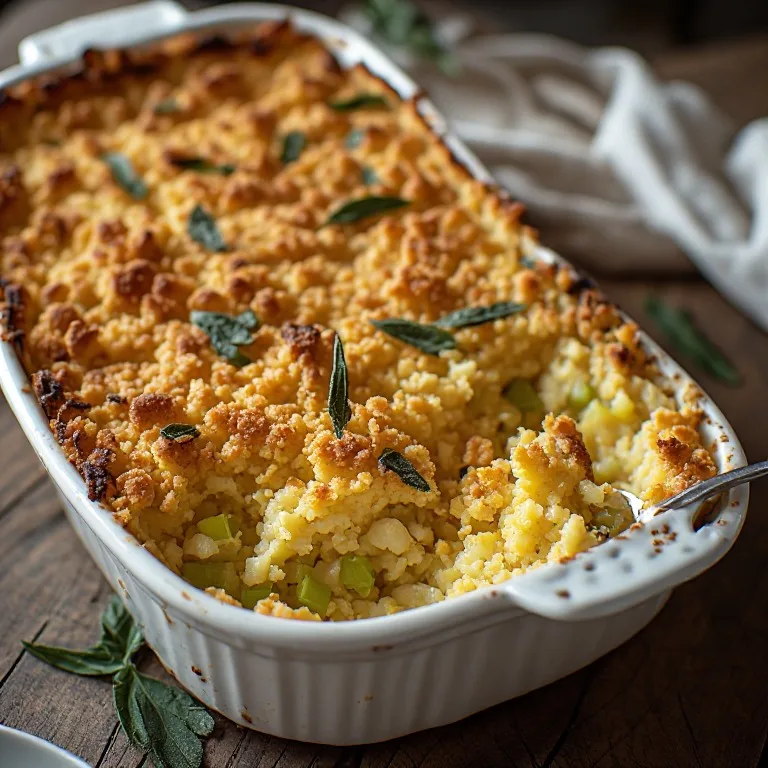
Cornbread stuffing: Substitute 2 cups of the bread cubes with dried cornbread cubes. Reduces the sage by half and increases the sweetness of the dish. This starts to approach Cracker Barrel’s cornbread dressing territory.

Mushroom add-in: After sautéing the onion and celery, add ½ cup finely diced mushrooms. Cook another 2 minutes until they release their water and shrink. Proceed as normal. Adds umami without changing the classic flavor profile.

Stove Top vs. Homemade: Honest Comparison
FactorBox Stove TopThis Recipe
Prep time (cold start)10 min25 min
Prep time (dry mix ready)10 min10 min
Sodium per serving~450mg~420mg (or ~280mg low-sodium)
Cost~$3/batch~$3–4/batch
FlavorReliable, one-noteMore dimensional
Shelf-stable convenienceYesYes (dry mix)

The box wins on pure convenience when you’re starting from scratch on the day. The from-scratch version wins on flavor and sodium control. The dry-mix approach closes most of the convenience gap.

Pairing Suggestions

Stove Top stuffing is the natural side for any roast bird, but it also holds its own next to:

🥗

Make It Healthier

Love Stove Top Stuffing (From Scratch) but want a lighter version? Try these simple swaps:

  • ✓Use low-sodium chicken broth and cut the added salt to ½ teaspoon — drops sodium to under 300mg per serving, which is significantly less than the box's 450–480mg
  • ✓Swap whole wheat sandwich bread for white — same technique, more fiber and a slightly nutty background note
  • ✓Replace 1 tablespoon of the butter with olive oil to reduce saturated fat while keeping the richness the stuffing needs
  • ✓Add ½ cup diced mushrooms to the sauté step for umami bulk — they cook down to nearly nothing but add depth and a tiny bit of extra fiber with almost no extra calories

Frequently Asked Questions

What is the copycat recipe for Stove Top stuffing?

The from-scratch copycat uses dried white bread cubes (about 4 cups), chicken broth (1½ cups), butter (3 tablespoons), and a seasoning blend of dried sage, dried thyme, dried parsley, dried minced onion, celery flakes, salt, and pepper. Dry the bread cubes in a 300°F oven for 10–15 minutes. Sauté the onion and celery in butter for 2–3 minutes, then pour in the broth and bring to a boil. Stir in the bread cubes, cover, remove from heat, and let stand 5 minutes. Fluff and serve. The technique is identical to the box — the difference is real herbs and fresh bread instead of a preserved dry mix.

What bread works best for homemade Stove Top stuffing?

Plain white sandwich bread produces the closest match to the box — its neutral flavor and tight crumb reconstitute into the small, uniform cubes that define the Stove Top texture. Pepperidge Farm white, any supermarket soft white, or a day-old baguette all work. The key is cutting the cubes small (½ inch or smaller) and drying them thoroughly so they absorb the broth without turning to mush. Brioche adds richness but is noticeably softer. Sourdough produces more chew and complexity, which is good but moves away from the classic Stove Top character.

What herbs are in Stove Top stuffing?

Stove Top's chicken variety is primarily sage-forward, with thyme, parsley, and a background note of celery. The box ingredient list includes dehydrated onion, celery, parsley, and a spice blend that reads as standard poultry seasoning — sage dominant, thyme secondary. For the from-scratch version: 1 teaspoon dried sage, ½ teaspoon dried thyme, ½ teaspoon dried parsley, 2 tablespoons dried minced onion, 1 tablespoon dried celery flakes (or celery seed at 1 teaspoon), salt, and black pepper. This produces a seasoning profile that's recognizably Stove Top without the preservatives.

How do I make Stove Top stuffing better?

Four things elevate the from-scratch version above the box: (1) Use real butter — not a substitute. The fat absorbs into the bread and coats every cube; reduced-fat versions taste flat. (2) Use chicken broth instead of water — the box instructions call for water, but broth adds depth the water version lacks. (3) Add a small amount of fresh aromatics — even just 2 tablespoons of diced onion and celery sautéed for 2 minutes adds sweetness and texture the dry mix version can't. (4) Let it stand covered the full 5 minutes — the steam reconstitutes the bread evenly; lifting the lid early steams off moisture and produces drier stuffing.

Can I make Stove Top stuffing in advance?

Two ways. Make the dry mix in advance: combine the dried bread cubes with all the dry seasonings, store in an airtight container or jar up to 2 weeks at room temperature (or 2 months in the freezer), then reconstitute with boiling broth and butter in 5 minutes when needed — functionally identical to a box of Stove Top. Alternatively, fully prepare the stuffing up to 2 days ahead, refrigerate covered, and reheat in a covered skillet over low heat with 2–3 tablespoons of additional broth to prevent drying. For Thanksgiving, the dry-mix approach is most practical — measure it into jars in October and you have instant Stove Top on demand through the holidays.

What is the Stove Top stuffing to water ratio?

The standard box instructions call for 1½ cups of water per one 6-oz box of stuffing (which makes 6 servings). For the from-scratch version, use 1½ cups of chicken broth per 4 cups of dried bread cubes plus 3 tablespoons of butter. The exact ratio depends on your bread — denser, thicker cubes need more liquid; very dry thin-sliced bread absorbs faster. If the stuffing seems dry after the 5-minute steam, stir in 1–2 tablespoons of warm broth. If it seems too wet, leave the lid off and let stand an additional 2–3 minutes.

Is homemade Stove Top stuffing healthier than the box?

Meaningfully so on sodium. A half-cup serving from the box has approximately 450–480mg of sodium; the from-scratch version with low-sodium broth and reduced salt runs closer to 280–300mg. The calorie and fat content are similar (both use butter and a bread base), though homemade lets you control the butter amount precisely. The from-scratch version has no preservatives, no artificial flavors or coloring, and no partially hydrogenated fats. For dietary restrictions, it's easier to make gluten-free (swap in a GF sandwich bread and GF broth) or lower-sodium (reduce salt + use no-salt-added broth).

Why is my homemade stuffing mushy instead of fluffy?

Three causes: (1) The bread wasn't dry enough going in — underdried bread absorbs the broth and collapses rather than reconstituting into distinct cubes. Dry the cubes in a 300°F oven for at least 10 minutes, until they feel hard and snap when bent. (2) Too much liquid — start with 1¼ cups broth and add more only if the stuffing seems dry after standing. (3) Stirring during the steam — once you cover the pan and remove it from heat, don't stir for the full 5 minutes. Premature stirring breaks the cubes and releases steam that should be doing the reconstituting.

Love this recipe? Share it!

Free PDF: our 12 most-wanted copycat recipes — instant download.

Made it? Buy us a coffee

Every recipe here is free, with no paywalls. If this one was a hit at your table, a small tip keeps new copycats coming.

$

Thanksgiving is a trademark of its owner, used here only to describe the dish this recipe recreates. This is an independent copycat written in our own words — Copycat Spices is not affiliated with, endorsed by or sponsored by Thanksgiving.

Ratings & Reviews

—
No ratings yet

Rate this recipe

Click a star to rate

Leave a Review

0/500

CS

Copycat Spices Editorial

Researched + fact-checked. Every recipe on Copycat Spices is built from published sources — official ingredient lists, brand-published recipes, interviews and food-science references — and fact-checked before it goes live, then written as clear, step-by-step instructions for home cooks of all skill levels.

Learn more about our mission →