

Pin It

Viral TikTok Creamy Mashed Potatoes

Viral TikTok Creamy Mashed Potatoes
Jump to Recipe
Prep 10 min Cook 20 min Serves 6
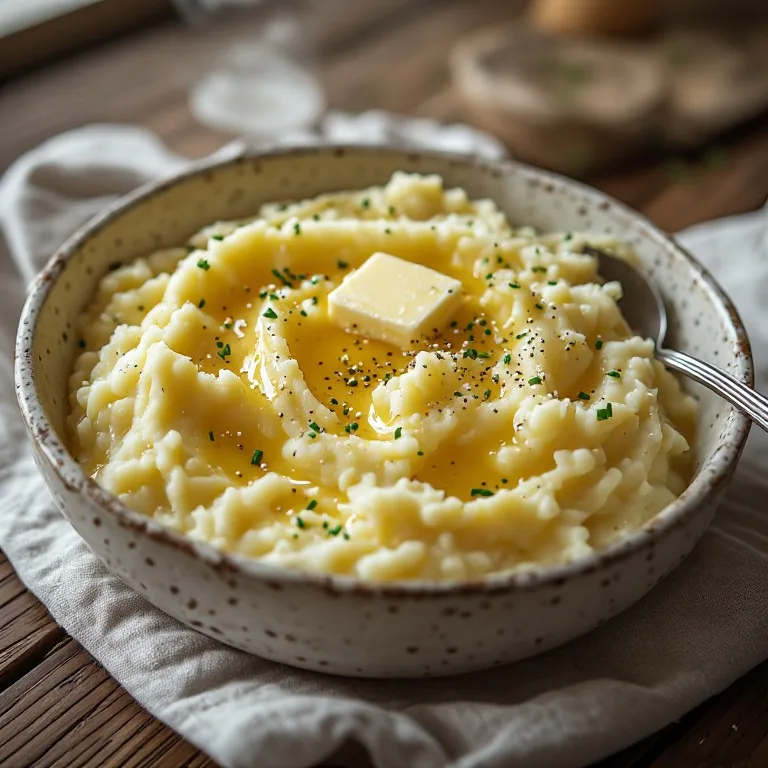
Quick answer: Start Yukon Gold potato chunks in cold salted water, boil until fork-tender (15–18 min), drain and steam-dry in the pot for 5 minutes, then rice while hot. Fold in 1 stick of room-temperature butter piece by piece until each disappears, then pour in ¾ cup warm heavy cream in a slow stream while folding. Season with salt and white pepper. The three non-negotiables: Yukon Gold (not russet), rice or pass through a food mill while the potatoes are still steaming, and warm your cream before it goes in.

Shop the tools

Gear matched to this recipe. These are Amazon affiliate links — we may earn a small commission if you buy, at no extra cost to you.

As an Amazon Associate, Copycat Spices earns from qualifying purchases. Product images are generic illustrations, not the exact item listed.

Viral TikTok Creamy Mashed Potatoes

The viral TikTok mashed potatoes technique that explains why restaurant versions always taste better: Yukon Gold potatoes, warm butter folded in piece by piece, hot cream, and a potato ricer. No lumps. No gluey mess. Ready in 30 minutes.

Easy Prep: 10 min Cook: 20 min Total: 30 min6 servings ~$2.45/serving
Prep10 min
Cook20 min
Total30 min
Servings
6
At home~$2.45/serving
vs
Restaurant~$11.02/serving
You save ~78%

The Story Behind the Recipe

The TikTok \"butter mountain\" mashed potatoes trend went viral when creators started showing just how much butter goes into restaurant mashed potatoes — and the reactions ranged from shock to instant \"oh, THAT explains it.\" The technique traces back to Joël Robuchon, the French chef who famously used equal weights of butter and potato in his signature purée. The TikTok versions are more restrained (one stick per two pounds of potatoes instead of one-to-one), but the principle is the same: the gap between home and restaurant mashed potatoes is almost entirely a butter and cream problem, not a skill problem.

The actual technique matters as much as the ratios. Russet potatoes are starchier and more prone to turning gluey when worked too hard; Yukon Golds are waxier and buttery-flavored, which gives you more room to fold without overworking the starch. Steam-drying the drained potatoes for 5 minutes before ricing drives off excess water, so the butter and cream you add in don't compete with waterlogged potato. Folding in warm (not cold) cream prevents the fat from seizing when it hits the hot potato. These steps take no extra skill — they just require knowing they exist.

Nutrition Facts

Per serving (6 servings)
Calories315
Total Fat22g
Total Carbs28g
Dietary Fiber2g
Sugars2g
Protein4g
Sodium440mg

* Estimated values based on standard recipe preparation. Actual values may vary.

Ingredients

Instructions

💡
Pro tip: This recipe tastes even better the next day. The flavors need time to meld together in the fridge.
❄️
Storage: Keeps in an airtight container in the fridge for up to 2 weeks. Freezer-friendly for up to 3 months.
🦃 Free Thanksgiving cookbook — download now The Copycat Thanksgiving Cookbook A ready-made, photo-illustrated PDF of our best thanksgiving copycat recipes — free to download, no building required. Pay what you want to support if you love it.

Free PDF — instant download. We'll also send new seasonal copycat recipes now and then; unsubscribe anytime. Or just download it →

Viral TikTok Creamy Mashed Potatoes — The Butter Mountain Technique

The version you’ve been making is probably good. This version will make you understand why restaurant mashed potatoes taste like a different dish.

The TikTok videos that went multi-million-view weren’t showing a complicated technique. They were showing how much butter actually goes in — and watching people’s reactions land somewhere between shock and a slow, understanding nod: oh. That’s why. One stick per two pounds of potatoes is the starting point here, not the wild exception. That’s the floor, not the ceiling.

The Yukon Gold Question

Russet potatoes are what most American recipes default to for mashed potatoes, and they work. But Yukon Golds are better for this technique. They have a naturally buttery, slightly sweet flavor that means the end result tastes richer even before any butter is added. More importantly, they’re waxier. Waxy potatoes have lower free starch content than floury russets, which means you can fold them more vigorously without triggering the breakdown that turns mashed potatoes into starchy paste.

If you’ve ever made beautiful mashed potatoes and watched them turn gluey within 10 minutes — that’s the starch problem. Yukon Golds give you more margin.

Why Steam-Drying Matters

Most recipes say “drain and mash.” The step between those two verbs is where restaurant kitchens operate differently.

After draining, every piece of potato is still carrying water it absorbed during boiling. If you fold butter into waterlogged potato, the water competes with the fat — some gets absorbed, some stays free, and the result tastes diluted no matter how much butter you’ve used. Returning the drained potatoes to the empty hot pot for 5 minutes drives off that surface and trapped moisture. What you’re working with afterward is pure potato that absorbs fat cleanly.

The hot empty pot also keeps the potato temperature up. Fat incorporates most smoothly into hot starch — let the potatoes cool and you’re fighting physics.

The Folding Sequence

Restaurant mashed potatoes come out consistently because the technique is precise, not because the cook is skilled in some rare way. The sequence:

  1. Rice while hot — don’t let the potatoes cool before passing them through the ricer. Hot potato through a ricer produces individual, fluffy strands that absorb fat beautifully. Cold potato through a ricer produces a denser base that resists.

  2. Butter before cream, piece by piece — each piece of butter emulsifies into the potato separately. Adding all the butter at once produces an uneven distribution and a greasier result. The 60 seconds of folding between pieces is the work.

  3. Warm cream last — streaming warm cream into the already-buttered potato allows you to dial in the consistency precisely. Start checking after half the cream is in.

The Gluey Problem

The single most common mashed potato failure is a gluey, dense texture. It happens in one of two ways: using a mixer or food processor (which beats air into the starch at the same time it ruptures cells), or working the potatoes too aggressively with a masher. Both break the starch structure in a way that cannot be undone.

The fix is prevention. Use a ricer. Fold — don’t stir. Work quickly. Once the texture turns gluey, you can’t save it by adding more butter or cream; you’re just adding fat to broken starch. The best move at that point is to use them as a base for potato pancakes, where the dense texture is actually an advantage.

Make Ahead Without Ruining Them

Cold mashed potatoes reheat badly in a microwave — they emerge dense and uneven. The right method:

For same-day holding (up to 2 hours): press plastic wrap against the surface and keep the pot over the lowest burner setting, or set the pot in a warm water bath.

For next-day: store in an airtight container in the fridge. Reheat over low heat in a saucepan with 3–4 tablespoons of cream added, folding gently as the cream heats. They will come back — the key is low heat and added liquid, not speed.
🥗

Make It Healthier

Love Viral TikTok Creamy Mashed Potatoes but want a lighter version? Try these simple swaps:

  • ✓Swap heavy cream for half-and-half — saves about 45 calories per serving with minimal flavor change at these ratios.
  • ✓Cut butter to 4 tablespoons and add 2 oz softened cream cheese — you get the same richness and cling with less saturated fat.
  • ✓Leave the skins on Yukon Golds (just scrub well instead of peeling) — the skins are thin and pleasant, and you add fiber with zero effort.
  • ✓Add 4 roasted garlic cloves mashed into the butter — deep savory flavor without adding a calorie.

Frequently Asked Questions

Why do restaurant mashed potatoes always taste better than homemade?

Two reasons: significantly more butter and cream than home cooks are comfortable using, and technique. Restaurant mashed potatoes typically use 1 stick of butter per 2 lbs of potatoes plus ¾ cup of cream. The technique matters too — draining and steam-drying the potatoes removes excess water so the fat incorporates cleanly, and ricing instead of mashing prevents the overworking that makes mashed potatoes gluey.

What is the 'butter mountain' TikTok mashed potatoes trend?

TikTok creators started filming themselves making restaurant-style mashed potatoes with an amount of butter that shocked home cooks used to adding a tablespoon or two. The viral reaction — millions of views across multiple creators — was almost always the same: "oh, THAT is why restaurants taste different." The technique traces back to Joël Robuchon's purée de pomme de terre, which uses equal weights of butter and potato. The TikTok versions scale back to about one stick per two pounds, which is still roughly four times what most home recipes call for.

Yukon Gold vs russet potatoes for mashed potatoes — which is better?

Yukon Gold is better for this style of mashed potatoes. They have a naturally buttery flavor and a waxier texture that tolerates more folding without turning gluey. Russets have higher starch content, which can produce gummy mashed potatoes if worked too vigorously. If russets are all you have, be gentler and quicker with the mixing — they work, they're just less forgiving.

Why do you need to steam-dry the potatoes before mashing?

Drained potatoes still carry moisture inside from boiling. If you mash or rice them immediately, that water dilutes the butter and cream you're adding, and the potatoes taste slightly watery no matter how much fat you use. Returning the drained potatoes to the empty hot pot for 5 minutes lets residual steam escape, so what you're working with is pure potato. The hot pot also keeps the temperature up for cleaner butter incorporation.

Can I make creamy mashed potatoes ahead of time?

Yes, up to 2 hours ahead with the right method. After making them, press plastic wrap directly against the surface (contact wrap prevents a skin from forming), set the pot over the lowest possible burner heat or in a warm water bath. For make-ahead by a full day, store in the fridge in an airtight container. Reheat over low heat with 2–3 tablespoons of additional cream, folding gently as it warms — do not microwave without adding liquid or they'll turn dense.

Why do mashed potatoes turn gluey and how do you fix it?

Gluey mashed potatoes are caused by overworking the starch after the potato cells are already broken. A food processor, stand mixer, or too much vigorous mashing ruptures starch granules and turns the mixture into wallpaper paste. Prevention: use a ricer or food mill, fold in fat gently rather than stirring aggressively, and work quickly so the potatoes don't cool (cold starch is harder to separate). There is no easy fix once they're gluey — the damage to the starch is permanent.

Love this recipe? Share it!

Free PDF: our 12 most-wanted copycat recipes — instant download.

Made it? Buy us a coffee

Every recipe here is free, with no paywalls. If this one was a hit at your table, a small tip keeps new copycats coming.

$

Ratings & Reviews

—
No ratings yet

Rate this recipe

Click a star to rate

Leave a Review

0/500

CS

Copycat Spices Editorial

Researched + fact-checked. Every recipe on Copycat Spices is built from published sources — official ingredient lists, brand-published recipes, interviews and food-science references — and fact-checked before it goes live, then written as clear, step-by-step instructions for home cooks of all skill levels.

Learn more about our mission →