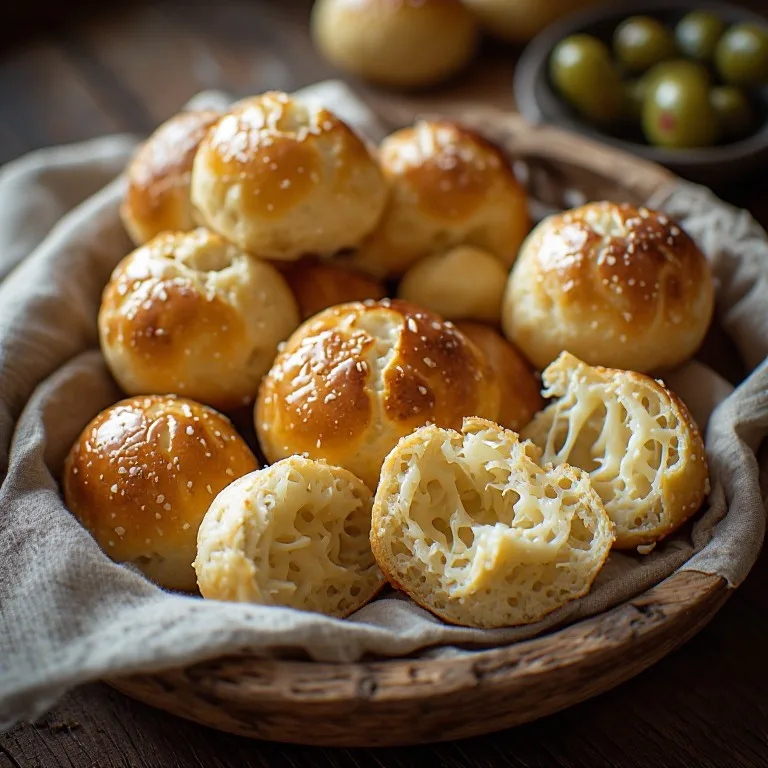




Texas de Brazil Pão de Queijo (Brazilian Cheese Bread)
Prep time: 15 min Cook time: 25 min Makes: About 30 pieces Difficulty: Easy
TL;DR: Bring milk + water + oil + salt to a full boil. Pour over tapioca starch all at once — stir until crumbly, cool 10 minutes. Mix in egg and grated Parmesan until a sticky dough forms. Roll into 1.5-inch balls with damp hands. Bake at 375°F for 22–25 minutes until puffed and golden with a crack on top. Serve while hot. The one step most home versions skip: the liquid must be at a rolling boil when it hits the starch — this scalds and gelatinizes the tapioca, creating the chewy, hollow interior that makes pão de queijo what it is.
At Texas de Brazil, the pão de queijo live at the hot section of the market table — the 50-item sides and salad bar that’s included with the rodízio dinner. They come out of the kitchen in small batches throughout service, still warm, slightly crackling, with a golden exterior and a distinctly chewy, airy pull inside. Most diners remember them as clearly as the meats being carved tableside.
The recipe is genuinely simple: tapioca starch, boiling liquid, egg, and Parmesan. The technique is what matters — one step that almost every home version either skips or misunderstands.
Why Boiling Liquid Is the Whole Technique
Pão de queijo dough is not a conventional bread dough. There is no gluten, no yeast, no long rest time. The structure — the chew, the puff, the slightly hollow interior — comes entirely from gelatinized tapioca starch.
Tapioca starch in its raw form is a dry powder that doesn’t bind or stretch. When you pour boiling liquid over it, the heat gelatinizes the starch granules: they absorb the liquid, swell, and form a cohesive, elastic matrix. This is the same principle as pâte à choux (choux pastry dough), where boiling water and butter cook the flour before eggs are added to create a paste that puffs dramatically in the oven. With pão de queijo, the starch replaces the wheat flour and the egg provides structure, but the physics are identical.
The temperature matters. Lukewarm or even hot-but-not-boiling liquid won’t fully gelatinize the starch. The result is dense, dry rolls that don’t puff. The liquid must be at a true, rolling boil when it hits the starch — 212°F — and you should pour it all at once, not in a stream, for an even temperature throughout.
Once the egg and cheese are mixed in, the dough is complete. No rising, no proofing — it goes directly from bowl to baking sheet to oven.
The Texture Goal
Properly made pão de queijo from Texas de Brazil has three qualities:
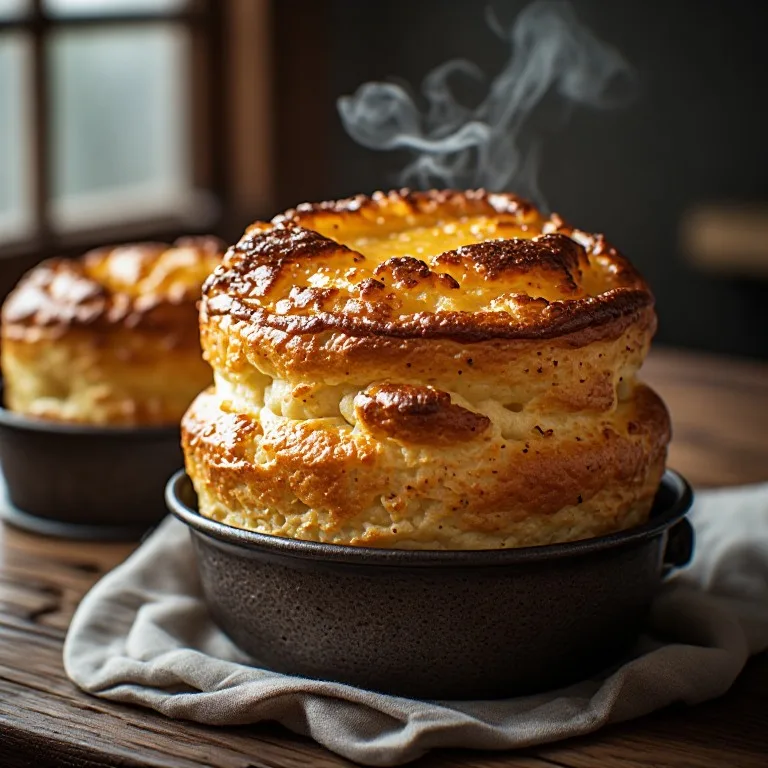
Exterior: Lightly crisp and golden, with a visible crack running across the top where the starch has set and split. The crack is the sign the interior has fully cooked.
First bite: A slight resistance — not hard, not soft — that gives way to chew. Tapioca starch has a characteristic gummy bounce that’s distinct from any wheat-based bread.
Interior: Chewy, slightly stringy from the melted Parmesan, and hollow at the center. The hollow forms because steam generated inside the dough has nowhere to go and pushes the starch outward.
If your pão de queijo are dense and don’t have the hollow: either the liquid wasn’t hot enough when it hit the starch, or the dough was overbaked at too high a temperature and dried out before the steam had time to form.
Polvilho Azedo vs. Polvilho Doce
The standard supermarket tapioca starch — sold as “tapioca flour” by Bob’s Red Mill and other brands — is polvilho doce: unfermented, neutral-flavored, and fine.
The traditional choice for pão de queijo in Minas Gerais is polvilho azedo (sour tapioca starch), which has been mildly fermented before drying. The fermentation does two things: it adds a very faint tanginess that cuts through the richness of the cheese, and it produces a more dramatic puff in the oven.
Polvilho azedo isn’t widely available in American grocery stores but is stocked at Brazilian markets and available online. The recipe works with standard tapioca flour — the result is good. With polvilho azedo, it’s noticeably better: more puff, more chew, and a flavor closer to what you get at the restaurant.
Serving and Reheating
Pão de queijo are best within 10 minutes of baking. After 30 minutes at room temperature they deflate and the exterior softens. This is not a failure — it’s how tapioca starch behaves as steam escapes.
For a party: Roll and freeze the raw dough balls up to a month ahead. Bake directly from frozen, adding 5–7 minutes to the baking time. This produces the freshest possible result with no day-of prep beyond preheating the oven.
For reheating: A 350°F oven for 5 minutes restores most of the puff and crispness. A microwave turns them limp and soft — it works in a pinch but isn’t the same.
| Feature | Standard tapioca flour (polvilho doce) | Sour tapioca starch (polvilho azedo) |
|---|---|---|
| Availability | Most grocery stores | Brazilian markets, online |
| Flavor | Neutral | Slight tang |
| Puff | Good | Better |
| Chew | Chewy | More pronounced chew |
| Traditional? | Not traditional | Traditional (Minas Gerais standard) |
The Texas de Brazil Context
Texas de Brazil opened its first location in Dallas in 1998, bringing the churrascaria rodízio experience — unlimited meats, tableside carving, two-sided table card — to American diners. The rodízio format comes from southern Brazil, where gaucho ranching culture in the states of Rio Grande do Sul and Santa Catarina developed the tradition of cooking large cuts of meat over open fire and bringing them directly to the table.
The market table hot bar, where pão de queijo live, includes 50+ items and is as important to the experience as the meats. At roughly $55–65 per adult for dinner (before tax and tip, with a lower lunch price), Texas de Brazil positions itself as a special-occasion steakhouse. The full batch of 30 pão de queijo from this recipe costs under $10 in ingredients.
For more from the churrascaria tradition, the Fogo de Chao picanha covers the signature cut of Brazilian beef. For famous restaurant breads that require a similar technique-first approach, Texas Roadhouse rolls and Red Lobster cheddar bay biscuits are the American steakhouse equivalents.