Copycat Texas Roadhouse Ribs
Prep: 20 minutes Cook: 4 hours 30 minutes Servings: 4 (one full rack per two people)
Texas Roadhouse serves ribs that most steakhouse chains can’t match — tender enough that the bone lifts out cleanly, with a char-marked exterior and a lacquered BBQ sauce finish. The half rack runs about $18.99 and the full rack about $25.99 (prices vary by location). Two full racks at home feed four people for roughly $25–30 in ingredients, and the technique, once you understand the three stages, is entirely repeatable.
The Cut: Why Baby Back Ribs, Not Spare Ribs
Texas Roadhouse specifies USDA #1 inspected fresh domestic pork loin back ribs — the cut the grocery store labels “baby back ribs.” Most copycat recipes don’t specify the cut, which is the first error: spare ribs behave differently and produce a different result.
Baby back ribs come from the upper back, where the ribs connect to the spine. They’re shorter (each rib is typically 3–6 inches), leaner, and more curved than spare ribs. The meat sits primarily on top of the bones rather than between them, and because it’s a leaner cut, it becomes tender faster in a low oven.
Spare ribs come from the belly section. They’re larger, fattier, and meatier — more surface area between the bones — and they require longer cooking to break down the additional connective tissue. They’re excellent for smoking; they’re not what Texas Roadhouse serves.
When you’re at the grocery store: look for racks labeled “pork loin back ribs” or “baby back ribs” weighing 2–2.5 lbs each. A rack under 1.75 lbs is too thin and will dry out before the center bone loosens. A rack over 3 lbs may be labeled “baby back” but is closer to spare rib territory.
The Three-Stage Method
Texas Roadhouse has demonstrated their rib process publicly — the method is straightforward once you understand why each stage exists:
Stage 1 — Dry rub. The ribs are coated in a powdered spice blend before any heat is applied. The dry rub penetrates the meat surface during the oven stage and forms the crust during the grill stage. This is a dry rub, not a wet marinade — no overnight soaking required.
Stage 2 — Steam-oven slow-cook. The seasoned racks are placed on racks above a pan of water and liquid smoke, covered tightly with foil to seal in the steam, and slow-cooked at low heat for 8–10 hours (overnight or all day) in a HALO convection oven. The steam from the liquid smoke and water bath circulates around the ribs throughout the cook, breaking down collagen into gelatin without dehydrating the meat. This is what produces the fall-off-the-bone texture — it’s not just “cooking for a long time,” it’s steam-cooking combined with low heat. At home, 250°F with the steam bath for 4–4.5 hours produces the equivalent result. Open-pan oven ribs at any temperature produce a firmer, drier outcome because there’s no sustained steam environment.
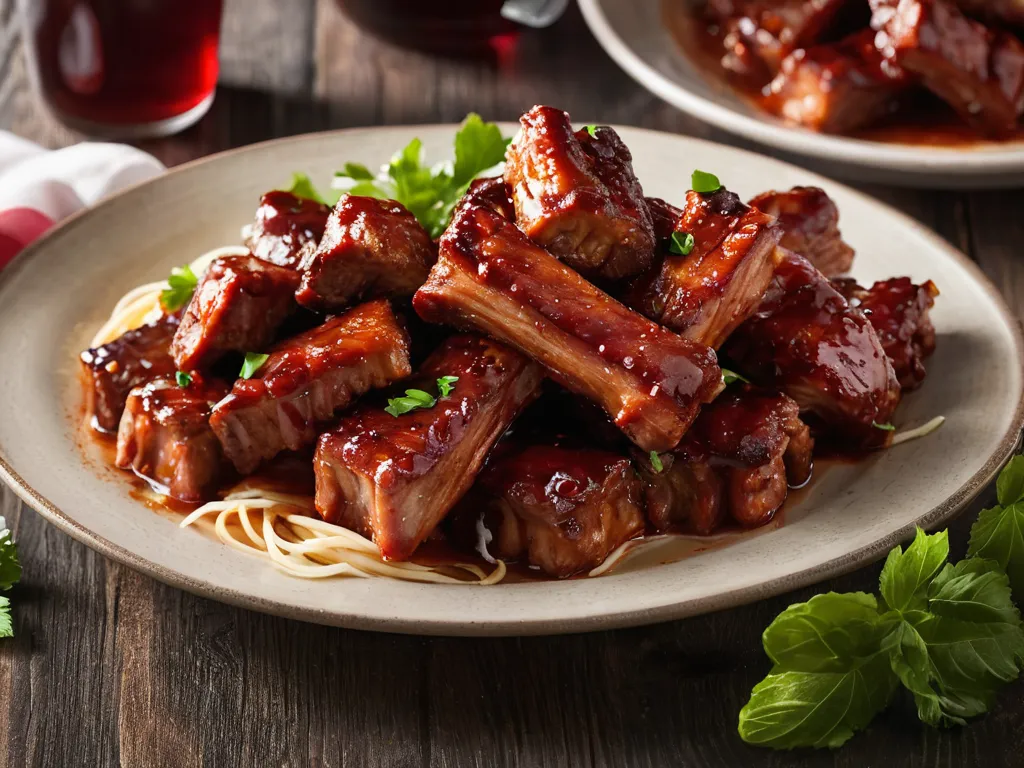
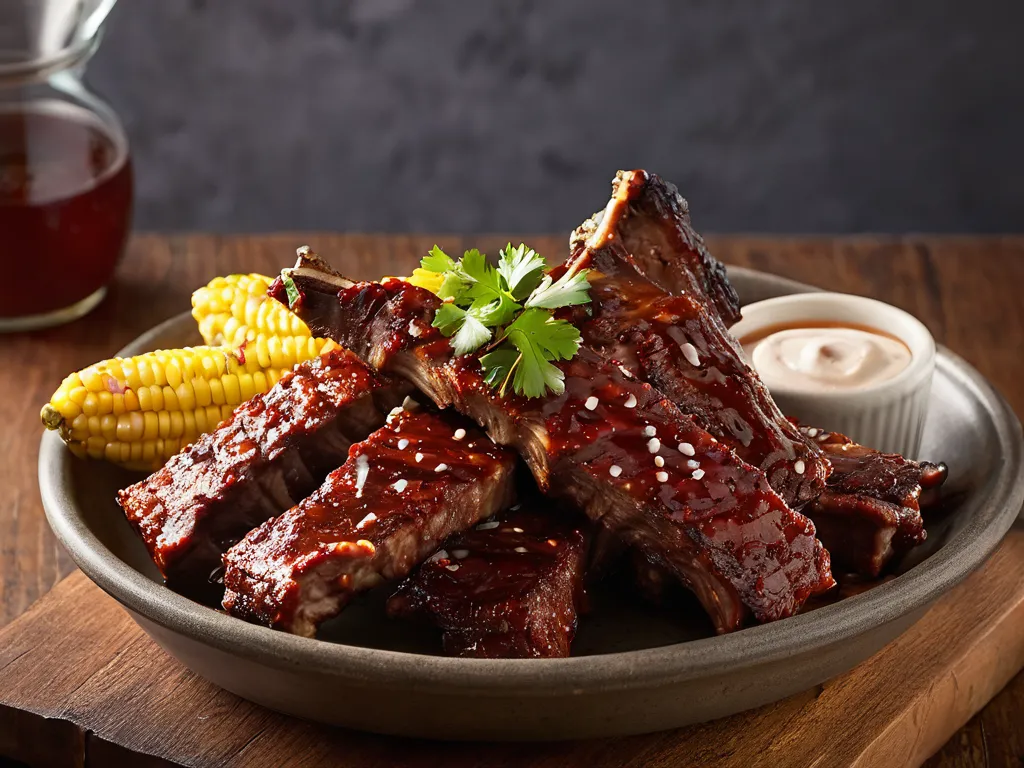
Stage 3 — Grill finish. The cooked ribs are transferred to a hot grill and basted with BBQ sauce during a short 6–8 minute finish. The grill does two things: it develops the crisscross char marks on the surface (from direct contact with the grates), and the heat caramelizes the sugars in the sauce and dry rub into the sticky, dark exterior the restaurant is known for. This stage is often missing entirely from copycat recipes that stop at the oven. Without the grill finish, the ribs are soft but lack the char and smoke character of what’s served at the table.
The Dry Rub
The backbone is brown sugar, smoked paprika, and kosher salt — but the specific role of each:
Brown sugar is functional, not just sweet. It caramelizes at relatively low temperatures on contact with the grill surface, building the dark, lacquered exterior that plain spice rubs can’t achieve. Use packed brown sugar specifically: the molasses content caramelizes differently than granulated or turbinado sugar.
Smoked paprika carries the baseline smoky-earthy note that runs through the ribs even before the grill finish. Regular (sweet) paprika can substitute, but smoked paprika is worth using here — it’s the difference between a rib that tastes oven-cooked and one that has a char-forward backbone.
Cayenne is the heat source. The Texas Roadhouse rub has a perceptible but not aggressive heat level — 1 teaspoon across two full racks is correct for most palates. Reduce to 1/2 teaspoon for a mild version or increase to 1.5 teaspoons if you want the heat more forward.
One rub mistake to avoid: apply it and cook immediately. The rub does not need a 24-hour cure. Thirty minutes at room temperature while the oven preheats is enough for the salt to begin drawing in and the meat to lose the refrigerator chill. A longer rest doesn’t hurt, but it’s not required for the result.
The BBQ Sauce
Texas Roadhouse’s house sauce is proprietary and not consistently available in retail. The recipe above is a close approximation: ketchup-based, vinegar-bright, with liquid smoke providing the smokiness that comes from the restaurant’s grill, and brown sugar for the caramelized sweetness.
The key application detail: the sauce goes on at the grill stage only, not during the oven cook. Adding sauce before the slow-cook stage would burn the sugars during four-plus hours of heat and leave a bitter, dark residue rather than a caramelized glaze. Apply the sauce only after the oven stage is complete and the ribs are on the hot grill — multiple thin coats, letting each one caramelize before adding the next.
Serving at Home vs. the Restaurant
Texas Roadhouse serves ribs with two sides and unlimited fresh-baked rolls. The closest home pairings from the restaurant’s menu:
- Texas Roadhouse Mashed Potatoes — butter-forward, medium-textured, thicker than most restaurant mashers
- Texas Roadhouse Rolls — the famous honey-cinnamon rolls, the most copied item on their menu
- Texas Roadhouse Green Beans — slow-cooked with bacon and onion, a better side than most people expect from a steakhouse chain
For a full Texas Roadhouse appetizer spread before the ribs, the Rattlesnake Bites — jalapeño and pepper jack cheese bites with Cajun horseradish dip — are worth making. And if you’re making the rib dry rub, the base blend is similar enough to the Texas Roadhouse Steak Seasoning that you can mix one larger batch and use it across both recipes.
For a direct comparison: Chili’s Baby Back Ribs use a different rub (cumin-forward, no smoked paprika) and a mustard binder before the dry rub — a different approach to the same style of rib.
Common Mistakes
Using spare ribs instead of baby back ribs. The texture, cook time, and flavor profile differ enough that the result won’t match the restaurant. Buy racks labeled “pork loin back ribs” or “baby back ribs” at 2–2.5 lbs each.
Skipping the membrane removal. The silverskin membrane on the bone side is made of elastin — unlike collagen, it does not break down with heat, regardless of how long the ribs cook. It blocks the rub from penetrating the meat side and creates a chewy, papery layer in the finished rib. Removing it takes 30 seconds.
No liquid smoke steam bath. This is the most underreported detail in Texas Roadhouse copycat recipes. The restaurant’s distinctive method is not just a dry foil-covered roast — it’s a steam environment created by a liquid smoke and water bath underneath the rack. Without it, the ribs steam only in their own rendered fat and juices, which is less effective at breaking down collagen quickly and doesn’t produce the same smoky backdrop. Add 2 cups water and ¼ cup liquid smoke to the bottom of the pan before sealing.
Loose foil seal. A foil tent over the pan is not a steam environment — it just slows moisture loss. Crimp all edges of the foil firmly against the pan sides to trap the steam generated by the liquid bath below.
Cooking at too high a temperature. At 325°F or higher, the outer meat dries out before the collagen breaks down fully. 250°F is the practical home target — low enough to maintain the humid steam environment throughout the cook without scorching the bottom liquid.
Skipping the grill finish. The grill adds char, smoke, and the caramelized sauce exterior that defines the restaurant version. An indoor oven broiler at high (5–6 inches from the element, 3–4 minutes per side while basting) is a reasonable substitute — but the smokiness from the open flame will be absent.
Saucing during the slow-cook. BBQ sauce contains sugars that burn and turn bitter over hours of heat. Apply it only during the final grill stage, in multiple thin coats, so each layer caramelizes before the next is added.