

Viral TikTok Apple Cider Tiramisu — The Fall Dessert That Needs No Espresso
Prep: 30 min active + 4 hrs chilling | No-bake | Serves: 6 | No espresso, no raw eggs | Better the next day
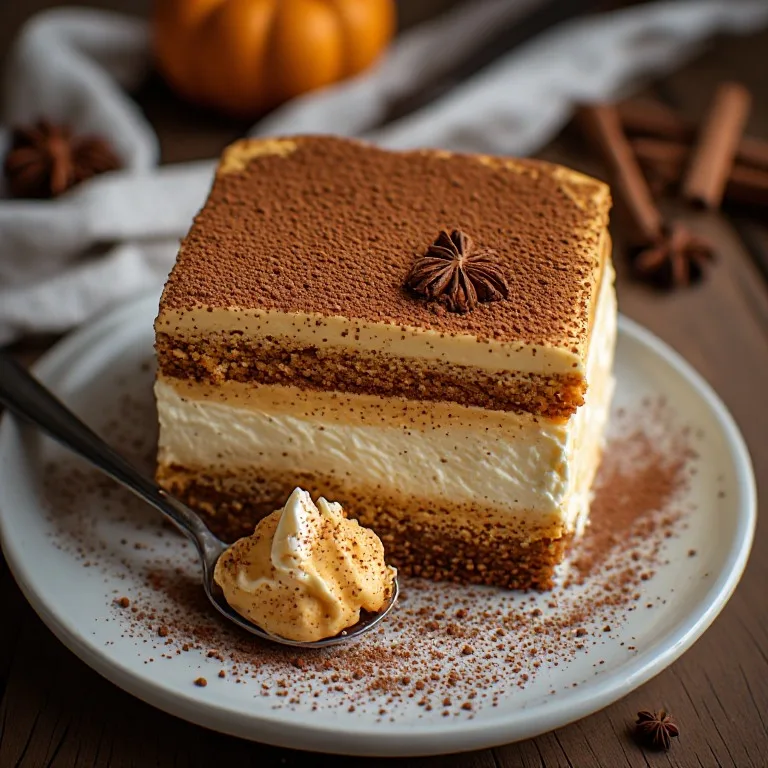
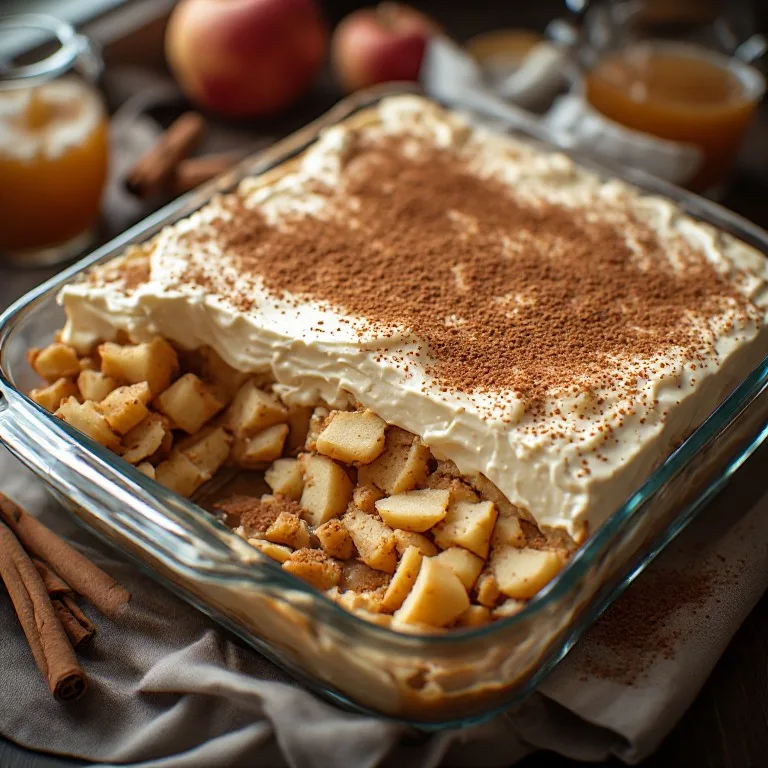
Apple cider tiramisu is the fall version of the tiramisu trend that’s been all over TikTok: spiced apple cider replaces the espresso, caramel mascarpone cream replaces the standard coffee-tinged filling, and a thin layer of cinnamon-sautéed Granny Smith apples goes between the layers. The result tastes like caramel apple pie in tiramisu form — familiar, deeply fall, and genuinely better after a night in the refrigerator.
It’s a no-bake dessert. No espresso machine required, no raw eggs, no thermometer. The active work is about 30 minutes: simmer the spiced cider, sauté the apples, make the caramel cream, dip and layer. Then it goes in the refrigerator and the overnight chill does the rest.
What Went Viral (And Why)
The original tiramisu TikTok trend is about swapping the espresso soak for something seasonal — the same layered, no-bake format with flavors adapted to whatever’s on the table right now. Pumpkin tiramisu took off in fall 2025. Strawberry tiramisu owned late spring 2026. Apple cider tiramisu is the natural fall 2026 successor: the warmest, most caramel-forward version yet, and the one that most closely mimics a baked dessert in its flavor profile without any baking involved.
The specific hook that makes it shareable: it’s the tiramisu you can make in September when you can’t get yourself to turn on the oven. The assembly is visual (visible layers, cocoa-dusted top, optional caramel drizzle), the flavor payoff is high, and the overnight chill means you make it the night before Thanksgiving or a dinner party and it’s done. Every version you see on TikTok gets made in under 35 minutes of active work and the results look genuinely impressive.
The Spiced Cider Soak — Why This Replaces Espresso
Traditional tiramisu soaks its ladyfingers in espresso because espresso is very concentrated, slightly bitter, and fast-absorbing — it adds flavor depth and balances the richness of the mascarpone cream. The spiced cider reduction does the same job with fall flavors: the 10-minute simmer concentrates the cider, boils off its water, and infuses the cinnamon, clove, and allspice into a rich, aromatic liquid with real depth.
Why reduce the cider instead of using it straight: Fresh-pressed apple cider is mostly water and natural apple sugars — too thin and sweet to soak ladyfingers without making them fall apart before you can lay them down. Simmering it down by about a quarter-cup concentrates the apple flavor, intensifies the spice infusion, and gives the soak the body it needs to function like espresso in this recipe.
Temperature matters: Let the reduced cider cool completely — ideally to refrigerator temperature — before dipping. Warm soak liquid absorbs into ladyfingers too fast and makes them mushy. Cool liquid gives you the 2-second window you need to control absorption.
A note on cider vs. apple juice: Use unfiltered apple cider, not clear apple juice. Cider has residual solids, natural tannins from the apple skins, and a cloudy, complex flavor that reduces into something genuinely delicious. Apple juice filtered clear loses all of that and reduces into sugar syrup. If your grocery store only carries juice, add 2 teaspoons of apple cider vinegar and extra cinnamon to approximate the depth.
Making the Caramel Mascarpone Cream
This is the component that makes or breaks the tiramisu. Two technique points matter above everything else.
1. Mascarpone must be at room temperature. Cold mascarpone (straight from the refrigerator) will not incorporate smoothly with caramel sauce. The cold fat resists blending and produces visible lumps that don’t smooth out with more beating. Let it sit on the counter for at least 30 minutes. It should look slightly glossy and feel soft when you press it — not stiff.
2. Do not overbeat once combined. Mascarpone has a very high fat content — around 41% — and that fat will break (separate out into grainy butter-like curds) if beaten past the point of smoothness. Add the caramel, powdered sugar, cinnamon, vanilla, and salt, then beat on medium speed for exactly 30–45 seconds. The moment the mixture is smooth and uniform, stop. The broken texture cannot be fixed; start over if it happens.
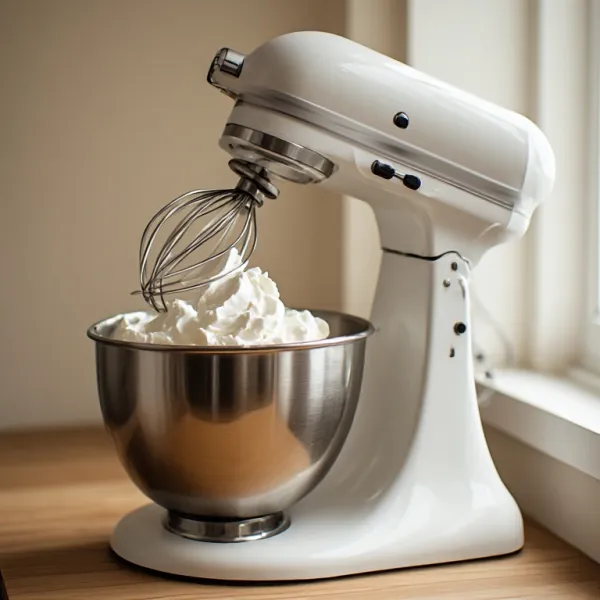
Folding in the whipped cream: Whip the cold heavy cream separately until stiff peaks form, then fold it into the mascarpone in three additions. Slow, deliberate strokes with a rubber spatula. The goal is a light, airy cream that still holds its shape — not a dense stiff paste and not a collapsed runny liquid.
Which Caramel Sauce to Use
| Caramel Type | Works? | Notes |
|---|---|---|
| Thick store-bought (Ghirardelli, Stonewall Kitchen) | Yes — best | Incorporates cleanly without thinning the cream |
| Salted caramel sauce (any thick brand) | Yes | The salt cuts the richness nicely |
| Thin caramel topping (Hershey’s, Smucker’s) | No | Mostly corn syrup and water — makes the cream loose and wet |
| Homemade dry-caramel sauce | Yes — best possible | 15 min to make; deepest flavor |
| Dulce de leche | Yes | Slightly less sweet, more butterscotch; excellent |
The Cinnamon Apple Layer
The apple layer between the two cream layers is technically optional, but it’s the detail that separates this from “tiramisu-flavored dessert” and makes it taste specifically like a fall apple dessert in tiramisu form. Five minutes in the pan, left to cool completely before layering.
Granny Smith is the right apple here because it stays firm enough after cooking to have actual texture — it doesn’t melt into a soft paste the way a Fuji or McIntosh would — and its tartness cuts through the richness of the caramel mascarpone cream. Honeycrisp also works well. Avoid Red Delicious (too soft, too sweet) and any variety that turns mushy when briefly sautéed.
Let the apples cool fully before layering. Warm apples transfer heat into the mascarpone cream and cause it to soften and slide. Spread them on a plate and give them 15–20 minutes at room temperature, or 5 minutes in the refrigerator.
How to place the apple layer: Scatter the apple dice evenly over the first cream layer, then gently press them in with the back of a spoon so they’re embedded in the cream rather than sitting on top. This prevents the second ladyfinger layer from displacing them when you lay it down.
Layering the Dish
| Layer | Component | Key Point |
|---|---|---|
| 1 | Dipped ladyfingers | 2 sec per side, snug rows, fill gaps |
| 2 | Half the caramel cream | Spread to edges, tap to settle |
| 3 | Cinnamon sautéed apples | Cooled completely, pressed gently into cream |
| 4 | Dipped ladyfingers | Same 2-sec rule, snug rows |
| 5 | Remaining caramel cream | Spread flat and smooth — this is what shows |
| 6 | Cocoa + cinnamon dust | Fine strainer, held 6 inches above, even coverage |
| 7 | Caramel drizzle (optional) | Thin ribbon over the dusted top, for visual finish |
The most common assembly mistake: Soaking the ladyfingers too long on the second pass. After you’ve been dipping cookies for several minutes, the cider has warmed slightly and the ladyfingers absorb it more quickly. Keep the 2-second-per-side rule consistent throughout — don’t add extra time because the first few felt dry.
How the Overnight Chill Changes the Texture
Most tiramisu recipes say “chill 4 hours minimum, overnight is better” — and it’s not a polite suggestion, it’s actually describing two different desserts.
At 4 hours: The ladyfinger layers are moist and have softened somewhat but still have a slight bite in the center. The cream is set but the layers aren’t fully cohesive — if you slice it, the layers slide a little. The spiced apple cider flavor in the cookie layer is forward but not yet melded with the cream.
At 8–12 hours (overnight): The ladyfingers have absorbed fully and transformed into something close to soft sponge cake — tender, yielding, no crunch anywhere. The layers have fused together into a single cohesive block that slices cleanly. The caramel, cinnamon, and apple flavors have woven together throughout. This is the version you want to serve.
Make it the night before. It’s designed to be made ahead.
Apple Cider Tiramisu vs. Standard Tiramisu
| Apple Cider Tiramisu | Classic Tiramisu | |
|---|---|---|
| Soak | Spiced reduced apple cider | Espresso |
| Cream | Caramel mascarpone + whipped cream | Mascarpone + egg yolks + whipped cream |
| Raw eggs | None | Yes (yolks, sometimes whites) |
| Flavor profile | Caramel apple, warm spice, lightly tart | Coffee, vanilla, bitter cocoa |
| When it’s best | Fall (September–November) | Year-round |
| Calories/serving | ~580 | ~450–550 |
| Make-ahead | Up to 2 days | Up to 2 days |
The apple cider version is richer (caramel cream vs. standard mascarpone + eggs) and sweeter than classic tiramisu. It’s a full dessert in the same way as a slice of caramel apple pie — not a light finish to a meal. Serve in reasonable portions; it’s satisfying in a 2-inch square.
Serving Suggestions
Dish format: Slice into 6 generous squares directly from the baking dish. A large serving spoon or pie server works; a thin spatula works better. Each square should show 2 distinct ladyfinger layers with cream and apple layers between them.
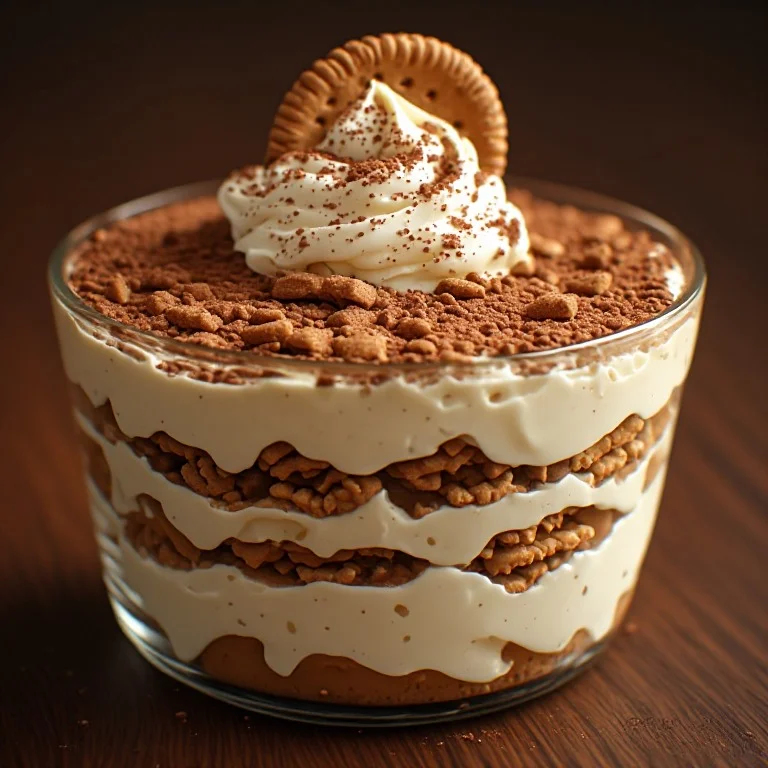
Individual jars: Build in 8-oz wide-mouth mason jars with broken ladyfingers — makes serving easy at a party or for gifting. Layer directly in the jar the same way as the dish. The caramel and cocoa dusting on top looks striking through clear glass.
Garnish options: A thin caramel drizzle, a few thin apple slices candied in brown sugar, a single cinnamon stick, or a dusting of extra cinnamon over the cocoa layer all add visual interest without changing the flavor significantly.
Variations
Salted caramel version: Use a good-quality salted caramel sauce and add an extra pinch of flaky sea salt to the cream. The salt sharpens the caramel flavor and cuts the richness.
Bourbon apple cider tiramisu: Add 2 tablespoons of bourbon or dark rum to the spiced cider soak after it cools. The alcohol doesn’t make the dessert boozy, but it adds a warm barrel-aged note that works exceptionally well with the apple and spice flavors.
Speculaas/Biscoff version: Replace the Savoiardi ladyfingers with Lotus Biscoff cookies (dip for 1 second per side instead of 2 — they’re denser and absorb faster). The Biscoff spice flavor complements the apple cider soak and adds an extra layer of cinnamon-ginger warmth. A little messier to assemble since Biscoff cookies don’t tile as neatly as ladyfingers, but very good.
Higher-protein version: Substitute the mascarpone + heavy cream with the strained Greek yogurt method from the Biscoff yogurt tiramisu. Use 32 oz strained full-fat Greek yogurt + ½ cup caramel sauce + cinnamon + vanilla, no whipped cream. Drops calories to roughly 200 per serving and adds ~12g protein. Lighter texture, slightly less rich.
Make-Ahead Timeline
| Time | State | Verdict |
|---|---|---|
| Assembled, 1 hour in fridge | Ladyfingers still partially firm, cream soft | Too early to serve |
| 4 hours | Ladyfingers soft throughout, cream set, layers distinct | Good |
| Overnight (8–12 hours) | Fully cohesive, layers melded, best slice | Best texture |
| Day 2 | Ladyfingers very tender, cream slightly looser at edges | Still excellent |
| Day 3 | Very soft throughout, starting to weep | Eat it today |
| Day 4+ | Past its best | Not ideal |
For the pumpkin tiramisu, the coffee-flavored espresso soak creates a bitterness that balances the sweet pumpkin cream. Here, the apple cider soak is sweeter and more aromatic — which is why the Granny Smith apple layer matters. Without it, the dessert tips too sweet. The tart sautéed apple is the counterweight.
This dessert pairs well with a scoop of vanilla ice cream alongside, a pour of hard apple cider, or strong black coffee. It’s the fall dinner party dessert you make the night before and pull straight from the refrigerator when it’s time — no last-minute work required.