


Greek chicken has been cycling through FoodTok for two years, and it refuses to leave — because the yogurt marinade is genuinely doing something that no other home-kitchen marinade technique replicates.
The yogurt is the unlock. Conventional marinades — olive oil, acid, herbs — season the surface of the meat and provide flavor. Greek yogurt does that and then two more things. The lactic acid in yogurt is a milder, more sustained tenderizer than citrus juice, working slowly over hours without breaking down the protein structure the way a high-acid marinade can. And the milk proteins and sugars in the yogurt brown rapidly at the high oven temperatures used for roasting (the Maillard reaction) — they char into spotted, dark-gold patches that look exactly like a restaurant grill did the work, even though you never touched a grill. This is why Greek chicken at a Greek restaurant looks fundamentally different from most home-cooked roasted chicken: they marinate in yogurt overnight and roast at high heat, and the yogurt proteins do the visual and textural work.
The Science Behind the Marinade
The marinade has three active components doing different jobs:
Greek yogurt provides lactic acid (tenderizing), milk fat (moisture retention during roasting), and milk proteins and sugars (Maillard browning at high heat). This is not interchangeable with regular yogurt or sour cream — full-fat Greek yogurt is significantly denser and has a higher protein content than either, which is what drives the browning.
Lemon does two jobs: the juice provides additional mild acid that works with the yogurt’s lactic acid, and the zest provides fragrant oils that are heat-stable and bloom further during roasting. The zest goes into the marinade; the juice is squeezed over the final dish if you want additional brightness after cooking.
Dried oregano is specifically the right form for this recipe — not fresh. Dried Greek or Mediterranean oregano has a more concentrated, slightly peppery flavor than fresh, and it holds up through a 45-minute roast without burning. Fresh oregano wilts and turns slightly bitter under sustained oven heat.
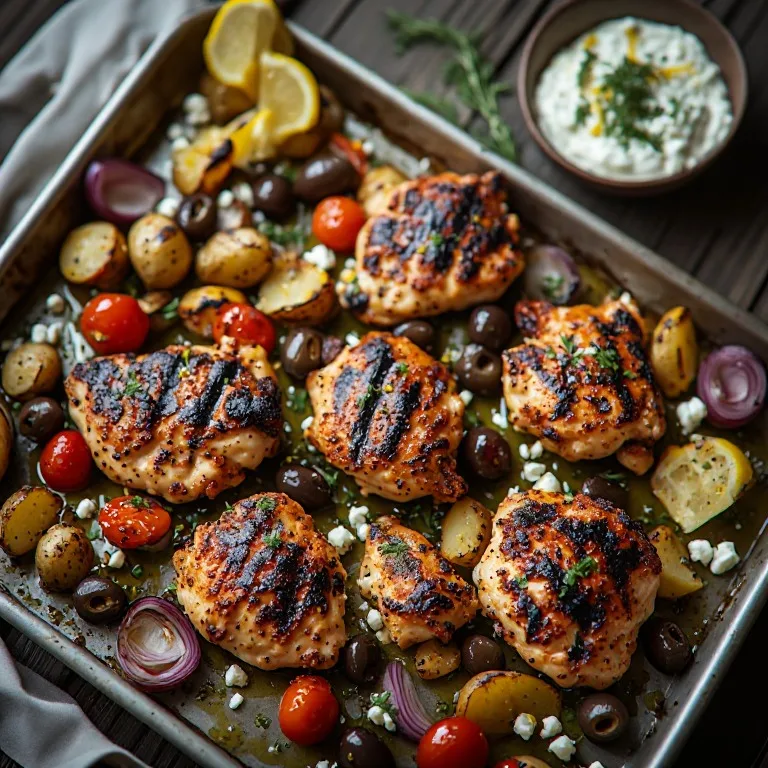
The Sheet Pan Lineup
The vegetables are not incidental — they are the second course of this meal, and the sequencing matters.
Baby potatoes need to be halved and placed cut-side down for the best caramelization. They cook at roughly the same rate as bone-in thighs, which is the reason this sheet pan dinner works without multiple timers. Yukon Golds or fingerling potatoes also work well; large russets cut into 1-inch cubes will overcook before the chicken is done.
Cherry tomatoes collapse and concentrate during roasting, releasing juice that pools with the chicken fat and olive oil into a pan sauce. Do not skip them — they are what keeps the potatoes from drying out and provides the bright acid counterpoint to the rich chicken.
Red onion softens and caramelizes, picking up the oregano and chicken drippings. White or yellow onion is a passable substitute, but red onion holds its color better and has more natural sweetness.
Kalamata olives go on in the last 5 minutes so they warm through without drying out. Adding them earlier causes them to shrivel. Castelvetrano olives (green, buttery, milder) are an excellent substitute if Kalamata is too briny for your preference.
Feta goes on at the same time as the olives and then hits the broiler briefly — it softens and very lightly browns at the edges without melting fully. The contrast between the salty, slightly softened feta and the savory roasted vegetables is what makes the dish taste finished.
Quick Tzatziki (The 10-Minute Version That Actually Tastes Right)
Restaurant tzatziki is thick, garlicky, and cool against the hot chicken. The reason homemade tzatziki often tastes thin and bland is skipping one step: squeezing the cucumber completely dry.
Grate the cucumber on a box grater directly into a clean kitchen towel or a triple-layer of paper towels. Pull the corners up and squeeze as hard as you can over the sink for 30 to 45 seconds. You will extract a surprising amount of water — this is the water that would have diluted your tzatziki into a thin sauce.
With dry cucumber: strained full-fat Greek yogurt + squeezed cucumber + 1 garlic clove + lemon juice + fresh dill + olive oil + salt = restaurant-quality tzatziki in 10 minutes, no draining the yogurt through cheesecloth required. This version is rich enough to use as a sauce over roasted vegetables, a spread on the next day’s sandwich, or a dip for warm pita.
Dried vs. Fresh Oregano — The One Exception
Dried oregano is the correct choice for the marinade, but there is one instance where fresh oregano wins: as a finishing herb scattered over the cooked dish, right before serving. The volatile oils in fresh oregano that would burn during a 45-minute roast are exactly what you want as an aromatic top note on the finished plate. If you have both, use dried in the marinade and fresh at the end.
Five Variations
With a lemon-garlic sauce: After roasting, scrape the pan drippings (concentrated tomato juice, olive oil, and chicken fat) into a small saucepan and reduce over medium heat for 2 to 3 minutes. Whisk in 1 tablespoon cold butter and a squeeze of lemon. Drizzle over the plated chicken — this takes the dish from weeknight to dinner-party level with 4 minutes of work.
Spatchcocked whole chicken: Butterfly a 3.5- to 4-pound whole chicken (cut out the backbone with kitchen shears), spread it flat, and marinate the same way overnight. Roast at 425°F for 45 to 55 minutes. The flat shape means the entire bird reaches temperature at roughly the same time, and the yogurt marinade creates the most dramatic charring on the breast skin.
With lamb chops: Substitute 8 small lamb rib chops for the chicken (marinate the same way, 1 to 4 hours). Reduce roast time to 12 to 15 minutes for medium (135°F internal) or 18 to 20 minutes for well-done. The yogurt marinade is arguably even better on lamb than chicken.
Wrap format: Pull the cooked chicken off the bone, slice the meat thin, and serve in warm pita with the roasted vegetables, a generous spoonful of tzatziki, and sliced cucumber. This format stretches 4 servings to 6 and is the format that most commonly goes viral on TikTok because the assembly is visually satisfying.
Air fryer version: Marinate the same way, then air fry at 400°F for 20 to 22 minutes, flipping once at the 12-minute mark. The air fryer produces crispy skin faster and with less setup, but you lose the roasted vegetable component (cook those separately in batches, or roast on a sheet pan in the oven while the chicken air fries).
What Makes the Charring Look Like a Restaurant Did It
The char spots on Greek chicken are not scorched skin — they are caramelized yogurt proteins. This distinction matters because it explains how to get them reliably:
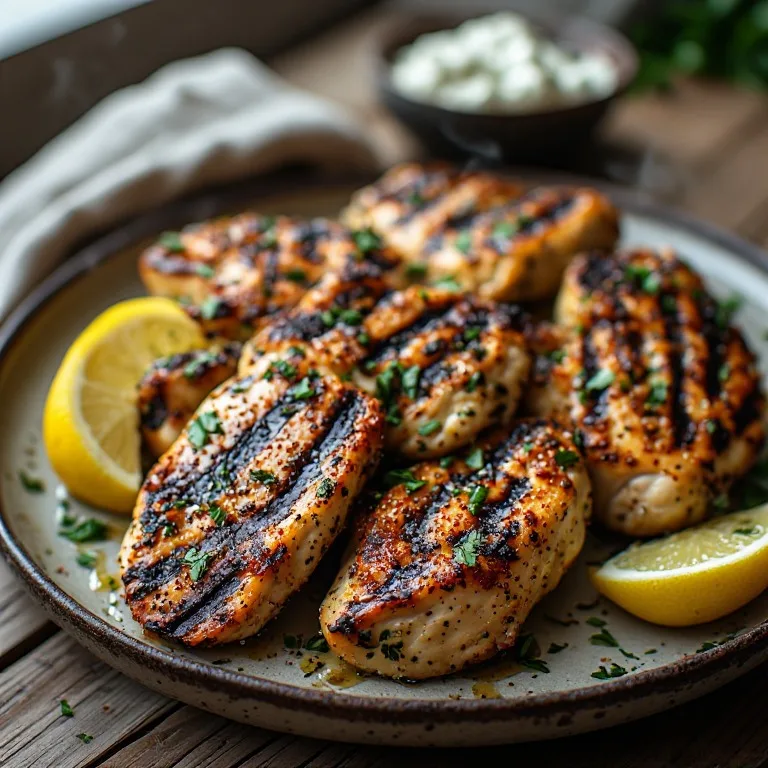
The charring develops only at the hot spots where the yogurt-coated skin is in direct contact with dry oven heat — the peaks of the skin, the edges where the skin meets the pan, and the visible ridges of the thigh bone. The valleys where yogurt pooled will be pale and moist; the peaks where the yogurt film was thin will be deeply charred. This is the correct visual result and the one that makes the dish look like grill work.
If your chicken comes out of the oven uniformly golden-brown with no dark spots, the oven was not hot enough (go to 450°F), or the marinade was too thick (it insulated the skin rather than allowing contact with the heat). If the dark spots turn black and taste bitter, the oven was too hot for the amount of sugar in your marinade — reduce the amount of paprika or the marinade time.
See also: Chicken Shawarma Bowls · French Onion Chicken (One-Skillet) · Mediterranean Bowl · Honey Garlic Chicken