


Whole beef tenderloin goes viral on TikTok every holiday season for one reason: the reverse-sear method makes a $175 roast almost impossible to ruin.
Why TikTok Changed How Home Cooks Do Tenderloin
The old instruction — “roast at 425°F for 20 to 25 minutes per pound” — produced perfectly acceptable beef if your oven ran exactly as calibrated and your roast was a perfect uniform cylinder. Most home ovens run hot or cool, most tenderloins taper at one end, and the result was a roast with an overcooked gray ring around the outside and a cold pink center.
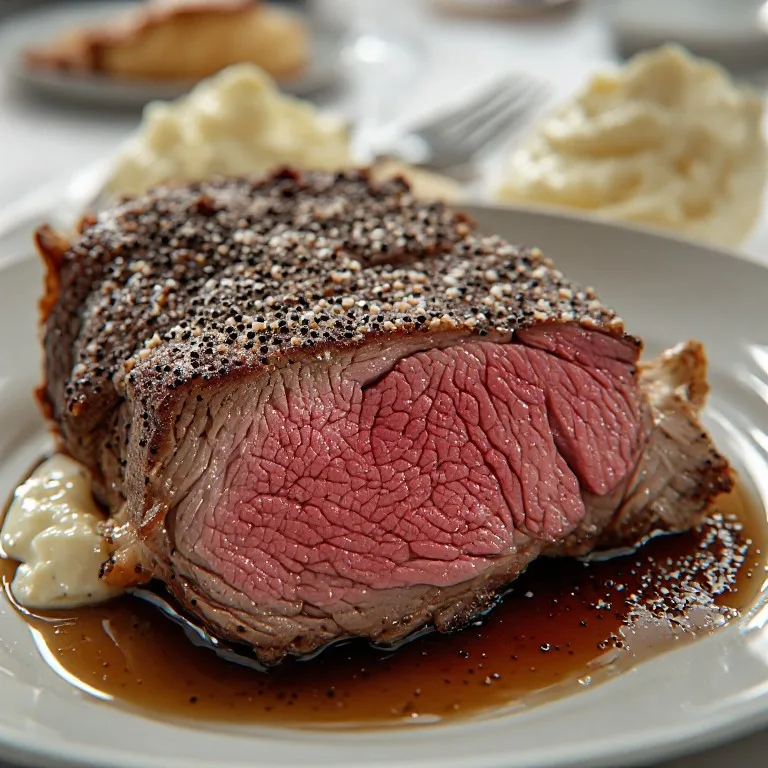
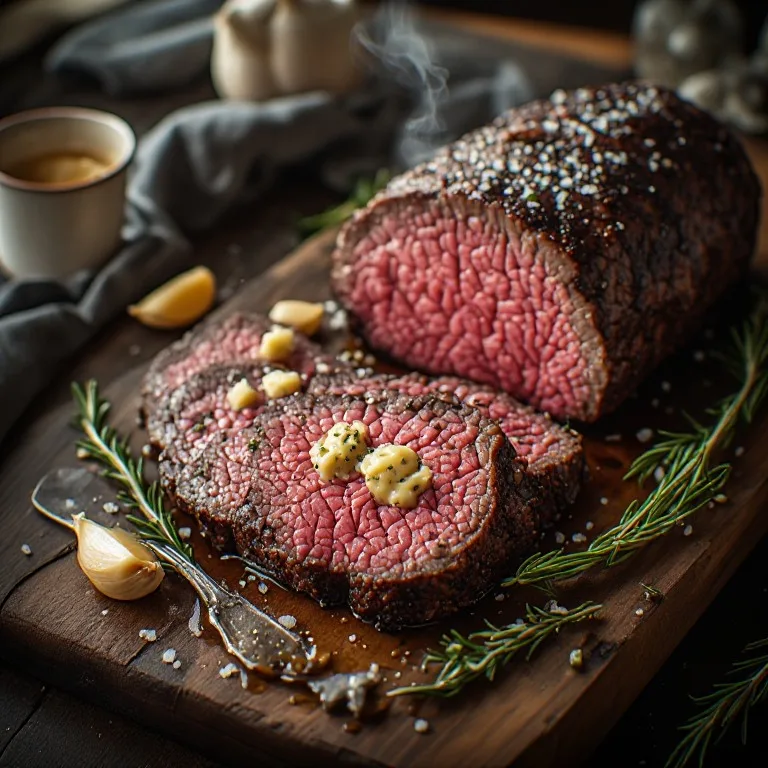
The reverse sear eliminates the gray ring. A 275°F oven is just barely above the temperature at which beef’s proteins begin to contract, so heat moves through the muscle slowly and evenly. When you pull the roast at 120°F, the temperature gradient from edge to center is less than 10°F — so the whole cross-section is the same shade of rosy medium-rare when you slice it.
The sear comes last, not first. This is the counterintuitive part. You might have learned to “sear to lock in juices” — that’s a culinary myth from the 19th century. Searing produces flavor through the Maillard reaction (the browning of proteins and sugars at high heat), and that flavor is the same whether you sear before or after roasting. Doing it last gives you a hot crust on a fully-cooked roast, which goes directly to the table.
The Dry Brine: The Step Most Recipes Skip
An overnight dry brine — salting the roast and leaving it uncovered in the refrigerator — does two things. First, the salt draws out surface moisture, then that salty liquid is reabsorbed into the meat over several hours, seasoning it several millimeters deep rather than just on the surface. Second, the surface dries out completely by morning, which means the first contact with the cast iron pan produces an immediate sear rather than a steam. A wet surface in a hot pan spends the first minute of cook time evaporating water before browning can begin.
If you salt only an hour before cooking, the moisture gets drawn out but doesn’t have time to reabsorb — and a wet surface doesn’t sear as well as a dry one. The fix: either salt overnight, or salt right before the roast goes in the oven (zero waiting), so the moisture sits on the surface and evaporates during the low-oven phase. The one timing to avoid is the 30-to-60-minute window after salting.
The Herb Butter Baste
The six tablespoons of butter, garlic, thyme, and rosemary go into the pan during the last 90 seconds of searing — not at the start, when they’d burn. Milk solids in butter begin to burn above 300°F, and the pan is well above that. Added at the very end, the butter foams and begins to brown but doesn’t have time to blacken before the roast comes out. Basting arrosage — the continuous spooning of hot fat over meat — coats the entire surface, gets the garlic and herbs into every crevice, and produces a final glaze on the crust that looks like it came out of a professional kitchen.
The herb combination — thyme and rosemary — is the classic French bistro pairing for beef. Thyme is woodsy and slightly floral; rosemary is camphor-forward and assertive. Together they cut through the richness of the butter and the fat on the surface of the sear without competing with the beef itself.
What to Serve With It
At a Christmas table: roasted asparagus or haricots verts for green, cheesy scalloped potatoes for richness, and a simple red wine pan sauce made from the fond left in the cast iron (deglaze with ½ cup red wine or beef stock, scrape up the browned bits, reduce by half, swirl in 1 tablespoon of butter). At a dinner party: individual plates with a slice of the tenderloin, a spoonful of the pan sauce, and a single garnish — watercress, a few flakes of flaky salt, a wedge of lemon.
The roast serves 8 at 4–5 oz per person with sides, or 6 if beef is the only main. A 4-lb tenderloin at $28/lb costs about $112 for the roast — roughly $14 per person, versus $75 per person for the same filet at a steakhouse.
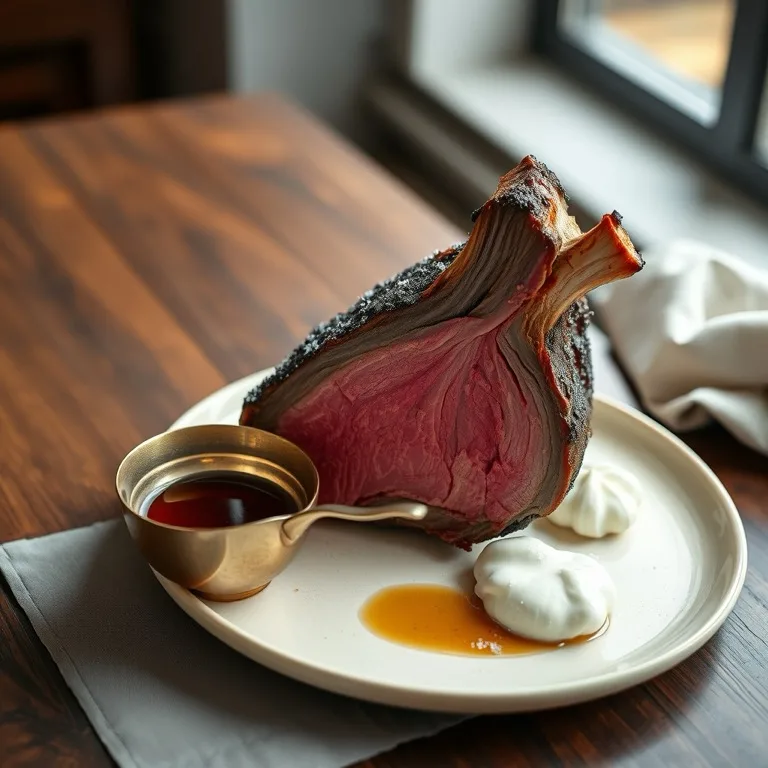
If you want the showier, fattier, bone-in centerpiece instead — the slow-roasted standing rib with a crackling crust — the same low-oven logic applies to our Lawry’s-style prime rib and the 4 Charles prime rib. Tenderloin is the leaner, faster, more forgiving holiday roast; prime rib is the richer, longer project. Both reward a good thermometer over a timing chart.