

Pin It

Lawry's The Prime Rib Standing Rib Roast (The Beverly Hills Classic)

Lawry's The Prime Rib Standing Rib Roast (The Beverly Hills Classic)
Jump to Recipe
Prep 30 min (plus 48 hr dry-brine) Cook 3–4 hr Serves 6–8
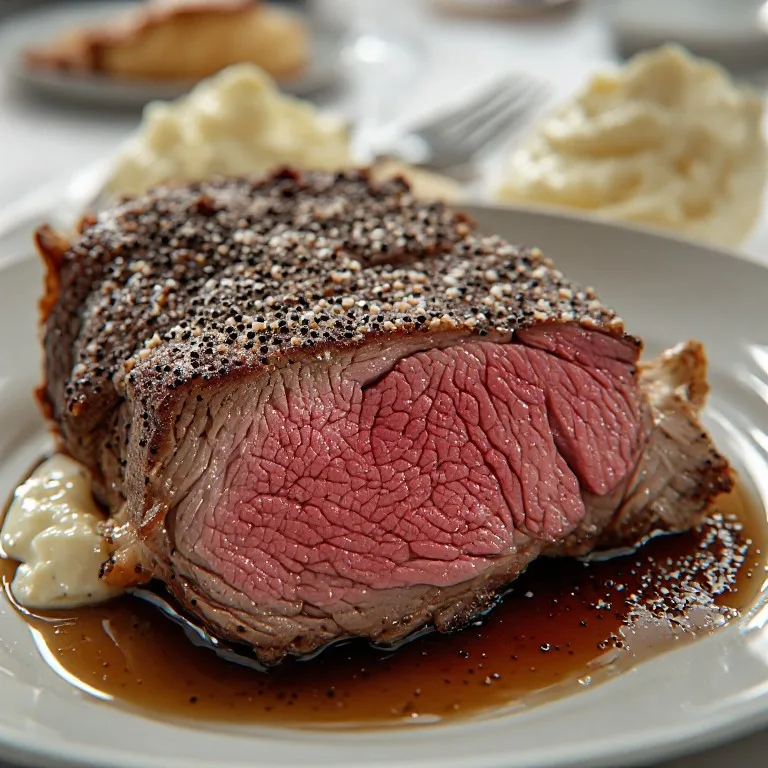
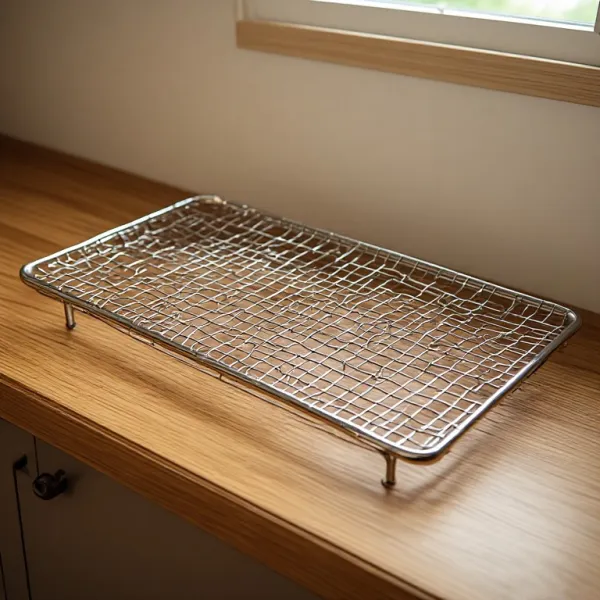
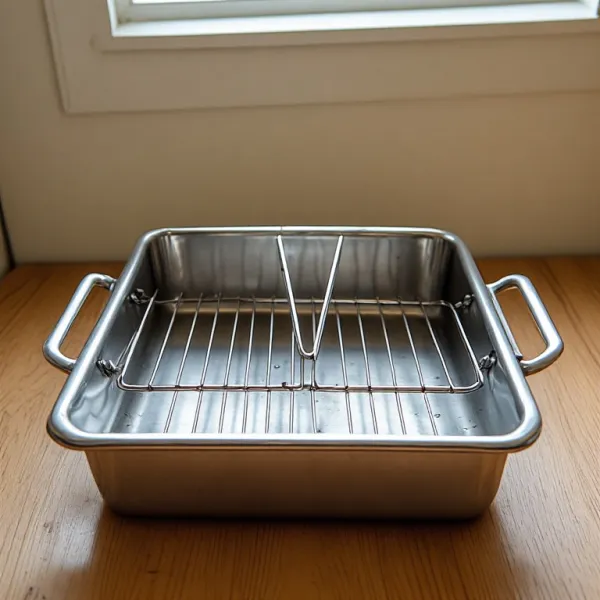
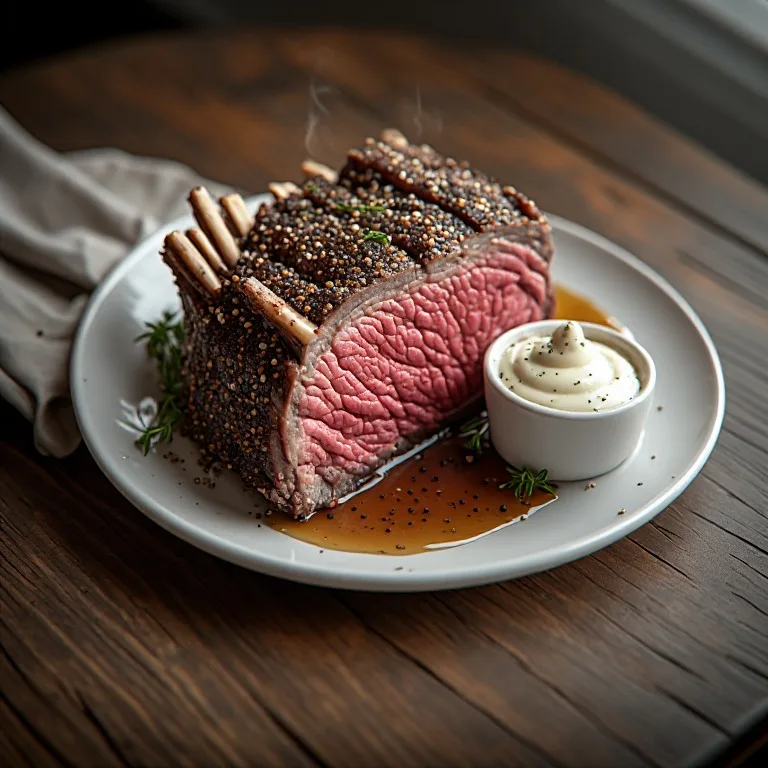
Quick answer: Season a 3-bone (7–8 lb) bone-in standing rib roast all over with 2 tablespoons of Lawry's Seasoned Salt plus 1 teaspoon each of black pepper and garlic powder. Set it rib-side down on a rack in a roasting pan, uncovered, and refrigerate for 48 hours — the salt dries the surface and the dry air of the fridge concentrates the flavor. Pull the roast from the refrigerator 2 hours before cooking; let it come to room temperature. Roast at 250°F until a probe thermometer reads 118°F for medium-rare (about 3 to 3.5 hours depending on size). Rest under foil for 20 minutes. While resting, pour the pan drippings into a small saucepan, skim the fat, add 1.5 cups of beef stock, bring to a simmer, taste for salt, and strain — that is the au jus. Slice thick, bone-in slabs for the Diamond Jim Brady cut, or carve three thin slices across the eye for the English Cut. At the restaurant, the cuts run about $41 to $59 depending on size (the price includes the famous spinning salad and sides); with a drink, tax, and tip a dinner lands near $75 to $90 a head. This recipe feeds eight for roughly $12 a plate using Choice-grade beef at about $15 a pound from Costco.

Lawry's The Prime Rib Standing Rib Roast (The Beverly Hills Classic)

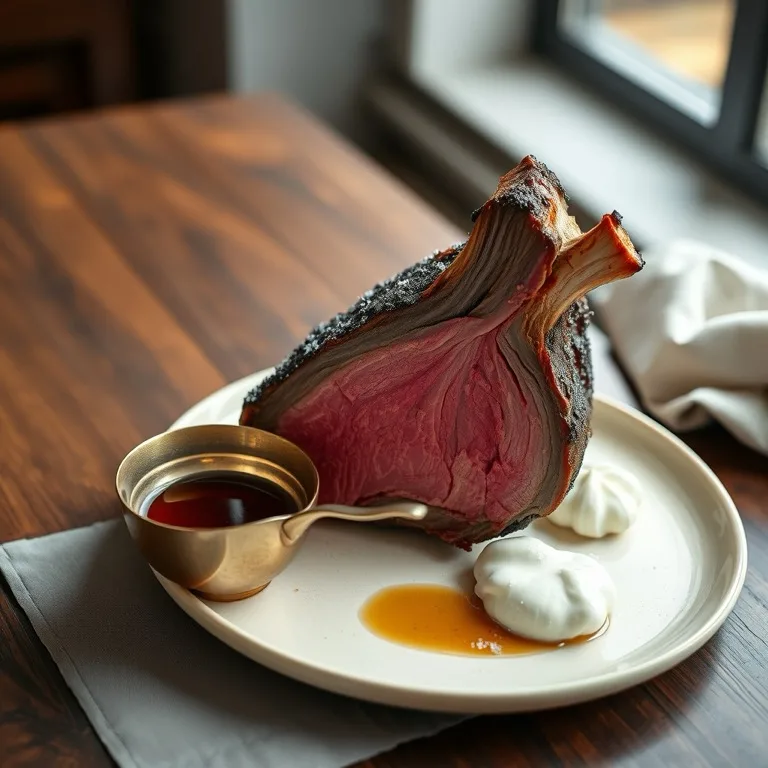
The famous Lawry's The Prime Rib standing rib roast, made at home: dry-aged technique with a 48-hour seasoned salt crust, low-and-slow roast, and silky au jus — from the Beverly Hills institution that has been carving tableside since 1938.

Moderate Prep: 30 min (plus 48 hr dry-brine) Cook: 3–4 hr Total: 52h 30m6–8 servings ~$4.20/serving
Prep30 min (plus 48 hr dry-brine)
Cook3–4 hr
Total52h 30m
Servings
6
At home~$4.20/serving
vs
Restaurant~$18.90/serving
You save ~78%

The Story Behind the Recipe

Lawry's The Prime Rib opened on La Cienega Boulevard in Beverly Hills in 1938, the brainchild of Lawrence Frank and Walter Van de Kamp, who wanted to build an entire restaurant around a single centerpiece: a whole roasted standing rib roast carved tableside from a silver cart. It was a radical concept for 1938 Los Angeles — one dish, done perfectly every night — and it worked for eight decades. The seasoned salt Frank developed to season the beef became so popular that customers begged to take it home; today Lawry's Seasoned Salt is one of the best-selling spice products in the United States. Every January since 1956, Lawry's has hosted the Beef Bowl dinner for Rose Bowl teams, serving prime rib to hundreds of Division I football players the night before the game — a tradition that has become an institution within an institution.

The magic at Lawry's is deceptively simple: USDA Prime or Choice beef, dry-seasoned 24 to 48 hours ahead, roasted low and slow, and carved just before it arrives at your table. You choose your portion from four named cuts — the California Cut (for lighter appetites), the English Cut (three thin slices), the Lawry Cut (the traditional, most-ordered portion), and the Diamond Jim Brady Cut (an extra-thick, bone-in slab named after the famously gluttonous financier). The cut price includes the theatrical spinning salad and the sides, and runs roughly $41 to $59; a full dinner with a drink and tip sits near $75 to $90 a head. Recreating it at home for a dinner party drops the per-person cost to about $12 and lets you control the doneness. The one true secret: give the roast two full days in the refrigerator after seasoning. That time does more for the crust and the depth of flavor than any sauce or finishing step.

Nutrition Facts

Per serving (6–8 servings)
Calories680
Total Fat48g
Total Carbs2g
Dietary Fiber0g
Sugars0g
Protein58g
Sodium620mg

* Estimated values based on standard recipe preparation. Actual values may vary.

Ingredients

  • The roast
  • Au jus
  • To serve

Instructions

💡
Pro tip: This recipe tastes even better the next day. The flavors need time to meld together in the fridge.
❄️
Storage: Keeps in an airtight container in the fridge for up to 2 weeks. Freezer-friendly for up to 3 months.
🦃 Free Thanksgiving cookbook — download now The Copycat Thanksgiving Cookbook A ready-made, photo-illustrated PDF of our best thanksgiving copycat recipes — free to download, no building required. Pay what you want to support if you love it.

Free PDF — instant download. We'll also send new seasonal copycat recipes now and then; unsubscribe anytime. Or just download it →

Lawry’s The Prime Rib Standing Rib Roast (The Beverly Hills Classic)

Prep time: 30 min (plus 48 hr dry-brine) Cook time: 3–4 hr Servings: 6–8 Difficulty: Moderate

The standing rib roast at Lawry’s Beverly Hills has been the same dish since 1938: bone-in rib roast, dry-seasoned days ahead, roasted low and slow, carved tableside from a gleaming silver cart. At $75 to $80 a head, it is one of the most famous roasts in American dining history. This recipe replicates the technique at home for a holiday dinner — the 48-hour dry-brine is what separates it from a generic prime rib, and the whole process is more forgiving than it sounds.

The only thing that matters: use a probe thermometer and pull the roast at 118°F. Everything else is preparation.

To build the full steakhouse dinner around it, pair the roast with Morton’s creamed spinach, Ruth’s Chris sweet potato casserole, and Texas Roadhouse rolls. If you want the same cut on a weeknight budget, the Texas Roadhouse prime rib uses a faster, higher-heat method.
🥗

Make It Healthier

Love Lawry's The Prime Rib Standing Rib Roast (The Beverly Hills Classic) but want a lighter version? Try these simple swaps:

  • ✓Ask the butcher to trim the fat cap to 1/4 inch instead of the standard 1/2 inch — you lose some self-basting but shave roughly 80 calories per serving without touching the technique.
  • ✓Serve a 4-ounce portion (the English Cut) rather than the 8-ounce Diamond Jim Brady — prime rib at 4 oz delivers all the flavor at half the calories, especially valuable at holiday dinners with multiple courses.
  • ✓Swap the creamed corn side for roasted broccolini or sautéed spinach with garlic to keep the plate's carb load minimal — the roast itself has essentially zero carbs, so the sides are where the carbs come from.
  • ✓For a leaner roast, request USDA Choice rather than Prime — the lower marbling cuts total fat by 10 to 15 percent per serving while still producing an excellent roast when cooked with the 48-hour dry-brine technique.

Frequently Asked Questions

What exactly is a 'standing rib roast' and is it the same as prime rib?

A standing rib roast and prime rib are the same cut — the primal rib section of the beef, typically ribs 6 through 12, sold bone-in. The name 'standing' refers to the fact that the roast rests on its rib bones during cooking, acting as a natural rack that lifts the meat off the pan floor and allows even heat circulation. 'Prime rib' is the common restaurant name for this cut regardless of USDA grade — though USDA Prime grade (the top 5 to 8% of beef by marbling) is what Lawry's uses and what you should buy if budget allows. Choice grade is an excellent alternative and widely available at Costco. For 6 to 8 people, a 3-bone roast (7 to 8 pounds bone-in) is the target.

Why does Lawry's season the beef 24 to 48 hours ahead?

The dry-brine technique works in two stages. In the first few hours, the salt draws moisture out of the meat's surface — you'll see beads of liquid on the exterior. By hour 16 to 24, osmotic pressure reverses and the meat reabsorbs that moisture, now carrying dissolved seasoning deep into the flesh rather than sitting only on the surface. The second effect is surface desiccation: after 24 to 48 hours uncovered in the refrigerator, the exterior of the roast dries into a tacky, almost papery pellicle that browns beautifully in the oven and forms a flavorful crust without a separate searing step. At Lawry's, this dry-brine period is part of the daily prep cycle — the roasts are seasoned the morning of the day before service.

What temperature should I pull the prime rib for medium-rare?

Pull the roast at 118°F internal temperature (measured in the thickest part of the eye, away from the bone, with an instant-read thermometer). The roast will carry over 5 to 8 degrees during its 20-minute rest, landing at 123 to 126°F — a true medium-rare with a warm pink center and a dark, deeply seasoned crust. For medium, pull at 128°F; the carry-over will bring it to 133 to 136°F. Never cook prime rib beyond medium — at medium-well the marbling has rendered out and the roast is irreversible. If your guests have different preferences, the exterior edge slices (near the cap and the fat collar) will always be a degree or two more done than the center slices, which is useful for accommodating a range of doneness preferences from one roast.

Can I use homemade seasoned salt instead of the Lawry's brand?

Yes. Lawry's Seasoned Salt is a blend of salt, sugar, paprika, turmeric, onion powder, garlic powder, and celery seed. A workable homemade version: mix 3 tablespoons of kosher salt, 1 teaspoon of sugar, 1 teaspoon of paprika, 1/2 teaspoon of turmeric, 1/2 teaspoon of onion powder, 1/2 teaspoon of garlic powder, and 1/4 teaspoon of celery seed. The turmeric provides the faint golden color on the crust. Use it in the same quantity as the Lawry's brand. That said, a bottle of actual Lawry's Seasoned Salt costs about $4 and is available at virtually every grocery store — there is no real reason to substitute it for this recipe.

What are the four Lawry's prime rib cuts and how big are they?

Lawry's offers four portions of the same standing rib roast, carved tableside to your preference. The California Cut (about 6 oz) is the lightest, for smaller appetites. The English Cut (about 8 oz) is served as three thin slices — the elegant, traditional British style. The Lawry Cut (about 10 oz) is the signature, most-ordered portion and the one the restaurant is built around. The Diamond Jim Brady Cut (about 16 oz) — named after James Buchanan Brady, the famously gluttonous New York financier — is the showstopper: an extra-thick slab with the rib bone left in. (Don't confuse these with the Beef Bowl, which is Lawry's annual January dinner for Rose Bowl teams, not a menu cut.) At home, slicing between every bone gives you the thick Diamond Jim Brady experience; carving thin across the eye gives you the English Cut.

How do you make the Lawry's au jus?

Lawry's au jus is built from the pan drippings — not from a packet, not from commercial beef base. After the roast is pulled from the pan, tilt the roasting pan and use a fat separator or a ladle to remove most of the solidified white fat from the drippings, leaving the dark, beefy liquid underneath. Transfer the defatted drippings to a small saucepan over medium heat. Add 1.5 to 2 cups of good beef stock (low-sodium preferred, so you can control salt). Bring to a gentle simmer, scraping up any browned bits from the roasting pan, and simmer for 3 to 4 minutes until slightly reduced. Taste for salt and strain through a fine-mesh sieve. That is the entire recipe. The depth comes entirely from the drippings — good beef roasted properly at low heat produces extraordinary drippings.

What does the Lawry's spinning salad bowl taste like?

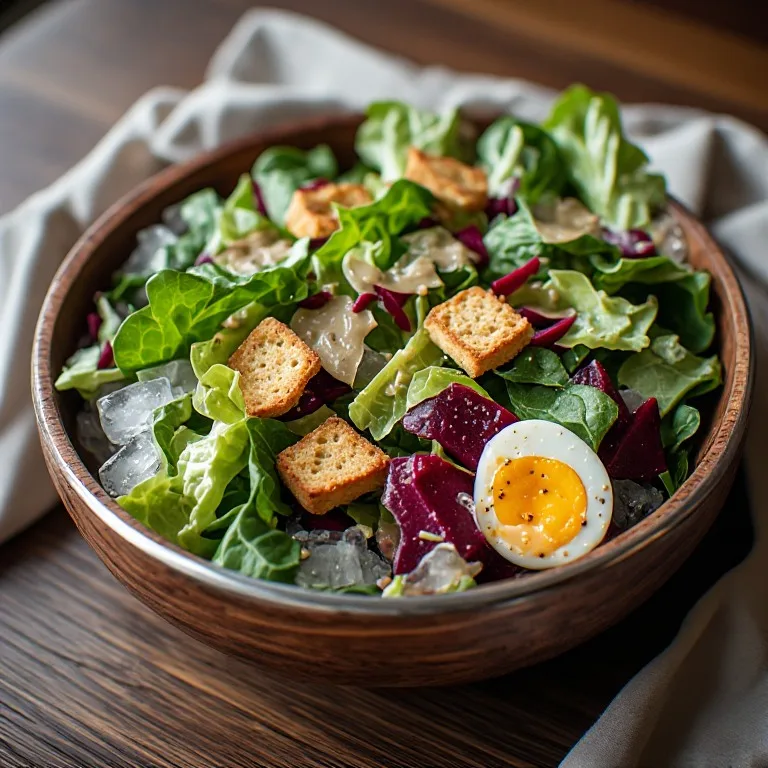
The Lawry's signature salad is served tableside in an enormous wooden bowl set inside a bowl of crushed ice — the server spins it while tossing so the dressing chills and firms against the cold bowl. The romaine (with canned beets, chopped hard-boiled egg, and croutons) is dressed in the proprietary Classic Vintage Dressing: a savory, lightly tangy emulsion built on Lawry's own Seasoned Salt, apple cider vinegar, and Worcestershire, held together with unsweetened applesauce in place of egg yolk — lighter and more savory than a Caesar, not a mustard-and-egg-yolk dressing. The showmanship is the point, but the salad genuinely reproduces at home. See our full make-at-home version in the Lawry's Spinning Bowl Salad recipe.

Love this recipe? Share it!

Free PDF: our 12 most-wanted copycat recipes — instant download.

Made it? Buy us a coffee

Every recipe here is free, with no paywalls. If this one was a hit at your table, a small tip keeps new copycats coming.

$

Lawry's The Prime Rib is a trademark of its owner, used here only to describe the dish this recipe recreates. This is an independent copycat written in our own words — Copycat Spices is not affiliated with, endorsed by or sponsored by Lawry's The Prime Rib.

Ratings & Reviews

—
No ratings yet

Rate this recipe

Click a star to rate

Leave a Review

0/500

CS

Copycat Spices Editorial

Researched + fact-checked. Every recipe on Copycat Spices is built from published sources — official ingredient lists, brand-published recipes, interviews and food-science references — and fact-checked before it goes live, then written as clear, step-by-step instructions for home cooks of all skill levels.

Learn more about our mission →