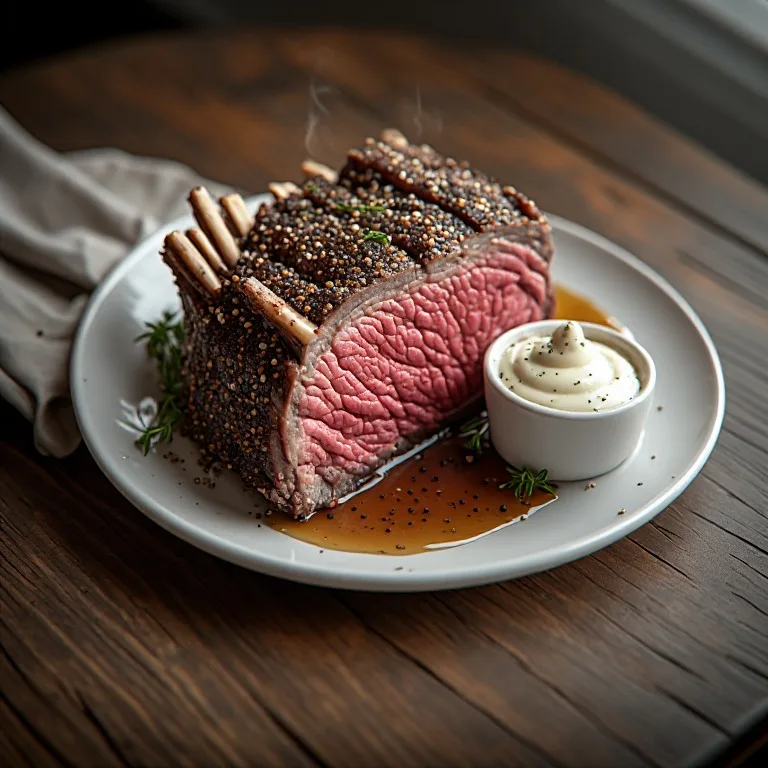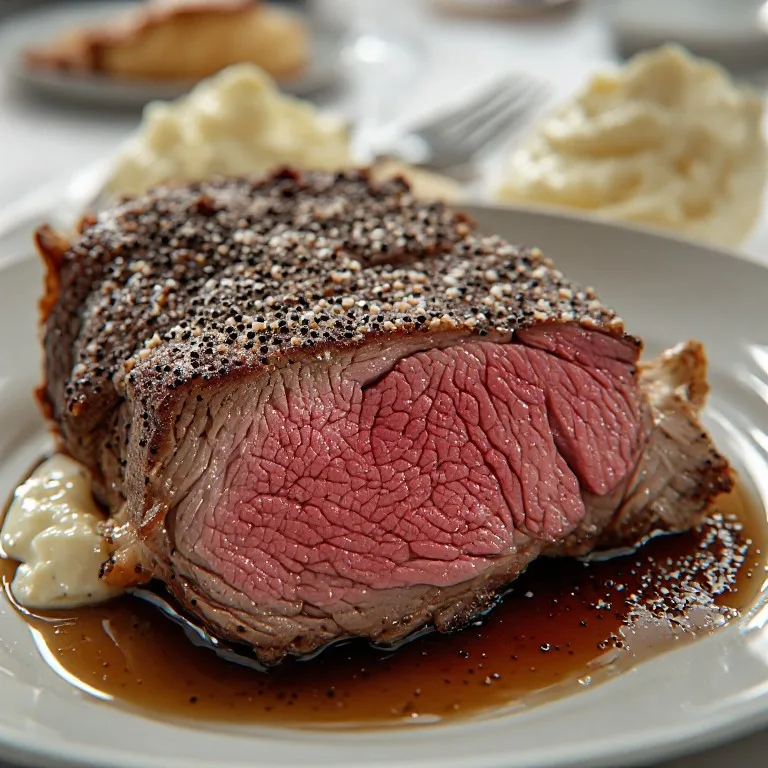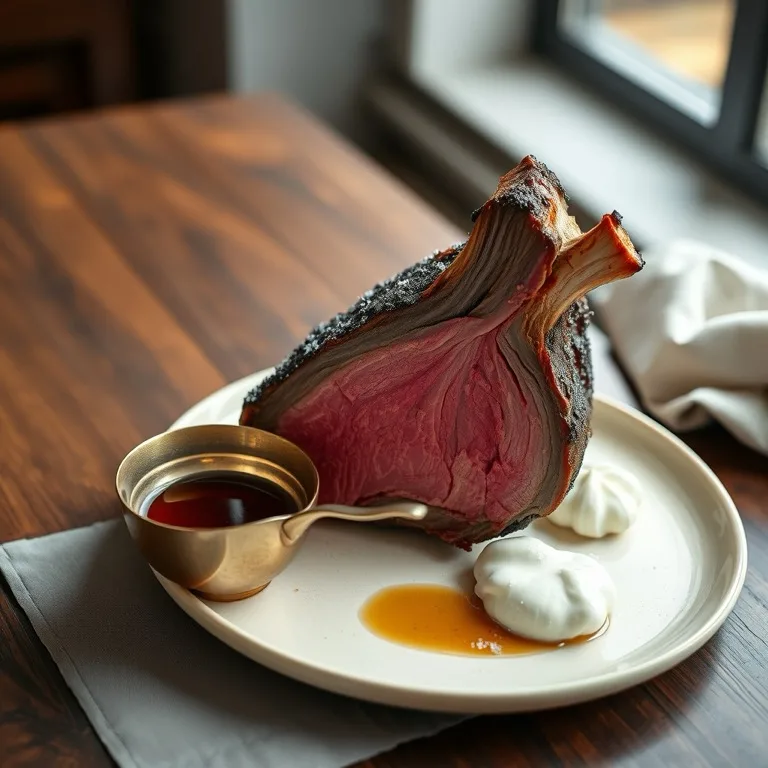


There is no tasting menu at 4 Charles Prime Rib. No amuse-bouche, no cheese course, no multi-act production. There is one thing: a standing rib roast, slow-roasted to within a degree of exactness, with a crackling salt crust built under the broiler, a clear beef jus, and a sharp horseradish cream. Brendan Sodikoff opened the restaurant in December 2016 on Charles Street in the West Village, and it has held a Michelin Guide listing and one of the most competitive Resy pages in the city ever since.
The prime rib runs $69 to $120 per plate depending on the cut — before sides, drinks, or the birthday cake. A USDA Prime 3-bone standing rib roast costs $80 to $120 total at a butcher and feeds six people. The math is not complicated.
The One Technique Worth Getting Right
4 Charles slow-roasts its prime rib for roughly 12 hours on the commercial scale. At home with a 7 to 8 lb, 3-bone roast, the equivalent is about 3.5 to 4.5 hours at 225°F, pulled at 118°F internal and rested 30 minutes. That part is straightforward.
The part most home cooks skip is the broiler finish after the rest. The low oven produces a perfectly cooked interior but a pale, soft exterior. The 500°F oven or broiler blast — run on a rested, room-temperature-ish roast for 8 to 12 minutes — builds the caramelized salt crust that makes 4 Charles prime rib look like it’s been lacquered. The crust is not decorative. It is where the roast’s flavor is most concentrated.
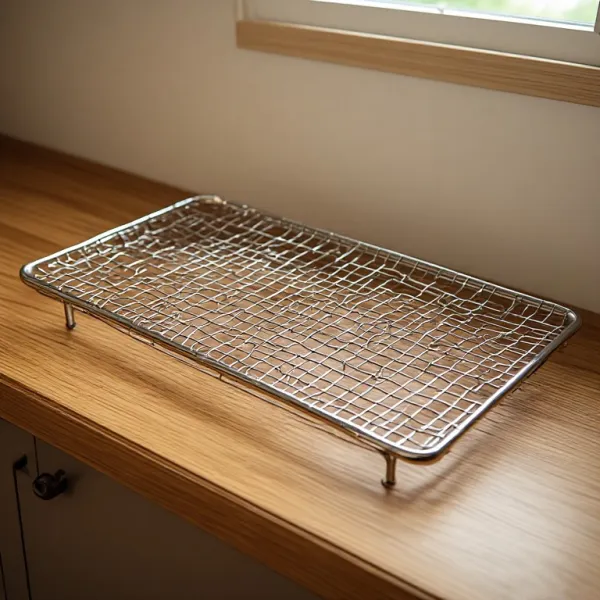
The second technique worth respecting is the dry brine. Coat the roast with kosher salt 24 to 48 hours before cooking and refrigerate uncovered on a rack. The salt draws moisture to the surface, it dissolves in that moisture, and the meat reabsorbs it. This is how you season a 7-lb roast all the way through, not just on the surface. It also dries the exterior dramatically, which is why the crust forms so quickly and so dark when the high heat hits it.
The Three Cuts
English cut — thin, wide slices carved across the grain. Each bite has more exterior-to-interior ratio. The char is present in every forkful. This is the classic British preparation, carried to American steakhouses by way of the Baltimore prime rib houses (Prime Rib, Smyth, etc.) that 4 Charles draws from stylistically.
Chicago cut — thick, 1.5-inch slabs, closer to a ribeye steak in proportion. More interior, bolder beef flavor per bite, less char. The presentation is more dramatic.
4 Charles Cut — the signature. A thick cut finished with crumbled Gorgonzola, run briefly under the broiler just before serving. The Gorgonzola melts and slightly seizes into the salt crust — funky, sharp, and rich against the beef. Use Gorgonzola dolce (the younger, creamier style) for a milder result or Gorgonzola piccante (the aged, more assertive style) for something sharper. One tablespoon per portion is enough — this is a counterpoint, not a coating.
The Sides at 4 Charles
The restaurant’s sides are American steakhouse through and through: creamed spinach with blue cheese, truffle mac and cheese, elote-style corn, roasted garlic, mashed potatoes. No Yorkshire pudding — 4 Charles is explicitly not a British room. If you want to add Yorkshire pudding at home, the recipe is simple (equal parts flour, whole milk, and eggs by volume, with a pinch of salt, baked in a hot muffin tin coated with beef drippings at 425°F for 20 minutes), but it is not part of the 4 Charles experience.
The beef jus is the essential accompaniment. The restaurant’s version is clean, thin, and thyme-forward — a reduction of beef drippings and stock, nothing elaborate. Pour it into a small pitcher or ramekin at the table and let each person add it themselves.
What USDA Prime Actually Means
Prime rib deserves Prime beef. USDA Prime represents the top 2 to 3 percent of graded beef in the United States — maximum intramuscular fat, typically from younger cattle fed on a grain-finishing diet. The marbling is what makes prime rib self-basting: as the fat renders slowly during the low oven phase, it continuously bastes the muscle fibers from the inside. USDA Choice, which most supermarkets sell, has meaningfully less marbling. The difference at the end of a 4-hour roast is significant. Buy Prime from a butcher if you can. If Prime is unavailable, Choice works — the technique is the same — but the interior will be slightly less silky and you are approximating rather than replicating.
For the closest approximation to 4 Charles: ask the butcher for bone-in Prime, request that the chine bone be removed and the roast retied (or, if available, request it frenched for a cleaner presentation), and dry brine the full 48 hours rather than 24.