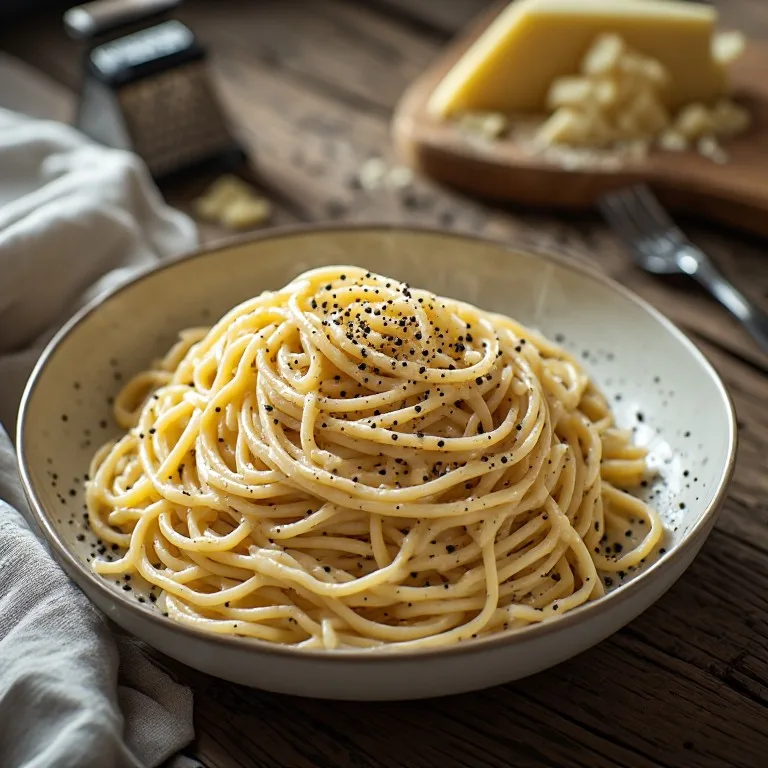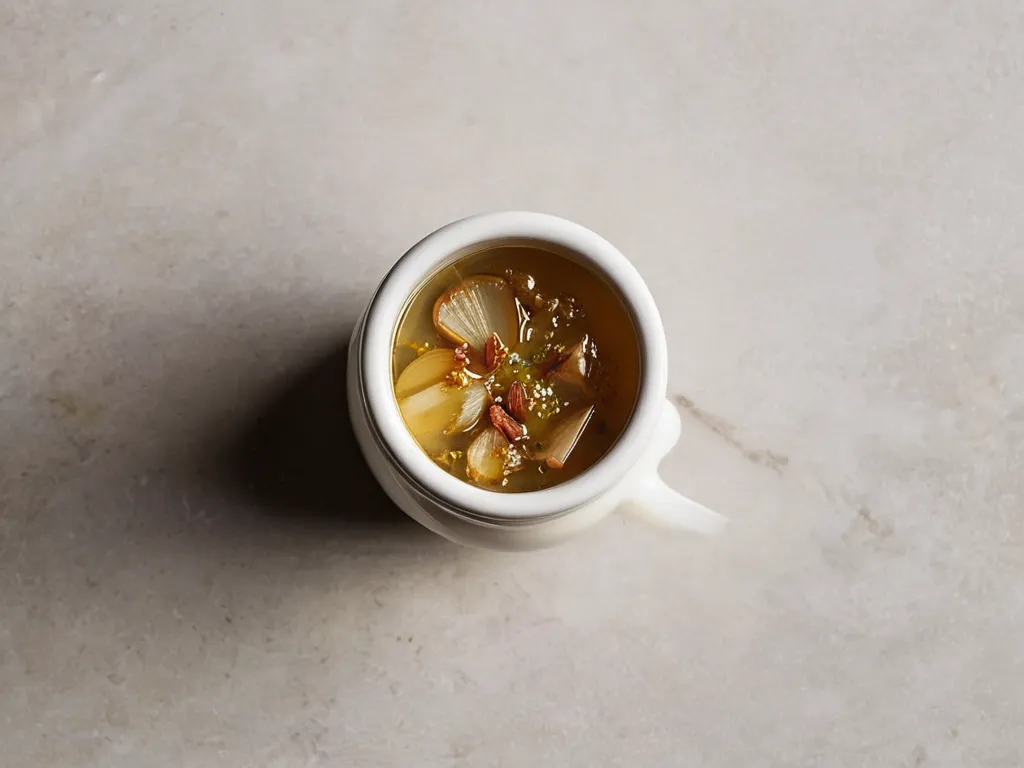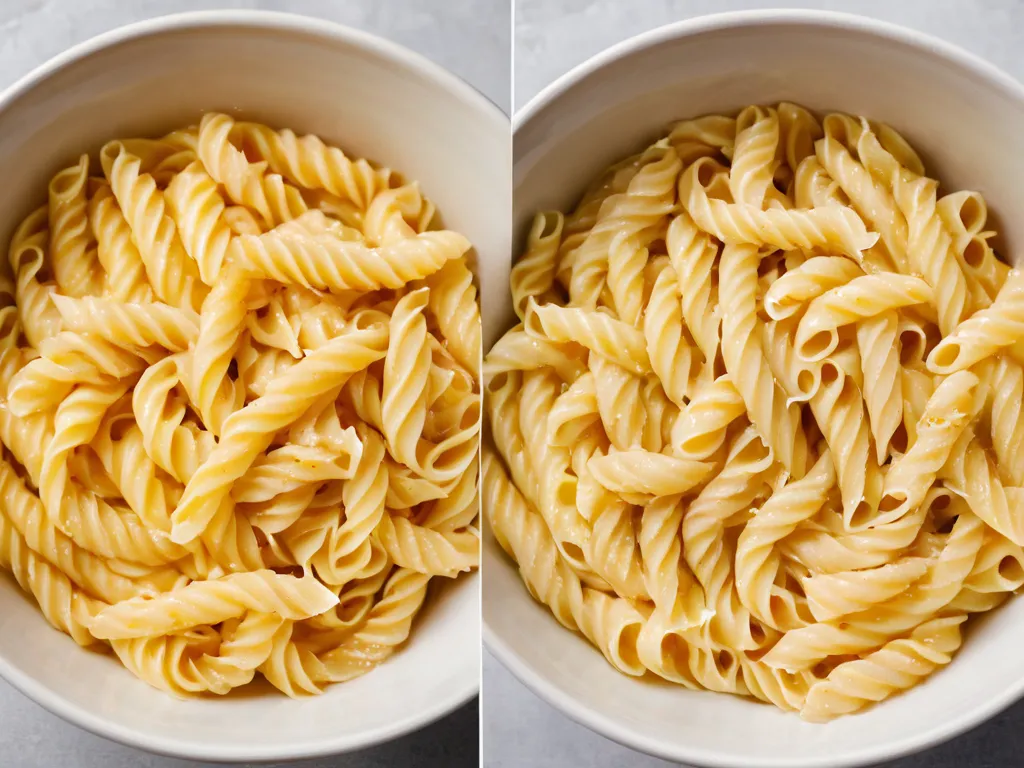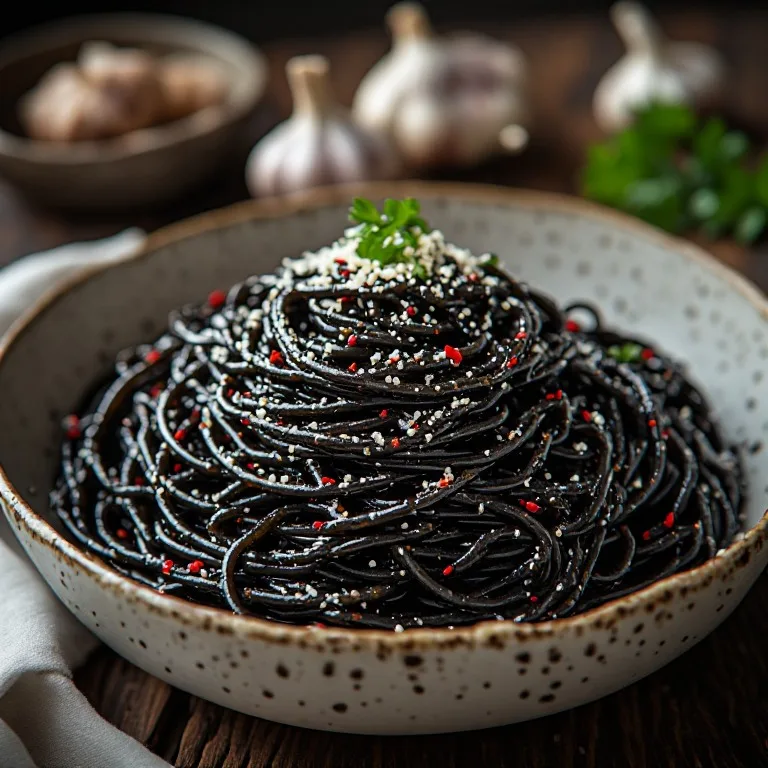



Black garlic pasta is the dish that makes people stop and stare before they’ve even taken a bite. The sauce is jet black — darker than anything you’d expect on pasta — and the smell coming off the pan is nothing like regular garlic. It went viral for a simple reason: it looks dramatic, comes together in 20 minutes, and tastes like something that took much longer.
What Black Garlic Actually Is
Black garlic is regular garlic held at low heat — 60 to 77°C (140–170°F) — for two to six weeks. During that time, the Maillard reaction slowly transforms the cloves without burning them. The result looks extreme: the cloves turn jet black, soft, and slightly sticky, like a thick fruit leather. They peel easily; the skin lifts off without resistance.
The flavor is the revelation. Everything sharp about raw garlic is gone. Allicin — the compound that creates garlic’s characteristic bite — breaks down through sustained low heat. What replaces it is a complex web of flavor compounds that read as sweet, tangy, mildly savory, and deeply umami all at once. Most people describe it as molasses or balsamic with a distant echo of garlic and a long umami finish. It is genuinely nothing like roasted garlic, which is milder but still recognizably sharp.
Black garlic has been used in Korean, Japanese, and Spanish cooking for decades. Its recent appearance in American home cooking — and its current presence on TikTok — reflects a broader shift toward ingredients that deliver intensity without technique.
| Raw garlic | Roasted garlic | Black garlic | |
|---|---|---|---|
| Color | Ivory | Golden brown | Jet black |
| Texture | Firm, crisp | Soft, spreadable | Jammy, sticky |
| Sharpness | High (raw allicin) | Low but present | None |
| Dominant flavor | Pungent, hot | Mellow, nutty | Sweet, tangy, umami |
| Made by | — | ~40 min at 400°F | 2–6 weeks at 140–170°F |
| Best for | Sauces, sautés | Spreads, dressings | Umami depth, finishing |
The Emulsion Is Everything
Black garlic pasta is fundamentally aglio e olio with black garlic in place of most of the fresh. Which means the core skill is building the emulsion.
Olive oil and water don’t mix on their own — the oil beads up and the pasta swims in it. What makes aglio e olio creamy and glossy rather than greasy is the starch in pasta cooking water. That starch acts as an emulsifier: it creates a stable bond between the oil and water, producing a sauce that looks and behaves like a thin cream sauce rather than oily noodles.
Three things build and maintain this emulsion:
Pasta water, not tap water. Only water that cooked pasta in it has the right starch content. Reserve at least a cup before you drain — you’ll use ⅓ cup to start and keep the rest on hand if the sauce breaks.
Continuous tossing over medium heat. Movement is what mechanically builds the emulsion. Toss actively for the full 60 to 90 seconds, using tongs or a fork to keep the pasta in constant motion. If you let it sit still, the oil settles back out.
Medium heat, not high. High heat breaks emulsions. Keep it at medium — the sauce should be steaming and glossy, not bubbling aggressively.
If the sauce breaks (looks oily rather than unified), add 2 tablespoons of pasta water and toss hard over medium heat. It comes back.
Why This Version Uses Both Black and Fresh Garlic
The instinct when making black garlic pasta is to use only black garlic. Don’t.
Black garlic delivers bass notes — sweet, deep, savory, lingering. It’s all low-end flavor: the kind of umami that builds over the course of the dish rather than announcing itself upfront. On its own, it produces a flat, slightly sweet pasta with no aromatic brightness.
Fresh garlic does the opposite: it’s volatile, pungent, fragrant, immediate. In the classic aglio e olio method — starting in cold oil, warming slowly together — fresh garlic blooms into something nutty and golden rather than sharp. It provides the top notes that black garlic lacks.
The two together produce a layered sauce: you smell the fresh garlic as the dish hits the table, you taste it first, and then the black garlic’s depth builds as you eat. This is the structure that makes the dish genuinely complex rather than one-dimensional.
Starting Garlic in Cold Oil
The aglio e olio technique that this recipe borrows is worth understanding: you combine the oil and raw garlic in a cold skillet and bring them up to temperature together.
The reason is control. Raw garlic goes from raw to golden to burnt very quickly over high heat — a matter of seconds. Starting cold and warming together gives you 2 to 3 minutes of gradual flavor development where the garlic gently releases its aromatics into the oil without any risk of burning. The oil becomes fully infused before the garlic reaches the point where it could turn bitter.
The visual cue: the garlic begins to sizzle gently around the edges — not vigorously, not browning fast, just a quiet, fragrant sizzle. That’s the sweet spot. Add the black garlic paste at that point.
Where to Find Black Garlic
It’s more available than it used to be. In rough order of accessibility:
Trader Joe’s — stocks it seasonally, usually in the produce section or specialty condiments aisle. Small packages of whole heads. Call ahead or check the app.
Whole Foods — carries it near the garlic in produce, typically in plastic clamshells of 2 to 3 whole heads. More reliably stocked than Trader Joe’s.
Asian grocery stores — H Mart, 99 Ranch, and similar stores stock it at better prices and in larger quantities. Korean cooking uses black garlic frequently, so it’s a reliable find.
Amazon — whole heads in bulk packs (6 to 10 heads) at reasonable prices, good if you cook with it regularly.
Make it yourself — the rice cooker method: wrap a whole head of garlic in foil, place it in a rice cooker on ‘keep warm,’ and leave it for 12 to 14 days. Don’t open it. The house will smell strongly of garlic for the first few days. At the end, peel the cloves — they’ll be black, soft, and identical to store-bought. The method works; the timeline is accurate; the only cost is patience.
Substitute if needed: garlic confit (raw garlic cloves slow-cooked in olive oil at very low heat until soft and golden) is the closest available approximation in terms of texture and mildness. The flavor will be softer and less complex — no sweet-umami depth — but it produces a similar absence-of-sharpness result. Not a direct replacement, but a workable one.
5 Variations
Black Garlic Butter Pasta
Replace the olive oil with 4 tablespoons of unsalted butter. Melt it over medium-low heat, add fresh garlic and soften, then add the smashed black garlic paste and stir to incorporate. Proceed exactly as above with the pasta and pasta water. The butter version is richer, slightly less sharp (butter lacks olive oil’s bitterness), and produces a sauce that’s almost glossy brown-black. More indulgent, arguably more forgiving to emulsify.
Black Garlic and Anchovy Pasta
Add 4 oil-packed anchovy fillets to the cold oil along with the fresh garlic. They’ll melt completely into the oil within 2 minutes — no fish pieces, just deep savory flavor. Add the black garlic paste on top. The anchovies double the umami of the dish, amplifying the black garlic’s savory character without adding any identifiable fish taste. This is the version to make if you want to impress.
Black Garlic Pasta with Burrata
Make the pasta as written. Serve it in a wide bowl with a full burrata torn open in the center. The cold, creamy, milky burrata against the dark, savory pasta creates a visual and textural contrast that photographs exceptionally well and tastes like a restaurant dish. The burrata also cools and enriches the pasta as you eat — effective contrast.
Black Garlic Pasta with Lemon
Finish the dish with the zest of half a lemon and a squeeze of juice before tossing the Parmesan in. The acid cuts through the olive oil richness and lifts the black garlic’s sweetness with a bright counterpoint. Good when the dish feels a bit heavy — the lemon sharpens everything.
Black Garlic Cream Pasta
After the black garlic paste dissolves into the olive oil, add ¼ cup heavy cream and let it bubble gently for 30 seconds before adding the pasta and pasta water. The cream produces a dark mahogany sauce with a velvety texture, no emulsification gymnastics required. More forgiving for beginners, and the cream’s sweetness plays well with black garlic. Add more pasta water as needed to loosen.
Making It a Full Meal
The basic recipe is fast and complete as-is, but a few additions push it further:
Protein that works: Sautéed shrimp (cook separately before building the sauce; return at the end), anchovies stirred into the oil, pan-seared scallops on top, or sliced grilled chicken alongside. Shrimp and black garlic is particularly good — the sweetness in both ingredients reinforces each other.
Vegetables: Blanched broccolini or asparagus added to the pasta water for the last 2 minutes of cooking, then lifted out with tongs before the pasta drains. Both go directly into the skillet. Baby arugula stirred in right before serving wilts from residual heat and adds peppery bite.
Bread: Good crusty bread to wipe the bowl. The sauce is too good to leave behind.
Why It Works on TikTok
Black garlic pasta follows a reliable viral structure: the visual is unexpected (jet-black sauce on pasta looks wrong), the flavor is a genuine surprise (nothing like what the color suggests), and the method is accessible (anyone who can boil spaghetti can make this).
The dish also photographs well against any surface — the dark sauce creates contrast against white bowls, wooden boards, or light countertops. It looks finished and dramatic with minimal effort.
It has a specific demographic: people who already make regular aglio e olio and want to take one step further, and people who’ve been wanting to try black garlic and want a recipe that actually uses enough of it to matter. Eight cloves per two servings uses almost a full head — enough to get the full flavor impact rather than a background whisper.
Related Pasta Recipes
- Viral TikTok Cacio e Pepe — the most technique-dependent of the pasta classics; shares the emulsification challenge of black garlic pasta
- Viral TikTok Garlic Confit — make this first if you want a soft-garlic substitute or a companion sauce component
- Viral TikTok Butter Pasta — the simplest weeknight pasta; understanding how butter-and-pasta-water emulsifies makes this one clearer
- Viral TikTok Chili Oil Noodles — the spicy oil-based noodle companion; similar technique, entirely different flavor register
- Viral TikTok Gochujang Pasta — the other dark, umami pasta that broke TikTok; if you liked this, make that next