


Viral TikTok Creamy Mustard Chicken Thighs
The recipe that’s all over TikTok right now isn’t a new dish. Ina Garten published it in 2018 in Cook Like a Pro, filed under weeknight dinners that look like you worked all day. For years it lived on Food Network’s website, reliably excellent, largely undiscovered by anyone who wasn’t already an Ina devotee.
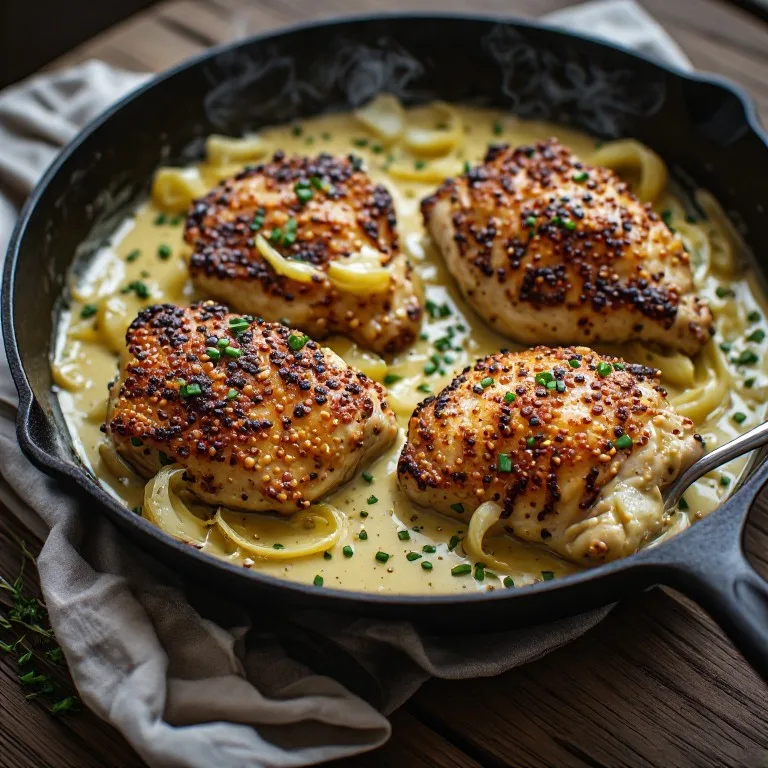
Then food creators started filming it in 2026 — the close-up of the mahogany skin releasing from the pan at the 15-minute mark, the sauce swirling into the caramelized onions, the final glossy pour. And TikTok did what TikTok does: the saves and recreations cascaded, and suddenly every home cook was asking the same question: why does this taste like a $40 bistro dish?
The answer is the technique and the sauce. Fifteen uninterrupted minutes skin-side down. Two mustards. Crème fraîche. One pan. That’s the entire secret.
Why This Went Viral
Two things make a recipe spread on social media: it photographs beautifully, and it tastes dramatically better than its ingredient list suggests it should.
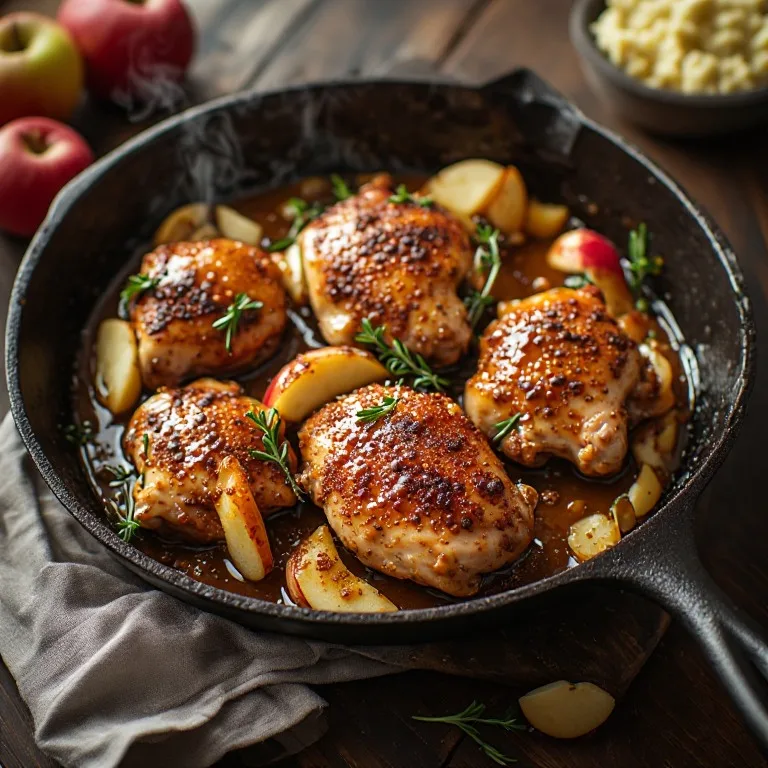
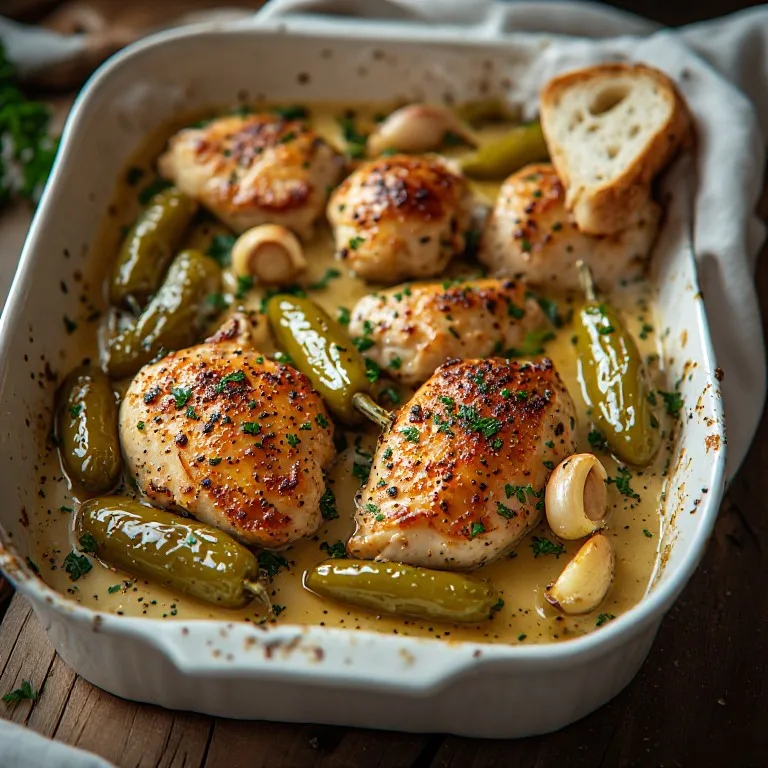
This recipe delivers on both. The rendered chicken skin photographs with a deep, lacquered color that looks like a restaurant photo. The sauce — pale golden, glossy, flecked with mustard seeds — looks complex. And when you taste it, it is: the Dijon sharpness, the whole-grain mustard’s nuttier finish, the crème fraîche tang, the sweetness of the caramelized onions, all underneath a piece of chicken with a genuinely crispy skin.
The fact that it uses a single pan and comes together in 40 minutes with five sauce ingredients is the twist that sends people to their kitchens immediately.
The Technique That Actually Matters
The 15-minute undisturbed sear is non-negotiable.
Chicken thighs have a thick layer of fat under the skin. For the skin to become crispy — actually crispy, not just golden and slightly less rubbery — that fat needs to render out almost completely. This takes time. Medium-high heat, skin-side down, no touching, no peeking, no repositioning for 15 full minutes.
What happens during those 15 minutes: the fat melts and flows into the pan, coating the bottom. The skin shrinks and tightens as the moisture drives off. The protein in the skin firms up and then begins to caramelize. By minute 13, the sizzling that was loud in the first few minutes has quieted — that’s the sound of moisture, and its absence means the skin is almost done. By minute 15, the skin is deep mahogany and releases from the pan cleanly. If you lift a piece and it resists, give it another minute.
The second critical point: when you flip and add the onions, the chicken fat that’s now pooled in the pan is your sauce base. Those caramelized bits on the bottom of the pan — the fond — will lift when you deglaze with white wine and become the backbone of the mustard sauce. Don’t use a nonstick pan; nonstick surfaces don’t build fond.
The Sauce: Two Mustards Do Different Things
Most mustard chicken recipes use one mustard. This recipe uses two, and the difference is meaningful.
Dijon mustard is smooth, sharp, and emulsifying. When whisked into a sauce, it helps keep the fat and liquid cohesive — it’s the reason the crème fraîche sauce doesn’t separate or look greasy. The flavor is assertively mustard-forward and slightly acidic.
Whole-grain mustard is different. The seeds are partially crushed, giving you a milder, nuttier, faintly sweet flavor alongside visible texture. The seeds pop lightly when you bite through the sauce, giving bursts of concentrated mustard flavor rather than a continuous background note.
Together: the Dijon defines the sauce’s character, and the whole-grain adds dimension and interest. You can make the recipe with only Dijon (use 1 tablespoon plus 1 teaspoon), but the whole-grain is worth buying if you don’t have it.
Variations Worth Trying
Chicken breasts instead of thighs. Butterfly 4 large breasts to an even ¾-inch thickness. Sear 6–8 minutes per side at medium-high heat until golden and cooked to 165°F. The technique works, but the window between perfectly cooked and dry is smaller. Thighs are more forgiving and more flavorful.
Add mushrooms. After flipping the chicken, add 8 oz sliced cremini mushrooms alongside the onions. They absorb the chicken fat, caramelize with the onions, and add an earthy depth to the sauce that complements the mustard.
Skip the wine. If you don’t cook with alcohol, substitute ¼ cup chicken broth plus 1 tablespoon white wine vinegar. The vinegar restores the brightness the wine would have contributed.
Add shallots. Substitute 4 large shallots for the yellow onions — they caramelize faster and have a more delicate, slightly garlicky sweetness that plays very well against the Dijon.
The core dish is elegant and complete as written. What makes it genuinely viral-worthy isn’t a clever trick or an unusual ingredient combination — it’s a proper technique applied to inexpensive chicken thighs, producing something that tastes like it was cooked by someone who has been doing this for a long time.