Viral TikTok Duchess Potatoes
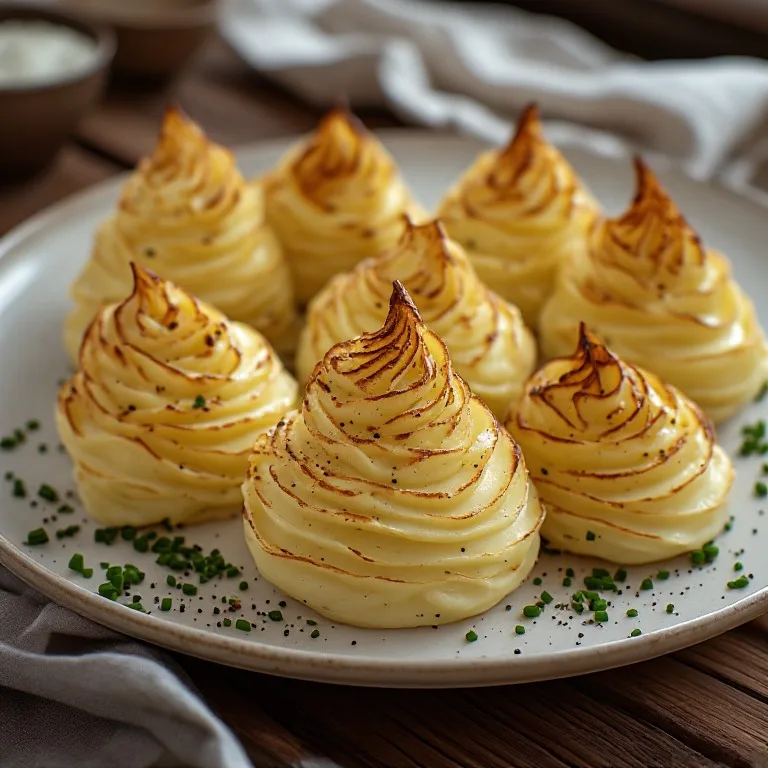
Quick answer: Boil 2 lbs peeled russet potatoes until tender (about 20 min), drain, and rice them into a large bowl while hot. Let steam escape for 2 minutes, then beat in 4 tbsp unsalted butter until absorbed. Stir in ¼ cup heavy cream and beat in 3 egg yolks one at a time. Season with 1 tsp salt, ¼ tsp white pepper, and a pinch of nutmeg. Let cool until warm (not hot). Spoon into a piping bag fitted with a large star tip (like a 1M). Pipe 3-inch rosettes or swirls onto a parchment-lined baking sheet — hold the bag straight down, squeeze steadily as you lift, then release and pull away. Refrigerate 30 minutes (or freeze 15 minutes) until firm. Brush with 1 beaten egg mixed with 1 tbsp water. Bake at 425°F for 15–18 minutes until the ridges are deep golden brown. Finish with chives and flaky salt.
Shop the tools
Gear matched to this recipe. These are Amazon affiliate links — we may earn a small commission if you buy, at no extra cost to you.
 Illustrative imageInstant-Read Digital ThermometerNail fry-oil and doneness temps every timeCheck price on Amazon →
 Illustrative imageNordic Ware Half Sheet PanCommercial-quality aluminum, bakes dead evenCheck price on Amazon →
 Illustrative imagePiping Bags and Tips SetPipes cookie batter, frosting, and fillings neatlyCheck price on Amazon →
As an Amazon Associate, Copycat Spices earns from qualifying purchases. Product images are generic illustrations, not the exact item listed.
Viral TikTok Duchess Potatoes
The TikTok holiday side dish obsession: classic pommes duchesse piped into golden rosettes, crispy on the ridges and cloud-soft inside. Make-ahead, elegant, and ready in 20 minutes from the fridge — the showstopper side dish that looks like it took hours.
Medium
Prep: 40 min
Cook: 18 min
Total: 58 min6 servings
~$4.50/serving
At home~$4.50/serving
vs
Restaurant~$20.25/serving
You save ~78%
The Story Behind the Recipe
Pommes duchesse — duchess potatoes — have been on French classical menus since at least the late 1800s, where they showed up alongside roasted meats as an elegant garnish: piped mashed potato rosettes, gilded in the oven, served immediately. They were the kind of technique associated with Escoffier-era brigade cooking, the sort of thing home cooks assumed required culinary school. Then TikTok discovered the transformation video.
The before-and-after is irresistible: a bowl of mashed potatoes going into a piping bag, then 24 identical golden-ridged rosettes coming out of the oven looking like something from a Michelin-starred restaurant. The technique is surprisingly achievable — the main requirement is an egg yolk-enriched potato mixture (the yolks set in the oven, holding the piped ridges perfectly) and ten minutes of piping practice. A comparable side dish at an upscale steakhouse costs $14–18. Made at home from 2 lbs of russet potatoes, the cost is about $3 for the whole batch.
Nutrition Facts
Per serving (6 servings)Calories235
Total Fat11g
Total Carbs28g
Dietary Fiber2g
Sugars1g
Protein5g
Sodium400mg
* Estimated values based on standard recipe preparation. Actual values may vary.
Ingredients
- For the duchess potatoes
- For the egg wash
- To finish
Instructions
Pro tip: This recipe tastes even better the next day. The flavors need time to meld together in the fridge.
Storage: Keeps in an airtight container in the fridge for up to 2 weeks. Freezer-friendly for up to 3 months.
Free PDF — instant download. We'll also send new seasonal copycat recipes now and then; unsubscribe anytime. Or just download it →
🎉 Your Thanksgiving Cookbook is ready!
It's free — but if it's worth something to you, you can pay what you want. It keeps the recipes coming.
$
✓ Downloading your free Thanksgiving Cookbook — check your downloads folder. Happy cooking!
Make It Healthier
Love Viral TikTok Duchess Potatoes but want a lighter version? Try these simple swaps:
- ✓Use Yukon Gold potatoes instead of russets — they have a naturally buttery flavor that lets you reduce the butter to 2 tablespoons without losing richness, saving about 50 calories per serving while keeping the texture silky.
- ✓Replace the heavy cream with whole milk or even 2% — the egg yolks provide enough fat and structure to hold the piped shape; the cream is richness only, not structural. The rosettes will be slightly less glossy but still hold their ridges cleanly.
- ✓For a lighter finish, brush with olive oil instead of egg wash — the ridges still brown (via the Maillard reaction on the starch), just with a slightly different color and less gloss.
- ✓Make the potato mixture a day ahead and refrigerate the piped rosettes overnight so you can bake them directly from cold — this makes the recipe genuinely low-effort for a holiday meal, and there's evidence the overnight chill improves the crispness of the ridge edges.
Frequently Asked Questions
What are viral TikTok duchess potatoes?
Duchess potatoes (pommes duchesse) are classic French mashed potatoes enriched with egg yolks and butter, piped through a star-tipped piping bag into decorative rosettes, then baked at high heat until the ridged edges turn golden and slightly crispy. The interior stays soft and cloud-like. They went viral on TikTok because the transformation — from ordinary mashed potatoes to beautifully formed golden rosettes — is visually dramatic and the technique is more achievable than it looks.
Why do duchess potatoes hold their piped shape in the oven?
The egg yolks are the structural key. When the potato mixture heats in the oven, the yolk proteins set and solidify, locking the piped ridges in place. Plain mashed potatoes without egg yolks would slowly slump and spread. The ratio matters: three yolks per two pounds of potato is the standard. More yolks makes the texture denser and the color more golden; fewer yolks and the rosettes soften and lose their sharp ridges.
Can I make duchess potatoes ahead of time?
Yes — this is one of their main advantages over plain mashed potatoes. Pipe the rosettes onto the baking sheet, cover loosely with plastic wrap, and refrigerate for up to 24 hours. Brush with egg wash and bake directly from the fridge — add 2 to 3 minutes to the baking time. You can also freeze them solid on the sheet (about 1 hour), then transfer to a zip bag and freeze for up to 1 month. Bake from frozen at 425°F for 22–25 minutes, no thawing needed.
What piping tip gives the classic duchess potato shape?
A large open-star tip — the 1M tip is standard and widely available. It has multiple teeth that create the ridged rosette pattern, and the ridges are what brown and crisp in the oven. A closed star tip (like a 4B) also works and gives slightly sharper lines. A plain round tip will also work but loses the classic look — the rosettes will brown evenly on top without the dramatic golden ridges that made the TikTok version spread. Use the largest tip that fits your bag for the best visual result.
What potatoes work best for duchess potatoes?
High-starch potatoes — russets (Idaho potatoes) — are the traditional choice. Their low moisture content means less steaming-off time and a drier mixture that pipes cleanly. Yukon Gold potatoes work well too and have a natural butteriness that lets you use slightly less butter; their slightly higher moisture means they need an extra minute drying in the pot after draining. Waxy potatoes like red new potatoes or fingerlings have too much moisture and too little starch — they'll produce a gluey, dense mixture that doesn't pipe cleanly or hold ridges.
Why do you rice the potatoes instead of mashing them?
A ricer or food mill pushes the potato through tiny holes, producing a uniformly smooth, light, fluffy result with no lumps. Mashing — especially with a standard masher — breaks the starch granules differently, releasing a compound called amylose that can make the texture gluey or sticky, especially if you overwork it. For duchess potatoes, texture matters even more than for plain mashed: you're pushing the mixture through a small piping tip, and any lumps will either clog the tip or create uneven ridges. A ricer is a $15 tool that transforms the recipe.
My rosettes spread flat in the oven. What went wrong?
Three likely causes: (1) The mixture was too warm when piped — it should be warm to the touch but not hot; let it cool to about 140°F before piping. (2) The mixture has too much moisture — if you boiled the potatoes in lots of water and didn't steam them dry enough in the pot, the extra water weakened the structure. Return riced potatoes to the pot over low heat for 2 minutes, stirring, to drive off extra steam before adding butter. (3) You didn't chill the piped rosettes before baking — the refrigerator chill firms the mixture and dramatically helps the rosettes hold their shape. Even 20 minutes in the freezer makes a visible difference.
What do you serve duchess potatoes with?
They're the classic accompaniment to roasted meats — prime rib, rack of lamb, beef tenderloin, or a whole roasted chicken. At Christmas, they're particularly popular alongside a standing rib roast or a glazed ham. Their elegance makes them a natural with pan sauces: place 4 rosettes on the plate, pool a red wine or au jus sauce around (not over) them to preserve the crispy ridges. They also work as a standalone appetizer with a small dish of crème fraîche and salmon roe — a classic French presentation.
Love this recipe? Share it!
Made it? Buy us a coffee
Every recipe here is free, with no paywalls. If this one was a hit at your table, a small tip keeps new copycats coming.
$
💛 Support checkout is coming soon — the cookbook stays free either way.
Ratings & Reviews
Rate this recipe
Click a star to rate