

Why This Went Viral
Earthquake Cake went viral for the same reason storm-chasing videos go viral: controlled destruction is satisfying to watch. The baking-time video — cake batter smooth and flat at the start, then the surface heaving and cracking as the cream cheese sinks through — is kinetic in a way that most baking videos aren’t. You watch something structurally chaotic happen inside a cake pan, and the result looks exactly like something geological.
The genius of the recipe is that the dramatic appearance comes entirely from physics, not skill. You drop cream cheese on batter and put it in the oven. The rest happens automatically. That ratio of visual payoff to actual effort is what drives TikTok shares — when the recipe looks hard but takes 20 minutes of prep, you share it immediately.
It’s also a one-pan, no-frosting dessert that feeds 16 people out of a 9×13 pan, which gives it practical staying power beyond the viral moment. This is a potluck cake, a birthday-at-the-office cake, a “company is coming in an hour” cake.
The Technique That Makes It Work
The earthquake effect is driven by density differential. The cream cheese mixture — butter, cream cheese, powdered sugar — is significantly heavier per volume than aerated cake batter. When the oven heats both layers simultaneously, the cake batter wants to rise via leavening (baking powder in the mix) while the cream cheese has no gas production to lift it. It sinks under its own weight, displacing batter upward and sideways, which creates the tunnels and surface cracks.
The coconut-pecan base layer serves two purposes: it adds texture and flavor to the bottom of each slice, and it acts as a barrier that keeps the cream cheese from sinking all the way through and pooling on the pan floor. Without it, the cream cheese would drop to the bottom and burn against the pan edge.
Don’t soften the cream cheese in the microwave — it heats unevenly and produces a mixture that’s partially liquid and partially cold. Real room temperature (leave it out for 2 full hours) gives you a cream cheese that beats into a smooth, even consistency throughout. Same for the butter.
Serving and Presentation
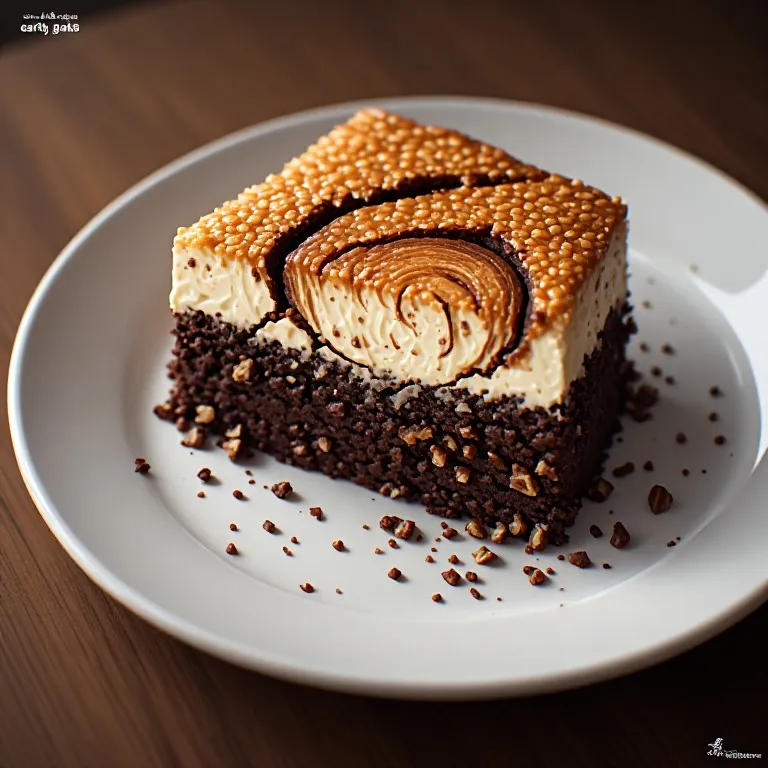
The cake is a mess in the best way — cracked surface, cream cheese pools at random intervals, chocolate chips half-submerged. Don’t fight it. Cut into generous squares (4×4 gives you 16 pieces) and serve as-is from the pan.
If you want to add a finishing touch for photos or special occasions, a light dusting of powdered sugar through a small sieve gives the cracked surface a “snowed-on” look that photographs beautifully. A scoop of vanilla ice cream on the side is never wrong — the warm cake against cold ice cream is the classic move.
For parties, mark where the cream cheese pockets are before you cut — there will be some squares that are mostly cake and some that have a buried pocket of cream cheese. The cream-cheese-heavy squares are coveted; distribute fairly.
Variations to Try
Pumpkin Earthquake Cake: Swap the German chocolate cake mix for spice cake mix and add 1/2 cup canned pumpkin to the batter (reduce water by 2 tablespoons). Add 1/2 teaspoon cinnamon and a pinch of nutmeg to the cream cheese layer. The coconut and pecan base still works beautifully.
Strawberry Cream Cheese: Use strawberry cake mix. Replace chocolate chips with 1 cup of diced fresh strawberries scattered over the cream cheese drops. The red and white contrast inside each slice is striking.
Dark Chocolate with Sea Salt: Use dark chocolate or devil’s food cake mix and replace semi-sweet chips with dark chocolate (70%) chips. Add 1/2 teaspoon of flaky sea salt (like Maldon) scattered over the top before baking. The salt highlights the bitterness of the dark chocolate and cuts through the cream cheese sweetness.
Lemon Earthquake Cake: Yellow cake mix + 2 tablespoons of fresh lemon zest in the batter + 1 tablespoon lemon juice in the cream cheese mixture. Swap chocolate chips for white chocolate chips. The lemon cream cheese combination tastes like lemon bars erupted through pound cake.