Pin It

Viral TikTok One-Pot Pasta e Fagioli

Viral TikTok One-Pot Pasta e Fagioli
Jump to Recipe
Prep 5 min Cook 25 min Serves 4
Quick answer: One-pot pasta e fagioli: brown 1 lb Italian sausage, drain fat, sautΓ© 1 small diced onion and 2 stalks celery 5 minutes, add 3 cloves minced garlic + 2 tbsp tomato paste for 1 minute, pour in 1 can diced tomatoes, 4 cups chicken broth, 1 can cannellini beans (half mashed), Italian seasoning, red pepper flakes, and 1 cup ditalini pasta all at once. Simmer 12–14 minutes until pasta is al dente β€” the pasta releases starch that naturally thickens the soup. The one non-negotiable: add pasta to the raw soup and cook it in the broth, never use pre-cooked pasta. Total time: 30 minutes.
Viral TikTok One-Pot Pasta e Fagioli

Viral TikTok One-Pot Pasta e Fagioli

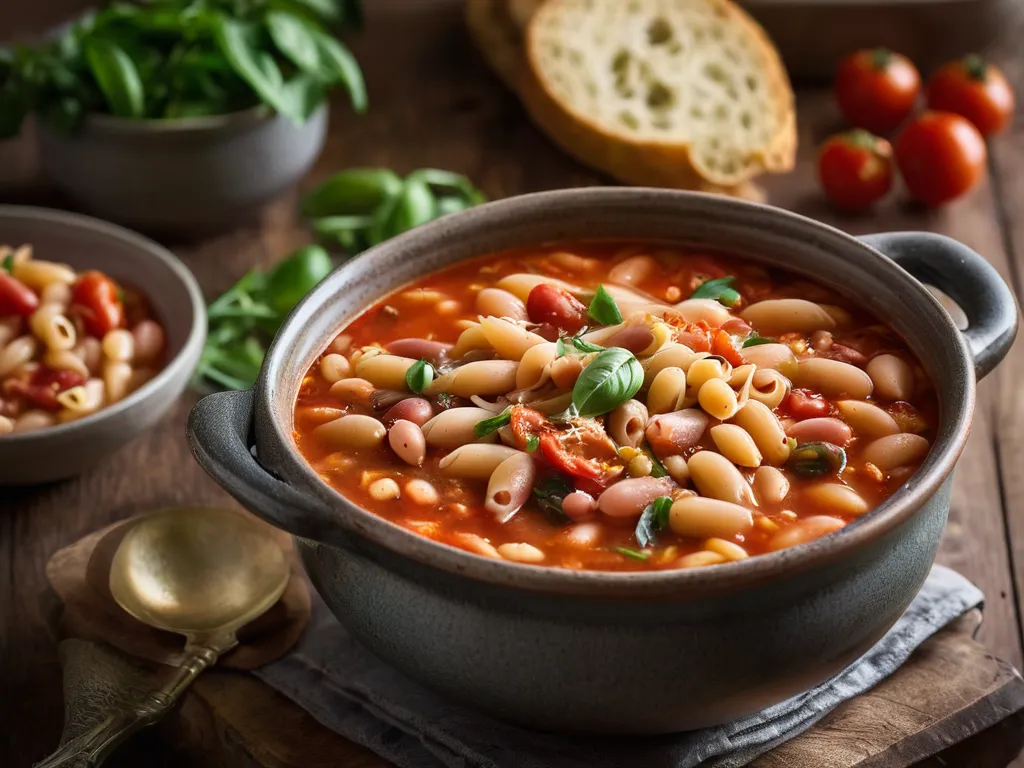
The viral TikTok pasta e fagioli uses Italian sausage, canned cannellini beans, diced tomatoes, and ditalini cooked directly in the broth β€” one pot, 25 minutes, tastes like hours of simmering. The technique that makes it work: pasta starch thickening from the inside out.

Easy Prep: 5 min Cook: 25 min Total: 30 min4 servings ~$4.50/serving
Prep5 min
Cook25 min
Total30 min
Servings
4
At home~$4.50/serving
vs
Restaurant~$20.25/serving
You save ~78%

Ingredients

Instructions

💡
Pro tip: This recipe tastes even better the next day. The flavors need time to meld together in the fridge.
❄️
Storage: Keeps in an airtight container in the fridge for up to 2 weeks. Freezer-friendly for up to 3 months.
~300-500 cal/serving

The Story Behind the Recipe

One-Pot Pasta e Fagioli β€” Italy’s Ancient Poor-Kitchen Soup, in 30 Minutes

Pasta e fagioli is not a TikTok invention. It is one of the oldest dishes in Italian cooking β€” centuries-old peasant food born from a simple principle: a handful of dried beans, a handful of pasta, some aromatics, and patience. What TikTok did was strip out the patience part without sacrificing the result, and it turns out the result holds up better than most shortcut recipes deserve.

The standard one-pot hack gets you to a thick, hearty, deeply flavored soup in 30 minutes. The secret is not what TikTok creators usually explain: it is the pasta itself, cooking directly in the broth and thickening it from the inside out.


What Pasta e Fagioli Actually Is

The name means exactly what it sounds like β€” β€œpasta and beans.” It is Italian cucina povera, or peasant cooking: a tradition of producing deeply satisfying food from modest ingredients. No meat required in the original versions. No cream. No expensive hardware. Just legumes, pasta, and a long time over a low flame.

The dish exists across Italy in meaningfully different versions:

Neapolitan pasta e fagioli is the most widely known internationally. It includes tomatoes β€” often San Marzano β€” and a pinch of dried peperoncino (chili flake). The color is deep brick-red and the flavor is assertive. This is the version that Olive Garden’s pasta fagioli most closely resembles.

Roman pasta e fagioli uses no tomatoes at all. It starts with a soffritto of celery, carrot, and onion, adds dried borlotti beans that have soaked overnight, and builds a cream-colored, rosemary-scented broth that tastes earthier and more austere than the Neapolitan version.

Venetian pasta e fagioli is traditionally made with lard (not olive oil), rosemary, and sometimes a ham hock for smokiness. It tends to be thicker β€” closer to a stew than a soup.

What all three share: dried beans (usually borlotti, which are cranberry beans), small pasta cooked directly in the broth, and a long simmer that the one-pot hack condenses into 25 minutes by substituting canned cannellini beans for dried borlotti.


The Traditional Version vs. the Hack: What’s Gained, What’s Lost

Traditional pasta e fagioli is a two-day project. Dried borlotti beans soak overnight, then cook for 1–2 hours until tender, releasing their starch gradually into the liquid. Pancetta or guanciale (cured pork jowl) renders slowly in olive oil before the soffritto goes in. The result has a depth and creaminess that takes time to build.

The hack gives up three things:

  1. The bean starch release. Dried beans, simmering for hours, contribute a gradual, deep starchiness that canned beans cannot replicate. The one-pot hack compensates by mashing half the canned cannellini beans β€” this is the key technique that home cooks skip, and it explains why restaurant pasta e fagioli always seems creamier than the quick version without any cream added.

  2. The pork base. Pancetta or guanciale renders slowly and flavors the fat that everything else cooks in. Italian sausage is a reasonable stand-in β€” it has the same pork + fennel + spice character, minus the delicate cured note.

  3. Time itself. There is no substitute for a long simmer that slowly breaks down connective tissue and melds everything together. The 30-minute version is a different dish that happens to taste surprisingly similar.

What the hack keeps: the fundamental flavor architecture. Pork, tomato, beans, starchy pasta water, aromatics. These five elements don’t require 90 minutes β€” they require good technique in each short step.


The Cannellini Bean Technique That Changes Everything

Traditional recipes specify borlotti (cranberry) beans, which have a creamier, more earthy flavor than cannellini. For a weeknight hack, cannellini (white kidney beans) are the correct swap β€” they’re widely available, have a mild, buttery flavor that doesn’t compete, and their high starch content means they mash cleanly.

The critical technique: mash half the beans before adding them.

Italian cooks have done this for generations, not for texture alone, but for structure. Mashed cannellini beans dissolve into the broth as it simmers, creating a cloudy, cream-like consistency without any cream. The remaining whole beans provide textural contrast. The result is a soup that looks and feels like it simmered all day, because the bean starch is doing the same thickening work it would do in a traditional long braise β€” just from canned beans released quickly by mechanical mashing rather than hours of heat.

If you add both cans of whole, unmasked beans and a thin broth, you get soup with beans in it. Mash half first and you get pasta e fagioli.


Why Ditalini? (And What to Use If You Can’t Find It)

Ditalini means β€œlittle thimbles” in Italian β€” short, stubby hollow tubes about 3/8 of an inch long. They are the traditional pasta shape for pasta e fagioli specifically because the scale matches: a ditalino and a cannellini bean are nearly identical in size, so each spoonful contains both in equal proportion.

The hollow tube does something else: it fills with the thick bean-and-tomato broth as it cooks, delivering a concentrated hit of soup flavor with each bite. Long pasta shapes cannot do this; flat shapes like orzo release too much starch too quickly and gum the soup.

If you cannot find ditalini at your grocery store:

  • Small shells (conchiglie piccole) are the best substitute β€” the concave shape catches broth the same way the hollow tube does
  • Tubetti are essentially the same shape by a different name, interchangeable
  • Small elbow macaroni works well; slightly larger, so add 1–2 extra minutes
  • Orzo works in a pinch but releases starch very aggressively β€” reduce to 3/4 cup and watch closely

Avoid penne, rigatoni, fusilli, and any pasta that takes more than 12 minutes to cook at package directions β€” by the time the pasta is done, the broth will be over-reduced.


The Sausage: Sweet, Hot, or Mixed

The original dish uses no sausage at all β€” or at most a small amount of pancetta or guanciale as an aromatic fat, not a protein centerpiece. The TikTok hack makes sausage the core ingredient, which is also what Olive Garden does in their version.

Sweet Italian sausage (fennel-forward, no heat) produces a mild, family-friendly soup that lets the tomato and bean flavors come forward. It pairs well with a heavier hand on the red pepper flakes if you want some heat.

Hot Italian sausage (chili flake in the mix) builds heat slowly into the broth as it simmers. By the time you serve, the entire pot has a slow-building warmth rather than a sharp front-of-mouth spice. This is more interesting and more layered.

Mixed (half sweet, half hot) hits the middle: enough background heat to add complexity without overwhelming anyone at the table.

One practical note: buy bulk sausage if available, or remove the sausage meat from casings before cooking. Casing sausages in whole links will not break into the fine crumbles that distribute evenly through the soup.


The Pasta-in-Soup Technique (Why It Works, Why It Fails on Reheating)

Cooking ditalini directly in the broth rather than separately is not just convenient β€” it is what makes the soup thick.

Pasta starch (primarily amylose) leaches into the surrounding liquid as the pasta boils. Amylose gelatinizes when heated and acts as a natural thickener, similar to the starch slurry used in Chinese cooking. A soup with 1 cup of ditalini cooked directly in it will thicken considerably β€” by the time the pasta is al dente, the broth has gone from thin to a glossy, coating consistency.

The failure mode: this starch does not stop working when the soup comes off the heat. In the pot, in the refrigerator, overnight β€” the pasta continues absorbing liquid. A soup that was perfectly textured at dinner becomes a dense stew by morning. This is not a defect; it is what pasta starch does.

The fix: Store the pasta separately from the soup base if you are making this ahead. Combine individual portions when reheating. If you have already mixed them together and the soup has turned solid overnight, add 1/3 to 1/2 cup of chicken broth per portion and reheat over medium-low heat, stirring, until the soup loosens to the right consistency.


The Tomato Paste Step You Should Not Skip

Most quick pasta e fagioli recipes say β€œadd diced tomatoes.” This recipe adds tomato paste first and cooks it for 1–2 minutes before anything else goes in.

The reason: tomato paste is concentrated and acidic straight from the can, with a sharp, tinny note that lingers in finished soup. When you push it into a hot pan and cook it β€” caramelizing the sugars and reducing the water content further β€” it transforms into something sweeter, deeper, and more complex. Look for the color change: bright red to deep brick-red. That shift represents the Maillard reaction happening on the tomato solids.

This 90-second step is the difference between a soup that tastes like canned tomatoes and one that tastes like it has been cooking all afternoon.


The Olive Garden Connection

Olive Garden’s pasta fagioli soup is the most searched reference point for this dish in the US. Olive Garden does not publish an official recipe, but the widely reproduced copycat versions consistently point to the same build:

  • Ground beef and Italian sausage together (most copycats use both, not one)
  • Ditalini
  • Cannellini beans and dark red kidney beans (a two-bean mix)
  • Crushed tomatoes, sometimes with a little tomato sauce blended in
  • Chicken broth (a few versions use beef broth for a darker, richer base)
  • Onion, celery, and carrot (the full traditional soffritto)
  • Italian seasoning

To get closer to the Olive Garden style from this recipe: add 1/2 lb ground beef alongside the sausage, add 1/2 cup of drained dark red kidney beans with the cannellini, and add 1 diced carrot with the onion and celery.

The restaurant version is also thinner than this recipe β€” it uses more broth relative to pasta, and the pasta is cooked separately rather than in the soup. This recipe’s technique (cooking pasta in the soup) produces a thicker, more unified result than the restaurant’s.


Variations

Vegetarian: Skip the sausage entirely. Add 1 more can of cannellini beans (mash half as usual) and 1 tablespoon of olive oil plus a Parmesan rind (added with the broth, removed before serving). The rind releases savory umami compounds that replace much of the richness sausage provides. Use vegetable broth.

Slow cooker: Brown the sausage and build the tomato paste base on the stovetop first β€” this step is non-negotiable, since unbrowned sausage in a slow cooker produces a flat, gray soup. Transfer everything except the pasta to the slow cooker. Cook LOW 6–7 hours or HIGH 3–4 hours. Cook ditalini separately according to package directions; stir in during the last 15 minutes (LOW) or 10 minutes (HIGH).

Spicier: Add 1 whole dried peperoncino (Italian dried chili) with the broth. Remove before serving. This is closer to the Neapolitan original and builds a different kind of heat than red pepper flakes β€” more fragrant, less sharp.

Extra-thick / stew-style: Reduce broth to 3 cups and increase pasta to 1.25 cups. The result is closer to a thick pasta stew (pasta e fagioli β€œasciutta”) than a soup, which some prefer.


Troubleshooting
ProblemCauseFix
Soup too thinForgot to mash beans, or not enough pastaMash 1/4 cup of beans into a paste and stir in; simmer 5 more minutes
Pasta turned mushyCooked too long, or sat too long in hot soupCheck package time, subtract 2 min next time; serve immediately after resting
Soup turned solid overnightPasta absorbed remaining brothAdd 1/3 cup broth per serving when reheating over medium-low
Tastes flat / tinnySkipped tomato paste caramelizationAdd 1 tbsp tomato paste, cook 2 min in a spot of oil, then stir into soup
Too greasyDidn’t drain sausage fatSkim surface fat with a ladle; next time drain more thoroughly after browning
Too saltyUsed regular broth + sausageSwitch to low-sodium broth; the sausage contributes significant sodium on its own

Make-Ahead and Storage

Refrigerator: Soup base (without pasta) keeps 4–5 days in a sealed container. With pasta mixed in, 3–4 days, but expect it to thicken. Add broth when reheating.

Freezer: Freeze the soup base without pasta for up to 3 months. Cooked pasta does not freeze well β€” it becomes soft and loses its texture when thawed. If you want to freeze a full batch, cook pasta fresh when reheating the thawed base.

Meal prep strategy: Make a double batch of the soup base on Sunday. Store in individual portions. Cook fresh ditalini as needed β€” it takes 11–13 minutes, the same time the soup base takes to reheat.


For another Italian soup one-pot approach, the Olive Garden Minestrone copycat uses a similar broth-building technique with a lighter, vegetable-forward profile. Olive Garden Chicken Gnocchi Soup covers the cream-based end of the Olive Garden soup lineup. For a beef-based one-pot comfort soup, the Stuffed Pepper Soup uses the same browning-and-simmer method with bell peppers and rice instead of beans and pasta. And Wendy’s Chili rounds out the hearty one-pot bean-based comfort food options.

Nutrition Facts

Per serving (4 servings)
Calories520
Total Fat22g
Total Carbs45g
Dietary Fiber9g
Sugars7g
Protein30g
Sodium890mg

* Estimated values based on standard recipe preparation. Actual values may vary.

πŸ₯—

Make It Healthier

Love Viral TikTok One-Pot Pasta e Fagioli but want a lighter version? Try these simple swaps:

  • βœ“Use sweet Italian chicken sausage instead of pork β€” about 60% less saturated fat, same seasoning profile.
  • βœ“Use low-sodium chicken broth and a low-sodium canned tomato; the sausage provides plenty of salt.
  • βœ“Add 2 cups of baby spinach or chopped kale in the last 2 minutes β€” they wilt immediately and add nutrients without changing the soup's character.
  • βœ“Increase the bean-to-pasta ratio: use 2 cans of cannellini beans and reduce ditalini to 1/2 cup for more fiber and protein with fewer refined carbs.

Equipment You'll Need

Large pot or Dutch oven (5–6 quarts)

The soup expands when you add the pasta; a 4-quart pot will be tight

Wooden spoon or silicone spatula

For breaking up the sausage and scraping up browned bits when building the broth

Fork or potato masher

For mashing half the cannellini beans before adding β€” don't skip this step

Frequently Asked Questions

What does 'pasta e fagioli' mean, and where does it come from?

Pasta e fagioli is Italian for 'pasta and beans' β€” and that's exactly what it is. The dish is centuries-old cucina povera (peasant cooking), born from the need to stretch modest ingredients into a filling meal. It originated in southern and central Italy, with the Neapolitan version (which includes tomatoes and sometimes chili) becoming the most widely recognized. Regional variations are significant: Roman pasta e fagioli uses a soffritto of celery, carrot, and onion with no tomatoes; the Venetian version traditionally includes lard and rosemary; Neapolitan cooks add San Marzano tomatoes and hot pepper. What all versions share: white beans, small pasta, and long-simmered depth. The TikTok hack captures the essence in a fraction of the time.

How is this different from Olive Garden's pasta fagioli?

Remarkably similar, actually. Olive Garden's pasta fagioli uses both ground beef and Italian sausage together, plus two kinds of beans β€” cannellini and dark red kidney beans β€” diced and crushed tomatoes, ditalini, and chicken broth. The hack version on this page uses only Italian sausage and cannellini beans, which produces a slightly simpler but still very close result. The key Olive Garden technique this version includes: soffritto (onion and celery sautΓ©ed before adding everything else) β€” that's what most TikTok hacks leave out. To get even closer to Olive Garden: add 1/2 lb lean ground beef alongside the sausage, add 1/2 cup drained kidney beans, and substitute 1 cup of the broth with crushed tomatoes.

Why cook the pasta directly in the soup instead of separately?

Cooking ditalini directly in the broth is what makes this recipe work as a thick, cohesive soup rather than a thin broth with pasta dropped in. As ditalini boils in the liquid, it releases amylose β€” a starch that gelatinizes when heated and naturally thickens the surrounding broth to a creamy, slightly stew-like consistency. If you cook pasta separately and add it at the end, you get soup with pasta floating in it; if you cook it in the soup, you get a unified, velvety texture. The tradeoff: pasta continues absorbing liquid as the soup sits, so leftovers thicken significantly and need broth added when reheating.

What pasta can I substitute for ditalini?

Ditalini (little thimbles in Italian β€” short, narrow tubes about 3/8 inch long) is traditional for pasta e fagioli because the size matches the cannellini beans, and the tubes capture the thick broth inside each bite. Good substitutes: small shells (conchiglie piccole), tubetti, small elbow macaroni, or small rigatoni cut in half. Avoid long pasta (spaghetti, linguine), large shapes (penne, rotini), and orzo β€” orzo releases too much starch too quickly and can turn the soup gluey. If you use a thicker shape like small rigatoni, add 2–3 extra minutes of cook time.

Sweet Italian sausage or hot β€” which is better?

Hot Italian sausage builds more complexity into the final soup β€” the heat blooms slowly through the broth and lingers in a way that makes each bite more interesting than the last. Sweet sausage produces a milder, more family-friendly result that lets the tomato and bean flavors come forward more clearly. Either works. The best approach: use 3/4 lb hot sausage plus 1/4 lb sweet if you want the depth without too much heat. Avoid pre-cooked or smoked sausage varieties β€” they lack the fat and spice mix of raw Italian sausage, which is doing most of the flavor work in this dish.

How do I make pasta e fagioli ahead, and why does it thicken overnight?

Make it ahead, but store the pasta separately if possible. Ditalini continues absorbing broth even after it's fully cooked β€” left in the soup overnight, it can absorb nearly all the remaining liquid and turn into a dense, gummy stew by morning. For meal prep: cook the soup base through the simmering stage, then cook and store pasta separately, combining when serving. If you've already made the full soup and it thickened overnight, add 1/2 cup of chicken broth per serving when reheating over medium heat β€” the soup loosens back to the right consistency within a few minutes. Reheat gently to avoid breaking down the beans.

Love this recipe? Share it!

Shop the tools

The right tools make all the difference. We earn a small commission if you buy through these links β€” at no extra cost to you.

Free PDF: our 12 most-wanted copycat recipes β€” instant download.

Ratings & Reviews

β€”
No ratings yet

Rate this recipe

Click a star to rate

Leave a Review

0/500

CS

Copycat Spices Test Kitchen

Every recipe on Copycat Spices is developed and tested in our home test kitchen. We reverse-engineer beloved restaurant dishes and refine each one until the flavors and the instructions work reliably for home cooks of all skill levels.

Learn more about our mission →