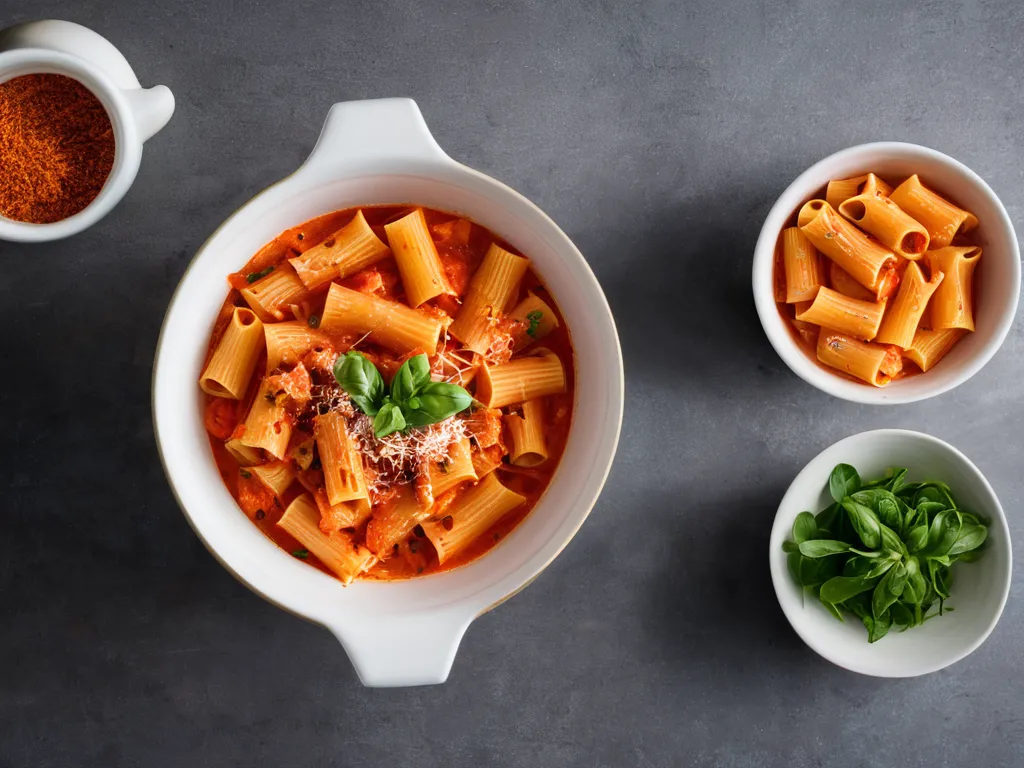
Spicy Vodka Rigatoni: What TikTok Got Right (and the Parts It Left Out)
Prep time: 10 minutes Cook time: 25 minutes Servings: 4
Spicy vodka rigatoni is penne alla vodka, improved. The sauce — tomato, cream, garlic, red pepper, vodka — is a classic Italian-American formula that’s been on restaurant menus since the 1970s. TikTok didn’t invent it; it rediscovered it, swapped the pasta shape, and turned up the heat. The result is one of the most searched pasta recipes of the past five years, and for good reason: it’s genuinely excellent.
Most online versions of this recipe are fine. But most 60-second videos skip the parts that explain why the dish works — what the vodka actually does, why the pasta shape matters, why full-fat cream isn’t optional, and how finishing the pasta in the sauce changes the result entirely. This guide covers all of it.
See also: Copycat Olive Garden Chicken Parm, Viral TikTok Boursin Pasta, Copycat Cheesecake Factory Louisiana Chicken Pasta
What the Vodka Actually Does
The vodka is not a gimmick and it’s not just for flavor. Tomatoes carry a set of aromatic flavor compounds — certain esters and aldehydes among them — that are fat-soluble rather than water-soluble. A tomato sauce built only on water and tomato juice can’t fully release or carry these compounds; they tend to stay locked in or escape as steam.
Alcohol dissolves both the water-friendly compounds and the fat-soluble ones that plain water misses, which is why it’s often described as bridging the two. When vodka hits the hot tomato sauce, it helps extract and distribute those fat-soluble aromatics through the sauce. As the alcohol cooks off over 3–4 minutes of simmering, the volatile alcohol leaves but the released flavor compounds remain, bound to the tomato base and the cream fat.
The result is a tomato cream sauce with more aromatic complexity than a standard tomato cream sauce made without alcohol. The difference is subtle but real — the sauce tastes more “tomatoey” in a way that’s difficult to attribute to any single detectable flavor.
Vodka specifically is used because it’s the purest alcohol available: no wood aging, no malts, no grapes, no fermentation byproducts. It contributes the solvent chemistry without adding any flavor of its own. White wine would also extract these compounds but would add its own acidic, fruity notes to the sauce. Vodka lets the tomato flavor come through clean.
Why the Dish Became a TikTok Phenomenon
Penne alla vodka has been on American Italian restaurant menus since the 1980s. The specific combination — penne, vodka, tomatoes, cream, parmesan — was probably developed in Italy or New York in the 1970s and popularized in the US through restaurants like Orsini in New York and eventually codified into the American Italian playbook.
Carbone, the red-sauce Italian restaurant in Manhattan’s Greenwich Village (opened 2012), made a version with rigatoni instead of penne that became one of the most copied restaurant dishes in New York. The switch was deliberate: rigatoni’s larger diameter and ridged surface hold dramatically more sauce than penne, and the visual — sauce-packed tubes cut open in a bowl — is more dramatic.
When TikTok food content exploded in 2020–2021, spicy vodka rigatoni became one of the defining date-night pasta recipes: accessible technique, restaurant-quality results, a pink color that photographs beautifully. Search volume for the dish is still consistently high because it’s genuinely worth making.
One point of confusion worth clearing up: Gigi Hadid’s pasta, which went viral in 2020, is a spicy vodka pasta — it does contain vodka, and it’s arguably the dish that kicked off the whole trend. The differences from the restaurant-style version in this guide are the tomato base and the pasta shape: her recipe builds the sauce from tomato paste (not canned whole tomatoes) and uses shells or any pasta on hand rather than rigatoni. So it’s the same family of dish, not a different one — a home-cook, pantry-friendly take on spicy vodka pasta rather than the Carbone restaurant approach.
Choosing Your Tomatoes
This is the ingredient decision that affects the final sauce most.
Whole San Marzano DOP tomatoes, crushed by hand: The best option. San Marzano tomatoes from the DOP zone near Napoli (look for the DOP designation on the can) have lower acidity, less water, and a sweeter, more concentrated flavor than standard canned tomatoes. Crushing them by hand keeps some texture and avoids the uniform mush of pre-crushed product. The juices from the can go in too.
Standard whole tomatoes, crushed by hand: Fine and much cheaper than San Marzano. They’ll be slightly more acidic — taste the sauce as it reduces and add a pinch of sugar if needed to balance.
Pre-crushed tomatoes: Acceptable. The flavor is usually slightly flatter because pre-crushed tomatoes are cooked down further in processing. The texture will be smoother. This is an easy option that produces a reliably good sauce.
Tomato passata: The smoothest result — you get a uniform sauce with no pieces. The flavor can be one-dimensional compared to whole tomatoes. If passata is what you have, it works.
Diced tomatoes: Avoid. They’re treated with calcium chloride to hold their shape during processing, which means they don’t break down properly during cooking. You’ll end up with chunky pieces in an otherwise smooth sauce — a textural problem the other options don’t have.
Why Rigatoni Beats Penne
Rigatoni is the correct pasta for this dish, and the reason is structural.
Penne has a smooth interior and a relatively narrow tube. Sauce gets inside, but not much, and the surface area is limited. The tube-to-sauce contact is mostly on the outside.
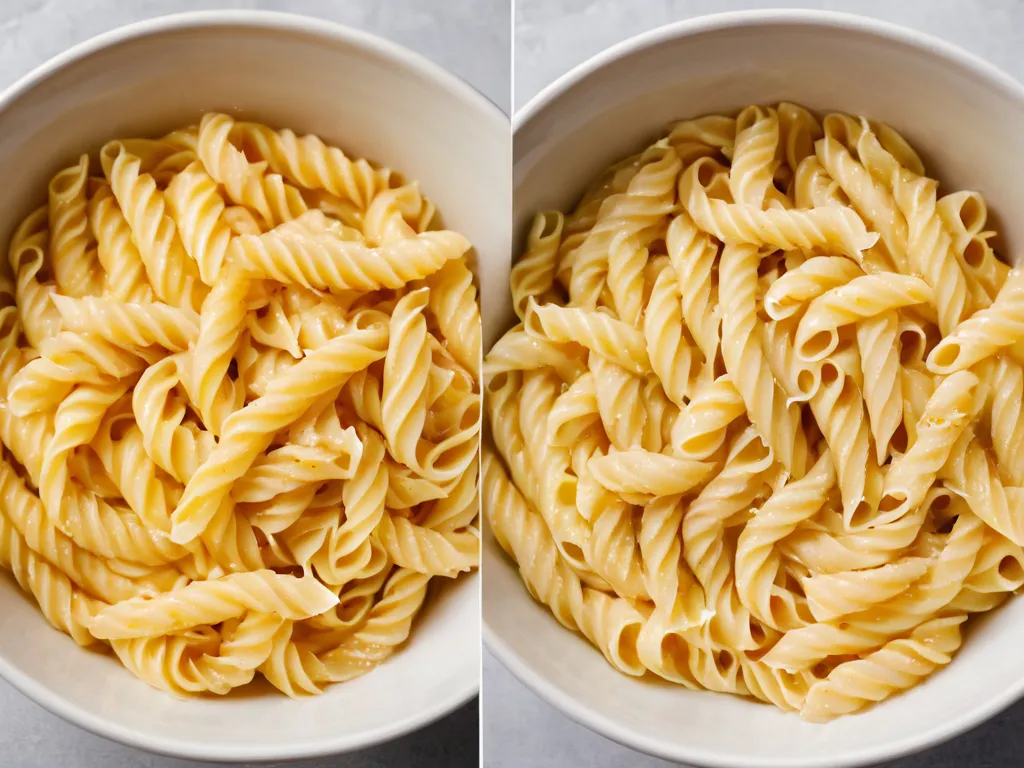
Rigatoni is wider (the tube diameter is roughly 1 cm vs. 0.5 cm for penne), and the exterior has deep ridges running the length of the tube. Sauce catches in those ridges and stays there even when you’re scooping and twirling. The interior of the wider tube fills with sauce more completely. The end result is more sauce in every bite — not just on the surface.
Visually, rigatoni is also more striking. The thick, squat tubes look more substantial than penne, they hold their shape better in the skillet during the finishing step, and when the dish is plated, the sauce stays on top rather than sliding to the plate.
If you don’t have rigatoni, penne rigate (ridged penne) is the best substitute. Regular penne works. Spaghetti or linguine do not — long pasta is a completely different experience with this sauce and produces a worse result.
The Onion Question
Many recipes skip onion and go straight to garlic. Carbone’s version includes onion; most TikTok versions don’t because caramelizing onion takes time that doesn’t fit a 60-second video.
Including the onion matters. Properly cooked onion (soft, translucent, beginning to turn sweet — 5–6 minutes over medium heat) adds body and subtle sweetness to the sauce base. Without it, the sauce tastes slightly flat and one-dimensional even when properly seasoned. The onion doesn’t register as a distinct flavor in the finished dish; it registers as depth.
Don’t rush the onion. Medium heat, 5–6 minutes until soft. Add garlic only after the onion is done — garlic burns faster and tastes bitter when overcooked.
Spice Control at Three Stages
The red pepper flakes provide the heat, and you have three windows to add them.
At the start (blooming in oil): Adding the flakes to the olive oil before anything else and letting them sizzle for 30 seconds extracts the capsaicin into the fat, which distributes it through the entire sauce. This produces the deepest, most integrated heat.
In the middle (with the tomatoes or cream): Adding flakes at the tomato stage produces more even heat. Adding at the cream stage produces the sharpest, most present heat with less time to mellow.
At the end (at serving): A pinch of red pepper flakes on top of the plated dish adds a burst of fresh heat on top of the base heat already cooked into the sauce. This creates a heat-on-heat layering effect that makes spice lovers particularly happy.
The cream mellows the heat significantly. If you want the dish genuinely spicy, use 1.5–2 teaspoons of flakes in the bloom, not the standard 1 teaspoon. The cream will pull it back to a moderate level.
The Pasta Water Finish
This is the step that separates restaurant-quality vodka pasta from home versions where the sauce sits in a puddle at the bottom of the bowl.
When pasta cooks in salted water, it releases starch. By the time the pasta is nearly done, the cooking water has become a starchy liquid — slightly opaque, slightly thick. This pasta water does two things when added to the sauce:
- Loosens the sauce to coat every piece of pasta rather than forming a thick layer that pools under the noodles
- Binds the sauce to the pasta via the starch, which acts as a light emulsifier
Adding the undercooked pasta directly to the sauce skillet and finishing it there — with a splash of pasta water added incrementally — is how restaurant kitchens cook pasta. The pasta absorbs a bit of the sauce as it finishes cooking, the sauce thickens around the pasta, and the result is a unified dish where sauce and pasta are one thing rather than two things piled together.
Reserve a full cup of pasta water before draining. Add it 2–3 tablespoons at a time during the finish. You may not need the whole cup.
Variations Worth Making
Pancetta version: Before blooming the red pepper flakes, render 4 oz of diced pancetta in the dry skillet over medium heat until crisp, about 5 minutes. Remove pancetta, drain most of the fat (leave 1 tablespoon), then continue with olive oil and the rest of the recipe. Return the pancetta at the end when you add the pasta. Adds a salty, porky depth that works well with the tomato cream.
Italian sausage version: Brown 1/2 lb of mild or hot Italian sausage (casings removed) in the skillet before building the sauce. Break it into small pieces as it cooks. Remove, drain the fat, then proceed with olive oil. Return the sausage with the pasta at the end. For extra heat, use hot Italian sausage and reduce the red pepper flakes.
Shrimp version: Season 1 lb of large shrimp with salt and red pepper flakes. Sear them in olive oil for 60–90 seconds per side until pink and cooked through; remove from pan. Build the sauce in the same pan. Return the shrimp at the end when adding the pasta. Do not overcook — shrimp added back to a simmering sauce will toughen.
Extra vegetables: Add 2 cups baby spinach to the sauce right before the pasta (it wilts in under a minute). Or char 2 cups of cherry tomatoes separately in a dry cast-iron skillet until blistered, then stir them into the finished sauce for a fresh contrast to the cooked tomato base.
Make-Ahead and Storage
The sauce (without pasta) keeps refrigerated for up to 4 days. Make the sauce through the cream addition, cool completely, and store in a sealed container. Reheat gently in a skillet over low heat, adding a splash of cream or pasta water if it’s thickened too much. Cook the pasta fresh and finish in the reheated sauce.
Cooked pasta with sauce combined does not store well. The pasta absorbs the sauce and becomes bloated overnight; the sauce separates on reheating. If you’re meal-prepping, keep the sauce and pasta separate until you’re ready to eat.
The dish does not freeze well — the cream-based sauce breaks when thawed and reheated, even if stirred. Make only what you’ll eat within a few days.
The Cost Comparison
At Carbone, the vodka rigatoni runs around $32 per plate. The home version costs approximately:
- 1 lb rigatoni: $1.50–2.50
- One 28-oz can San Marzano tomatoes: $4–5 (cheaper brands $2.50)
- 1 cup heavy cream: $1.25
- 1/2 cup vodka: $2 (from a standard bottle)
- Parmesan, garlic, onion, oil, herbs: $2–3
Total for 4 servings: $11–13, or about $3.00–3.25 per serving. The gap between $3 and $32 is real; so is the gap in ambiance. The home version, made properly, is not a lesser version of the restaurant dish. It tastes like the restaurant dish.
Pair with Copycat Olive Garden Breadsticks or serve alongside a simple green salad for a complete dinner. If you love TikTok pasta, try Viral TikTok Boursin Pasta next — same category of creamy sauce with a completely different base.