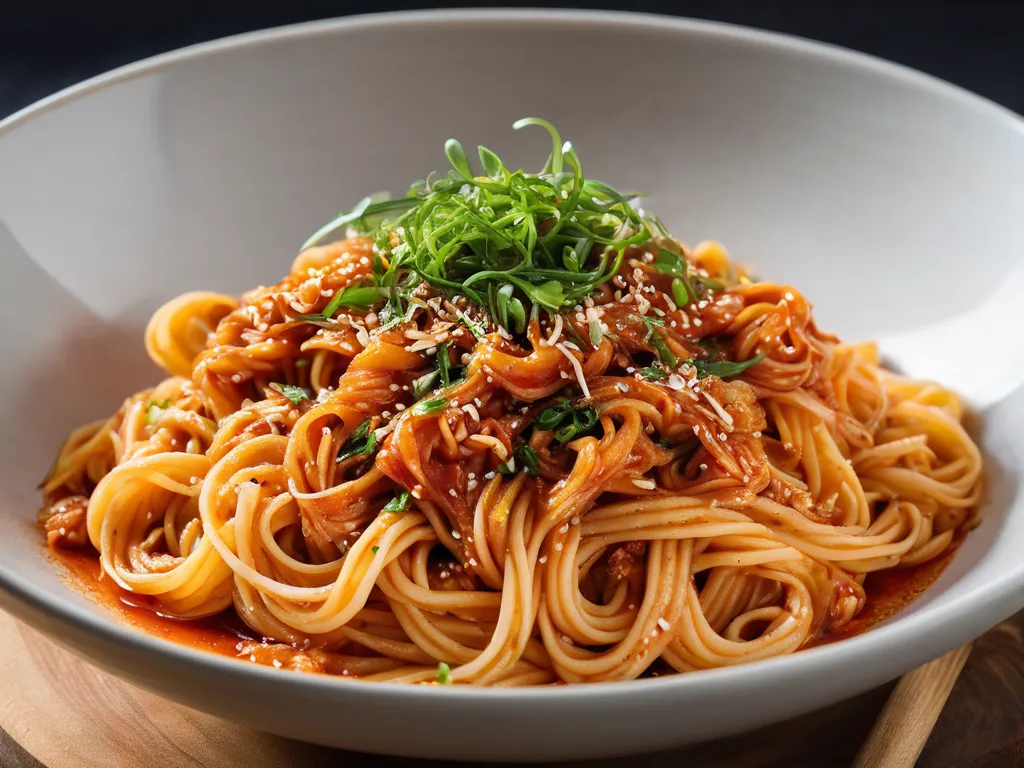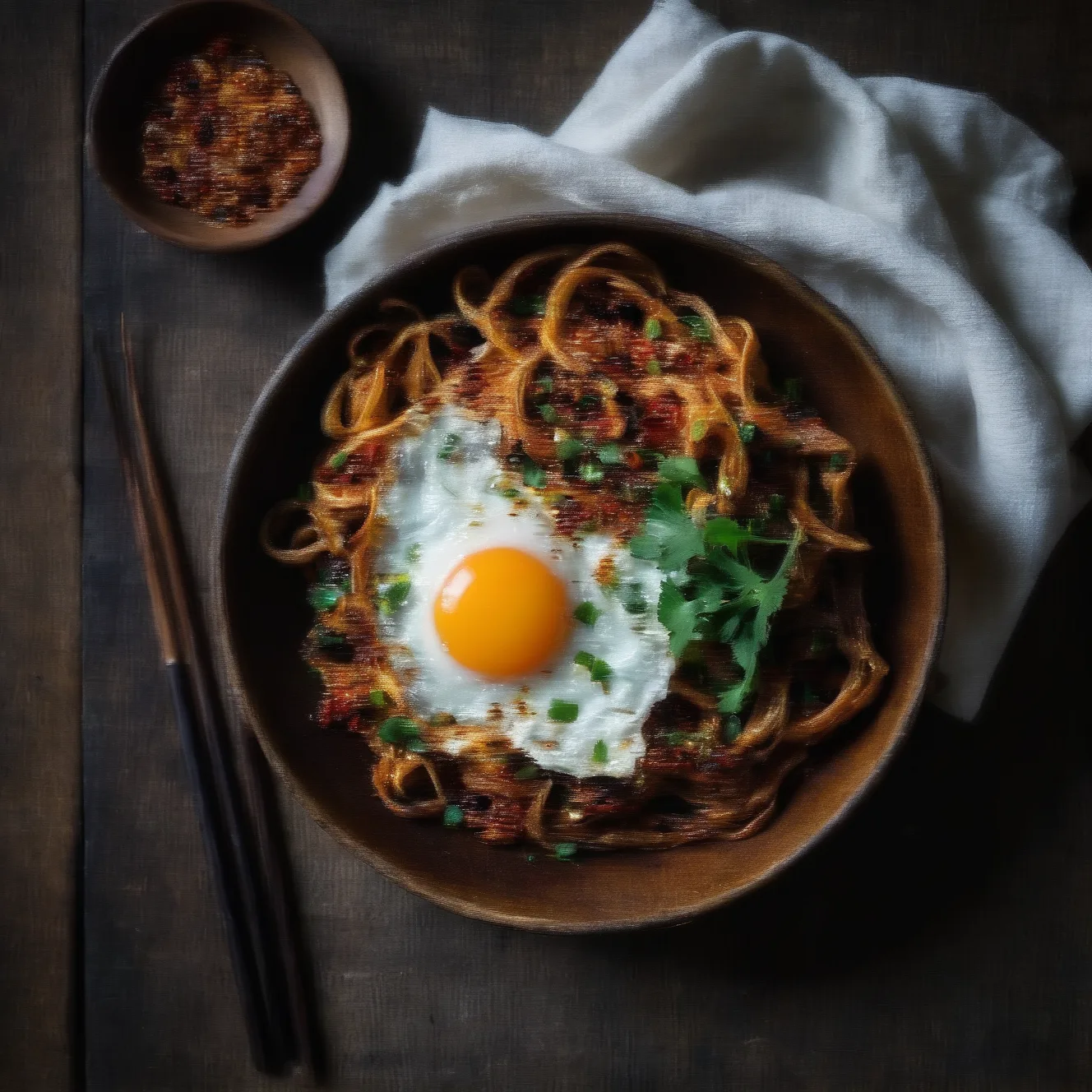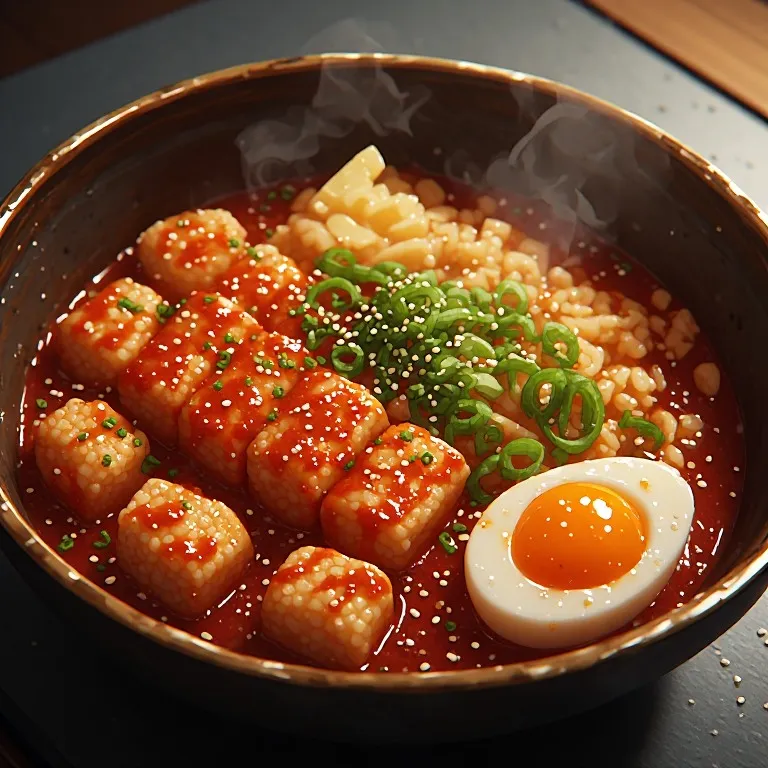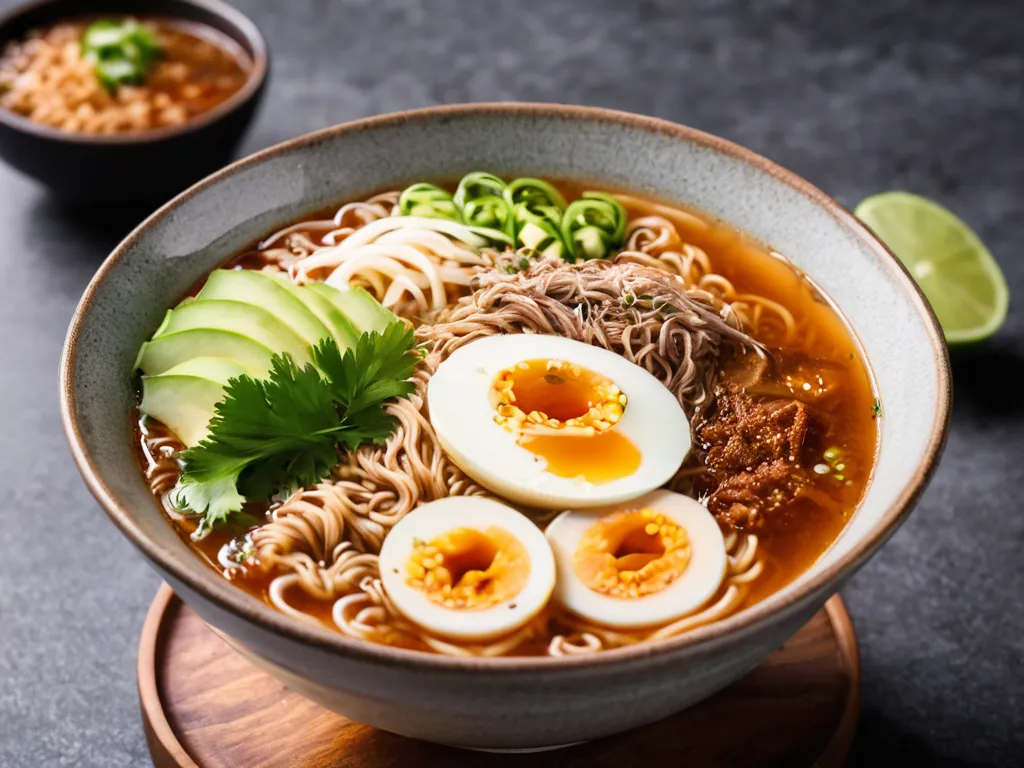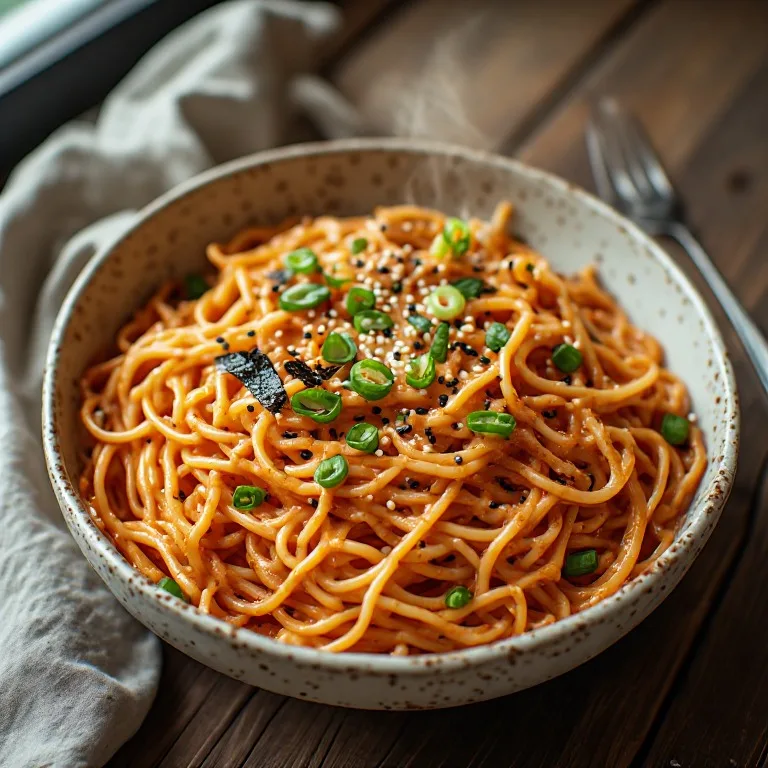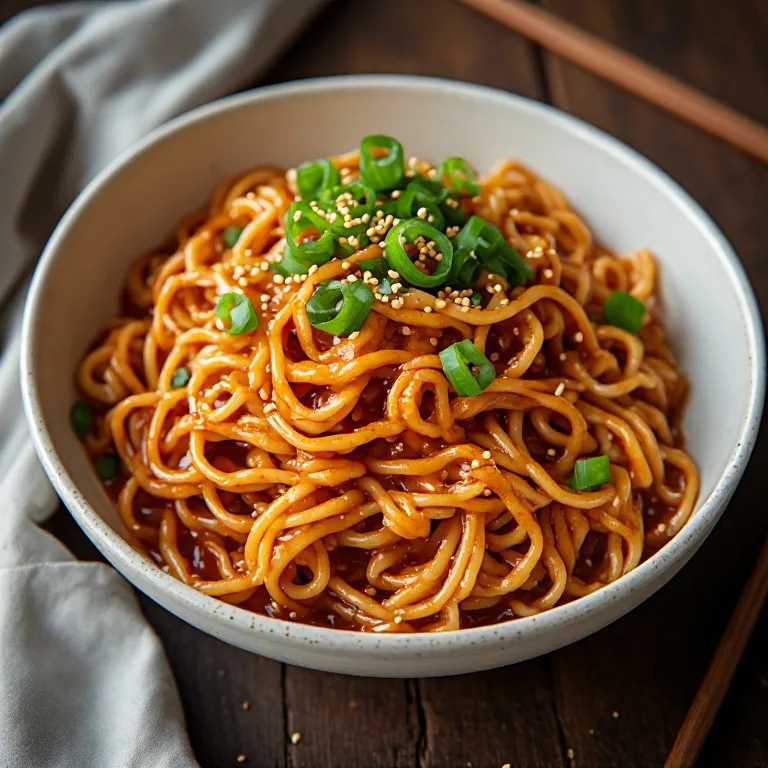



Quick answer: Gochujang butter noodles is ramen tossed in a glossy sauce of gochujang + butter + honey + garlic + soy. The butter emulsifies the fermented chili paste into a smooth, clinging glaze. It takes 12 minutes and uses pantry ingredients most Korean food fans already have. The TikTok version goes viral every few months because it genuinely tastes like restaurant food made at home — and it does.
What makes this different from the gochujang pasta trend
The gochujang caramelized pasta trend from 2023 uses thick Western pasta, a 2-minute caramelization step, and pasta cooking water as the sauce binder. It’s a Korean-Italian fusion that takes about 25 minutes.
Gochujang butter noodles is Korean in format: thin ramen noodles, fast cook, butter as the emulsifier, honey as the sweetener. No caramelization, no pasta water technique. The result is faster (12 minutes vs. about 15 for the pasta), glossier, and richer-tasting. Where the caramelized version is complex and Italian-leaning, the butter noodle version is straightforward and Korean-weeknight — the kind of thing someone cooks at 10pm on a Tuesday.
Both are worth making. They’re not the same dish.
The one technique that matters: the butter emulsion
Gochujang is a thick paste. If you just toss it cold with noodles, it clumps and doesn’t coat evenly. If you thin it with water, the sauce is flat and wet. Butter solves both problems.
Melted butter creates an emulsion with the water content already in the gochujang paste — fat surrounds the chili particles and carries them evenly across every noodle strand. The result is a glossy, uniform coating that clings instead of sitting in a puddle at the bottom of the bowl. The honey thins it slightly and rounds the heat; the soy adds depth; the garlic makes it savory. But the butter is the functional ingredient — it’s what turns a paste into a sauce.
The only technique requirement: stir constantly for 60 seconds once the gochujang goes in. This is the window where the emulsion forms. Stop stirring and the fat separates.
Heat level guide
| Gochujang | Honey | Heat level |
|---|---|---|
| 1 tablespoon | 1.5 tablespoons | Mild — sweet and gently warming |
| 2 tablespoons | 1 tablespoon | Medium (base recipe) — noticeable heat, well-balanced |
| 3 tablespoons | 1.5 tablespoons | Hot — sustained burn, not scorching |
| 3 tbsp + gochugaru pinch | 1.5 tablespoons | Very hot — for people who order extra chili |
The honey is load-bearing at every heat level: without it, gochujang reads sharp and one-dimensional. Keep the honey even when you’re pushing the heat up.
Noodle types and what each gives you
Instant ramen bricks (recommended starting point): The most accessible option — any grocery store, $0.25–1.00 per brick. Discard the seasoning packet entirely. The noodle itself is thin, slightly wavy, and cooks in 2 minutes. The deep-frying process used to make the dried brick gives the noodle a slight richness that works well with a buttery sauce.
Fresh ramen noodles: The best texture — springy, bouncy, and more substantial than the dried bricks. Found in the refrigerated section of Asian grocery stores ($2–4 per pack). Cook according to package directions (usually 1–2 minutes in boiling water), rinse briefly with cold water to stop cooking, then toss in the sauce. This is the restaurant-quality version.
Udon: Thick, chewy, pillow-soft — works well, but gives a completely different eating experience. The sauce coats udon beautifully (more surface area). Good choice when you want something more filling. Takes 5–8 minutes to cook.
Soba: Nutty, earthy, 100% buckwheat versions are gluten-free. Cook 4 minutes, rinse immediately with cold water to stop overcooking, then toss in the warm sauce. The nuttiness of soba and the fermented depth of gochujang are genuinely complementary.
Variations that work
With a soft-boiled egg (the classic add-on): Boil an egg for exactly 6 minutes, transfer to ice water, peel, and halve. Place cut-side up in the bowl. The jammy yolk breaks into the sauce and adds richness. This is how most people top it on TikTok.
With ground beef (a full meal): Cook 6 oz of 80/20 ground beef in the pot first over medium-high heat, breaking it up, until browned. Drain any excess fat. Build the sauce directly over the cooked meat, add noodles, toss. The beef fat that stays in the pan contributes to the sauce.
Gochujang cream noodles: Add 2 tablespoons of heavy cream to the sauce after the gochujang step, before adding noodles. It turns the sauce blush-pink, softens the heat considerably, and adds a richness that makes this feel more like a restaurant dish than a weeknight hack. Pairs well with shrimp.
Spam + gochujang: Pan-fry 4–5 slices of Spam in the dry pot until caramelized on each side (about 2 min/side), then push them to the edge and make the sauce in the center of the same pan. Toss the noodles in, plate, and arrange the Spam slices on top. Gochujang and Spam is a legitimately great Korean-American combination — the saltiness of the Spam replaces or reduces the soy sauce.
With kimchi: Add 1/3 cup of drained kimchi (press excess liquid out) to the noodles during the final toss. The fermented tang of kimchi amplifies the gochujang rather than competing with it. Add a spoonful of kimchi brine at the very end for extra punch.
What goes wrong and how to fix it
Sauce clumps and doesn’t coat evenly: The butter separated before the emulsion formed. Fix: add 1–2 tablespoons of water, turn heat to medium-low, and stir vigorously for 30 seconds — the sauce will re-emulsify into a smooth glaze.
Noodles absorb all the sauce: You waited too long. Ramen noodles are highly absorbent and will suck up loose sauce within a few minutes. Eat immediately, or cook the noodles right before eating (the sauce can wait in the pot for hours; the noodles cannot).
The heat tastes sharp and raw: You didn’t cook the gochujang long enough. It needs a full 60 seconds of direct heat with the butter and honey to lose its raw fermented edge and develop the glossy, rounded profile. One more minute over medium heat will fix it mid-dish.
It tastes flat: Add a teaspoon more soy sauce for depth, a squeeze of lime juice for brightness, or a drizzle of sesame oil if you skipped it. Taste as you go — gochujang varies in saltiness by brand, and soy sauce varies too.
Frequently asked questions
What gochujang brand should I buy? For grocery stores: Bibigo (widely available, slightly sweet), CJ Haechandle (more fermented depth, traditional flavor, available at most Asian grocery stores and Whole Foods), or Sempio (similar profile to CJ). All three are excellent. Avoid sriracha as a substitute — it’s a completely different product (vinegar-based fresh pepper sauce vs. fermented paste) and won’t give you gochujang’s depth.
Do I need sesame oil? Technically no, but it makes a real difference. Sesame oil adds a toasty, nutty aroma that ties the dish together. Don’t cook with it — add it off heat at the end so the fragrance is preserved. A small bottle costs $3–5 and lasts months.
Can I make this vegetarian or vegan? It’s already vegetarian as written. For vegan: substitute plant-based butter (Earth Balance or Miyoko’s) and use maple syrup instead of honey. The sauce works identically.
Is this kid-friendly? At the base 2-tablespoon gochujang level, this is medium-spicy for most adults and probably too hot for young children. Use 1 tablespoon gochujang and 1.5 tablespoons honey for a mild version that kids will actually eat — it tastes more like a sweet-savory sauce than a spicy one.