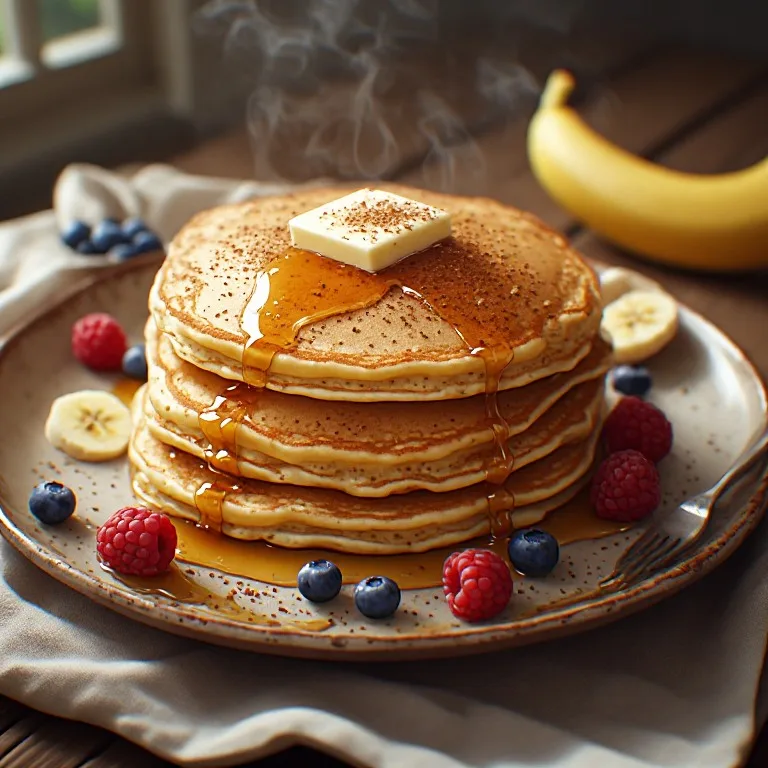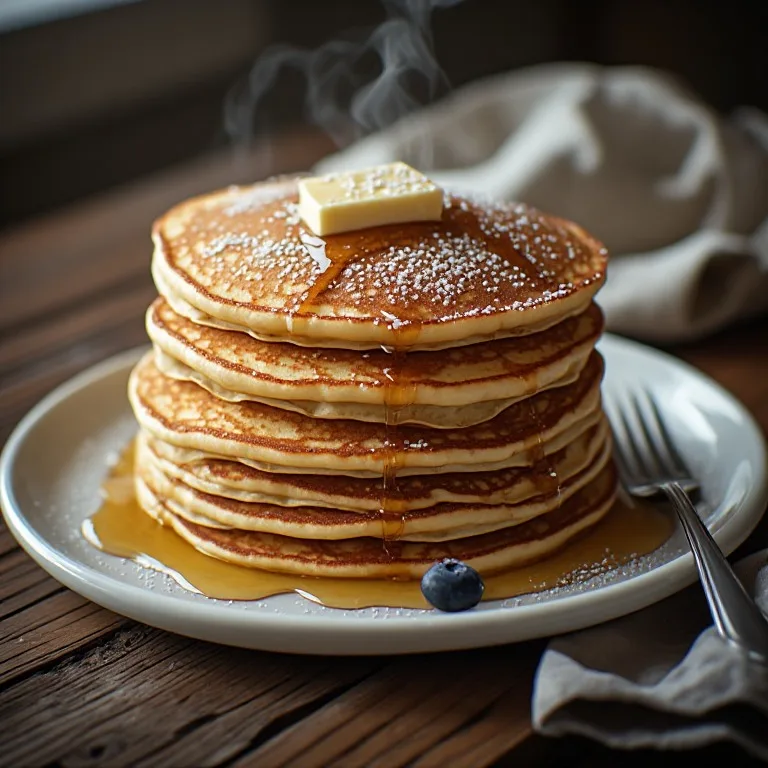


Viral TikTok 2-Ingredient Ice Cream Pancakes
Softened ice cream and self-rising flour, nothing else. The melted ice cream replaces the eggs, butter, milk, sugar, and salt in a traditional batter all at once, and the self-rising flour carries the only thing ice cream can’t: the leavening. Scoop, melt, whisk, pour — fluffy pancakes in under 15 minutes with two things most kitchens already have. Below is why the trick works, which ice cream to reach for, and the handful of mistakes that separate tender pancakes from gummy ones.
Why Two Ingredients Are Enough
A standard pancake batter is just fat, sugar, liquid, a little salt, flour, and a leavener. Softened ice cream already carries the first four in one pre-emulsified package: cream supplies the fat, milk supplies the water, there’s sugar dissolved throughout, and the milk solids add a trace of protein for structure. Whisk that into self-rising flour — which is all-purpose flour with baking powder and salt already milled in — and you’ve reassembled a complete batter from two things instead of six.
The stabilizers that keep commercial ice cream smooth (guar gum, carrageenan, mono- and diglycerides) do extra work here: they help the batter hold together and trap air, which is why these pancakes come out surprisingly light despite having no egg. What you give up is a little of the chew that egg protein provides — these are more delicate than a classic diner pancake — but the trade is tenderness, not failure.
Which Ice Cream Makes the Best Pancakes
Not all pints behave the same. Premium, dense ice cream (high butterfat, low overrun — the industry term for whipped-in air) makes the richest, fluffiest pancakes because you’re adding more fat and fewer air bubbles that collapse in the pan. Cheaper, airy ice cream still works but produces a slightly flatter, less tender result, so you may need a touch less flour to reach a pourable batter.
Flavor is where the trend earns its views. Vanilla is the neutral workhorse. Strawberry turns the batter pink and genuinely fruity; chocolate makes a near-dessert pancake that’s excellent with whipped cream; birthday cake with rainbow sprinkles is the one kids request on repeat. Avoid heavily chunked flavors — cookie dough, brownie batter, anything with large inclusions — unless you strain the chunks out first, because they interrupt the batter and scorch before the pancake cooks through.
The Mistakes That Make Them Gummy
Three things go wrong, and all three are easy to avoid. First, under-melted ice cream: if any frozen chunks remain, the fat and sugar aren’t evenly distributed and the center cooks up dense and wet. Let the ice cream go fully liquid at room temperature for 10 to 15 minutes, or microwave it in 15-second bursts — melted, never warm.
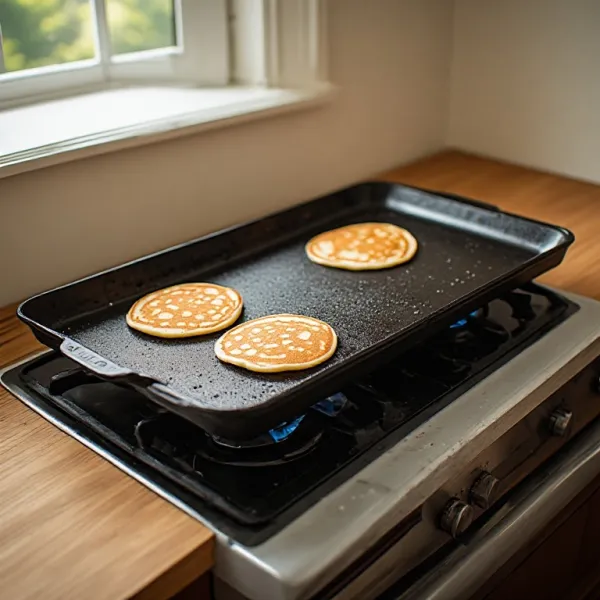
Second, overmixing. The moment flour meets liquid, gluten starts forming; too many strokes and you get rubbery pancakes. Stir 10 to 15 times, just until the dry streaks vanish, and leave the lumps. Third, a pan that’s too hot. These batters carry more sugar than ordinary pancakes, so they brown fast — hold the heat at medium-low, and if the first pancake colors in under two minutes, drop it lower.
Make-Ahead, Storage, and Serving
This batter is a cook-now batter. The baking powder in self-rising flour activates on contact with the ice cream’s moisture, so the lift fades as it sits — use it within 10 minutes for the fluffiest stack, or refrigerate up to 30 minutes if you must. Cooked pancakes reheat well (20 seconds in the microwave, or 2 minutes in a 300°F oven on a wire rack to keep the edges crisp), but they don’t freeze — the melted-ice-cream structure turns gummy on thawing.
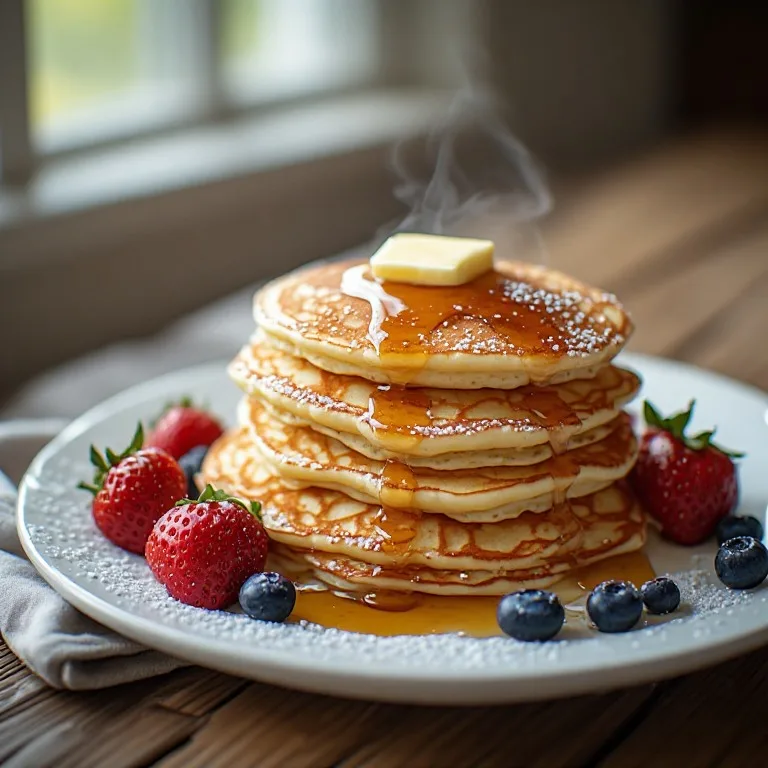
At roughly $2 in ice cream and flour for eight pancakes, a full stack costs a fraction of the $12 to $18 a diner charges for a short stack. Serve them the minute they leave the pan with maple syrup, fresh berries, or a dollop of whipped cream — the airy texture relaxes as they cool, so the first bite off the griddle is always the best one.