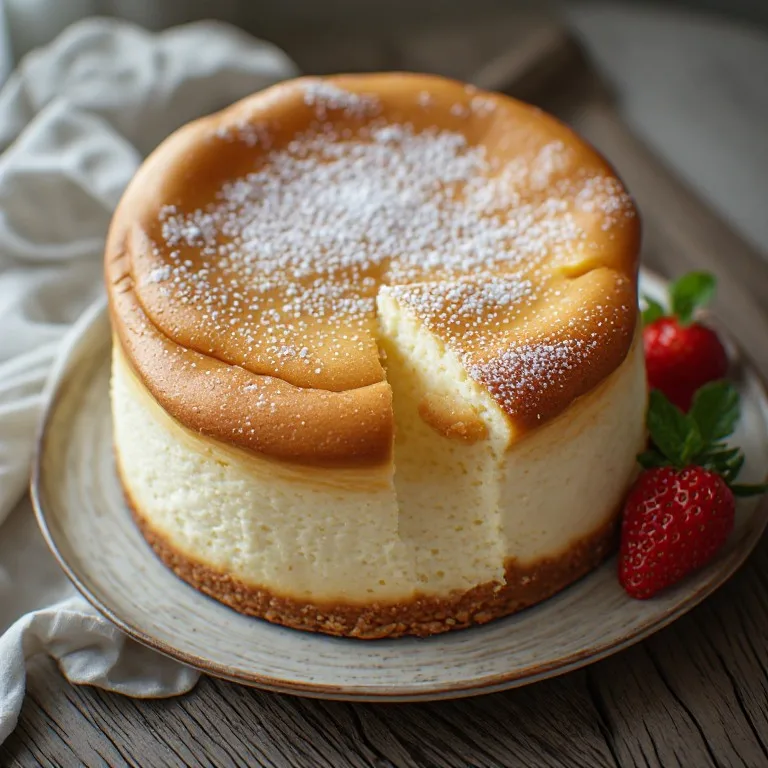



Viral TikTok Jiggly Japanese Cheesecake — No Water Bath
Prep: 25 min active + 5 hrs chilling | Bake: 60–65 min at 300°F | Serves: 8 | Pan: 7-inch springform
The jiggly Japanese cheesecake earned its TikTok reputation from a single property: when you nudge the pan, the center ripples and wobbles like a slow-motion wave. It looks like magic. It is, in fact, physics — beaten egg whites folded into a cream cheese batter and baked at low temperature create an internal foam structure that stays suspended even after the cheesecake sets. Cold it, slice it, and the cotton-soft interior holds a clean edge while still feeling impossibly light.
Traditional Japanese cotton cheesecake requires a water bath, which keeps humidity in the oven and prevents cracking. This version skips the water bath entirely. Greek yogurt provides the moisture from inside the batter instead — the result is indistinguishably close in jiggle and texture, with none of the hassle of a bain-marie.
Two technique points determine whether this works or doesn’t: the meringue must reach stiff, glossy peaks (not dry and dull), and it must be folded in with slow, deliberate strokes (not stirred or rushed). Get those right and the cheesecake jiggles. Get them wrong and it bakes dense. That’s the whole game.
Why This Works Without a Water Bath
Classic Japanese cheesecake needs a water bath because the batter — made with milk and butter — doesn’t contain enough internal moisture to survive a dry oven without drying out and cracking. The water bath keeps the oven environment humid, which slows surface setting and gives the interior time to cook through gently.
Greek yogurt changes the moisture dynamics. It’s roughly 80% water by weight (vs. whole milk’s 88%), but it’s suspended in a protein-fat matrix that releases moisture slowly and evenly during baking — rather than all at once, which would make the batter watery. The result is a batter that self-humidifies from the inside, keeping the surface from setting too fast without any external water pan.
The trade-off: the Greek yogurt adds a slightly tangier note compared to the milk-based version. In practice, it reads as a pleasant brightness that cuts the richness of the cream cheese — most people prefer the flavor to the original. The jiggle is comparable.
The Meringue Is Everything
There are two types of cream cheese cheesecakes: ones that use beaten egg whites (meringue) and ones that use whole eggs. This is the meringue kind. The distinction matters enormously.
Whole-egg cheesecakes — New York style, San Sebastián, Basque — are rich, dense, and creamy. Their structure comes from egg proteins setting during baking. They don’t jiggle; they slice firm and hold their shape at room temperature.
Meringue cheesecakes — Japanese cotton style — use egg yolks for richness and beaten egg whites for structure. The beaten whites trap millions of tiny air bubbles. When those bubbles heat in the oven, they expand, lift the batter, and create a foam that sets into the “cotton” texture. It’s the same principle as a soufflé, but stabilized by cream cheese so it doesn’t collapse when it cools.
The key implication: any step that deflates the meringue before or during baking eliminates the jiggle. This is why you fold (don’t stir), why you bake at 300°F (not 325°F or 350°F), and why you don’t open the oven door during baking.
The Fold: How to Not Kill the Jiggle
This is where most first attempts go wrong. The cream cheese base is dense and the meringue is light — folding them together too aggressively deflates the bubbles before they can make it into the oven.
The right motion: Run a large silicone spatula down the side of the bowl to the bottom, then sweep it up through the center and fold it over. Rotate the bowl a quarter turn between strokes. You’re moving the dense batter from the bottom up and over the meringue, not pressing it into the meringue from above.
The right pace: Slow and deliberate, not fast. The whole fold for each addition should take 20–30 strokes, not 5.
When to stop: As soon as no visible white streaks remain. A few faint ghost streaks are fine. If you keep going past that point, you’re deflating what you just worked to build.
The three-addition approach matters: Adding all the meringue at once makes it much harder to incorporate evenly without over-working. The first third lightens the dense base so the next two additions fold in with far less deflation.
Bake Low, Cool Slow
300°F is deliberate. At this temperature:
- The surface sets slowly enough that the interior has time to cook through before the top cracks
- The meringue foam has time to expand gradually rather than blasting upward and then collapsing
- The pale golden color develops without the surface darkening or setting too firm
The 15-minute oven-off, door-cracked rest is equally important. Rapid temperature drop causes the exterior to contract faster than the interior — the surface cracks and the sides pull away. The gradual cool lets the structure adjust evenly.
The cheesecake will look underdone when you take it out. The center still jiggles. This is correct. It continues setting as it cools, and then firms further during refrigeration. Pulling it at the first sign of done-looking is pulling it too early — trust the process.
Texture Comparison
| Style | Fat base | Eggs | Texture | Jiggle? |
|---|---|---|---|---|
| Japanese cotton cheesecake | Cream cheese + Greek yogurt | Separated (meringue) | Soufflé-soft, cotton-like crumb | Yes — ripples when nudged |
| New York cheesecake | Cream cheese + heavy cream | Whole eggs | Dense, creamy, firm | No |
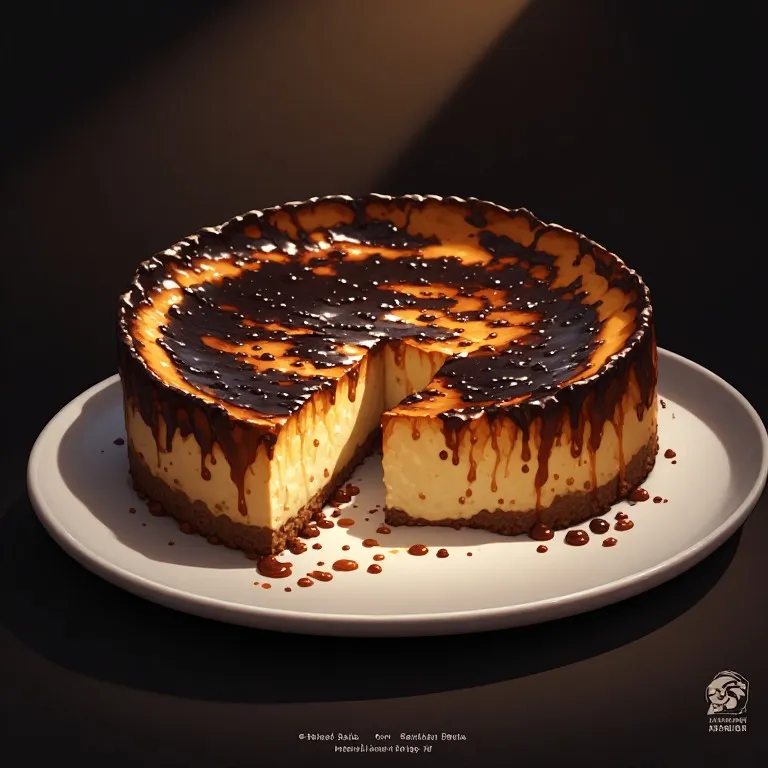
| San Sebastián / Basque | Cream cheese + heavy cream | Whole eggs | Burnt top, custardy center | Slightly when warm |
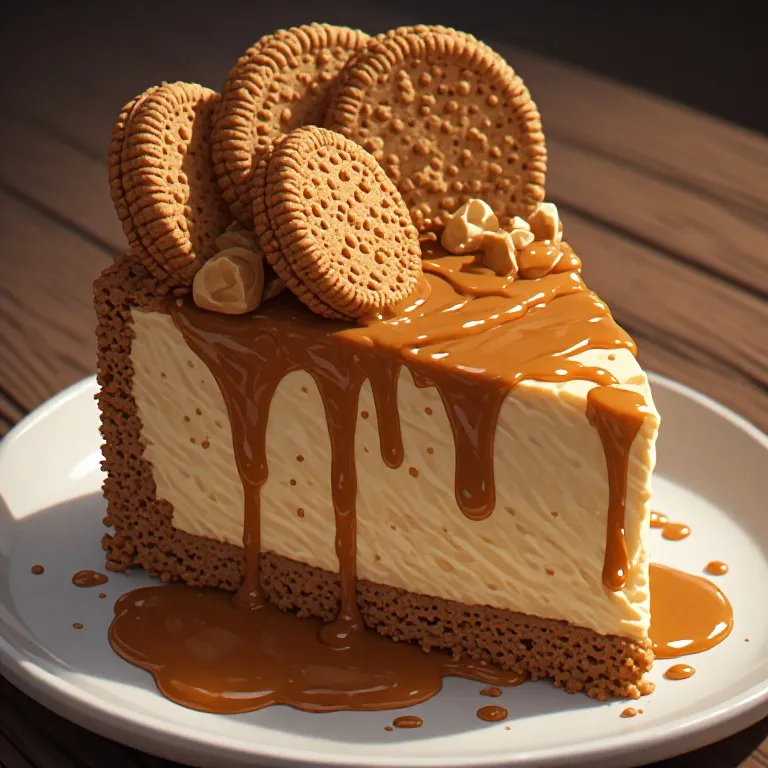
| Biscoff cheesecake (no-bake) | Cream cheese + whipped cream | None | Light, mousse-like | No |
| Soufflé | No cream cheese | Beaten whites | Very delicate, collapses | Yes — briefly |
The Japanese cotton cheesecake sits between a soufflé and a regular cheesecake: it has the lightness of the former with the stability and sliceability of the latter.
Why It’s Everywhere on TikTok
Jiggly cheesecake videos have been resurfacing on FoodTok in cycles since 2021. The shareable element is obvious: a slow-motion pan-nudge showing the cheesecake rippling looks almost digitally-enhanced. It’s the baking equivalent of a lava lamp — hypnotic and deeply satisfying.
The second reason: the “no water bath” hack lowered the barrier. Water bath baking intimidates people (will it leak? does it really matter?), and the Greek yogurt version demonstrated that you could get the same jiggle without any of that. Search volume for “japanese cheesecake recipe no water bath” is consistently high, especially in fall when people return to baking projects.
The result is a recipe with two audiences: people who want to recreate the viral video, and people who’ve always wanted to attempt Japanese cheesecake but were scared of the water bath. This recipe serves both.
Troubleshooting
Surface crack: Too-high oven temperature (check with a thermometer), oven door opened early, or cooled too fast. Doesn’t affect flavor or texture — dust with powdered sugar before serving.
Dense, not jiggly: Meringue was over-folded or under-beaten. Check: did the meringue have stiff, glossy peaks (not dry and dull)? Did you fold in three additions with slow strokes? Was the cream cheese fully at room temperature?
Sunken center after cooling: A slight depression is normal. A major sunken center (more than ½ inch) usually means the meringue was not beaten quite to stiff peaks — it set but lacked enough structure to maintain full height. Still fine to eat; the texture is usually good even when the center sinks.
Wet, sticky top surface: Usually from condensation — either the cheesecake was covered tightly before fully cooling, or refrigerated in a container that traps moisture. Cool uncovered for 1 hour at room temperature and refrigerate loosely covered (not airtight) the first night.
Sticks to the pan / parchment tears: The parchment-lined pan should release easily. If it sticks, the parchment may have been too thin or the pan wasn’t sprayed before lining. Run a thin spatula under the base before transferring to a serving plate.
Serving
Jiggly Japanese cheesecake is best served cold, straight from the refrigerator. The jiggle is most pronounced when the interior is well-chilled — at room temperature, the structure softens and the wobble dampens. If you want to show off the jiggle on camera, unmold and shoot within the first few minutes out of the refrigerator.
Toppings: the cheesecake is traditionally served plain, dusted with powdered sugar. Fresh strawberries, a light strawberry sauce, or a blueberry compote complement the tangy cream-cheese flavor without overpowering the subtle texture. Heavy toppings (whipped cream, caramel, ganache) tend to obscure both the flavor and the visual of a pale, cloud-like surface — save those for denser cheesecake styles.
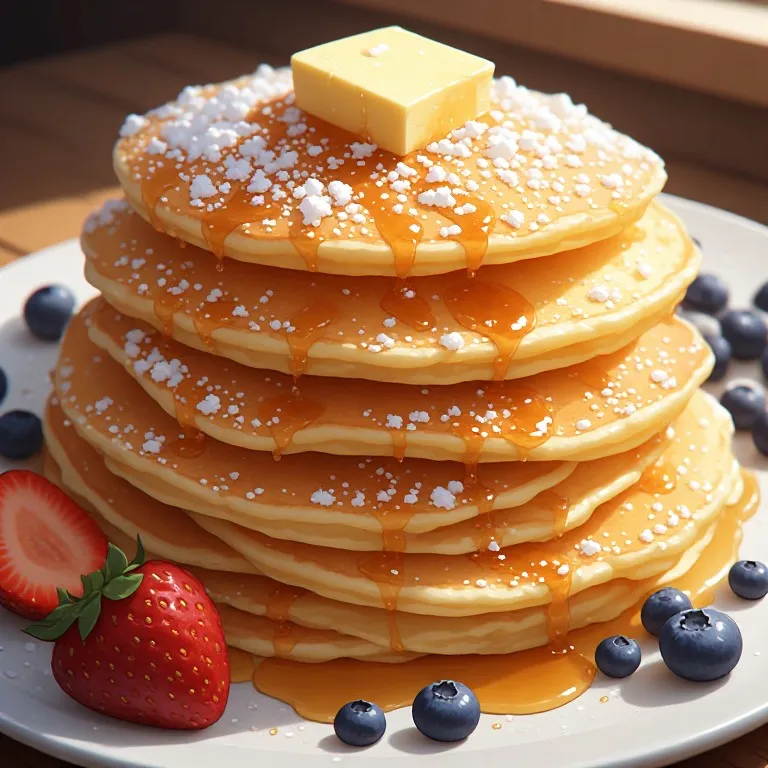
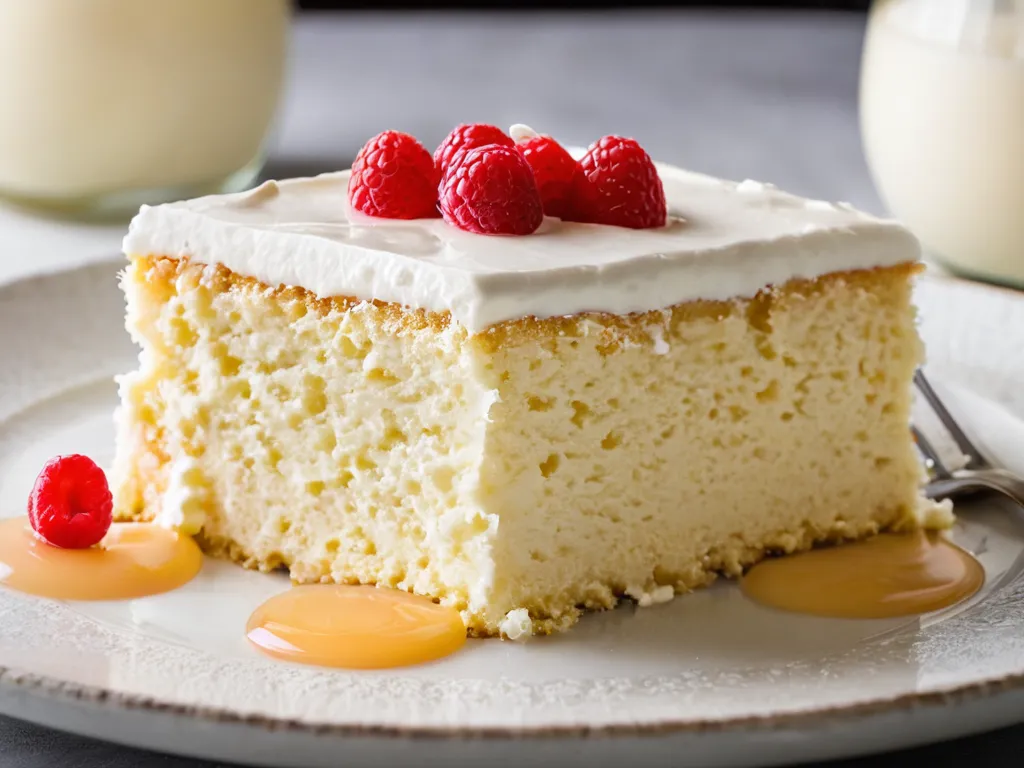
For the other great jiggly baking project in this format, Japanese Soufflé Pancakes use the same separated-egg meringue technique applied to breakfast pancakes — impossibly tall and light, cooked in ring molds. The San Sebastián Cheesecake is the opposite end of the cheesecake spectrum: a high-heat, burnt-top Basque cheesecake with a custardy center and no crust — equally dramatic for different reasons. The Biscoff Cheesecake and Banana Pudding Cheesecake are the no-bake cheesecake lane — lighter assembly, no oven required. The Tres Leches Cake is the other make-ahead soaked dessert worth knowing for a crowd.