
Pin It

Viral TikTok Ichigo Sando — Japanese Strawberry and Cream Sandwich

Viral TikTok Ichigo Sando — Japanese Strawberry and Cream Sandwich
Jump to Recipe
Prep 15 min active + 30 min chilling Cook 0 min Serves 2
Quick answer: Whip 1 cup cold heavy cream with 3 tablespoons powdered sugar and 1 teaspoon vanilla to stiff peaks. Spread thickly on 4 slices of soft white bread (milk bread or brioche). Hull 6 medium strawberries, then arrange 3 per sandwich with the pointed tips alternating directions — tips pointing left, right, left — so when you cut diagonally, each slice reveals a perfect cross-section of strawberry. Press the two bread slices together, wrap tightly in plastic wrap, and refrigerate at least 30 minutes. Cut with unflavored dental floss (not a knife) drawn straight down through the sandwich in one motion — it glides through the cream without dragging. Serve immediately after cutting. Makes 2 sandwiches.

Shop the tools

Gear matched to this recipe. These are Amazon affiliate links — we may earn a small commission if you buy, at no extra cost to you.

As an Amazon Associate, Copycat Spices earns from qualifying purchases. Product images are generic illustrations, not the exact item listed.

Viral TikTok Ichigo Sando — Japanese Strawberry and Cream Sandwich

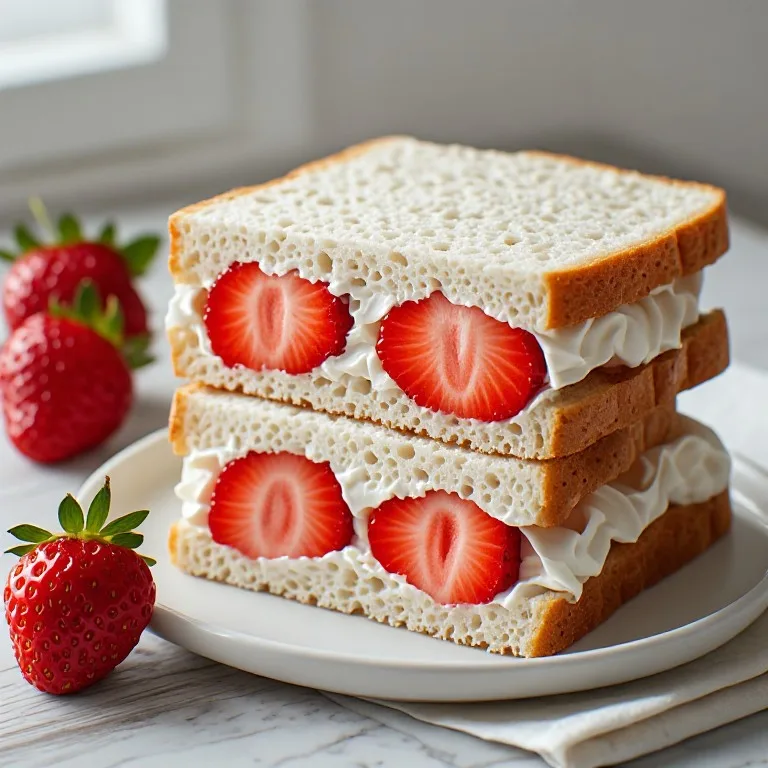
The viral TikTok ichigo sando: soft milk bread, thick whipped cream, and whole fresh strawberries arranged for the perfect cross-section reveal. The Japanese strawberry sandwich that broke Western food TikTok — with the exact cream technique, the strawberry placement method, and the cut timing that makes the difference between a clean reveal and a smashed mess.

Easy Prep: 15 min active + 30 min chilling Cook: 0 min Total: 15 min2 servings ~$4.20/serving
Prep15 min active + 30 min chilling
Cook0 min
Total15 min
Servings
2
At home~$4.20/serving
vs
Restaurant~$18.90/serving
You save ~78%

The Story Behind the Recipe

The ichigo sando has been a staple of Japanese konbini (convenience stores) for decades. At 7-Eleven Japan, Lawson, and FamilyMart, these sandwiches are stacked in clear plastic packaging so you can see the strawberry cross-sections inside — they're one of those simple foods that Japanese food culture has perfected through obsessive attention to texture and presentation. The strawberries used in high-end Japanese versions, like Amaou and Tochiotome, sell for $30 or more per tray and are bred specifically for sweetness and aesthetic shape.

The sandwich broke onto Western TikTok when food creators began filming the reveal moment: one clean cut, a perfect cross-section of cream and strawberry, no smearing. The combination of the simple technique and the dramatic payoff made it one of the more enduring TikTok food trends — it still pulls millions of views. At home, you do not need a $30 tray of Japanese strawberries; any ripe, fragrant strawberry in season works. The technique — the strategic berry arrangement and the dental-floss cut — is what the recipe is actually about.

Nutrition Facts

Per serving (2 servings)
Calories480
Total Fat30g
Total Carbs44g
Dietary Fiber3g
Sugars22g
Protein7g
Sodium290mg

* Estimated values based on standard recipe preparation. Actual values may vary.

Ingredients

  • For the whipped cream
  • For assembly
  • Optional mascarpone upgrade

Instructions

💡
Pro tip: This recipe tastes even better the next day. The flavors need time to meld together in the fridge.
❄️
Storage: Keeps in an airtight container in the fridge for up to 2 weeks. Freezer-friendly for up to 3 months.
🎃 Free Halloween cookbook — download now The Copycat Halloween Cookbook A ready-made, photo-illustrated PDF of our best halloween copycat recipes — free to download, no building required. Pay what you want to support if you love it.

Free PDF — instant download. We'll also send new seasonal copycat recipes now and then; unsubscribe anytime. Or just download it →

Quick answer: Whip 1 cup cold heavy cream with 3 tablespoons powdered sugar and 1 teaspoon vanilla to stiff peaks. Spread thickly on 4 slices of soft milk bread. Arrange 3 hulled strawberries per sandwich with the tips alternating directions — right, left, right across the diagonal. Fill with more cream, press the second slice on top, wrap tightly in plastic, and refrigerate 30 minutes. Cut diagonally with unflavored dental floss in one downward motion. The revealed cross-section — three perfect strawberry discs visible in a field of white cream — is the point of the whole dish.

What makes this worth making (and why it went viral)

The ichigo sando has been a fixture of Japanese konbini (convenience stores) for decades. At 7-Eleven Japan and Lawson, they’re sold in clear plastic packaging so you can see the cross-sections before buying — a bit like a preview of the reveal. The berries used in premium Japanese versions, like Amaou, sell for $30 a tray and are bred specifically for sweetness and the kind of shape that photographs perfectly. The konbini version costs $5–10 per sandwich.

Western food TikTok discovered it and turned it into a home cooking moment: the diagonal cut, the strawberry reveal, the clean white cream face. It hits because it looks both impossibly beautiful and genuinely simple. There is no pastry skill here — just attention to placement and timing.

At home you don’t need Japanese strawberries. You need ripe, fragrant, in-season berries — the kind that smell like strawberry from a foot away. The technique does the rest.

The bread — the decision that determines everything

Soft white milk bread with a close crumb is non-negotiable. Here is why other breads fail:

Bread typeProblem
Standard thin-sliced sandwich breadToo thin, buckles under cream weight, tears at cut
SourdoughHard crust tears the cream face on cut; tangy flavor competes
Whole wheatDense crumb absorbs cream too fast; sandwich goes soggy within an hour
Brioche (thick-cut)Works well — slight richness complements cream
Texas Toast (thick-cut)Works structurally; less sweet than milk bread but acceptable

Where to find shokupan in the US: Asian grocery stores (H Mart, 99 Ranch, Mitsuwa) carry it under labels like “Hokkaido Milk Bread,” “Japanese Style Milk Bread,” or directly labeled shokupan. The loaves come in standard or “luxury” (higher butter and milk content) varieties — the luxury version is worth it here. Whole Foods sometimes carries a shokupan-style loaf. If you can’t find it, thick-cut brioche from any bakery is the right call.

The cream — two approaches

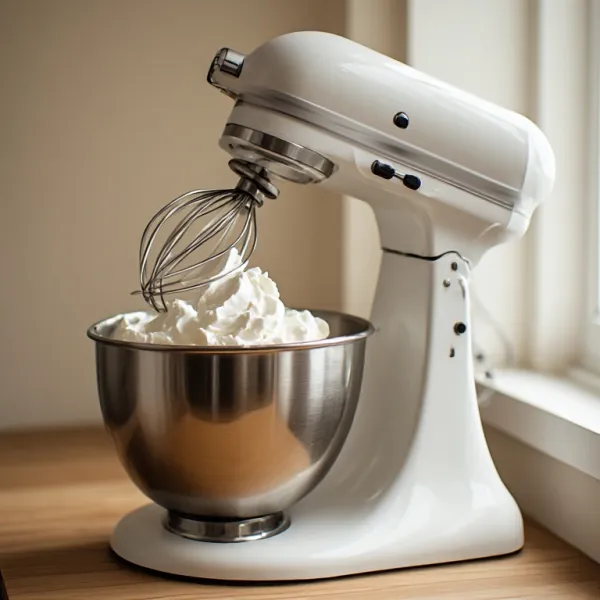
Version 1 — Classic (heavy cream only): 1 cup heavy cream + 3 tablespoons powdered sugar + 1 teaspoon vanilla → whip to stiff peaks. Light, airy, slightly sweet. The traditional konbini approach.

Version 2 — Mascarpone blend (richer, more stable): Beat 4 oz room-temperature mascarpone with 2 tablespoons powdered sugar and vanilla until smooth. Whip ½ cup heavy cream to stiff peaks separately. Fold together. This version holds its shape longer after cutting (up to 1 hour on the cut face rather than 30 minutes), has a denser texture, and slices even more cleanly. If you’re serving to guests and want extra margin for error, use this version.

Both whip methods work fine. The key principle in either case: the cream must reach stiff peaks before you spread it. Soft or medium peaks will not support the weight of whole strawberries during chilling and will slump and smear when cut.

The arrangement — how to get the clean reveal

This is the step most home versions skip, and it is the step that makes the result look like a konbini sandwich instead of a fruit salad on bread.

Place the bread slice on a cutting board with one corner pointing toward you. Imagine the diagonal cut line running from the top-left corner to the bottom-right corner of the slice. You will arrange three strawberries along this diagonal:

  1. Top-left position: Hull facing down, tip pointing right (toward the center of the bread)
  2. Center position: Hull facing down, tip pointing left
  3. Bottom-right position: Hull facing down, tip pointing right

The alternating tips ensure the widest cross-section of each berry falls on the cut line. Without this, the tips end up off-center in the finished triangles and you see the thin tip of one berry and a cut-edge of the next.

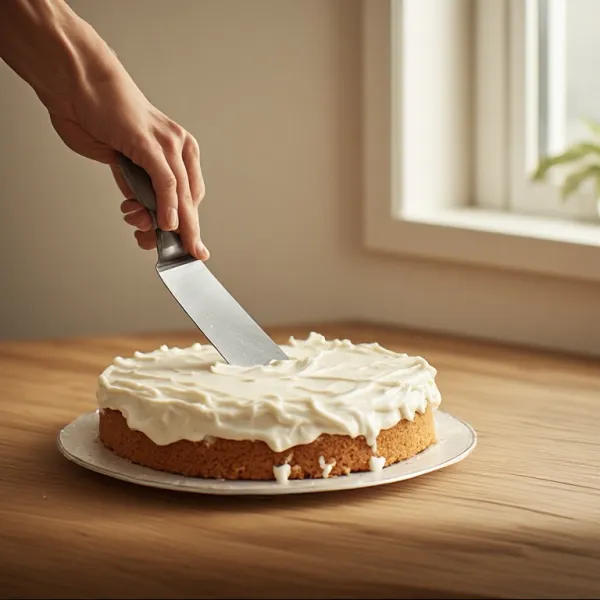
Press each berry gently but firmly into the thick cream base until the bottom half of each berry is embedded. Add more cream to cover all three berries completely, then press the second bread slice on top.

The cut — why dental floss matters

The most common ichigo sando failure happens right here. People reach for a knife and drag it through the sandwich, which smears cream across the cut face rather than parting it cleanly.

The correct tool is unflavored, unwaxed dental floss. Tear off about 12 inches, hold it taut between both hands, position it at the top-left corner, and draw it straight down through the sandwich in a single slow motion. No sawing. One pull, all the way through.

The floss separates cream by pushing it aside. There is no blade edge to drag cream laterally. The strawberry cross-sections appear as the floss passes through them, and because the cream has been chilled, they hold their position. The result looks deliberate — which is the point.

If you don’t have dental floss, a sharp thin-bladed knife drawn down in a single stroke (no sawing) is the second-best option. A serrated knife or any sawing motion will smear.

Timing: the 30-minute rule

The unwrapped, assembled sandwich holds in the refrigerator for up to 4 hours before the bread becomes detectably soggy. But the optimal window for cutting and serving is 30 minutes to 2 hours after assembly:

  • At 30 minutes: Cream is firm, strawberries are locked in position, bread is still tender but not wet
  • At 1 hour: The cutting window is at its cleanest — this is the ideal time to serve
  • At 2+ hours: The inside bread surfaces start absorbing moisture from the cream; still good to eat but the structure is softening
  • Cut and plated: Serve within 30 minutes of cutting before the cream face begins to oxidize and weep

If you want to serve ichigo sando at a party, assemble up to 2 hours ahead and keep wrapped and chilled. Cut right before serving.

Variations that work

Mango version (no strawberry): Replace strawberries with thick slices of ripe mango, arranged in the same alternating pattern. The sweet, tropical flavor is a natural fit for the cream, and the cross-section is equally visual.

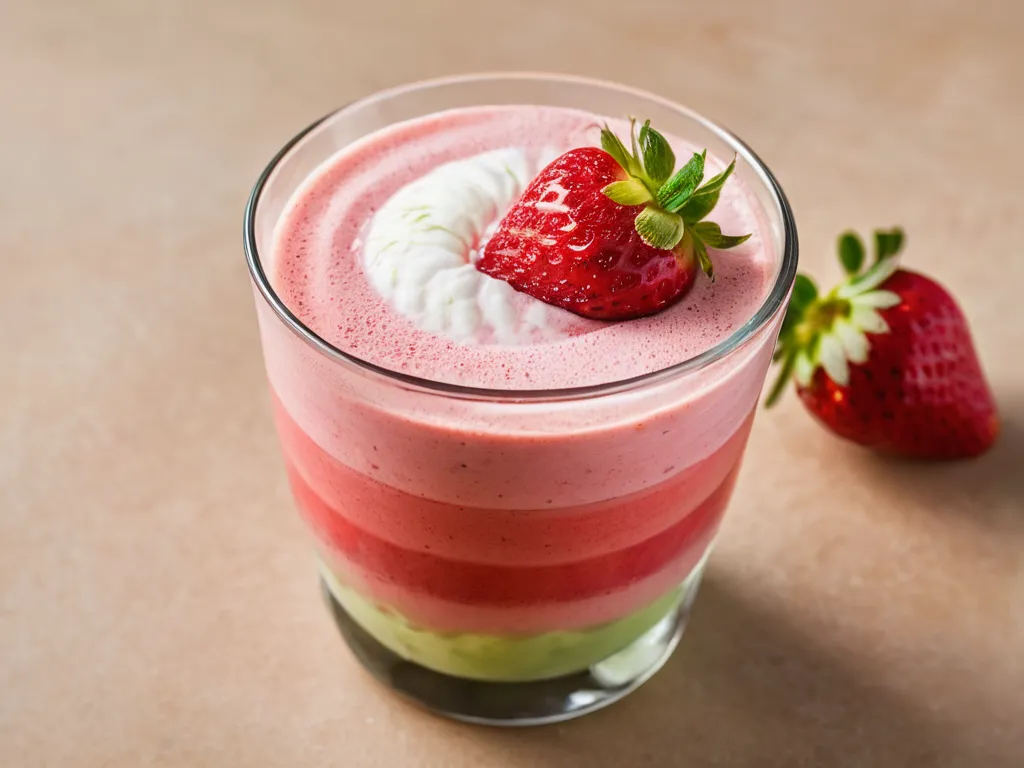
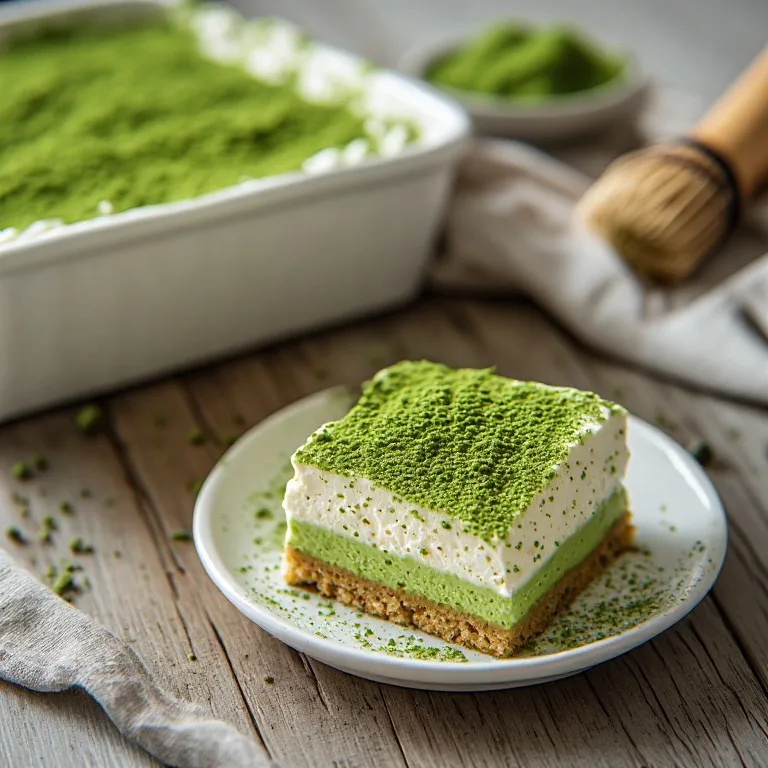
Strawberry with matcha cream: Add 1 tablespoon sifted matcha powder to the cream before whipping. The green-and-red cross-section doubles the visual payoff and the earthy bitterness of the matcha plays against the sweet strawberry well. (If you like that pairing, the layered strawberry matcha latte uses the same two flavors in a glass.)

Mixed berry version: Use a mix of strawberries, raspberries, and blackberries in the arrangement. The arrangement is more complex (mixed cross-sections) but the color contrast is striking.

Sweetened condensed milk cream: Replace the powdered sugar with 2 tablespoons sweetened condensed milk stirred into the cream before whipping. This is the version used by several Tokyo dessert shops — slightly denser and more caramel-forward, with a stickier texture that holds even longer after cutting.

If you like this, make these next

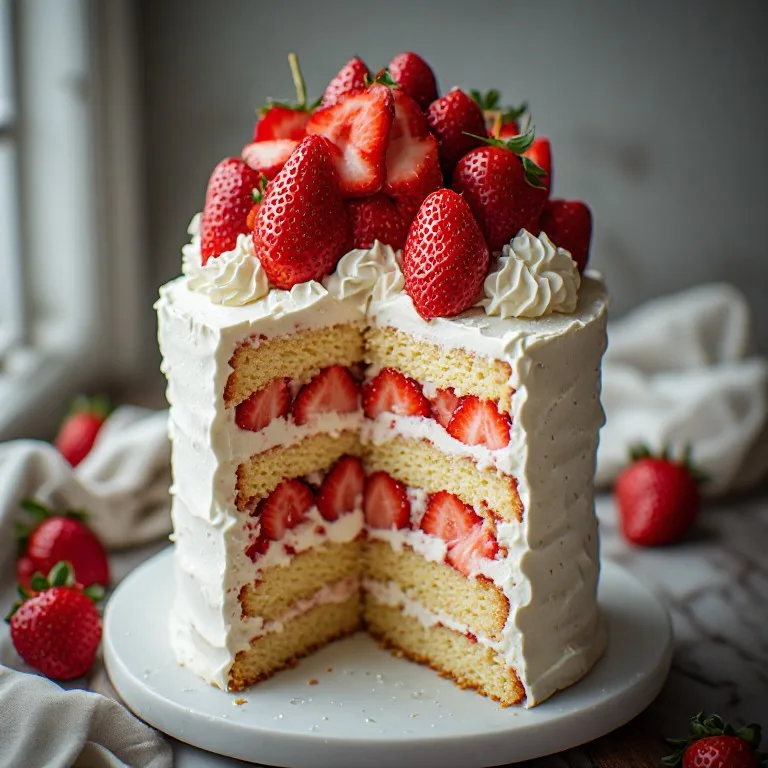
The ichigo sando sits in a small family of Japanese-style cream-and-strawberry desserts that all rely on stabilized whipped cream and fresh fruit. The Japanese strawberry shortcake is the full-cake version — the same airy cream and macerated berries built into a genoise sponge rather than milk bread. For a spoonable take, the strawberry tiramisu layers the same cream with soaked ladyfingers and fresh berries. And if the dental-floss-clean, no-bake assembly is what appeals to you, the whipped ricotta toast is the five-minute savory-sweet cousin.
🥗

Make It Healthier

Love Viral TikTok Ichigo Sando — Japanese Strawberry and Cream Sandwich but want a lighter version? Try these simple swaps:

  • ✓Reduce powdered sugar to 2 tablespoons (from 3) and the cream will still whip to stiff peaks — you save about 10 calories per sandwich with a slightly less sweet filling. Ripe, in-season strawberries are sweet enough that the extra tablespoon of sugar isn't necessary.
  • ✓A half-and-half split of heavy cream (½ cup) and full-fat Greek yogurt (½ cup) — where you whip the cream to stiff peaks and fold in the yogurt — cuts roughly 80 calories from the filling and adds about 5g protein. The texture is slightly less stable (serve within 1 hour of cutting) but the tangy yogurt pairs well with the strawberry.
  • ✓The bread is where the carbohydrate load sits. Using a thinner slice (½ inch instead of ¾ inch) reduces the carb count by about 8g per sandwich — but don't go thinner or the bread will tear under the cream's weight.
  • ✓Strawberries are among the lowest-sugar fruits (about 7g sugar per cup) and very high in Vitamin C. The strawberry component of this recipe is genuinely nutritious; the filling is where the indulgence lives.

Frequently Asked Questions

What is an ichigo sando?

Ichigo sando is a Japanese strawberry sandwich — ichigo means strawberry and sando is the Japanese shortening of sandwich. It's a classic item at Japanese konbini (convenience stores) like 7-Eleven Japan, Lawson, and FamilyMart, where they're sold in clear plastic packaging so you can see the strawberry cross-sections inside. The traditional version uses shokupan (Japanese milk bread), fresh whole strawberries, and sweetened whipped cream. The Western TikTok version became popular because of the reveal: one diagonal cut through a correctly arranged sandwich produces a perfect, symmetrical cross-section of cream and strawberry.

Do I need Japanese milk bread (shokupan), or can I use regular sandwich bread?

You need a bread with the right texture: thick-cut, soft crumb, and slightly sweet. Regular thin-sliced American sandwich bread will buckle under the cream's weight and tear at the cut. Japanese shokupan is ideal (available at Asian grocery stores, H Mart, 99 Ranch under names like Hokkaido Milk Bread). The best Western substitutes are thick-cut brioche, thick-cut soft pullman loaf, or grocery-store Texas Toast (the thick-cut version). Sourdough, whole wheat, rye, or any bread with a hard crust will tear when cut and does not fit the flavor profile.

Why does the strawberry arrangement matter?

The reveal is the point of the dish. Arrange strawberries randomly and when you cut, you'll see jagged cross-sections, berries cut off-center, and a messy visual. Arrange them in the alternating tip pattern — tips pointing right-left-right across the diagonal — and every cut passes through the exact widest point of each berry, producing a clean, symmetrical cross-section that looks like a planned pattern rather than an accident. This is the same arrangement used in Japanese konbini production — you can see the pattern in the clear-windowed packaging before purchase.

Can I use frozen or macerated strawberries?

No. The recipe works only with fresh, dry, whole strawberries. Frozen strawberries release water as they thaw, which will cause the cream to weep and turn soupy during the 30-minute chill. Macerated strawberries (tossed in sugar) do the same. The berries need to be hulled, patted dry, and placed whole into the cream — their natural surface acts as a moisture barrier. If your strawberries are underripe and not very sweet, a very light dusting of powdered sugar directly on the hulled berries before placing them in the sandwich is the only acceptable sugar addition.

Why dental floss instead of a knife?

Cream is fluid enough that any sawing motion — even with a sharp knife — drags cream across the cut face rather than producing a clean edge. Dental floss has no blade; it parts the filling by displacement rather than cutting. As you draw it downward in one motion, it moves cream aside rather than dragging it. The result is a clean cream face and a fully intact strawberry cross-section visible at the cut edge. An unserrated, very sharp knife drawn in a single downward motion (no back-and-forth) produces a similar result. A regular chef's knife used with a sawing motion will smear.

How long do ichigo sando keep?

Serve within 2 hours of cutting — ideally immediately. The filled, uncut sandwich holds in the refrigerator for up to 4 hours before the bread starts absorbing moisture from the cream and becoming noticeably soft. Cut sandwiches should be eaten within about 30 minutes before the cut face starts oxidizing and weeping. This is not a make-ahead dish you can prep the night before — the filling window is same-day.

Can I make a version without dairy?

Yes. Use a full-fat coconut cream (refrigerate overnight and use only the solid portion) whipped in place of heavy cream — it whips to stiff peaks and holds its shape. For the bread, look for a soft vegan milk bread or use thick-cut white sourdough (a loaf variety, not levain-style — the crust should be soft). The filling will be slightly less stable than dairy whipped cream and you should serve within 30 minutes of cutting. The flavor is slightly coconut-forward, which pairs surprisingly well with fresh strawberry.

Why do my strawberries look off-center or broken in the cross-section?

Two likely causes: (1) The berries shifted during chilling because the cream wasn't thick enough to hold them in place — apply a thicker cream base and press each berry firmly until it's half-embedded before adding the top cream layer. (2) The cut wasn't exactly on the diagonal you planned — the floss must start from the corner of the sandwich (not from the side) and travel in a straight line to the opposite corner for the alternating-tip arrangement to produce the symmetrical reveal.

Love this recipe? Share it!

Free PDF: our 12 most-wanted copycat recipes — instant download.

Made it? Buy us a coffee

Every recipe here is free, with no paywalls. If this one was a hit at your table, a small tip keeps new copycats coming.

$

Ratings & Reviews

—
No ratings yet

Rate this recipe

Click a star to rate

Leave a Review

0/500

CS

Copycat Spices Editorial

Researched + fact-checked. Every recipe on Copycat Spices is built from published sources — official ingredient lists, brand-published recipes, interviews and food-science references — and fact-checked before it goes live, then written as clear, step-by-step instructions for home cooks of all skill levels.

Learn more about our mission →