
Katsu Sando — Japan’s Perfect Sandwich
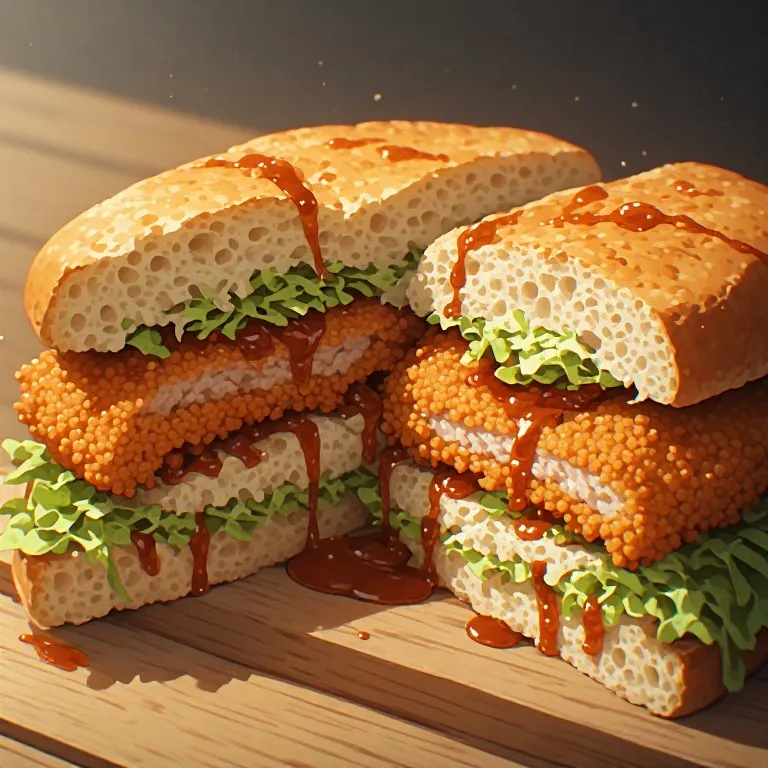
The cross-section is why it goes viral every time: a clean cut through soft white bread reveals a thick ring of golden panko crust, a uniform slice of tender pork, and a dark smear of tonkatsu sauce. No mess, no asymmetry. Just one of the most precisely engineered sandwiches on earth, packaged in every konbini (convenience store) in Japan and now on every food TikTok algorithm worldwide.
Born in the Convenience Store, Perfected in the Kissaten
Japan’s katsu sando culture is split between two worlds. The konbini version — neatly triangular, sealed in plastic, sold at FamilyMart and Lawson — is the one that went viral abroad because of its photogenic precision. But serious katsu sando culture lives in the kissaten: old-school Japanese coffee shops, often owned by the same family for generations, that serve a thick pork katsu between thick-cut shokupan on a small plate with a cup of drip coffee. These are not Instagram spots. They are simply excellent.
The Panko Difference
What makes katsu distinct from Western breaded cutlets is panko — Japanese breadcrumbs that are coarser, flakier, and drier than standard breadcrumbs. They fry into a shattering, open-textured crust that doesn’t pack down or get greasy. The secret to perfect panko crust is pressure: press the crumbs firmly into the egged surface so they bond, and fry at a moderate 170°C rather than the screaming heat that can burn the crumbs before the pork cooks through.
Tonkatsu Sauce: Japan’s Steak Sauce
Tonkatsu sauce is the umami linchpin of the sandwich — fruity, tangy, faintly sweet, with a Worcestershire backbone. Bulldog brand is the canonical choice and the one that tastes like Japan. It goes on the cutlet, not on both bread faces, which keeps the bread from getting soggy on both sides. Kewpie mayo — slightly richer and more eggy than American mayo due to the yolk-only formula — goes on the bread, acting as both flavor and barrier.
The Precision of Assembly
A Japanese katsu sando is not a casual sandwich. The bread is always crustless — Japanese bakeries sell pre-trimmed shokupan for exactly this purpose, and home cooks use a sharp bread knife. The cutlet slices are arranged so every bite has an equal ratio of crust, meat, and sauce. The final cut is one downward motion through the assembled sandwich, no sawing, revealing the clean cross-section that makes for the money shot.
Three Worthy Variations
Wagyu katsu sando: The luxury version — thick-cut wagyu beef striploin, breaded and fried at lower heat to keep the interior rosy. Tokyo wagyu sando restaurants charge $50+ per sandwich and have lines around the block.
Menchi katsu sando: Ground pork and onion shaped into a patty, breaded and fried. The texture is softer, closer to a burger, and the flavor is more porky-rich than the lean loin version.
Ebi katsu sando: Minced shrimp patty, fried until just done, served with tartar sauce instead of tonkatsu. Lighter in color, briny, and photogenic in a completely different way — a staple at high-end sandwich specialists in Tokyo’s Ginza district.
Master the classic first. Shokupan, panko, tonkatsu sauce. Then you will understand why Japan treats this like an art form.