
Bánh Mì — How Colonialism Accidentally Created the World’s Greatest Sandwich
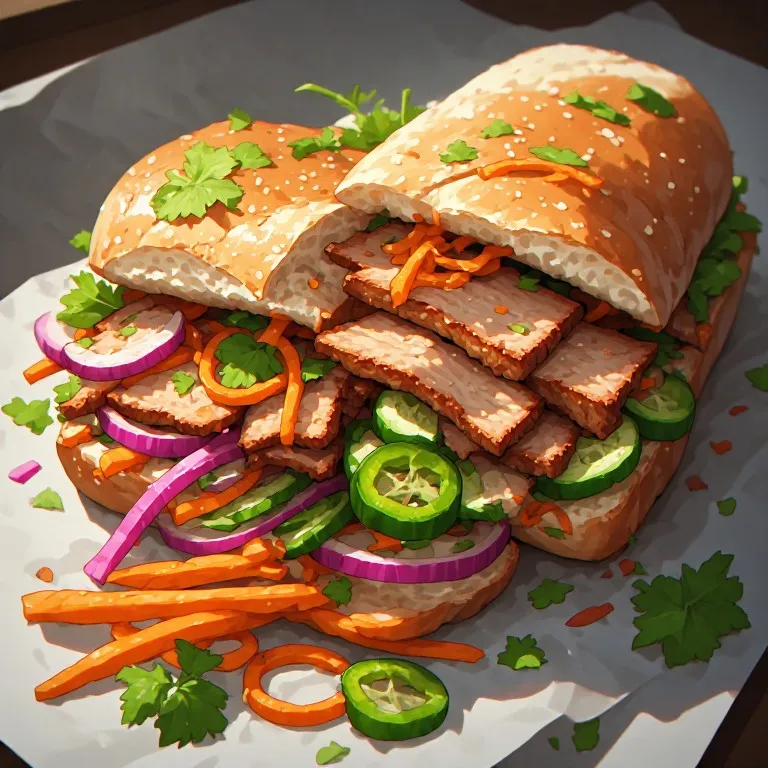
The French brought baguettes to Vietnam during the colonial period. The Vietnamese kept the bread, threw out most of the French sandwich tradition, and built something entirely their own. The result — a crackling baguette layered with pork pâté, cured meats, pickled vegetables, fresh cilantro, jalapeño, and savory mayo — is arguably the most perfectly balanced sandwich in the world. TikTok food creators have spent years confirming this thesis, one viral assembly video at a time.
The Architecture of Flavor
Every element of a bánh mì exists in relationship to every other element. The pâté is rich and livery — it needs the acidic pickled daikon and carrot. The mayo is fatty — it needs the heat of fresh jalapeño. The cilantro is herbaceous and slightly soapy — it needs the savory meats beneath it to give it context. The bread is crackling but thin — it needs to yield on the bite rather than fight, so the fillings are the experience rather than the chewing. This balance was not designed on paper. It evolved over decades of street food culture in Saigon (now Ho Chi Minh City), refined by generations of bánh mì vendors who understood that a cheap, fast sandwich could still taste like it was built with intention.
The Vietnamese Modification of the Baguette
Vietnam’s baguettes use a portion of rice flour in the dough, which changes everything. The crust is thinner and shatters on the first bite. The interior is almost hollow — a thin ring of crumb surrounding an air pocket that makes room for fillings without adding heaviness. When you eat a French baguette sandwich, you fight the bread. When you eat bánh mì, the bread is part of the pleasure rather than the obstacle. This technical detail is why bánh mì is what it is, and why approximations made with Italian hoagie rolls always fall short.
The Maggi Secret
Maggi seasoning sauce is what elevates the mayo beyond condiment. A few drops transform neutral mayonnaise into something with depth, umami, and a faintly savory darkness that pairs with both the pâté and the pork. Maggi, invented in Switzerland in 1886, found its most devoted audience in Southeast Asia, where it became a pantry staple. In Vietnam it’s added to soups, dipping sauces, and — critically — bánh mì.
Regional Variations
Hội An white rose bánh mì: From the ancient port city, bánh mì Hội An uses a yellow bread colored with turmeric and is noticeably fluffier than Saigon style. It’s considered by many to be the finest regional variation.
Bánh mì thịt nướng: Grilled lemongrass pork replaces the cold cuts — slightly sweet, charred at the edges, the most fragrant version. Marinate pork shoulder slices in lemongrass, fish sauce, sugar, and garlic overnight.
Bánh mì gà: Shredded chicken with a chili-lime dressing instead of pork. Lighter, brighter, and popular at lunchtime.
Modern fusion bánh mì: Pulled brisket, kimchi-marinated tofu, or shrimp po’boy-style — the format is one of the most flexible in street food because the vegetables and bread do so much work. Almost any protein works as long as the pickles and herbs are present.
The sandwich costs under five dollars from a Saigon street cart. It’s also one of the best things you’ll ever eat.