
Viral TikTok Tamago Sando — The Japanese Egg Salad Sandwich That Broke the Internet
Prep: 15 min | Cook: 10 min | Rest: 20 min | Serves: 2
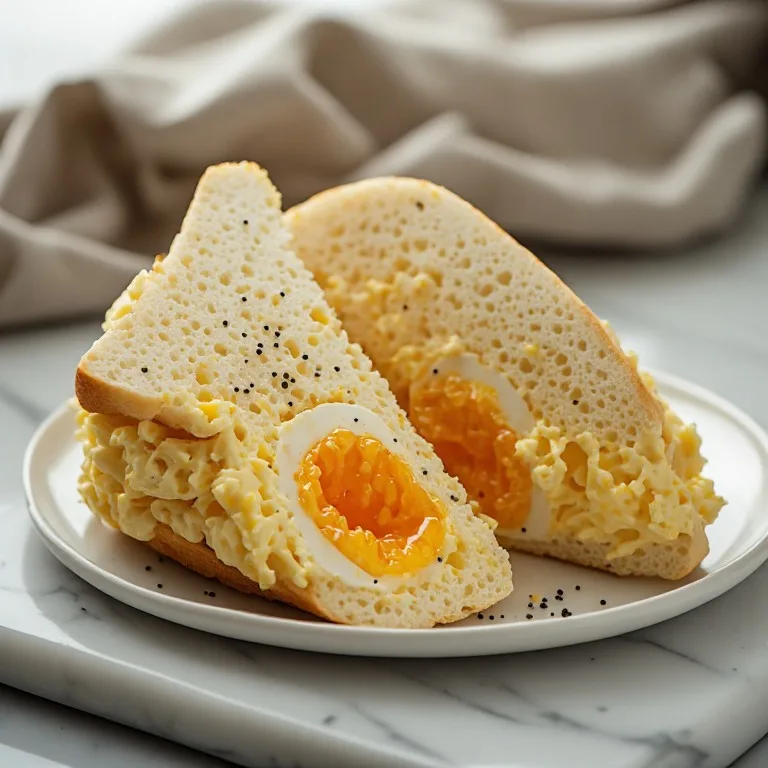
If you’ve spent any time on FoodTok in the last two years, you’ve seen it: a perfectly square sandwich, plastic wrap removed, then cut with one clean diagonal stroke to reveal a thick slab of creamy yellow egg salad with a jammy-orange yolk at the center. The reactions in the comments always follow the same script — “what IS that???” — followed by someone explaining: tamago sando. Japan’s convenience store egg sandwich. Seven-Eleven’s most-copied menu item.
The tamago sando (たまごサンド) has been a staple of Japanese konbini culture for decades — 7-Eleven, Lawson, and FamilyMart each sell their own version, and the konbini egg salad sandwich has such a cult following that Anthony Bourdain famously raved about the one from Lawson. When the sandwich started appearing on TikTok, food creators were stunned by something that looked impossibly simple: plain soft bread, egg salad, done. The viral element wasn’t a complicated technique or an exotic ingredient. It was the cold-rest technique that shapes it into a perfect rectangle, and the jammy-center egg that turns a cross-section photo into a jaw-drop moment.
Here’s how to make it at home — with an explanation of exactly why each step matters.
Why Kewpie Mayo Is Non-Negotiable
Regular mayonnaise will make a good egg salad sandwich. Kewpie will make a tamago sando. The difference is structural: Kewpie is made exclusively from egg yolks — no egg whites — which means more fat, more lecithin, and a creamier, more cohesive texture that clings to the egg pieces instead of separating. It uses rice wine vinegar instead of distilled, giving it a rounder, gentler acidity without the sharp edge of American mayo. The result is a filling that tastes richer and more complex with only 3 tablespoons than regular mayo tastes with 5.
You can find Kewpie at any Asian grocery store, most Whole Foods, and easily online. The bottle with the baby logo. Get it.
The Jammy Egg Center: What the Fuss Is About
The cross-section reveal on TikTok works because of one egg: a soft-boiled egg with a fudgy, jammy yolk — set on the outside, creamy at the core — placed whole at the center of the egg salad filling before the sandwich is pressed and wrapped.
When you cut the sandwich diagonally 20 minutes later, the egg has been compressed into the salad. The slice reveals a perfect circle of orange-gold yolk surrounded by cream-colored egg salad, framed by soft white bread. That’s the shot. It’s not hard to achieve — it just requires a dedicated 7.5-minute boil and a few extra minutes of prep.
If you skip the jammy egg, you still get an excellent tamago sando. The cross-section just shows egg salad all the way through — no drama, but no disappointment either.
The Cold-Rest Technique: Why the Sandwich Has to Wait
This is the step most people skip, and the reason their homemade tamago sando looks shaggy instead of architectural. The 20-minute cold rest in tight plastic wrap does three things:
- Shapes the sandwich. The plastic wrap holds the bread and filling in compression as the whole thing chills. When unwrapped, the sandwich holds its rectangular form instead of bulging.
- Sets the filling. The cold temp firms the mayo-egg mixture slightly so it cuts cleanly rather than squishing out the sides when you slice.
- Improves flavor. Egg salad is objectively better cold. The sugar and Kewpie need a few minutes to fully integrate with the egg proteins.
Twenty minutes minimum. Forty minutes is better. Six hours is the maximum before the bread starts absorbing too much moisture.
Variations Worth Trying
Original konbini style — no jammy egg, filling-only. Closer to the 7-Eleven version. Simpler and still excellent.
Spicy tamago sando — add 1 teaspoon karashi (Japanese hot mustard) to the filling and a thin smear of sriracha on one bread slice. The heat cuts through the richness.
Cucumber tamago sando — add 8–10 thin slices of seedless cucumber over the egg salad before closing the sandwich. Common in Japanese sandwich shops; adds freshness and crunch without disrupting the flavor profile.
Shiso tamago sando — place 2 whole shiso (perilla) leaves over the filling before closing. Shiso adds an anise-mint brightness that’s unexpected and very good.
High-protein version — use 6 eggs instead of 4+2; skip the jammy egg center. More filling per sandwich, higher protein, fewer grams of bread per bite.
What to Serve With Tamago Sando
In Japan, the convenience store sandwich is often eaten as a standalone snack or light meal. At home, pair it with:
- Miso soup — the savory depth of miso is the natural counterpart to the creamy, mild egg salad
- Pickled cucumber (sunomono) — the vinegar and crunch balance the richness
- Edamame — simple, high-protein, no prep
- Matcha latte — if you’re leaning into the Japanese theme fully, this is the right call