


Pin It

Crispy Lace Skirt Gyoza

Crispy Lace Skirt Gyoza
Jump to Recipe
Prep 35 min (plus 20 min salting cabbage) Cook 12 min Serves 5 (30 gyoza total, 6 per serving)
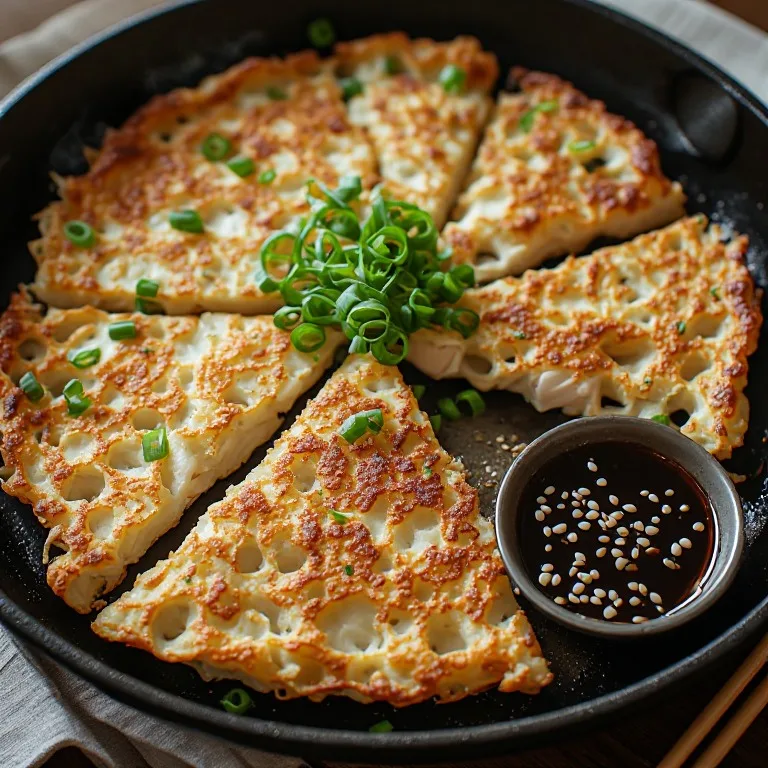
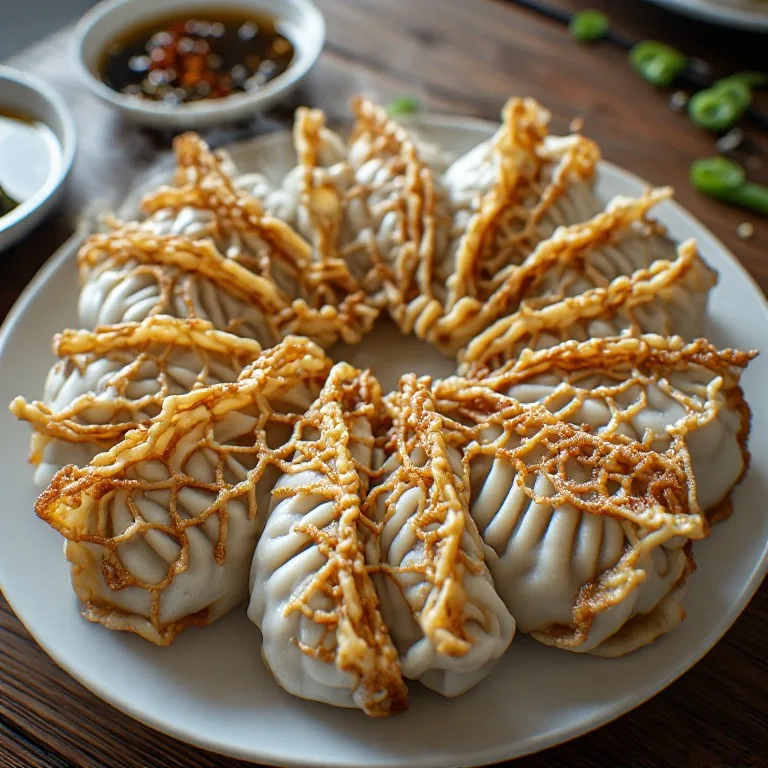
Quick answer: The viral TikTok lace skirt gyoza technique: sear 15–20 gyoza flat-side down in a thin layer of oil, 2–3 minutes until the bottoms are golden. Mix the slurry — 1/2 cup water + 1 tsp cornstarch + 1/2 tsp all-purpose flour + 1/4 tsp rice vinegar — and pour it around (not over) the dumplings. Cover and steam 3–4 minutes until all liquid is absorbed. Uncover and let the pan dry-cook 1–2 more minutes until you hear the sizzle stop and see the lattice solidify to a crispy, translucent gold. Remove from heat, place a large plate face-down over the pan, and flip in one confident motion. The lace skirt lifts off in one connected piece, every dumpling attached to it. That pan-flip reveal is the viral moment — the lace pulls apart at the table.

Shop the tools

Gear matched to this recipe. These are Amazon affiliate links — we may earn a small commission if you buy, at no extra cost to you.

As an Amazon Associate, Copycat Spices earns from qualifying purchases. Product images are generic illustrations, not the exact item listed.

Crispy Lace Skirt Gyoza

The viral TikTok lace skirt gyoza: sear-then-steam pork dumplings in a cornstarch slurry that cooks into a crispy, golden lattice connecting every dumpling — then flip the pan for the reveal. Full homemade filling and the exact slurry ratio that creates the lace.

Medium Prep: 35 min (plus 20 min salting cabbage) Cook: 12 min Total: 47 min5 (30 gyoza total, 6 per serving) servings ~$4.50/serving
Prep35 min (plus 20 min salting cabbage)
Cook12 min
Total47 min
Servings
5
At home~$4.50/serving
vs
Restaurant~$20.25/serving
You save ~78%

The Story Behind the Recipe

The hanetsuki gyoza video format took over TikTok in 2024 and hasn't left: a cast-iron or non-stick pan comes off the heat, a plate flips over it, and then in one motion the cook inverts the whole setup to reveal a perfectly golden, lacy lattice connecting thirty dumplings — every one attached to the same crispy web. The #gyoza tag crossed 2 billion TikTok views, and the lace-skirt variant became the specific sub-format that spawned thousands of recreations. The technique is Japanese restaurant-standard — hanetsuki means "winged" in Japanese, named for the lace that spreads out from the dumplings like wings — but the slurry ratio is what most home cooks got wrong until food science creators broke it down: too much starch makes a gummy sheet, not enough and it evaporates clean without forming lace.

At a Japanese izakaya in New York, a serving of six hanetsuki gyoza runs $14–18. The version you make at home costs about $6 for the whole 30-piece batch: ground pork, a head of napa cabbage, ginger, garlic, and a pack of round gyoza wrappers from any Asian grocery or most large supermarkets. The filling takes 35 minutes including the salting step that actually matters (it pulls water from the cabbage so the filling stays tight, not soggy). The cook in two batches, 12 minutes total. The one irreducible rule: the slurry goes in after the bottoms are already golden — not before, not simultaneously — because you need a dry pan surface to form the lace rather than steaming the whole thing into mush.

Nutrition Facts

Per serving (5 (30 gyoza total, 6 per serving) servings)
Calories270
Total Fat15g
Total Carbs24g
Dietary Fiber1g
Sugars2g
Protein10g
Sodium620mg

* Estimated values based on standard recipe preparation. Actual values may vary.

Ingredients

  • For the filling (makes 30 gyoza)
  • For the wrappers
  • For frying (per batch of 15)
  • The lace-skirt slurry (per batch of 15)
  • Dipping sauce

Instructions

💡
Pro tip: This recipe tastes even better the next day. The flavors need time to meld together in the fridge.
❄️
Storage: Keeps in an airtight container in the fridge for up to 2 weeks. Freezer-friendly for up to 3 months.
🎃 Free Halloween cookbook — download now The Copycat Halloween Cookbook A ready-made, photo-illustrated PDF of our best halloween copycat recipes — free to download, no building required. Pay what you want to support if you love it.

Free PDF — instant download. We'll also send new seasonal copycat recipes now and then; unsubscribe anytime. Or just download it →

Sear, slurry, flip — the three-step TikTok technique that turns a pan of dumplings into one connected lacework of crispy gold.

What Makes the Lace Skirt Go Viral

The visual isn’t the point — the technique is. The Japanese term is hanetsuki gyoza, meaning “winged dumplings,” named for the crispy lace that fans out from the flat base of each dumpling and connects them all into one piece. It’s been made in Japanese izakayas for decades. What changed was TikTok: creators discovered that the pan flip — plate on top, flip, lift the pan, reveal the intact lattice — was exactly the kind of single-moment reveal that short-form video formats reward. The #gyoza tag crossed 2 billion views, and every second recreation was someone attempting (or nailing, or catastrophically failing) the flip.

The actual cooking technique is more approachable than it looks. There are three distinct phases: searing (dry heat, no liquid), steaming (wet heat, covered), and lace-building (dry heat, uncovered). Each phase serves a different purpose, and they can’t overlap or happen out of order. The searing builds the golden crust on the flat bottom. The steaming cooks the filling and the dough on top through steam pressure. The lace-building phase evaporates the water from the slurry and crisps the starch solids into the lattice. That’s the whole trick.

Why the Slurry Ratio Is Everything

Most failed attempts at the lace skirt come from the wrong slurry ratio. Too much starch (anything over 2 teaspoons of cornstarch per 1/2 cup water) makes the lattice thick and gummy, like a sheet of mochi rather than a crispy web. Too little starch (1/4 tsp or less) evaporates clean and leaves nothing behind.

The working ratio from Food Network’s test kitchen — 1 tsp cornstarch + 1/2 tsp all-purpose flour + 1/4 tsp rice vinegar per 1/2 cup water — creates a lace that’s thin, crispy, and golden without chew. The rice vinegar is the unintuitive part: a small amount of acid slows starch gelatinization, which keeps the lattice from forming a solid, opaque sheet instead of an open, airy web. Don’t skip it.

Cold water matters too. Mixing the slurry with cold water keeps the starch suspended rather than starting to gelatinize before it hits the pan. By the time the cold liquid contacts the hot pan surface, the temperature gradient is extreme enough to immediately spread the slurry thin before it sets — which is what forms the lace pattern instead of a thick circle around the dumplings.

The Filling: The Salt Step That’s Not Optional

Napa cabbage is about 94% water. If you put raw, unsalted cabbage into gyoza filling, that water releases into the filling during cooking, turning it from tight and meaty to loose and wet. It also migrates outward and steams the wrapper from the inside, making it soft and translucent before it has a chance to crisp.

Toss the shredded cabbage with 1 teaspoon of kosher salt and wait 20 minutes. The salt draws water out through osmosis — you’ll see a visible puddle. Wringing out the salted cabbage in a clean kitchen towel (squeeze as hard as you can, several times) pulls out a large share of its free water — you’ll typically wring out a few tablespoons of liquid from two cups of cabbage. What’s left is dense, concentrated cabbage flavor without the moisture problem.

After the squeeze: the cabbage should feel like a tight ball in your fist and hold its shape. If it’s still pliable and moist-feeling, squeeze it again. One under-squeezed cup of cabbage can release a tablespoon of water into the filling.

Folding: The Pleat Goes on the Front Only

Traditional gyoza folding has pleats along one edge only — the front — while the back is smooth. This isn’t purely aesthetic: the smooth back sits flat against the pan, maximizing the surface area that makes contact with the oil and heat. The pleated front faces up and out.

Place the wrapper flat, add filling in the center, wet the edge of one semicircle, fold in half over the filling, and pinch the center. Then make 4–5 small folds from center outward on the front edge only, pressing each fold to the flat back as you go. Press the entire sealed edge firmly once you reach the end. The gyoza should stand upright on its flat bottom with a slight crescent shape.

If folding feels slow, the simple pinch-seal works: wet half the edge, fold over, press flat. No pleats. The flat bottom is what matters for the lace-skirt technique — the pleating is traditional but not structurally required.

Serving

Gyoza should be served immediately after the flip, while the lace is at maximum crispness. Set the full plate at the table — letting people see the intact lattice is part of it — then break it apart gyoza by gyoza. The lace shatters along natural fault lines between the dumplings.

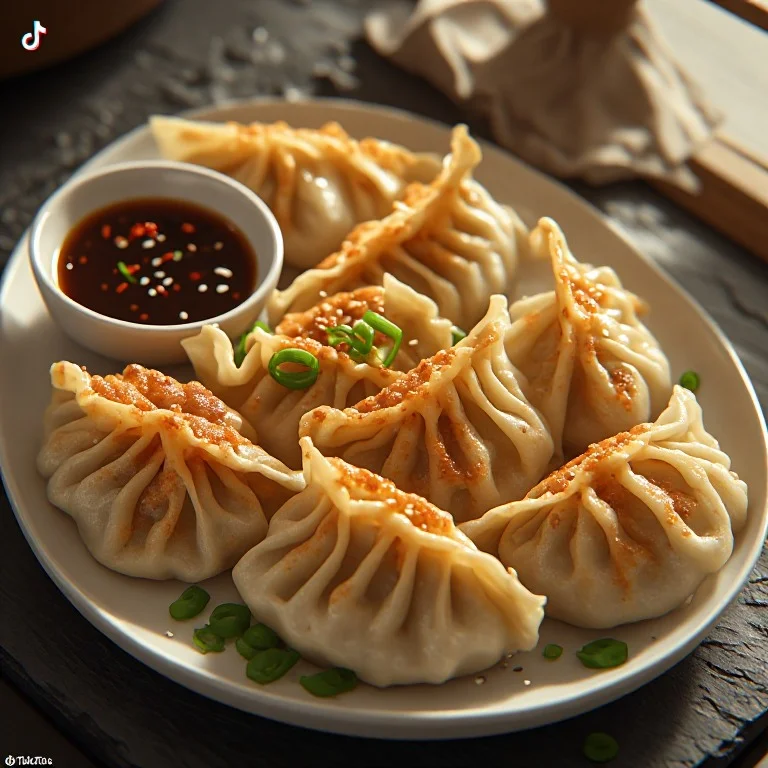
Dipping sauce alongside: soy sauce + rice vinegar + sesame oil + chili crisp. The acid in the vinegar cuts the richness of the pork. Some versions add a few drops of ponzu or a pinch of grated ginger. Keep it thin — a thick sauce pools under the dumplings and softens the lace skirt faster.

Frozen Gyoza Shortcut

Everything above applies identically to frozen store-bought gyoza. Sear from frozen (no thawing — a thawed gyoza releases moisture in the pan, steaming rather than searing the bottom). Add one extra minute to the steaming phase. The lace skirt technique doesn’t care whether the gyoza inside is homemade or Trader Joe’s — the slurry, the sear, and the flip are the same.

For the pan-flip shortcut version: Trader Joe’s frozen gyoza or the rice paper dumpling technique produce the same visual with significantly less prep time. The Din Tai Fung soup dumplings are the restaurant standard if you want the XLB version instead.
🥗

Make It Healthier

Love Crispy Lace Skirt Gyoza but want a lighter version? Try these simple swaps:

  • ✓Sub ground chicken or turkey (93% lean) for the pork — reduces fat by about 6g per serving while keeping the filling juicy if you add an extra teaspoon of sesame oil.
  • ✓Bake instead of pan-fry: arrange on a parchment-lined sheet, brush bottoms with oil, and bake at 400°F for 16–18 minutes. No lace skirt, but same crispy bottom and about 30% less fat.
  • ✓The dipping sauce is high in sodium — halve the soy sauce and add a tablespoon of rice vinegar to keep the flavor punchy with less salt.
  • ✓Swap half the cabbage for finely chopped shiitake mushrooms (remove stems): same texture, deeper savory flavor, and reduces total calories per serving by about 25.

Frequently Asked Questions

What is viral TikTok lace skirt gyoza?

Lace skirt (or hanetsuki) gyoza is a Japanese technique that went massively viral on TikTok: after searing the gyoza flat-side down until golden, you pour a thin cornstarch-flour-water slurry into the pan. The slurry steams the tops of the dumplings, and then when uncovered, the starch dries and crisps into a golden, lacy lattice that connects every dumpling together. The pan flip to reveal the intact skirt is the moment people film and repost.

What is the best slurry ratio for gyoza lace skirt?

The ratio that consistently produces a thin, crispy lattice (rather than a gummy sheet) is: 1/2 cup cold water + 1 tsp cornstarch + 1/2 tsp all-purpose flour + 1/4 tsp rice vinegar, per batch of 15 gyoza. The vinegar is counterintuitive but it slows gelatinization, keeping the lattice from thickening into a solid gummy film. Too much cornstarch (over 2 tsp for this amount of water) makes the skirt thick and chewy instead of crispy.

Can I use frozen gyoza or store-bought dumplings for the lace skirt?

Yes — the lace skirt technique works with frozen gyoza or any frozen dumpling with a flat bottom. DO NOT thaw them first. Add an extra minute of steaming time (4–5 minutes total) to ensure they're cooked through, since they go in frozen. Frozen Trader Joe's gyoza, Ajinomoto, or Bibigo dumplings all produce good results. The lace is identical.

Why did my gyoza stick to the pan when I tried to flip them?

The lace needs to fully solidify before the flip — if it's still wet or opaque-white in spots, it will tear and stick. After removing the lid, let the lace cook uncovered an extra minute beyond when you think it's done; the sound should shift to a dry crackle. Also: use a non-stick pan rather than stainless steel, don't reduce the oil in the initial sear, and flip quickly and confidently — hesitation during the flip is the main cause of sticking.

Can I make gyoza filling ahead of time?

Yes. Make the filling up to 24 hours ahead and refrigerate it covered. You can also fold and assemble all 30 gyoza up to 2 hours ahead — arrange them in a single layer on a lightly floured plate, cover with a damp towel, and refrigerate. Folded gyoza should not be stacked or they'll stick together. For longer storage, freeze them in a single layer on a parchment-lined sheet, then transfer to a bag — cook directly from frozen with the extra steam time.

What can I substitute for napa cabbage in the gyoza filling?

Green cabbage (regular head cabbage) works but needs 5 more minutes of salting since it's denser. Bok choy is excellent — use the leafy green parts only, not the white stems. Savoy cabbage is the closest substitute and needs minimal adjustment. All three need the same squeeze-dry step after salting; skipping it makes the filling watery regardless of which cabbage you use.

How do I reheat leftover gyoza?

A non-stick pan over medium heat with a thin layer of oil, 3–4 minutes per side, restores the crispy bottom. The microwave reheats the filling but turns the bottoms soft. An air fryer at 375°F for 4–5 minutes also works well. The lace skirt doesn't reheat well as a connected piece — it becomes fragile and breaks; just reheat individual dumplings separately.

Love this recipe? Share it!

Free PDF: our 12 most-wanted copycat recipes — instant download.

Made it? Buy us a coffee

Every recipe here is free, with no paywalls. If this one was a hit at your table, a small tip keeps new copycats coming.

$

Ratings & Reviews

—
No ratings yet

Rate this recipe

Click a star to rate

Leave a Review

0/500

CS

Copycat Spices Editorial

Researched + fact-checked. Every recipe on Copycat Spices is built from published sources — official ingredient lists, brand-published recipes, interviews and food-science references — and fact-checked before it goes live, then written as clear, step-by-step instructions for home cooks of all skill levels.

Learn more about our mission →