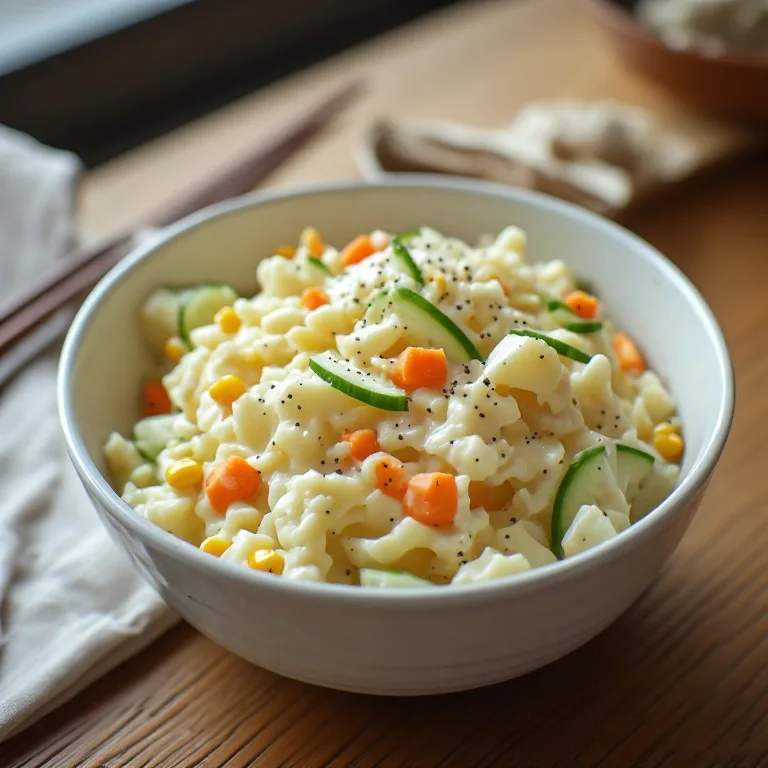


Quick answer: Korean potato salad (gamja salad) is partially mashed russet potatoes mixed with Kewpie mayo, sugar, hard-boiled eggs, salted-and-squeezed cucumber, and blanched carrot — served cold. It’s creamier and sweeter than American potato salad, and the texture is almost spreadable. Two things decide if it works: squeezing the cucumber bone-dry (or it pools water), and using Kewpie not regular mayo (the flavor difference is real).
What is gamja salad?
Gamja salad (감자 샐러드) is Korean potato salad — a standard banchan (side dish) served at Korean BBQ restaurants, home dinners, and at Korean delis and bakeries where it doubles as a sandwich filling. On TikTok, it went viral because of the texture: where American potato salad is chunky and tangy-mustardy, Korean potato salad is nearly smooth, lightly sweet, and creamy enough to spread like a dip — which is exactly why it also works piled into a soft-bread sandwich (more on that below).
The dish itself is simple — boiled and partially mashed russet potatoes, Kewpie mayo, a small amount of sugar, hard-boiled eggs, salted cucumber, and carrot — but every step has a specific reason, and skipping any of them produces a noticeably worse result.
Why it’s different from American potato salad: the three technique differences
1. The potatoes are mashed, not chunked
American potato salad is mixed while the potatoes are still in pieces. Gamja salad mashes the potatoes — not completely smooth, but enough that the mayo has no chunky gaps. This is what creates the cohesive, spreadable texture. Mash them while they’re hot and fresh from the pot; hot potatoes mash more evenly and absorb the sugar and seasoning better. Then let them cool completely before adding the mayo (adding mayo to hot potatoes turns it greasy and thin).
2. Kewpie mayo, not regular mayo
Kewpie is made from egg yolks only (not whole eggs), which makes it richer and more golden. It’s also seasoned with rice vinegar and MSG, giving it a deeper, more complex flavor than Hellmann’s. The difference in gamja salad is significant — regular mayo works, but the result tastes noticeably flatter. Kewpie is at Walmart, Target, and Costco now for $4–8 a bottle.
3. The cucumber is salted and squeezed — not just sliced
Cucumber releases a lot of water in a mayo-based salad. The fix: slice thin, toss with salt, wait 15–20 minutes, then squeeze with a kitchen towel until almost no water comes out. This single step is the difference between gamja salad that holds its texture for three days and one that’s watery by the next morning.
The banchan version vs. the sandwich version
Banchan version: Served cold in a small bowl alongside other side dishes. The texture is creamy and spreadable. Corn, ham, and apple are common add-ins. Eat as a side to Korean BBQ, with rice, or alongside any Korean meal.
Korean bakery sandwich version: The TikTok version that blew up in 2023–2024. Gamja salad is piled thick between two slices of soft Japanese milk bread (shokupan) — sometimes with a thin butter spread. Pressed lightly, refrigerated 30 minutes, cut into quarters. The bread absorbs a little moisture from the salad and becomes almost cake-like. This sandwich is sold at Korean bakeries nationwide (Paris Baguette, Tous les Jours) and at Korean delis in grocery stores like H-Mart. Making it at home requires two things: the gamja salad made slightly firmer (less mayo), and the right bread — regular sandwich bread is too dense and spongy; you want shokupan or a good brioche sandwich loaf.
How to serve it
Gamja salad is served cold. Serve straight from the fridge. As banchan, 2–3 tablespoons per person alongside rice and other dishes. As a sandwich filling, pile it generously — a thin layer doesn’t capture the texture. As a party dish, serve in a bowl with bread, crackers, or crudités for scooping.
It keeps 3 days refrigerated and is genuinely better on day 2 than day 1.